@LuckyCatChain@AlpacaHQ @OndoFinance @solana Off-chain custody with regulated brokers plus on-chain compliance and 24/7 settlement is exactly how RWAs should be done.
@LuckyCatChain Been doing my end-of-year taxes, despite countries like the UK requiring us to declare crypto gains and payments now - they make it really difficult to export and categorise transaction data - I had to screenshot.
RWAs aren’t the future anymore, they’re here, and they’re driving infra choices.
• Tokenised assets on @arbitrum .
• Privacy upgrades on @ethereum .
• Rust/WASM runtimes (e.g., @VaraNetwork ) targeting high‑throughput settlement.
This isn’t about which chain wins.
It’s about: which infrastructure becomes the settlement & routing layer for tomorrow’s asset flows.
RWAs require predictable settlement, auditable execution, cross venue liquidity, and low latency rails. Crypto is building exactly that.
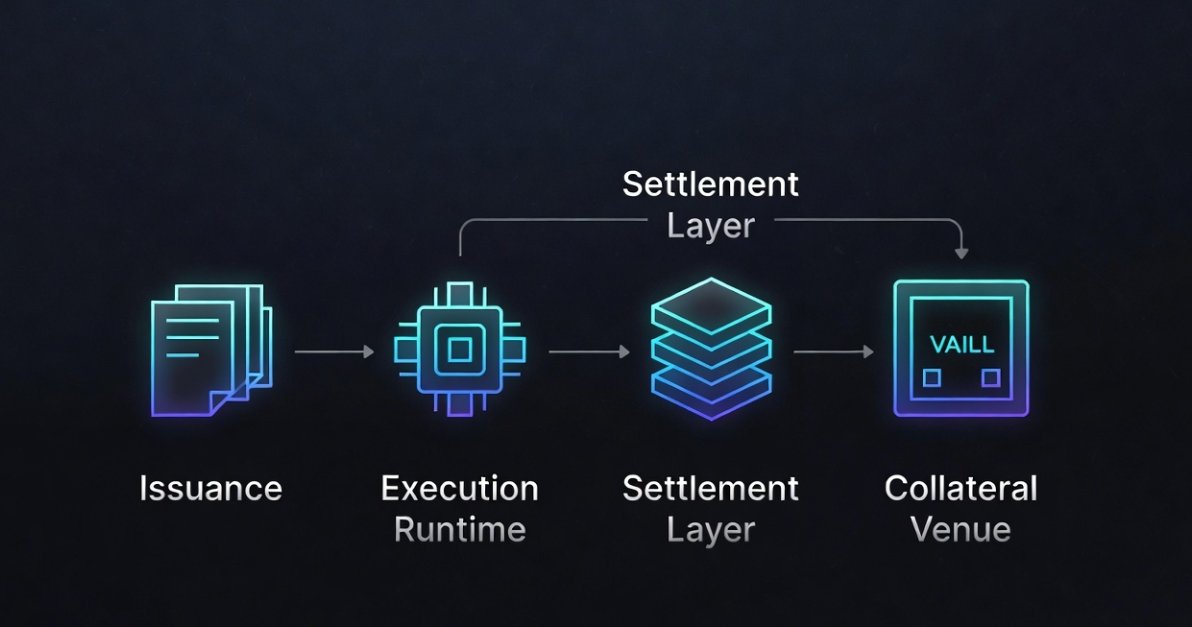
Imagine:
‑ Tokenised treasuries issued on one network.
‑ Traded through a high‑performance runtime (Rust/WASM).
‑ Settled via an L2 with shared DA.
‑ Posted as collateral in another venue.
All verified with light‑clients, privacy primitives, shared sequencing.
That’s not a chain war anymore.
It’s a modular settlement network that routes liquidity.
And infra teams building toward that (modular stacks, Rust/WASM chains, privacy layers) are positioning for when institutions stop experimenting and start standardising.
The chain that wins isn’t the loudest.
It’s the one institutions standardise on without thinking.
The UK’s digital ID push should be scrapped because the tech and legal safeguards don't protect against authoritarianism or cybercrime.
Blockchain tech helps, but even decentralised digital IDs put people at risk unless the right legal frameworks are in place to protect people.
Shoutout to @BigBrotherWatch
Read my op-ed @CoinDesk
https://t.co/5KUBqcToj7
Everyone’s shouting about the @monad airdrop
Mostly because they didn’t qualify.
And I get it!
People grinded for months on testnet, engaged, built, yapped, only to find they didn’t meet smokescreen criteria.
Meanwhile, eligibility looks heavily skewed toward whales, active traders, and ‘known’ wallets.
But let’s be honest:
Airdrops have become a game of expectations.
- Everyone wants something for nothing
- Then FUD when they don’t get it
- Or dumps when they do
Monad’s approach isn’t perfect, but it does have logic.
They’ve tiered eligibility to attract capital, network effects, and credible users. Its forward thinking to the mainnet launch due later this year.
They are favouring those who can actually bootstrap liquidity and activity when it matters. According to the official Monad blog, around 5,500 ‘core community’ wallets were selected from a total of 230,000 eligible addresses.
That’s a deliberate strategy.
Reward wallets that can actually move volume, build apps, or contribute to liquidity, rather than scatter tokens thinly for optics.
Quality over quantity
And maybe that’s the right trade off.
But here’s where it still falls short:
- People who genuinely supported the ecosystem for months are pissed as they feel excluded.
- The claim process looks messy, a take your time warning, emergence of fake portals, scam links, and confusion spreading faster than the official info. Not strictly the team’s fault, but still damaging.
- Lack of transparency around the weighting and tier logic is just adding fuel to the fire. It didn’t need to happen.
- If the early whales treat this like another farm and dump, MON gets crushed before it even proves utility.
Without clear communication, Monad risks losing the community backing it’s built over the last couple of years.
So yeah, airdrops are tricky!
- Reward too wide, you get sell pressure
- Reward too narrow, you get backlash
Monad’s trying to walk that tightrope and I respect that, especially knowing firsthand how hard that is.
But if they fumble execution, all that carefully engineered ‘traction’ could be lost overnight. The crypto community is not very forgiving.
The mainnet launch will decide if Monad real success, or it becomes another lesson in how not to run an airdrop.
Watch this space!
I'll be at the #LondonBlockchainConference later this month.
From 22-23 November, I’ll be in London meeting the innovators building things in this space.
If we haven’t spoken yet, I’m Callum, Founder of @guava_studio_ . We help Web3 companies with marketing, strategy, and ideation that actually cuts through the noise.
I’m looking forward to hearing what the sharpest minds in blockchain are working on.
If you’re going too, message me. Excited to grab a coffee and talk about what’s next. 😎
While looking at the pyramids, I couldn’t help thinking about how AI has changed SEO.
(jk... kinda 😅) But it’s Monday, so back to work.
Our last 3 inbound leads came from ChatGPT, not Google.
In Web3, I’m seeing a real shift. Organic traffic is down across projects, while brands are doubling down on retention through email, loyalty, and community-driven growth.
AI Overviews are causing a 15–60% drop in organic traffic, and SEO budgets are feeling it. LLMs give users exactly what they ask for. If they’re ready to buy, they’ll click what the model recommends. If they’re just browsing, they’re much harder to convert than they were through Google search.
That means the top-of-funnel blog play isn’t hitting like it used to.
But here’s the alpha. This is the opportunity for Web3 trailblazers to go all in on Generative Engine Optimization (GEO). The early adopters will own AI-driven discovery while everyone else scrambles to catch up.
If you want to get ahead of the curve, DM me. 🚀
A friend asked me this weekend:
"What's the point of tokenized real estate?"
Here’s how I explained it, and why the $280T property market is moving on-chain.
1. You don’t buy the building 🏙️
You don’t directly own bricks and mortar
Instead, you own fractional tokens linked to an SPV (Special Purpose Vehicle) - a legal entity that owns the property.
🔸Your tokens = digitized SPV shares
🔸Same legal rights & protections as traditional investing
2. How you make money 💸
🔸Rental yield. Earn pro-rata (% of tokens held) rent via automated smart contract payouts
🔸Capital appreciation. If the property value goes up, so does your token price
🔸Instant liquidity. Sell tokens 24/7 on-chain, no delays or broker fees.
🔸Flexible utility. Use tokens as collateral, stake, or LP for extra yield
3. Why tokenization wins
🔸Start from $100, not $100K+
🔸Trade anytime, from anywhere
🔸global diversity. Hedge your portfolio
🔸Automated payouts, no middlemen skimming
🔸Plug into defi yields
Platforms like @circle, @Securitize, @OndoFinance, and @wormhole are building cross chain liquidity rails powering this shift.
TradFi built walls around real estate.
Tokenization tears them down.
$280T is about to get liquid. 💧
The best is yet to come 😎
This week has been filled, full of excitement around the fintech and blockchain space, and I feel lucky to be a part of this journey.
Attending the Global Fintech & Blockchain Conference was a standout experience. I wanted to say a big thankyou to the organisers, and speakers, with special shoutouts to Nicolas Cary, Co-Founder of https://t.co/lESogRTLvp, as he discussed the intersection of AI, blockchain, and CBDCs. As well as Philip Belamant, CEO and Co-Founder of Zilch with his unique perspectives and methodologies that helped propel Zilch to become Europe's most recent and most impressive unicorn. 🦄
At Guava Studio, we find ourselves in a privileged position, collaborating with incredible projects, each offering distinctive value. I'm super excited to help contribute to their growth and to stand amongst those leading new innovations and ideas. ☘
#guavastudio #fintech #web3marketing
⛓ #Blockchain networks are typically designed to maintain the #anonymity of their users. The rise of money laundering and #cybercrime without punishment degrades the credibility of blockchain solutions.
🌐 #KYC is one potential method to combat money laundering and terrorist financing. As a result, user anonymity is relinquished. How important is anonymity vs protecting funds and cyber thefts?
🧐 What's your personal stance on KYC?
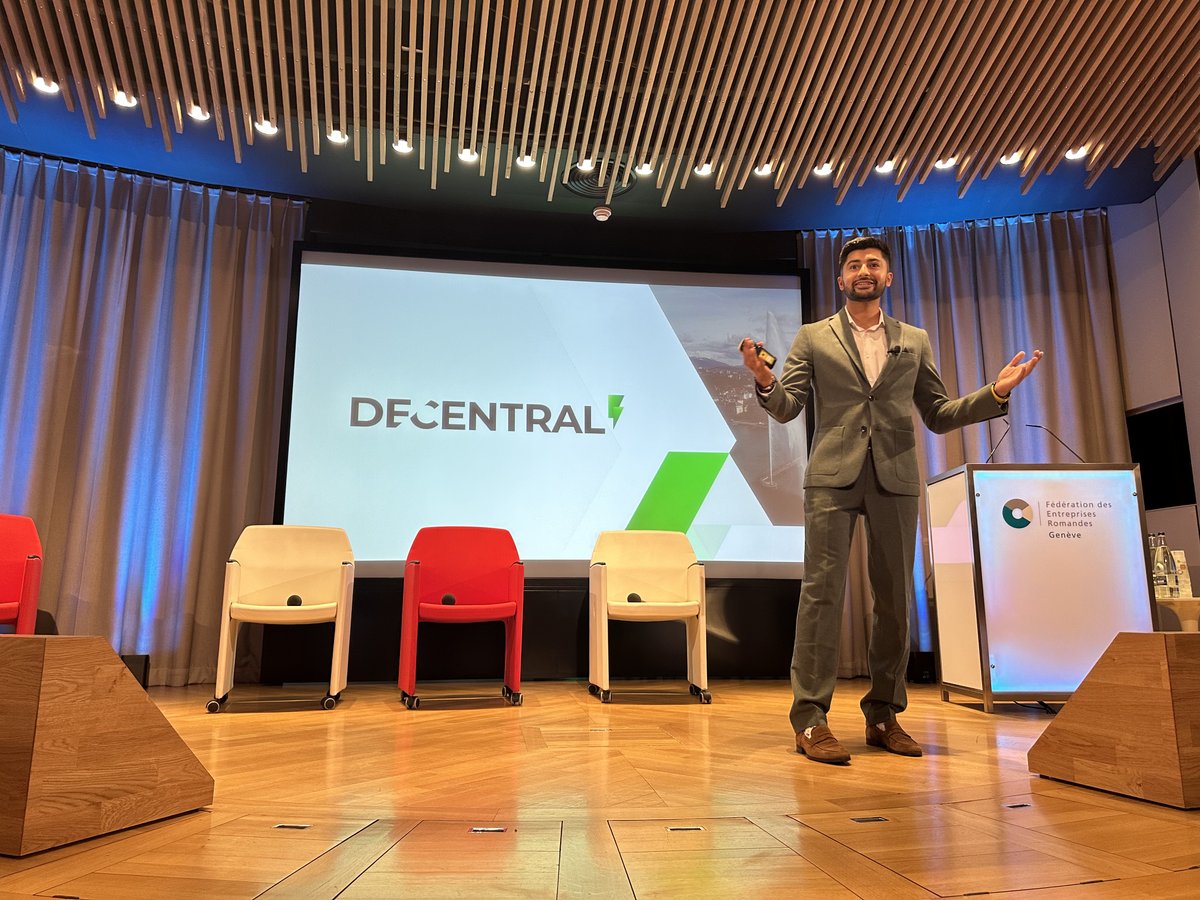
The new creative innovation hub to boost the Swiss blockchain ecosystem was just announced today at Web3 Connect! 🚀
In his keynote speech @CryptoSherazo, STORM Partners Managing Partner, has announced his vision with the launch of Decentral House to supercharge blockchain projects in Switzerland. ⚡
This state-of-the-art hub will incorporate emerging technologies, fostering an ecosystem that nurtures creativity, collaboration and revolutionary breakthroughs. With industry-focused events, workshops and collaborative cross-company alliances, all designed to help emerging Web3 projects unite and thrive.
Every aspect, from private offices to shared spaces, is designed to meet the unique needs of high-growth projects, allowing them to learn from seasoned experts, showcase their endeavours, and establish valuable partnerships.
Propel your Web3 project to new heights! 🏗
Interested? Message us at [email protected] to discuss your requirements. ✉
#decentralhouse #blockchaininnovation #web3 #stormpartners #web3connect
How will large centralised companies use your data in the wake of the AI revolution?
There’s so much we can do to safeguard ourselves from the dangers of AI, and the centralised companies that are growing ever more powerful.
My first article on this topic went live yesterday evening.
Thank you @Cointelegraph and @STORM_Partners for the amazing opportunity to share my thoughts.
"Through blockchain technology, we already have the tools needed to safeguard our independence from AI at both the individual and national levels."
Have a read below 👇
#cointelegraph #oped #ai
Opinion: As long as centralized companies like Meta run the systems that make us vulnerable to AI, our data and well-being are at risk. https://t.co/Ou9g8pZC3r