Just coming off of meetings with a couple dozen enterprise IT leaders discussing AI agents. Here are a few of the common themes that stand out:
* Lots of conversation that you have to solve an operating model challenge to get the full benefits of AI. Most companies have orgs that have always operated in siloes; but agents are most effectively when they are tied to a process, which often cuts across these siloes. So the big question is how do you start to deploy centrally managed agents that can work across organizational boundaries. Who manages these agents? How do they get deployed and adopted?
* Data fragmentation remains a major issue for most organizations. As long as data remains highly fragmented and not in standard formats, or data is not available to the right people and agents, enterprises are dealing with issues around being able to get answers from agents that are accurate or that conform to their business practices. This cuts across both systems with structured data (product metrics or revenue figures) and unstructured data (product roadmap or customer contracts).
* Clear sense that companies need to figure out what their core data moats are going to be in the future. If everyone has access to roughly the same superintelligence from the various models, then the context that you feed the models becomes proprietary value in the future. Capturing this data and getting it into a format that agents can use becomes very important.
* Everyone is trying to figure out the right metrics to manage to for AI adoption. General consensus that tokens are not the right metric per se, and people leaning more toward business outcomes (in an ideal world). For business outcomes (like more revenue or more shipped product), though, you have to get close to each individual workflow to figure out if it was successfully transformed with AI so it’s harder to manage top down.
* Growing view that enterprises are going to live in a multi-model world. Lots of interest (though early in actual adoption) in layers that can route workloads to different models (frontside or open weights) for cost or performance reasons. Also enterprises are trying to figure out what things do you give to the models directly vs. what do you separate as horizontal systems and context so you can swap any system in and out.
* Talent for driving AI adoption and implementation still remains a major issue and topic. Many view it as something you necessarily have to train for internally due to a shortage of talent being trained on this in the outside. As an aside, this feels like it remains a huge opportunity for those that get very good at deploying and management agents in an enterprise since most companies are looking for these skills.
* The best use-cases for AI tend to be those that fundamentally change the work being done instead of just replacing an existing process and doing it more efficiently. Companies are working through their versions of this individually because it’s different per industry, but this often remains both the most exciting and higher upside uses of AI.
Many more topics discussed recently, but overall it’s clear that there’s a ton of change going on with much more to come.
Steve Jobs understood one thing better than anyone else
Intrinsic motivation is an innate skill that cannot be taught. You either have it or you don’t
Highly underrated quote from Jobs himself
@PalmerLuckey This is why I have a great respect for France because of their unwritten social codes. If you break these rules you will definitely get shamed at like not saying bonjour.
Social shame when used moderately serves as a society’s immune system.
We need a bit more shame.
People used to avoid certain self-interested behaviors to avoid shame, private and public. Law and customs assumed this.
Now, 38% of Stanford students claim to be disabled. 40% of young women (under 35) claim mental illness, and SSI disability payments have gone up 400% in a single generation.
It isn't good for anyone, least of all people who are actually disabled, when everyone looks the other way as friends and family and peers con the system with a level of shamelessness no architect of our safety net ever imagined could be possible in America. When everyone is disabled, nobody is.
Just 250 years ago, America didn’t exist. Let that sink in.
Within three generations of people, this country has accomplished the impossible
> first country to send human to the moon
> invented the internet and core infrastructure behind it (ARPANET, TCP/IP)
> invented airplanes
> invented the telephone
> invented electricity distribution
> invented reusable rockets
> invented the polio vaccine and mRNA technology
> invented the GPS
> built the deepest capital markets in history
> won 34% of all nobel prize awards, more than the next two countries combined
> annually spend a third of the world’s entire R&D budget
> led the Genome project that sequenced human DNA
> hold just 4% of the population but contribute 25% to the world’s GDP
> hold the oldest written national constitution that still remains in force
The birth of America was not just a win for Americans. It was a win for the entire world.
God bless America. Greatest country on the planet.
Possible scenarios (ranked in order):
1/ Your country makes the best cheapest products. You export, and your citizens also buy the best.
2/ Your country doesn’t make the best/cheapest; but your consumers enjoy them (Brazil below).
3/ Your country doesn’t make the cheapest/best AND your country blocks access to your market. So you pay more for worst products, and you don’t export. Plus your local companies become less globally competitive as they are protected.
#3 is the worst. It’s what Europe did when America thrived. And it’s what many in Washington recommend today.
Key post that gives a bit of insight into what the future of AI could look like.
“The most interesting thing happening in AI isn't that one model is getting smarter. It's that intelligence is becoming increasingly customizable. The companies that win won't necessarily be the ones with the biggest models. They'll be the ones that turn intelligence into something uniquely their own.”
The ability to combine your unique data, workflows, and a layer that can route intelligence to whatever model best performs the task is clearly the future.
in @ycombinator they have a playbook on how to get customers ASAP for your startup.
if you follow this, you’ll brute force your way to 100 customers, almost no matter what your product is.
Here it is:
1/ launch-max.
product hunt, hackerNews, devhunt, betalist, peerlist, indie hackers, etc. YC tells you to launch 3 times MINIMUM
2/ pull your competitor’s strongest backlinks and get yourself listed in the same places.
whatever article they have listed, you make a better version and ask the site to replace it (or supplement) with yours.
3/ WARM OUTBOUND.
Everyone knows about building in public. but you still need to capitalize on the 99% of leads who see your content but don’t come inbound
scrape everyone who likes your posts on Linkedin each week, check if they fit your customer profile, and message them.
you set this up to fire automatically with @origamichat (i dropped a prompt in the comments)
4/ find 20 to 30 ugc creators on tiktok / instagram in your niche. ask them to create content about your product, ideally from a fresh account.
pay them a fixed fee ($15–$30 per video) plus performance incentives ($1k for 1 million views, etc).
you can use @sideshift_app (best creators imo) and line up 20+ of these creators in 1 day
5/ when building in public, a video is 10x better than an image/text - spam use cases of ur product on X/Linkedin
6/ figure out where your customers actually spend time.
which slack/discord groups are they in? what newsletters do they open? which podcasts and accounts do they follow? pay those people for shoutouts
7/ there's a fresh trend on x basically every week. jump on the relevant ones and fold your product in (like i’m doing right now).
To find trends i just use Origami & search “Lead Gen/GTM posts that are viral on X” to find the best posts every week in my niche
Then, I will reply to those, quote tweet them, and use the formats that work myself
(that’s the secret to why my account has high engagement BTW - you can do this too)
---------
if you are doing all this every single week and DO NOT GIVE UP (launching, posting demos, contacting new customers)
I guarantee you will hit your customer goals. Then the game becomes retention.
will be posting 2-3 more growth hacks every single week
Elite admissions select for one trait: getting the known answer faster than anyone else. 18 years of optimizing against an answer key someone already wrote.
AI just made the answer key free. Everyone has it instantly now.
So the kids trained hardest to win spent their whole lives mastering the one thing that's now a commodity. The premium moved to the questions with no answer key yet.
We need a new training.
The new training is about one thing:
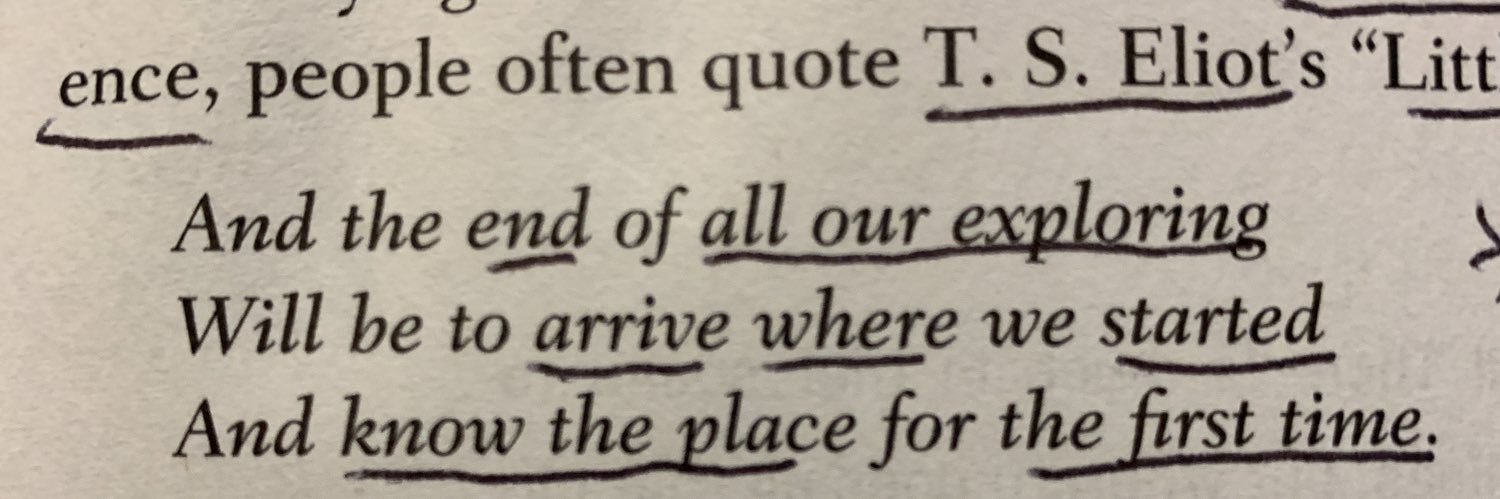
How to be the first person standing in a new land, exploring it, preparing it for the coming billion people who will need it. The future will be built by these people.
And there is a lot to build.
I've had access to Fable for a bit. A genuine jump in capability, I could feed it a 15 page design document for a project and it would work for 9+ hours and deliver terrific results.
But working with it is weird & weirder is coming
Lots of examples: https://t.co/HptkYunBzr
The Three Humans Left in a VC Firm
Fred Wilson, co-founder, Union Square Ventures, interviewed by Michael Mignano (USV)
[I post one executive summary daily of an interview I enjoyed and learnt from. I loved this interview that @mignano did with @fredwilson, who I've learnt a tremendous amount from on the board of Coinbase. Tons of great nuggets for founders and investors.]
Summary: After 40 years in venture, Wilson has rebuilt USV around a single conviction. Only three things in the firm still need a human: picking the thesis, building relationships with founders working in that thesis, and supporting them after the check. Everything else, including sourcing, diligence, term sheets, and CRM, is being handed to agents. The interview is a working sketch of what a venture firm looks like when the back half of its job becomes software, and a clear read on what stays human-only and why.
1. The Three Humans Left. A year ago Wilson wrote a memo to his partners saying that if he were starting USV from scratch today, only three jobs would stay with humans: high-level thesis development, building relationships with founders inside that thesis, and supporting them after the check. Everything else gets handed to agents. USV is now executing on that memo, not theorizing about it. For founders raising, this is the new operating profile of the firm sitting across the table.
2. Agents Love Data Rooms. "I hate data rooms. Agents love data rooms." USV no longer asks a junior associate to scrub the data room before a term sheet. An agent reads the room and answers questions in conversation: cap table, vesting, founder ownership, anything in the corpus. The effect on partner time is direct, with less work on the parts of the job no one enjoys and more time with founders.
3. Term Sheets Without Lawyers. USV's term sheets are now written by an agent, with no outside counsel stamp at the term-sheet stage. The firm seeded the agent with standard term sheets by sector and by stage, then partners shape each document in conversation with the agent. Wilson does not yet trust an agent to write long-form definitive docs. The implication for founders: term sheets land faster, with less round-trip friction, and the cost structure of the next-generation venture firm starts to drop.
4. The Kill Zone Test. Wilson ran a sample contract through a legal-AI startup and through raw Claude Code, side by side, and Claude's markup was better. "All of legal AI is in the kill zone." The test is portable to almost any AI vendor pitch. If a wrapper company cannot outperform the raw model on the thing it sells, the wrapper is paying for the privilege of being disrupted. Operators should run the same test before signing a multi-year contract.
5. No Wrappers Allowed. To survive the kill zone you cannot wrap a model. You have to rebuild the business model from scratch around the new economics. Cursor is the example Wilson reaches for: it has been hugely successful, but more developers are dropping back to raw Claude Code, and nothing stops Anthropic from shipping an IDE. A defensible AI company redesigns the workflow itself, so the foundation lab would have to abandon its current pricing model to copy.
6. Energy Is the AI Trade. About a third of USV's deployment now goes to energy, because no matter which model wins, the winner needs power. The firm has backed a decentralized model-training network and a company that turns each grid-scale solar and wind plant into a mini data center selling inference tokens. The trade is indexed to AI without forcing USV to pick the model. Builders hunting for a less crowded adjacent market should read the same memo, because the picks and shovels of AI run through electricity.
7. Sellers, Not Coders. The skill USV now overweights in founders is selling: recruiting, fundraising, convincing customers, inspiring teams. Forty years has taught Wilson that the founder who can tell the story and bring it to life wins more often than the founder who can write the code. The corollary is uncomfortable for technical founders. "Actually being able to write code is probably not a big deal anymore," though enough technical vision to see three moves ahead still matters. If you are a CEO who cannot recruit, that is now your constraint.
8. The 80–90% Open Source Window. Open-source models, especially the ones shipping out of Asia, are running at 80 to 90 percent of the quality of the closed frontier models. Right now the closed labs are subsidizing usage, so price does not force the comparison. When the labs have to charge a real margin, open source becomes a serious value alternative and the playing field levels. Wilson is not betting the firm on this outcome, but he is hedging into the quadrant where open source wins.
9. Founders Still Want Humans. Founders do not want to raise money from an agent. They want to know the human they are getting in business with, and that is why Wilson does not see VC automating itself out of a job in the short term. The firm can automate the back half of the workflow. The front half, sitting across from a founder at 11 p.m. when they have had a horrible day, stays human.
10. Don't Pass on Price. The biggest regrets of Wilson's career are deals he passed on because the price was too high. The market-clearing valuation will almost always feel uncomfortable a year later, and the right answer is to find a way in, even if that means buying secondary instead of leading the round. Saying no on price is a defensive move masquerading as discipline. Founders raising can use the line in negotiation, because a firm that walks on price is telling you it has not adjusted to the current market.
11. Offense Over Defense. Wilson lost $25 million in six months in 2001 and learned that getting it wrong is a byproduct of the job, not a verdict on the investor. He spent his first 15 years scared of losing money and only got good at venture once he stopped playing defense. The advice is harder to apply for someone breaking in, because the first checks really do matter, but the directive holds at every level. For operators, the analog is the founder who refuses to ship until the product is perfect, because you cannot win a game you are not playing.
12. The Relationship Is the Moat. After 40 years and an AI rebuild of the firm, Wilson's one-line summary of the venture business is the same as it was on day one. The relationship between the investor and the founder is the secret sauce. Everything else, including the work USV used to staff up to do, gets compressed by technology. Find great founders, build real relationships with them, and help them build great companies. If your venture pitch to LPs does not lead with that, you are pitching the wrong business.
Deploying AI in enterprise is a mess right now.
We watched one company spend 8 months going in circles:
Month 1: Copilot (bundled in, seemed free)
Month 2: Rolled out ChatGPT to 20% of staff because Copilot underperformed
Month 3: Both tools sitting at ~20% adoption. Reassessing costs.
Month 4: Decided to go all-in on ChatGPT
Month 4-5: A rogue Claude user group quietly formed
Month 6: IT launched a formal Claude assessment
Month 7: Decided to switch the whole rollout to Claude
Month 8: ChatGPT Codex dropped. IT is now running another cost review...
This landscape will continue to change.
Enterprise AI adoption is not a procurement problem. It is a change management problem... And most companies are solving the wrong one.
One of the new, buzzy jobs in Silicon Valley is the AI Forward Deployed Engineer (FDE), an engineer who is embedded within a client organization to help customize solutions, such as building and tuning agentic workflows that suit the client’s particular needs. I’ve heard from people who are wondering anew about the FDE career path since OpenAI and Anthropic started building new teams to place FDEs within client organizations.
The rise of FDEs for AI workloads is one way AI is creating new jobs (and why the jobpolcalypse narrative of upcoming job market collapse is false -- there will be many AI and non-AI jobs). However, I believe there will be far more AI Engineer jobs than FDEs, as I explain below.
The FDE role was pioneered about two decades ago by Palantir, which sent engineers to government locations to work on secure, air-gapped networks. In addition to having good technical skills, FDEs need communication skills and sometimes business skills. For example, they may need to speak with clients to understand their needs, formulate a strategy to prioritize projects, explain complex technology, and respectfully push back if a client asks for something unrealistic. They’re enjoying a resurgence because of the amount of work involved in taking an off-the-shelf LLM and building it into a custom agentic workflow that fits particular business needs.
However, I believe the number of AI Engineer jobs will be far larger. A company might accept a few FDEs to be embedded within its organization. But most companies will want far more of their own employees working on their projects. While my organizations do hire FDEs, we hire far more AI Engineers! Also, a common client concern is that it is hard to find vendor-neutral FDEs — they are, after all, there to deeply integrate a particular vendor’s product into a company. In this moment when it’s hard to predict which AI service will be the best one in a year’s time, optionality (the ability to pick whatever vendor turns out to fit best in the future) is very valuable. In contrast, letting FDEs tightly bind a company’s processes significantly reduces optionality.
Right now, I see surging demand for AI Engineers who can build software applications using AI software components (like LLM prompting, agentic frameworks, evals, etc.) and effectively use AI coding agents (like Claude Code, Codex, Antigravity CLI, and OpenCode). As the AI Engineer role matures, I expect it to fragment into more specialized roles, like the generic Software Engineer role from decades ago fragmented into frontend, backend, mobile, data engineering, devops, and so on.
What will be the future, specialized AI engineering roles? I don’t know. Perhaps there will be AI FDEs, LLMOps Engineers, Evals Engineers, AI Data Engineers, Harness Engineers, and other roles we don’t have names for yet. But for now, I see a lot of AI engineers who are generalists create a lot of value. Skilled AI Engineers are in very high demand! As our field continues to mature over the coming decade, I look forward to new specializations within AI Engineering that create even more job opportunities.
[Original text: The Batch newsletter]
Everyone building AI agents is focusing on building the prefrontal cortex. Planning. Reasoning. Multi-step chains. There's value here. CEO-stuff.
But also, a reframe: there is value in building the cerebellum. It's offloading boring tasks into reflex so the complex thought can focus.
Your mortgage gets paid by a standing order, not a committee. The things that are not fun, not interesting, but have to be done? Done. Most agent frameworks will fail because they treat all cognition as high cognition.
The winners will nail the boring stuff first.
The need and opportunity for professional services and FDEs to deploy agents right now is massive.
Every tech wave offers a new era of consulting and tech services requirements. Moving from analog to digital led to a massive wave in the 90s. Moving from on-prem to cloud did the same in the 2000s. But this is going to be at a scale far greater than the others.
The reason is that agents fundamentally change the underlying workflows of an organization. Unlike most prior eras of technology, where it was a change in medium of the service being delivered (on-prem CRM to cloud CRM), agents rewire the business process itself. And unlike upgrading a tech system, business processes are full of idiosyncrasies.
Every industry will have its own variants, and every department within those industries will have variants as well. Not to mention the bespoke difference between firms. Bringing agents to marketing in CPG will look different from marketing in healthcare. Bringing agents to sales in a B2B software company will look different from a car dealership.
And none of the change is easy technically. You need to first modernize your infrastructure and data and make sure it’s ready for agents; access controls, entitlements, and permissions need to be mapped in a way that works for agents and people; you need to make sure agents have the right context to work with; you need to consistently eval and maintain the agents when there are model upgrades; and you need to drive the change management of the process itself to figure out which parts the people do and what agents do.
That’s an insane amount of technical and domain-specific process work to be done to make this all happen. Huge opportunity for new service providers, as well as internally teams and roles to emerge, to help drive this change.
@levelsio The US dreaming about UBI, Europe showing how it works, ha
On a more serious note this difference (governement support for unemployment, healthcare not tied to employment etc) could mean the impact of AI plays out v differently between US and EU
@levie Worth distinguishing two contexts. Model context is what the agent sees this turn. Operational context is the workflow rules, escalation chains, and sign-off authority the agent has to respect. Most discourse fixates on the first. Most rollout pain lives in the second.
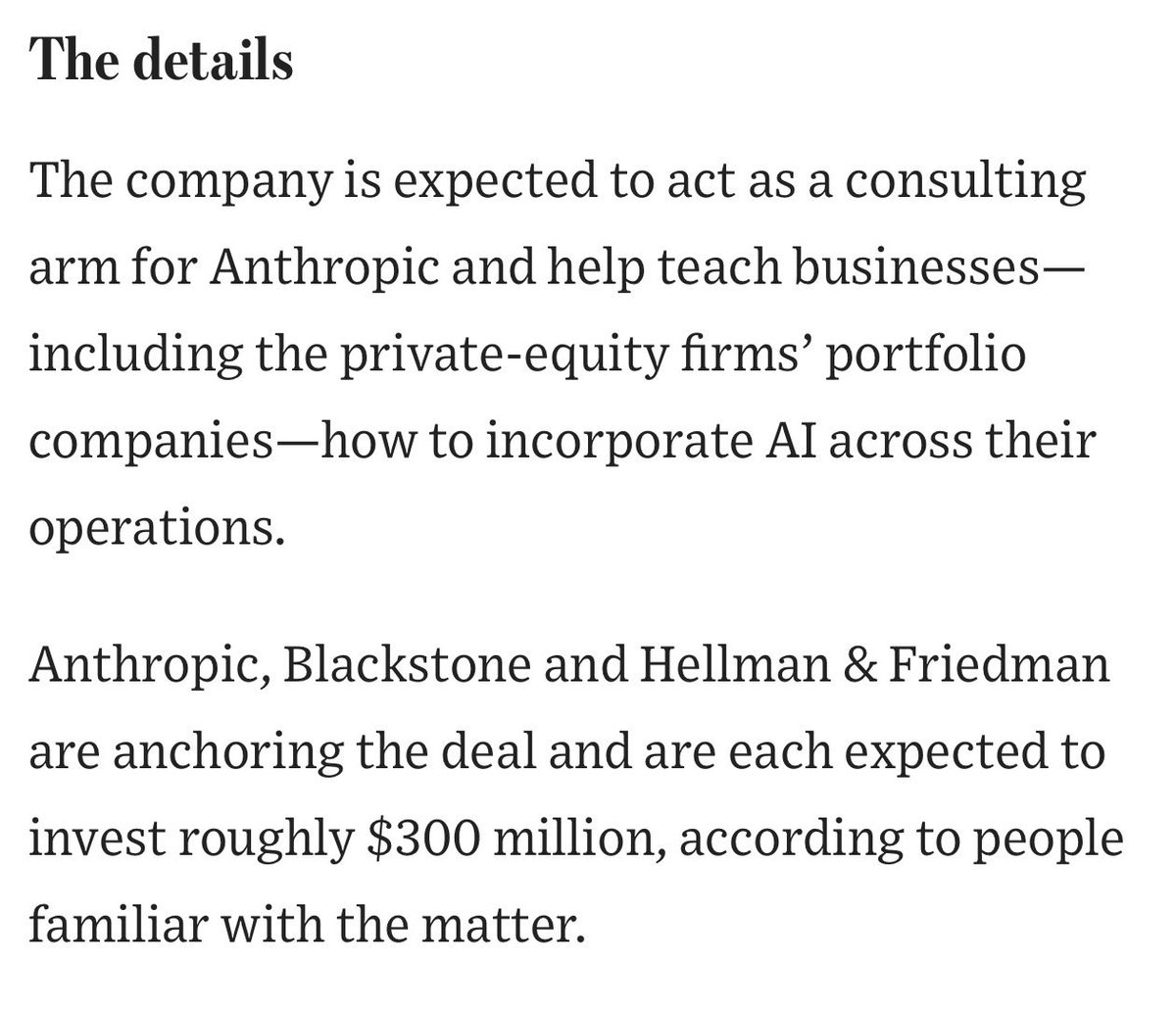
Both Anthropic and OpenAI have new initiatives to help enterprises deploy AI agents within their organizations. This is a trend that’s early but going to get very big fast.
As agents enter knowledge work beyond coding, there is very real work to upgrade IT systems, get agents the context they need, modernize the workflows to work with agents, figure out the human-agent relationship in the workflow, drive adoption and do change management, and much more.
While AI models have an incredible amount of capability packed into them, there’s no shortcut to getting that intelligence applied to a business process in a stable way. This is creating tons of opportunities across the market for new jobs and firms, and the labs are equally recognizing the criticality here.







![AndrewYNg's tweet photo. One of the new, buzzy jobs in Silicon Valley is the AI Forward Deployed Engineer (FDE), an engineer who is embedded within a client organization to help customize solutions, such as building and tuning agentic workflows that suit the client’s particular needs. I’ve heard from people who are wondering anew about the FDE career path since OpenAI and Anthropic started building new teams to place FDEs within client organizations.
The rise of FDEs for AI workloads is one way AI is creating new jobs (and why the jobpolcalypse narrative of upcoming job market collapse is false -- there will be many AI and non-AI jobs). However, I believe there will be far more AI Engineer jobs than FDEs, as I explain below.
The FDE role was pioneered about two decades ago by Palantir, which sent engineers to government locations to work on secure, air-gapped networks. In addition to having good technical skills, FDEs need communication skills and sometimes business skills. For example, they may need to speak with clients to understand their needs, formulate a strategy to prioritize projects, explain complex technology, and respectfully push back if a client asks for something unrealistic. They’re enjoying a resurgence because of the amount of work involved in taking an off-the-shelf LLM and building it into a custom agentic workflow that fits particular business needs.
However, I believe the number of AI Engineer jobs will be far larger. A company might accept a few FDEs to be embedded within its organization. But most companies will want far more of their own employees working on their projects. While my organizations do hire FDEs, we hire far more AI Engineers! Also, a common client concern is that it is hard to find vendor-neutral FDEs — they are, after all, there to deeply integrate a particular vendor’s product into a company. In this moment when it’s hard to predict which AI service will be the best one in a year’s time, optionality (the ability to pick whatever vendor turns out to fit best in the future) is very valuable. In contrast, letting FDEs tightly bind a company’s processes significantly reduces optionality.
Right now, I see surging demand for AI Engineers who can build software applications using AI software components (like LLM prompting, agentic frameworks, evals, etc.) and effectively use AI coding agents (like Claude Code, Codex, Antigravity CLI, and OpenCode). As the AI Engineer role matures, I expect it to fragment into more specialized roles, like the generic Software Engineer role from decades ago fragmented into frontend, backend, mobile, data engineering, devops, and so on.
What will be the future, specialized AI engineering roles? I don’t know. Perhaps there will be AI FDEs, LLMOps Engineers, Evals Engineers, AI Data Engineers, Harness Engineers, and other roles we don’t have names for yet. But for now, I see a lot of AI engineers who are generalists create a lot of value. Skilled AI Engineers are in very high demand! As our field continues to mature over the coming decade, I look forward to new specializations within AI Engineering that create even more job opportunities.
[Original text: The Batch newsletter]](https://pbs.twimg.com/media/HJvWmCHagAAnTxQ.jpg)


