From 1957 to 2020, humanity launched roughly 60 to 120 rockets a year into orbit. For sixty years, the number barely moved.
The Space Race didn't break it. The Shuttle program didn't break it. The ISS didn't break it. Billions in government funding, Cold War urgency, national prestige. None of it pushed the curve past ~120 launches a year.
Then one company figured out how to land a booster and fly it again.
After 2020, the line goes vertical. 321 successful launches last year. A global record. And when you look at the chart, the entire spike is one color. SpaceX.
Russia, which dominated launch cadence for decades, has collapsed to a sliver. The rest of the US launch industry, the one that existed before SpaceX, hasn't grown at all. China is climbing, but from a small base.
Strip away SpaceX and the world is still on the plateau.
Sixty years of flat. Then reusability. Then vertical.
That's the thing about real inflection points. They don't look like gradual improvement. They look like someone broke the chart.
The rest of the industry didn't fall behind because they stopped trying.
They fell behind because the game changed and they were still building disposable rockets.
The global space economy could grow from $630B today to more than $3T by 2050 🚀📈
Here are the companies best positioned to benefit 👇
📡 𝗦𝗮𝘁𝗲𝗹𝗹𝗶𝘁𝗲 𝗖𝗼𝗺𝗺𝘂𝗻𝗶𝗰𝗮𝘁𝗶𝗼𝗻𝘀
$SPCX | SpaceX (Starlink)
$ASTS | AST SpaceMobile
$IRDM | Iridium
$AMZN | Amazon (Project Kuiper)
$GSAT | Globalstar
🛰️ 𝗟𝗮𝘂𝗻𝗰𝗵 & 𝗦𝗽𝗮𝗰𝗲 𝗜𝗻𝗳𝗿𝗮𝘀𝘁𝗿𝘂𝗰𝘁𝘂𝗿𝗲
$RKLB | Rocket Lab
$RDW | Redwire
$BA | Boeing
$LMT | Lockheed Martin
$NOC | Northrop Grumman
🛡️ 𝗗𝗲𝗳𝗲𝗻𝘀𝗲 & 𝗦𝗽𝗮𝗰𝗲 𝗦𝗲𝗰𝘂𝗿𝗶𝘁𝘆
$PLTR | Palantir
$LHX | L3Harris
$LMT | Lockheed Martin
$NOC | Northrop Grumman
$RTX | RTX
🌍 𝗘𝗮𝗿𝘁𝗵 𝗢𝗯𝘀𝗲𝗿𝘃𝗮𝘁𝗶𝗼𝗻 & 𝗔𝗜
$PL | Planet Labs
$BKSY | BlackSky
$SPIR | Spire Global
🌕 𝗟𝘂𝗻𝗮𝗿 𝗘𝗰𝗼𝗻𝗼𝗺𝘆
$SPCX | SpaceX
$LUNR | Intuitive Machines
$RKLB | Rocket Lab
$RDW | Redwire
The space economy is still in its early innings.
What's your favorite way to invest in the space revolution? 🚀👇
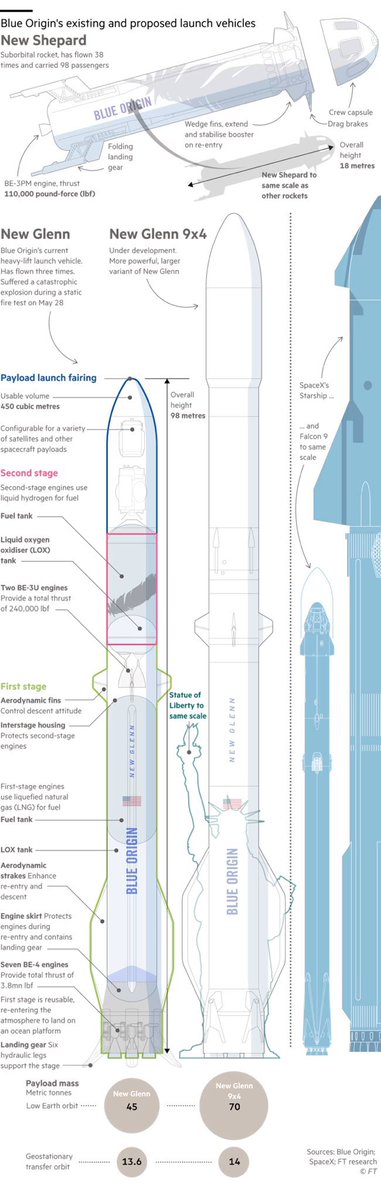
Blue Origin - Gigantesque !
🔶 Une image intéressante du FT qui compare les deux modèles de New Glenn aux Falcon 9 et Starship.
La New Glenn 9X4 est un joli bébé !
Partial reusability has enabled SpaceX to launch almost as many Starlink satellites in a few years than the rest of the world combined did in history.
Full and rapid reusability will make this look like a rounding error
1/
Grazie mille per la domanda.
Rispondo sia a questa sia alla richiesta, arrivata in altri messaggi, di quale sia la logica che porta alla richiesta di ridurre la spesa pensionistica.
SpaceX floated 4.9% at IPO.
This chart is the schedule for when the other 95% comes back.
Look at the cliff. Between June and July 2027, insider eligibility jumps from 50.8% to 96.9%. In weeks.
The tiny float that forced index funds to buy at any price was never the supply.
It was the appetizer. The real supply unlocks on Day 366.
oggi è un giorno che tutto il circo dei semiconduttori, memorie e data center è su forte per cui non sembra il giorno adatto, ma ogni giorno arrivano notizie che la concorrenza cinese gli sta tagliando le gambe "Low-cost Chinese AI models like DeepSeek gain traction in the U.S. - Rest of World"https://t.co/m5TfiXbrpw
Per chi chatta solamente e non paga Chatgpt non importa, ma chi programma e usa agenti che consumano molto spende da 10 a 50 volte meno
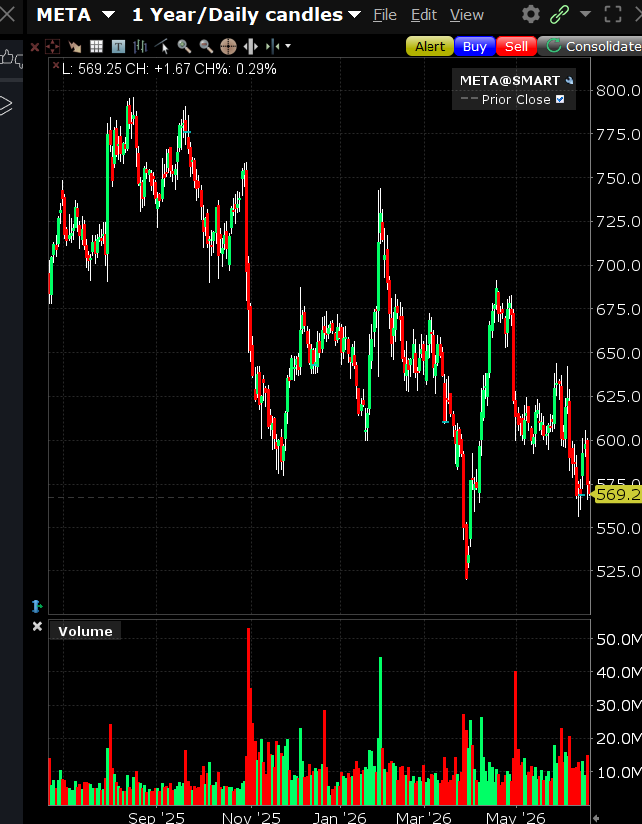
Il Nasdaq è risalito ai massimi, nonostante da un paio di mesi Microsoft, META di Zuckerberg, Amazon e ora persino Apple e Google abbiano un poco perso. E Nvidia ha dato indietro un 10% dal massimo.
Queste 6 big del "tech" qui valgono sui 20mila mld, in una borsa che in totale in USA vale 76mila.
Come spiega il vecchio Grantham, sono stati per 15 anni dei monopoli, ma ora lottano tutte tra loro per questo mercato dell'IA, spendendo 200 mld l'anno ognuna (meno Apple).
Cioè da monopoli, ora sono in concorrenza feroce tra loro. In più, ci sono 6 o 7 IA cinesi che ogni mese riducono la distanza e spendendo da 5 a 10 volte meno
🚀🤔 Pourquoi Ariane 6 s’incline-t-elle autant juste après le décollage ?
🔹 À chaque lancement d’Ariane 6, certains commentaires notent la rotation particulièrement rapide de la fusée quelques secondes après avoir quitté le pas de tir. La fusée donne presque l’impression qu’elle « plonge » vers l’horizon. Certains y ont même vu une trajectoire digne d’un missile balistique... Une vision particulièrement marquée sur le direct du lancement.
🔹 Ce comportement est parfaitement normal et prévu. Avec ses quatre boosters P160C associés au moteur Vulcain 2.1, Ariane 64 dispose d’une poussée exceptionnelle au décollage. Elle accélère donc beaucoup plus rapidement que de nombreux autres lanceurs.
🔹 Cette forte accélération permet d’entamer très tôt le « gravity turn », la manœuvre qui consiste à orienter progressivement la trajectoire vers l’horizontale. L’objectif est simple : ne pas gaspiller d’énergie à monter verticalement et commencer au plus vite à acquérir la vitesse horizontale nécessaire à la mise en orbite.
🔹 Sur des lanceurs moins puissants, cette transition est généralement progressive et discrète. Mais avec le rapport poussée/poids élevé d’Ariane 64 :
🔸 l’accélération est très rapide ;
🔸 le temps passé dans les couches denses de l’atmosphère est réduit ;
🔸 le guidage peut commander une rotation marquée dès que les contraintes aérodynamiques le permettent.
👉 Résultat : depuis le sol, la fusée semble s’incliner de manière spectaculaire quelques secondes seulement après le décollage.
🔹 Cette trajectoire n’est pas un signe d’anomalie, bien au contraire. Elle permet :
🔸 de réduire la traînée atmosphérique ;
🔸 d’optimiser les performances du lanceur ;
🔸 d’atteindre plus efficacement la vitesse orbitale.
👉 En résumé : l’inclinaison observée au décollage est simplement la conséquence de la puissance d’Ariane 64 et d’une trajectoire optimisée pour placer une lourde charge utile en orbite basse. Spectaculaire à observer, mais totalement nominale !
📹 : Lancement du 17 juin 2026, @Arianespace.
Midjourney, l’azienda nota per l’AI che genera immagini, ha annunciato uno scanner medico full-body basato su ultrasuoni.
Si tratta di un grande anello immerso in acqua. La persona sale su una piattaforma che scende lentamente attraverso l’anello. In circa 60 secondi migliaia di trasduttori emettono onde sonore da tutte le direzioni.
L’AI poi ricostruisce immagini 3D dei tessuti e degli organi.
Punti principali:
• Nessuna radiazione (a differenza di TAC e radiografie)
• Nessun magnete forte (a differenza della risonanza magnetica)
• Non claustrofobico: il corpo è immerso in acqua, esperienza tipo spa
• Risoluzione dichiarata intorno ai 0,5 mm
Al momento è in fase prototipo. Il primo centro (chiamato Midjourney Spa) dovrebbe aprire a San Francisco alla fine del 2027.
L’idea è rendere possibili controlli di imaging più frequenti e accessibili, senza i limiti attuali di radiazioni o tempi lunghi.
La struttura delle famiglie Italiane dal 1994 a oggi
Quasi raddoppiate le famiglie unipersonali e quasi dimezzate le coppie con figli
Fonte: https://t.co/wEPIJWF3MR
Mission success for the most powerful Ariane 6 yet. ✅
Flight #VA269 launched 36 @Amazonleo satellites using upgraded boosters carrying 14 tonnes more propellant each.
A new record for Europe’s heaviest payload in a single launch.
🔗 https://t.co/0hWXHTxmXA
(Pic: ESA-CNES-Arianeespace-ArianeGroup \ Optique Video du CSG - T. Leduc)
🚀 SUCCESS.
36 Amazon Leo satellites deployed.
🔥 First flight with P160C boosters.
📦 Heaviest payload ever launched by an Ariane launcher.
📈 The biggest Amazon Leo stack ever launched to date
With VA269, Ariane 6 has now launched 100 Amazon Leo satellites in just five months.
A new milestone for Ariane 6 and for Amazon's low Earth orbit constellation.
Learn more: https://t.co/PCRkQ4m96F
#LaunchingAmbitions #Ariane6 #VA269
@Amazonleo@ArianeGroup@esa@CNES@EuropeSpacePort
466 km above our planet, the Ariane 6 upper stage has completed its second boost, ready to start deploying the 36 @Amazonleo satellites in about 15 minutes.
Watch live, and follow today's launch: https://t.co/cpRwodWVTj
Con VA269 ha debuttato la versione potenziata di #Ariane64. I nuovi booster #P160C hanno permesso di portare in orbita il carico più pesante mai lanciato da un razzo della famiglia Ariane, e il più pesante lanciato per @Amazonleo. @esa@Arianespace
https://t.co/mE4XuPl1XH