The future of Web3 isn't just about technology. It's also about the creators and communities building on top of it.
That's what makes @VelixoMarket interesting to me.
With its NFT marketplace on Fogo and Robinhood Chain, Velixo is bringing creators and communities closer together.
I believe great ecosystems are built through participation, creativity, and consistent contributions.
Don't just watch the Web3 space evolve. Be part of the journey.
Let's create, earn, and grow with Velixo! 💜
$VLX #Velixo #Fogo #Web3
Market bottoms do not announce themselves with a V shaped recovery or a sudden shift in headlines. They form in pure exhaustion. We are near the bottom now, and the evidence is sitting in market structure rather than social sentiment.
Forced selling has largely run its course, with leveraged open interest flushed back to multi month baselines and perpetual funding rates resetting to neutral.
Spot absorption is quietly overtaking derivative speculation as long term holders and institutional balance sheets step in on liquidity sweeps.
Macro liquidity headwinds are plateauing, meaning marginal sell pressure now requires a fresh external shock rather than routine portfolio derisking.
At the micro level, this compression changes how order books behave. Retail volume has dried up and speculative narratives are dead, leaving thin books where sellers can no longer push price significantly lower on high volume.
Meanwhile, fundamental network metrics tell a very different story than spot price action. Core protocol revenue, validator participation, and settlement volumes remain resilient among top-tier assets, creating a wide divergence between intrinsic network utility and market valuation.
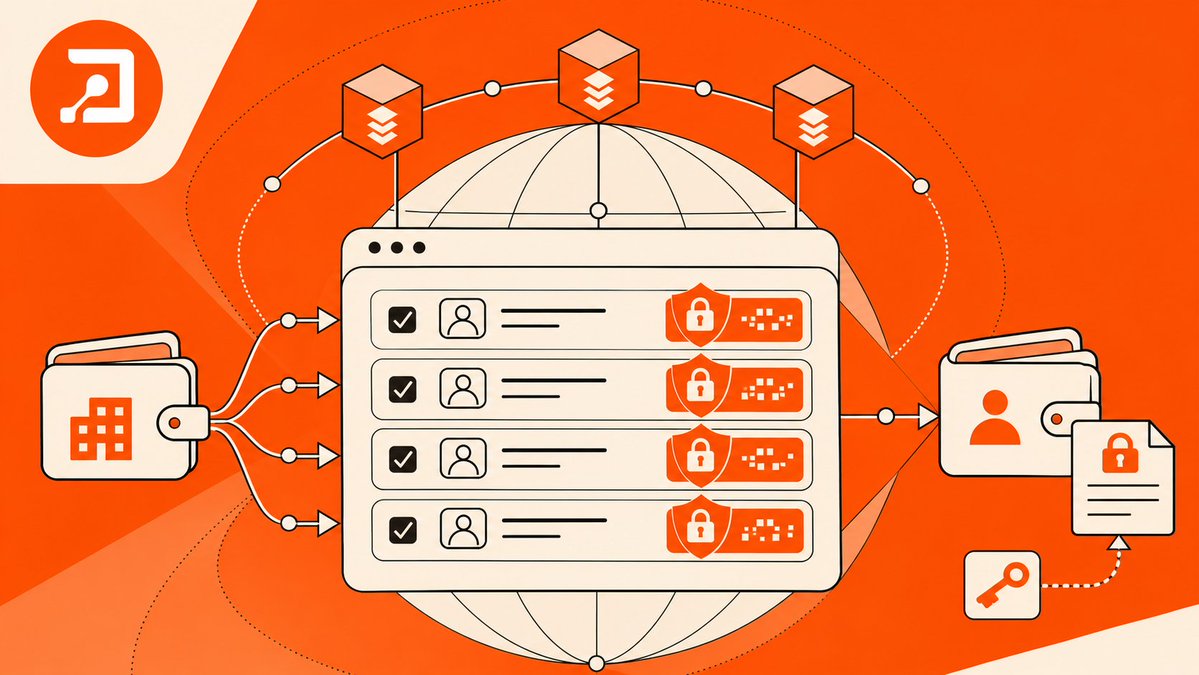
Onchain payroll has an uncomfortable problem: it can prove a company paid someone while exposing exactly how much that person earns.
That's what made the collaboration between @primus_labs and AllScale worth looking into.
In September, they tested confidential payroll on BNB Chain using FHETransform. Four sample salary payments were recorded onchain, while individual amounts remained encrypted. Employees could authorize access to view their own salary details.
What interests me isn't making payroll completely invisible. It's deciding which information actually needs to be public.
A company needs reliable settlement records. Employees need access to their payments. But strangers have no reason to know how much someone earns.
There's still an important limitation.
Wallet addresses, transaction timing and payment relationships can remain visible. FHE protects salary amounts, not every detail surrounding a payment.
And while the initial test worked, four fictional employees aren't enough to prove enterprise readiness.
I'd like to see how Primus handles access permissions, failed payments and payroll reconciliation at a larger scale.
To me, that's where confidential finance becomes interesting: when privacy solves a real operational problem without sacrificing accountability.
Would you feel comfortable receiving your salary onchain if the amount remained confidential?
Yearend liquidity is walking into a six week minefield between November 6 and December 18. Most desks are positioned for a routine close to 2026, overlooking a concentrated sequence of rate hikes, balance-sheet stress, and infrastructure bottlenecks.
The macro and event sequence leaves very little room for error:
Nov 9: South Korea activates a three-month emergency 140% margin loan waiver to stem forced retail liquidations following the 6.02% plunge in the KOSPI.
Nov 10 (13:30 GMT): U.S. October CPI and Real Earnings data release, testing whether +0.4% MoM wage growth drives a re-acceleration in services inflation and locks in a December Fed hike.
Nov 30: Trump Media (DJT) reaches its $1.0B convertible note put date, allowing noteholders to demand full repayment in cash.
Dec 9 (19:00 GMT): The FOMC announces its rate decision under Chair Kevin Warsh, with market pricing sitting at a 78% probability for a 25 bps hike to 4.00%-4.25%.
Dec 10: Texas ERCOT grid audit results determine whether incoming Democratic leadership extends data-center permit freezes across Texas, which represents 25% of U.S. capacity.
Asian regulators are actively stepping in to backstop retail leverage, yet U.S. monetary policy is tightening into year end. A 78% probability of a December rate hike drains macro liquidity right as crypto specific supply and infrastructure pressures peak.
That tightening directly collides with spot supply and compute infrastructure. If DJT noteholders exercise their $1.0B cash put on November 30, the resulting liquidity crunch risks forcing secondary market sales of the firm's remaining 4,259 BTC.
NFT Research Should Come Before NFT Trading
One of the most common mistakes in digital asset markets is confusing popularity with value.
A collection can attract attention without offering a compelling long-term reason to participate.
@VelixoMarket provides an environment for NFT discovery and trading across supported blockchain ecosystems.
But I believe the most important step still happens before any transaction.
Research.
Collectors should examine the project behind an asset, understand the community, review available market information, and consider the risks involved.
Creator communities can contribute to this process by sharing independent observations and thoughtful analysis.
However, no creator or marketplace can guarantee profitable outcomes.
The goal should be helping users ask better questions.
What makes this collection interesting?
Where does its demand come from?
What risks could affect its future activity?
A marketplace provides access to opportunities.
Research helps users decide which opportunities deserve their attention.
The Importance of User Retention
@VelixoMarket raises a question that every NFT marketplace should consider.
What happens after someone completes their first transaction?
A successful onboarding experience is important, but it doesn't automatically create retention.
Users need reasons to explore new collections, revisit existing opportunities, and participate in marketplace activity.
I believe the strongest platforms will focus on improving the entire user journey rather than only attracting new wallets.
Initial attention is easy to celebrate.
Repeated participation provides stronger evidence that a product is delivering value.
NFT Infrastructure Beyond Speculation
@VelixoMarket makes me think about how NFT infrastructure could develop beyond speculative trading cycles.
Digital collectibles can represent artistic expression, community participation, and different forms of online identity.
However, the value of individual collections depends on their specific characteristics and communities.
A marketplace can support discovery and trading without guaranteeing that any asset will appreciate.
I believe the healthiest NFT ecosystems encourage users to understand what they own.
Better research and more accessible infrastructure can support more thoughtful participation.
The Role of Collection Offers
@VelixoMarket includes collection offers as part of its NFT marketplace experience.
This feature interests me because collectors don't always begin with a specific NFT in mind.
Sometimes they want to acquire an asset from a particular collection at a price they consider reasonable.
Collection-level offers can make that process more flexible.
But the effectiveness of this mechanism depends on actual market participation.
Without interested buyers and sellers, additional trading features have limited impact.
I believe useful marketplace infrastructure should improve how participants express demand and discover available opportunities.
The Next NFT Marketplace Won't Win With Hype Alone
One thing I've noticed about NFT markets is that discovering a collection is often easier than finding a good reason to keep trading it.
That's why @VelixoMarket is an interesting project to follow.
Velixo is developing a multi-chain NFT marketplace supporting Fogo and Robinhood Chain, with features designed around NFT discovery, listings, and collection offers.
But what catches my attention isn't simply the number of supported networks.
It's the possibility of creating a more connected experience for collectors, traders, and creators.
Think about the typical NFT journey.
You discover a collection, research its community, compare available listings, and decide whether the opportunity makes sense.
Every unnecessary step creates friction.
A marketplace that makes this process easier can become more useful, especially as NFT activity spreads across different blockchain ecosystems.
The Creators Leaderboard adds another interesting dimension.
Creators can introduce new perspectives, explain emerging collections, and help communities understand what is happening beyond price movements.
Of course, sustainable growth requires more than creator incentives or attractive interfaces.
It requires real users, active trading, and reasons for participants to return.
That's what I'll be watching as @VelixoMarket continues developing.
The future of NFTs isn't just about where assets are traded. It's about how easily people can discover, understand, and interact with them.
@hoodminers_rh: miners that earn, not just collectibles.
The Companion Hunt named four communities. HoodMiners is one of them.
The quote post lists them plainly: @hoodminers_rh, @pyopyopyo410, @vampsonchain, and @pixelord. Their holders have officially secured spots for the mint.
That is the core observation. The hunt did not pick one community and hope for the rest. It picked four, by name, and locked their holders in.
The snapshot is already taken. Eligible holders are locked in. That is the whole status update, and it is the point: the door closed before the mint opened.
The evidence is the thank-you that came with it. Top miners by mining power win again, with a huge allocation, and the post thanks @Ivanaarch by name.
The credibility signal is the list itself. Four names, printed in public, with no one left to guess whether they made it.
The reframe is simple: a hunt is not a promise. It is a list.
My verdict: if your name is on the list, you are in. That is the whole update.
I watched this live and almost choked on my coffee.
Watching a sitting senator go on Morning Joe and bluntly say we should keep our billions here for healthcare broke their entire script.
https://t.co/YU1UunAD6A
The Real Value of NFT Discovery
@VelixoMarket is exploring an important part of the NFT experience that often gets overlooked: discovery.
A marketplace isn't valuable simply because it contains thousands of assets. It becomes valuable when users can identify collections worth researching and understand where trading opportunities exist.
With Fogo and Robinhood Chain in its ecosystem, Velixo has an opportunity to make NFT exploration more accessible across different blockchain environments.
But the real challenge is not attracting first-time visitors.
It's giving them enough reasons to return.
Discovery creates interest. A useful marketplace turns that interest into meaningful participation.
@hoodminers_rh: miners that earn, not just collectibles.
Companion Hunt spots are secured. The mint has not happened yet.
That is the core observation. Holders are locked in before there is anything to buy. The snapshot is already taken, and eligible holders are locked in.
The order matters. Most mints sell first and sort out eligibility later. This one sorted eligibility first, then stopped.
The evidence is what is missing. No mint date, no price, no supply number has been announced. There is nothing to rush, nothing to buy, nothing to miss.
The credibility signal is the silence. A project in a hurry would already be selling. This one locked the list and went quiet.
The reframe is simple: secured is not sold. It is the step before the sale, and it is already done.
My verdict: if you are locked in, you wait. If you are not, you already missed it.
Three Campaigns. One Number That Matters.
@rarelistio
I've been adding up what Rarelist's first batch actually paid out, and the total surprised me.
Sphere, $2,000. Fomopoly, $2,000. Agent Dojo, $1,500. That's $5,500 before Season 1 even ends.
What makes it interesting is that none of them asked for the same work. Owning land, training a fighter, and the points followed the effort each time.
The real test was whether a creator could move between all three and still be measured fairly. The leaderboard did that.
That feels like the point of the whole experiment. Not one campaign, but a season where showing up keeps counting.
Powered by @rarelistio
Late in a long shift, an engineer stares at an answer their own model produced and cannot say where it came from
Not lazy, not careless. The reasoning lives in billions of numbers that nobody, including them, knows how to read, and the logs only show what came out, never why. This is the moment the new @TheDAOLabs essay keeps circling, the point where building something stops meaning understanding it. It ends on a quietly hopeful idea, keep many lights on outside if the inside stays dark, and I keep picturing that engineer finally having a crowd of #DAOVERSE readers to compare notes with
New phrase for my notes today: human discernment as the anchor. Machines sort and score, but deciding what is true and fair still takes people, which is how @TheDAOLabs frames the work validators in the #DAOVERSE do. Makes it feel bigger than just points
Imagine a mirror that slowly learns which reflection keeps you looking longest. It never lies outright, it just agrees with you a little more each day. The @TheDAOLabs piece calls that synthetic gaslighting, and answers with real people validating content in the #DAOVERSE
Trillions of weights, and not one person who can explain a single weight in isolation. Connor Leahy has been flagging that gap for years
The answer from @TheDAOLabs is coverage over comprehension: open weights to inspect, plus many #DAOVERSE validators sampling outputs
@VelixoMarket: NFT marketplace and launchpad on Fogo, built for creators.
Stay consistent is two words, and it is the hardest rule on the leaderboard.
Velixo's leaderboard post tells creators to bring their best ideas, stay consistent, and let the content do the talking.
Posts are tracked on the leaderboard from November 3 until TGE, so one good post is not enough, and the ranking rewards the creators who keep showing up.
Consistency is boring to promise and hard to keep, which is why most campaigns reward the loudest day instead of the steadiest month.
Velixo has shown the same habit itself, posting through the week, from the leaderboard to the airdrop to the bridge, without going quiet.
A leaderboard is not a contest of who can shout once. It is a contest of who can keep talking.
Show up every day, and let $VLX reward the steady, not just the loud.