MD, PhD @ Institute for Cardiovascular diseases of Vojvodina, Serbia;
Assistant @ Medical Faculty, University of Novi Sad, Serbia;
Interventional Cardiologist.
Myocardial compression and recoil as determinants of coronary blood flow. Read more in EHJ.
Coronary blood flow is conventionally analysed as a continuous flow of blood through a tube with the input of energy in the epicardial coronary arteries and the principal resistance to flow in the arterioles and the small arteries. This model has been studied in detail and is accepted by all expert groups. However, this essay argues that this model is valid but incomplete. Coronary blood flow is not continuous.
Coronary blood flow is phasic and asynchronous. During systole, at rest, there is no forward flow to the left ventricle in the epicardial coronary arteries. But there is forward flow in systole in the coronary veins. The blood forced during systole into the coronary veins is expelled from the coronary microcirculation by myocardial contraction and represents the compressible volume of the coronary microcirculation. During diastole, inflow of blood from the epicardial coronary artery begins abruptly, accelerated by myocardial recoil, refilling the compressible volume of the coronary microcirculation, and then flowing through the coronary vein. Accordingly, the hydrostatic energy in the epicardial coronary artery is not the only energy propelling blood through the coronary circulation. Myocardial compression and recoil also contribute. Disorders of myocardial compression and myocardial recoil in diastole should be considered in the differential diagnosis of disorders of the microcirculation. Thus, reduced coronary flow reserve in heart failure with preserved ejection fraction might be a consequence, rather than a cause, of myocardial dysfunction.
https://t.co/E75mpujjGQ
@ESCardio@ESC_Journals #CBF
📌 HALT after TAVI: variable response to DOACs
This case-based report highlights haemodynamic valve deterioration (HVD) linked to HALT, with heterogeneous outcomes to DOAC therapy. Warfarin may be more effective in selected cases. @AliSahebHusain
https://t.co/XIngieCkJV
#TAVI #HALT #DOACs #ValveThrombosis #Cardiology
This State-of-the-Art review aims to facilitate a comprehensive assessment of plaque pathology using coronary imaging. It outlines how imaging characterizes plaque components and phenotypes, links plaque features to clinical events, and summarizes trials using serial imaging to assess drug effects on plaque morphology and progression. https://t.co/kSUPzQCRrB
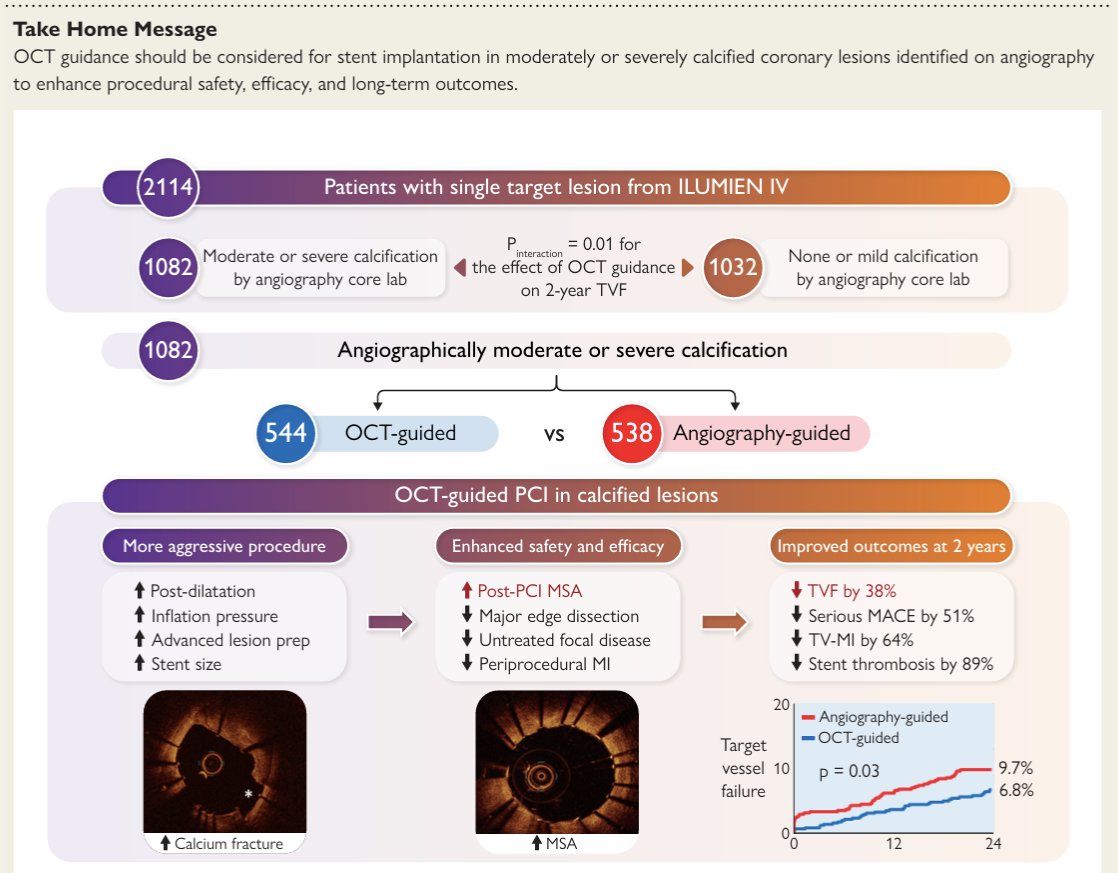
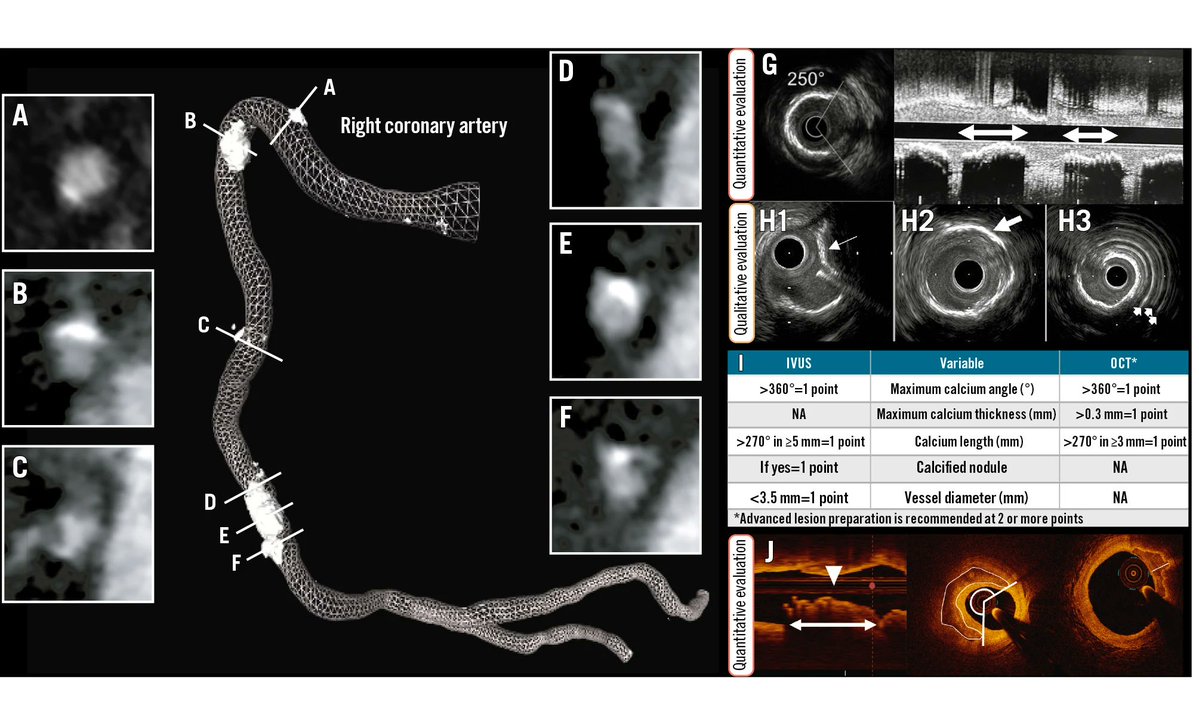
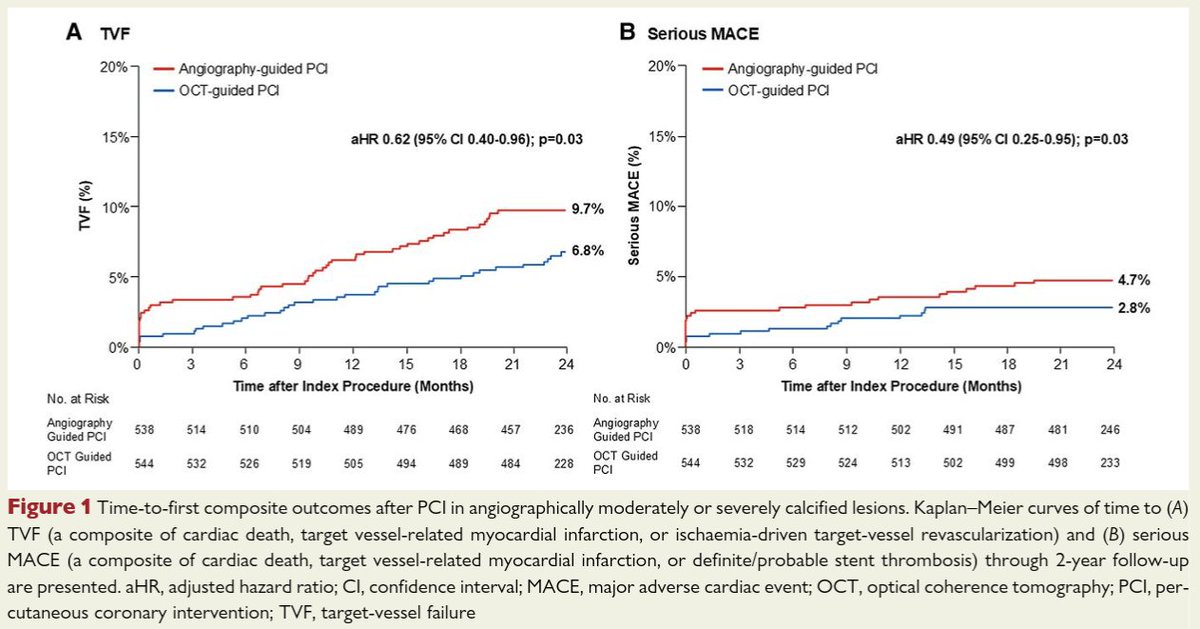
Our publication in EHJ: In ILUMIEN IV, >50% of lesions were mod/sev calcified. OCT-guided PCI in calcified lesions reduced 2-yr rate of TVF and serious MACE - one of the best uses for OCT guidance! Free access link: https://t.co/0ZX6qtCYwk
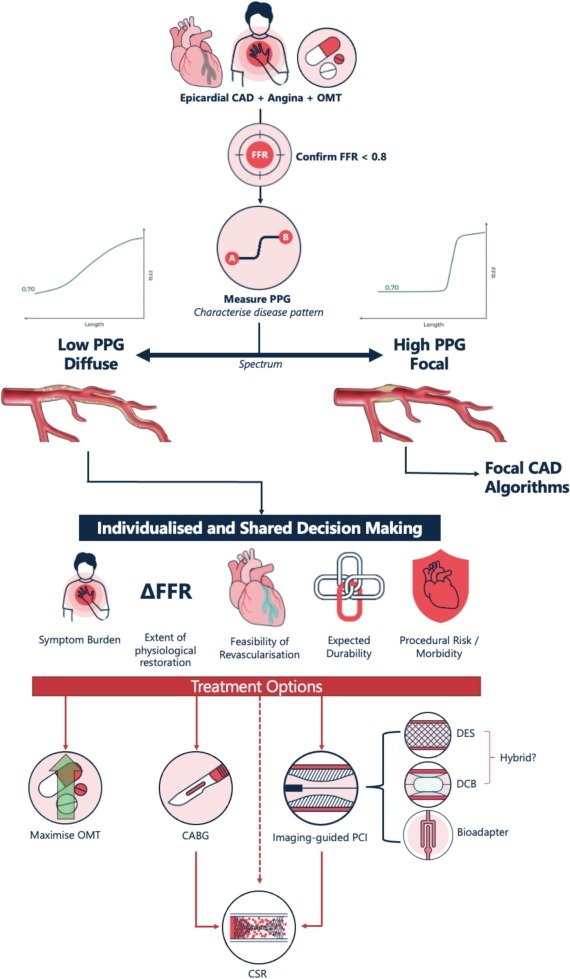
We are entering a new era in coronary revascularization—where predicting PCI success becomes central to clinical decision-making.
Our latest view on how this shift is reshaping the field
https://t.co/n0nO3mbcoE
@CardioAalst@PCRonline@TCTMD
I don’t think the transitive property can be easily applied in interventional cardiology (or at least, a network meta-analysis would be needed), but if that were the case, then after the results of FLAVOUR II, I feel more confused than ever: iFR is noninferior to FFR for guiding PCI, and so far, so good. FFR is noninferior to IVUS (FLAVOUR I), and both are better than angiography. OCT is better than angiography (maybe), but doesn’t seem worse than IVUS. QFR is also better than angiography (FAVOR III China), but worse than FFR (FAVOR III Europe). Now we find out that QFR is also noninferior to IVUS, which throws the entire equation out of whack. These noninferiority trials are driving us crazy. #ACC25 https://t.co/0BQkxrPULK
The usefulness of kissing is always debated.
One argument impossible to be challenged is the idea of ‘opening the door’ to SB territory. And it is not just a matter of struts. See this late neotissue coverage: acceptable by 2D #OCT and terrific at 3D #YESTOCT (in & out view)!
Thrombin levels (Factor IIa in the coagulation cascade) are markedly elevated in the months following an acute coronary syndrome. Warfarin, rivaroxaban (a Factor Xa inhibitor), and also vorapaxar (a PAR-1 antagonist) decrease the levels of thrombin and have all demonstrated efficacy in reducing ischemic risk in positive clinical trials, but bleeding remains a significant limitation. Milvexian, a Factor XI inhibitor, is now under investigation. The protocol for LIBREXIA-ACS, a Phase 3, randomized, double-blind, placebo-controlled, event-driven trial in ~16,000 patients with recent acute coronary syndrome, is available online.
https://t.co/6vDd3Kegry
My submission has been accepted for #EuroPCR this year 🎉 Thrilled to share my insights and dive into vibrant discussions with my peers in Paris 20-23 May 2025! Can't wait for this an inspiring experience! #PCRPresenter@PCR https://t.co/YUQqPcz98K
⚡In a new meta-analysis, GLP-1 RAs and SGLT2i show unique cardiovascular benefits tailored to different patient phenotypes.❤️🩹 Curious how this could reshape your practice? 🏥 Read more in #EHJPharmacotherapy! https://t.co/AhR7a4vOH6 @EditorEHJCVP@FeliceGragnano@MattiaGalli10
The ROLEX Study evaluated the safety and efficacy of left main PCI with the latest-generation zotarolimus-eluting stent (Resolute Onyx DES). This large, prospective, multicentre registry highlighted the benefits of using dedicated large-vessel stent platforms and intracoronary imaging guidance, which significantly reduces adverse events at one year. @G_Tarantini01@BURZOTTA_F
Read more here: https://t.co/krTi3PGbyc
#InterventionalCardiology #LeftMainPCI #ResoluteOnyx #ClinicalResearch
Intensity or volume: the role of physical activity in longevity
Intensity is a main driver of reduced mortality risk suggesting that the intensity of PA rather than the quantity matters for longevity
https://t.co/X7Rnd1oKbc
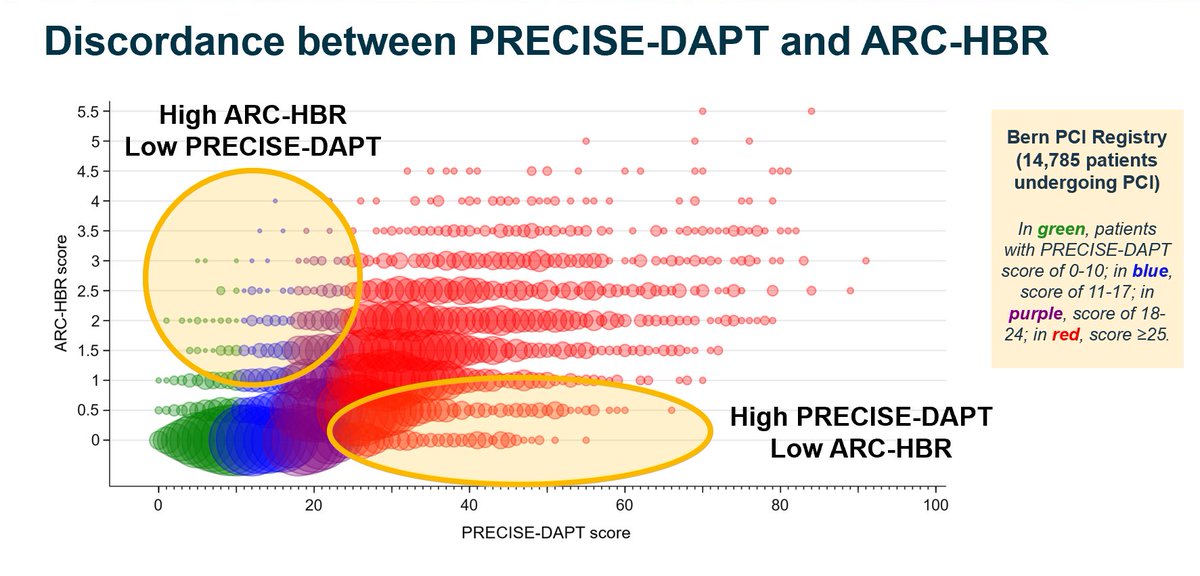
🏥 PRECISE-HBR score is a new risk score to predict #bleeding after #PCI that addresses the inconsistency between the PRECISE-DAPT and ARC-HBR scores and allows for #standardized risk stratification 🩸
Read more in @CircAHA 👉 https://t.co/JtW2Lzt0vN
@vlgmrc@paolocalabro1
ROTA-CUT trial: Rotational atherectomy combined with cutting balloon angioplasty shows similar stent expansion to non-compliant balloons in calcified lesions. Safe, with rare complications, it highlights strategies for optimizing PCI outcomes. https://t.co/GPwM0wweuy