Max Estates is not just undervalued, in my view, it is highly undervalued.
To understand the opportunity, it is important to understand how accounting works in real estate. A developer can sell a flat today. The customer can make the booking and sign the agreement. The company can start receiving money.
But if the project is not sufficiently completed, accounting rules do not allow the company to recognize the full profit immediately. The profit is recognized only when construction milestones and project completion criteria are met. Because of this, reported earnings often lag the actual business performance. This is exactly what is happening with Max Estates.
Management has stated that launch projects have a total future revenue potential of 16310 crore. Out of this, around 12500 crore has already been sold. The company estimates embedded Profit Before Tax (PBT) of 4250-4,900 crore from these projects.
In simple terms, a large part of the inventory has already been sold, but the corresponding profits have not yet appeared in the reported financial statements because of accounting recognition rules. This makes future earnings visibility unusually strong.
The business can be viewed as three separate engines.
The first engine is the rental business. This includes Max Towers, Max House, and Max Square. These assets are fully occupied at 100% which is amazing.
Rental income in FY26 is around 150 crore, growing about 40% YoY
The second engine consists of projects that are already sold but whose profits are yet to be recognized. This includes Estate 128, Estate 360, Estate 361, Estate 105 and Max One. These projects represent the source of the embedded 4250-4900 crore PBT.
The third engine is the future launch pipeline. Projects such as Sector 59 and other upcoming developments provide additional upside that is not fully reflected in current earnings.
The commercial business has another important layer. Apart from the existing operational assets, Max Estates is developing Max Square Two and Max District. Management expects annual rental potential of around 125 crore from Max Square Two and around 225 crore from Max District. Together, these projects can add more than 350 crore of annual rental income.
Management's long term target is to build an annuity portfolio capable of generating more than 700 crore of annual rental income over the next five years.
To understand the value of rental assets, investors use a concept called "cap rate" (capitalization rate). Cap rate is simply - Annual Rent ÷ Property Value
For example, if a property generates 8 crore annual rent and is worth 100 crore, the cap rate is 8%.
Similarly, if the Max Estates generates 700 crore annual rent and comparable office assets trade at an 8% cap rate, then the implied property value can be estimated as:
700 crore ÷ 8% = 8750 crore
This does not mean the company immediately deserves 8750 crore of value for the rental business alone. The reason is that Max Square Two and Max District are still under construction. Additional capital will be required to complete them. Execution risk still exists. Leasing risk still exists.
Therefore, investors generally discount future rental income and assign value gradually as construction progresses and occupancy improves.
But investors have discounted Max Estates so much that its total Mcap today is just 7200 Cr, only the implied property value o fretal portion is 8750 in future.
Its balance sheet is another key strength. Total debt stands at around 1850 crore. Cash and cash equivalents are around 1750 crore as per management. For a real estate developer executing multiple large projects, this is a relatively healthy balance sheet.
The real question is whether it will actually convert into reported profits and cash flows over the next few years. This is where the market remains skeptical. The market is effectively saying:
"The numbers look attractive, but we will wait for actual execution and profit recognition before assigning full value."
That skepticism explains why the valuation remains low despite strong operational progress.
The entire investment debate revolves around one question:
Will the estimated 4250-4900 crore embedded PBT actually materialize?
If the answer is yes, then a 8000 crore market capitalization could look extremely cheap in hindsight.
If the answer is no, then the market's caution is justified.
Personally, I never use management projections at 100% value.
If management estimates 4500 crore of embedded PBT, I apply a margin of safety.
For example, after a 30% discount, I would assume realizable PBT of roughly 3000-3200 crore.
If the stock still appears attractive under those conservative assumptions, then the investment case becomes stronger.
In my view, the most valuable aspect is that a large portion of future revenue is already sold, customer demand has been demonstrated, collections are improving, the rental platform is scaling and the balance sheet is healthy.
If management executes the announced projects over the next four to six years and NCR demand remains reasonably healthy and if project launches and deliveries are not materially delayed, the gap between current Mcap and Future Mcap is going to be significant.
RainInd is a cash machine and with adavnce materail reaching 1000Cr TO it is looking good... though too many varriables but managment is good!! Most of the Carbon prodcution issues are also getting over!!
From Concall... However, progress achievd in recent quarters, combined with our diversified footprint, flexible sourcing model, and disciplined execution, gives us cautious optimism that RAIN can continue to improve resilience and create value over time. #RainInd#Rain
RBZ Jwellers:
Mcap 416cr
FY25 PAT: 39Cr (TTM 50+)
Co can reach triple digit PAT by FY30.
Retail store expansion in native state (currently one store in Gujarat) and expansion in Job work should drive the growth.
Not the best business but valuation is very attractive.
Skipper:
FY24 PAT (12 mo): ₹82 cr
H2FY25 PAT (6 mo): ₹84 cr
Q4FY26 PAT (3 mo): ₹76 cr
Engineering division is absolutely reaping the benefits of the T&D capex cycle ⚡
A High School teacher spells:-
January as JUNGU
February, she starts with M and then gives up.
She is a teacher for last 2 decades.
Baba Saheb's legacy.
PM @narendramodi has put this disastrous policy on steroids. @DrMohanBhagwat endorses this Social INjustice.
CREEPS.
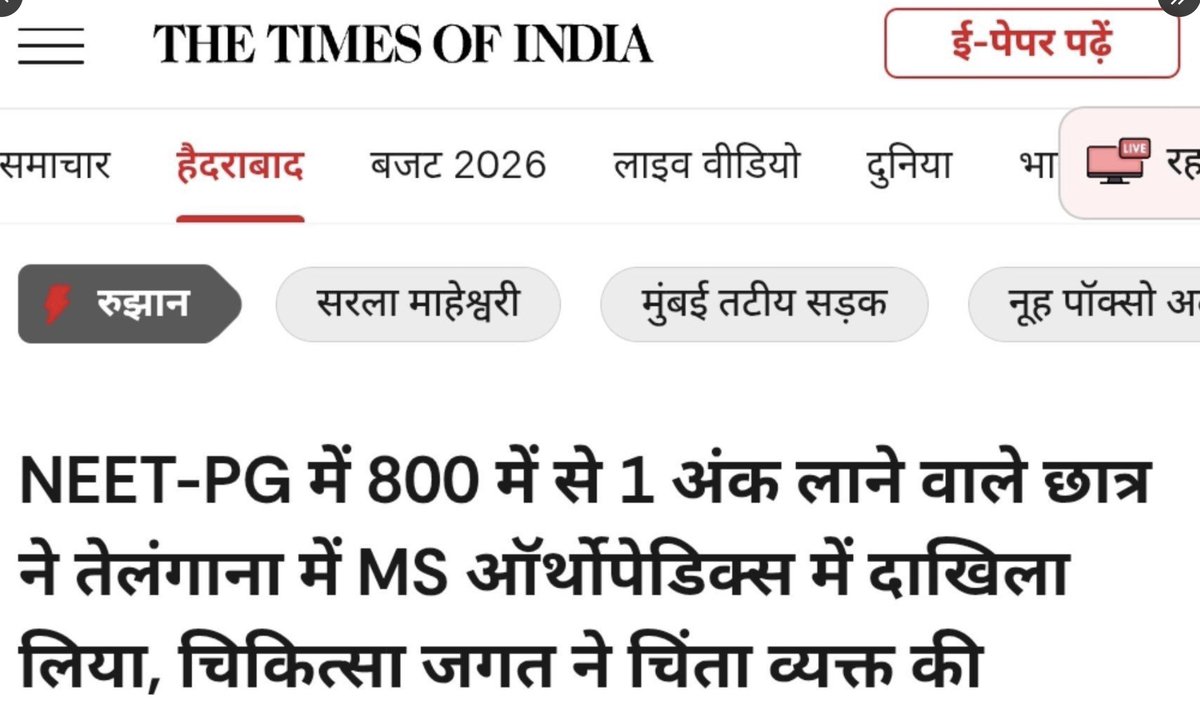
A person scoring 1/800 in PG entrance has been granted MS in Orthopaedics while those scoring 500+ are denied.
The nation is going to dogs and instead of being ashamed, political jokers are presenting it as an achievement.
Microcap investing has taught me a lot (still learning) over the past 30 years - about patience, conviction, discipline and Risk. I shared some of these learnings in my recent podcast with @kushallodha548 & talked about my learnings, mistakes, successes & failures in my Investing journey. Hope it adds value to fellow investors.
https://t.co/Pq4ZRrWLcL
At 3Cr, your life changes dramatically.
1) Setup a tax base abroad. Move your liquid money. And, start paying 0% capital gains.
2) This move comes with frictions. Setting up a tax base, paying money upfront, 250K LRS etc whatnot.
Most people give up here.
And, accept their fate.
But: if you power through this phase, new opportunities open up like never before.
3) Example: if you have a UAE tax base. You can easily invest across: US equities, derivatives, SEA equities, you name it.
It takes 1 min to move 1Mn$, legally. Friction is 0.
4) No nonsense of dealing with currency depreciation, unreliable laws, filing 100 forms for every little move.
You can focus your mental energy growing your wealth. Not on compliances.
5) On top of this: new income streams open up. For eg. Wheel strategy -- you sell Puts 15% OTM. Once you get the stocks, you sell call 15% OTM.
This is a solid active investing strategy with 0% tax.
****
Is the pain worth it? 100% yes. Numbers prove it.
3CR.
Let's say this grows at 13% with 0% capital gains.
₹3 Cr × (1.13)^30 = ₹3 Cr × 39.12 = ₹117.36 Cr
Total gain = ₹114.36 Cr
If you pay 12.5% (and other BS taxes), you will end up paying: 14.30Cr for a passive investment strategy.
If you undertake active investing, this number would be much higher.
Now you decide if paying X lakhs/year as the setup fee is worth it.
****
No Indian fund manager/CA will tell you this. Because if they tell you this, you will leave them & the system, lol 😅
SIMPLE RULES:
1. If you have a 10 year time horizon invest a higher amount in Midcap Mutual Funds, Large Cap Index Funds and some amount in Small Cap Funds - 50-30-20.
2. For stocks you buy - make a rule to never average down a falling stock.
3. Never sell a stock doing well.
4. When to sell? When the stock starts trading 2X its historic valuations without any major new future growth indicators, or when you need money.
5. Focus on increasing your revenue streams - do a side hustle. Basically anything to get distracted from everyday stock price movements.
6. Always maintain 9-12 months expenses in an arbitrage fund.
Then there are ways to get there!
@vinamravinamra8@LalitKModi@RanveerOfficial You must take nothing less than Ranbir!! He is the one who can do justice to your persona!!! What a wealth and model created by @LalitKModi!!! In-fact I remenber hearing his father saying good things about him. 😅
@VishalBhargava5 Still not very unfiltered and blunt! They are still trying to sell something by giving undercover!! Remebr when you called Gurgaon overpriced sometime back there were many calling you selective and biased!!!! Gurgaon ko bahi bahut Jaleel Hona hai in my view😓