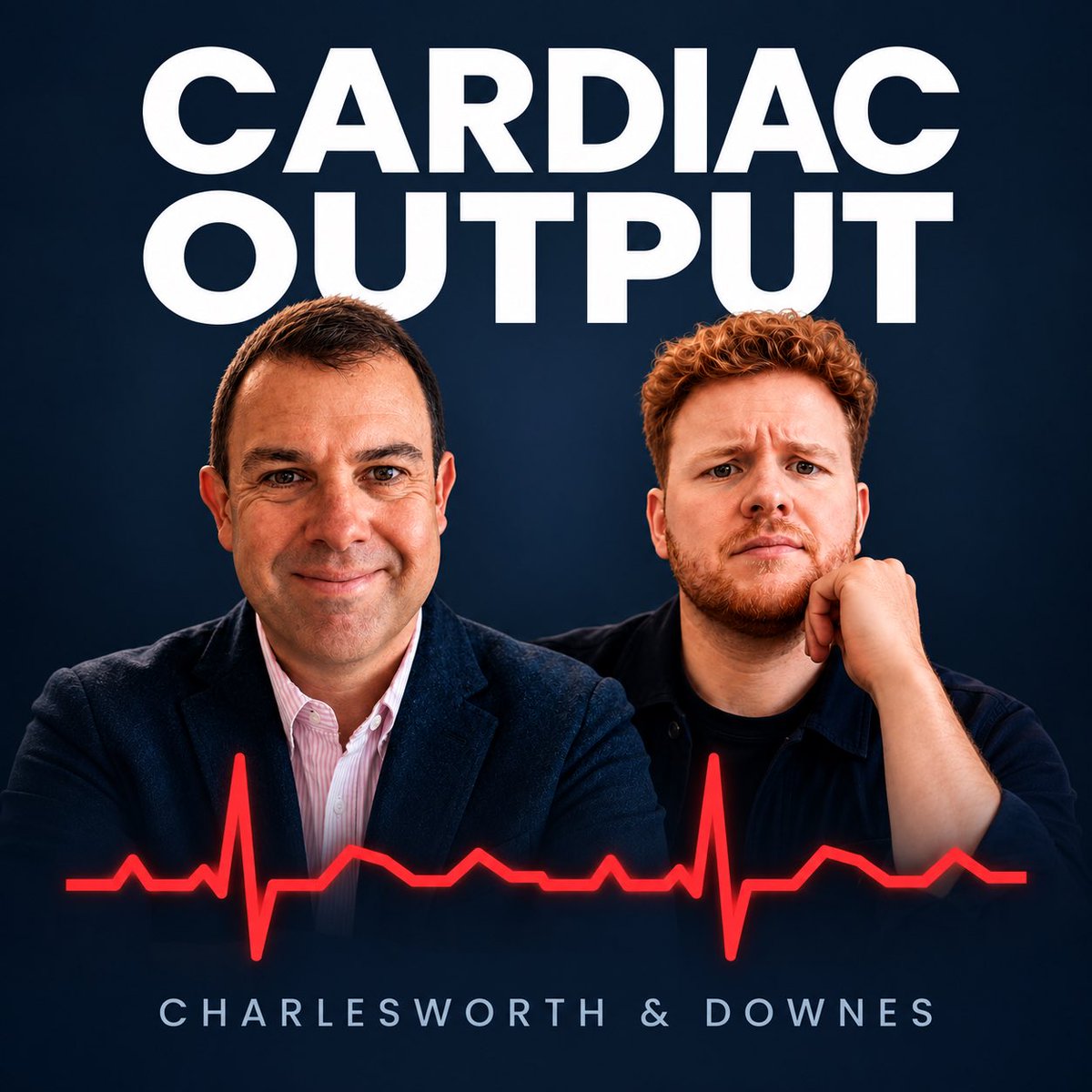
Delighted to receive a mention in @Assoc_Anaes@Anaes_News!🎙️
The rule we set ourselves is that anything a listener could find in a textbook gets thirty seconds, and the remaining time goes to the things you would otherwise only learn by being in the room.
Cardiac Output Monitoring: Believe the Patient.
This episode is cardiac output monitoring, for the exam and for the bedside: how each device works, the physiology underneath, when we actually use them, and where each one misleads you.
https://t.co/ExAsULjaGK
Cardioplegia makes planned ischaemia survivable in five ways — arrest, cool, empty, feed and buffer, and limit reperfusion injury — and arrest does most of the work.
https://t.co/1zAySV6F8D
This is atrial fibrillation on the cardiothoracic ICU, top to bottom. And it matters beyond the bedside: in a recent @RCoANews Fellowship paper it was the worst-performing question on the whole exam, with a pass rate of about 43 per cent.
https://t.co/paj972S3wR
TOE in Theatre: The Probe Earns Its Keep.
A foundation guide on the use of TOE for cardiac surgery – EF, the RV, wires/pipes and much more!
https://t.co/twVRXSwDkC
Today it's transthoracic echo on the intensive care unit: the views, and the patterns you are looking for in a shocked patient.
@ICS_updates@icmteaching@IM_Crit_
https://t.co/O7Mf9GW1VZ
TOE for Mechanical Support 2: VADs and the Impella.
People say "VAD" and mean five different machines, sitting in different places, for different lengths of time.
https://t.co/aRCn2W8sif
TOE for Mechanical Support 1: Balloon Pumps and ECMO.
In mechanical circulatory support, transoesophageal echo is not an investigation you order. It is part of the device.
https://t.co/hcOBAhgJQw
Cardiopulmonary Bypass: What It Does to the Patient.
This is cardiopulmonary bypass top to bottom, pitched at @RCoANews FRCA level and a little beyond, and built around the questions that have actually appeared in past papers.
https://t.co/dxL4nPIk4v
Intra-Aortic Balloon Pumps: Timing, Traces and Trials.
The answer isn't to ignore the evidence — it's to notice what the trials actually studied, which was routine, unselected use in two specific shock populations.
https://t.co/ZIX0jSGqFr
Today, we are featuring the @ITACStrial by @TobyRichardsUEL et al. published recently in @bmj_latest.
Probably the most important cardiac anaesthesia trial published in 2026 so far? We think so!
https://t.co/EomHTJMBPV
Protamine: The Most Dangerous Drug We Give Every Day.
Cardiac surgery consumes around ten per cent of the entire NHS blood supply, and ninety per cent of those products go into ten per cent of patients.
https://t.co/PqheMdKqUB
Bleeding After Cardiac Surgery: Products, TEGs and HIT.
Mike takes a deliberately unfashionable position on the TEG and defends it, and Calum pushes back.
https://t.co/2o6ox3pecM
Endocarditis Surgery: Timing, Bleeding and Vasoplegia.
Prosthetic valve endocarditis carries around a 27% one-year mortality, with device-related disease closer to a one in four risk of not getting home at all.
https://t.co/vso67y2gv1
In this episode Mike and Calum work through infective endocarditis
-why it presents so differently now
-how it gets diagnosed
-the traps that make it harder than it needs to be.
https://t.co/GZGwza9Wyv
TAVI for Residents: Evidence, Rapid Pacing and Sedation.
"And here's what I'd add, which matters more than any drug choice.
Be deliberate. Be patient. Be gentle."
@Anaes_Residents@ACTACCUK
https://t.co/pv6ytVx37K