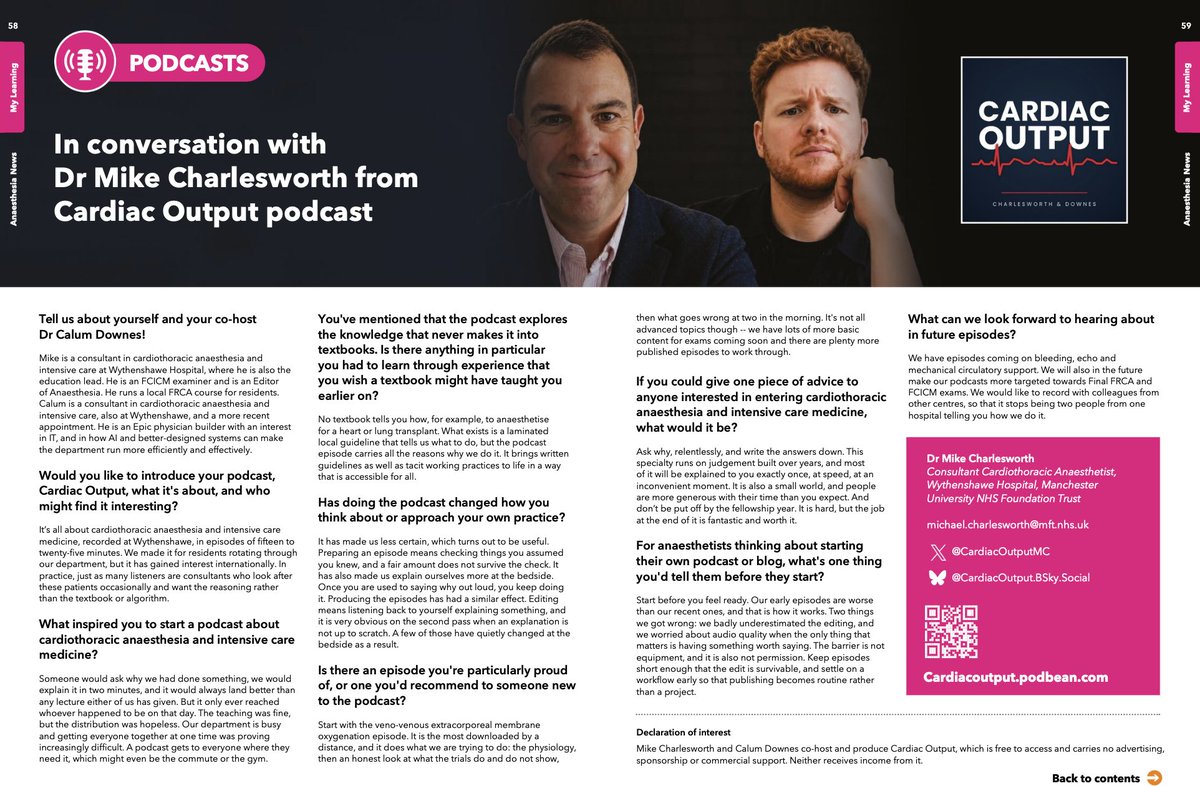
Thrilled to feature in this month's Anaesthesia News 🎙️
Dr Calum Downes and I on why we started Cardiac Output, how it's changed our practice, and our advice for anyone starting a podcast: start before you feel ready.
https://t.co/081apHLGk6
@Assoc_Anaes@Anaes_Residents
New episode 🎙️ Minimally invasive cardiac surgery, part 4: after the operation
Hidden bleeding and the saw at the bedside, failing pacing wires, the phrenic nerve, one white lung and when to call ECMO, and do the blocks really work? 👇
https://t.co/7EoleNnNc1
New episode 🎙️ Minimally invasive cardiac surgery, part 3: the mini aortic valve and the MIDCAB
Mini-sternotomy or right thoracotomy, what the CT tells you, femoral cannulation and stroke, rapid-deployment valves, and one-lung ventilation for MIDCAB 👇
https://t.co/XptGDuzGFz
New episode 🎙️ Minimally invasive cardiac surgery, part 2: the mini mitral and the robot
What to tell the surgeon before the first cut, predicting and avoiding SAM, the fluorescent endo-aortic balloon, and placing the neck cannula 👇 https://t.co/eha9im6Rmk
New episode 🎙️ Minimally invasive cardiac surgery, part 1
Why you keep ventilating on femoral bypass, who’s suitable, tube or blocker, endo-aortic balloon or clamp, and following every femoral wire on TOE 👇
https://t.co/07XYVWsAy6
New episode 🎙️ Regional anaesthesia for thoracic surgery
Why a third of patients get chronic pain after keyhole surgery, choosing paravertebral, erector spinae or serratus, how to make a paravertebral spread, and why the drain site matters 👇
https://t.co/rsPRqQqxlC
New two-part series: the aortic valve on TOE 🫀
Part 1 – anatomy, measuring the annulus and the bicuspid valve: https://t.co/nq9bBwR3VX
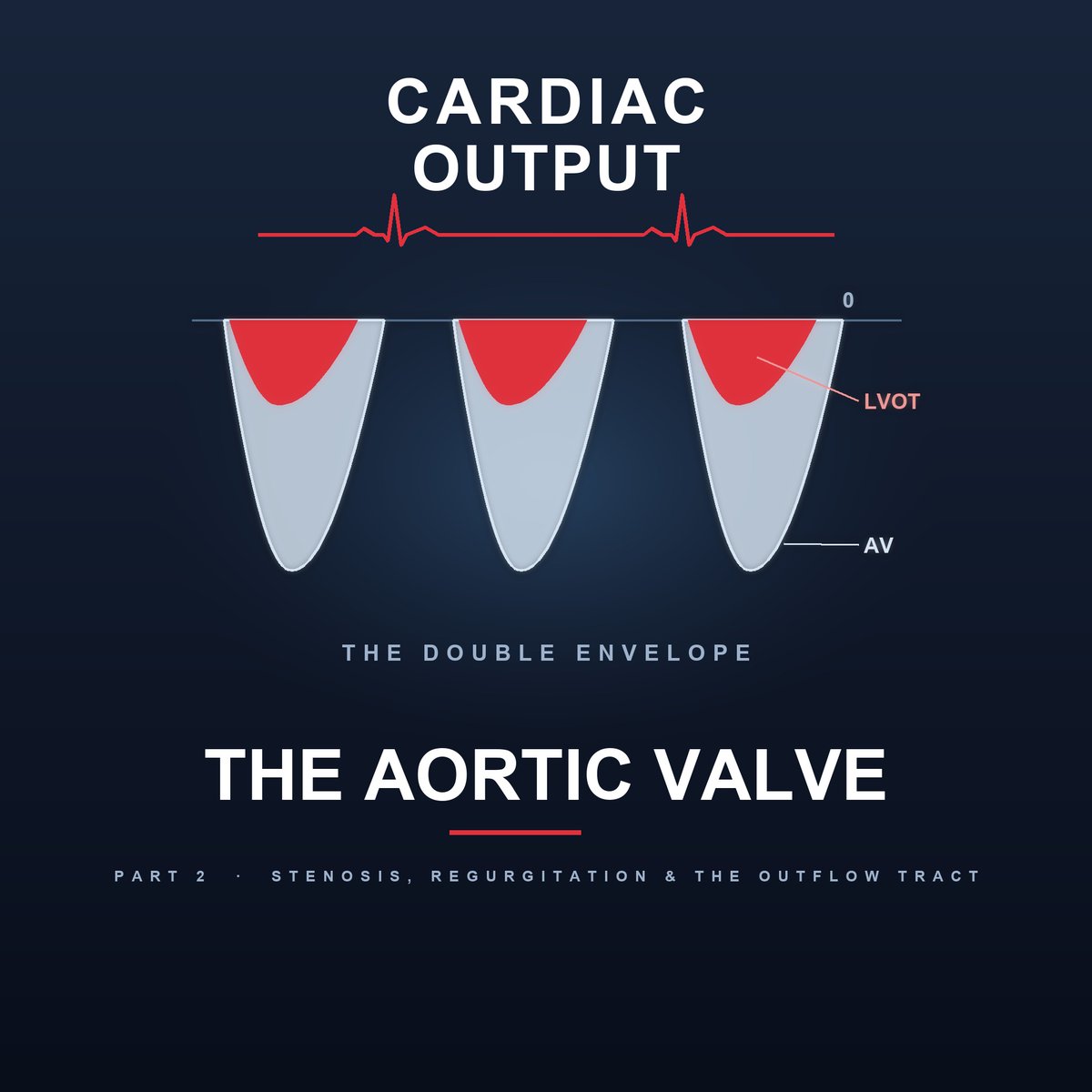
Part 2 – stenosis, regurgitation and the LVOT, and why a gradient under 40 can still be severe: https://t.co/Lz3RscEcrY
#FOAMed#MedEd
Face-to-face education should be for: supervised clinical experience; discussion; feedback; simulation; apprenticeship; and the development of judgement.
@Anaes_Journal@Wilkinsonjonny@EMManchester
Editorial👇
https://t.co/GxSrK6X8Yb
Podcast👇
🎙https://t.co/eSeS3lQtyb
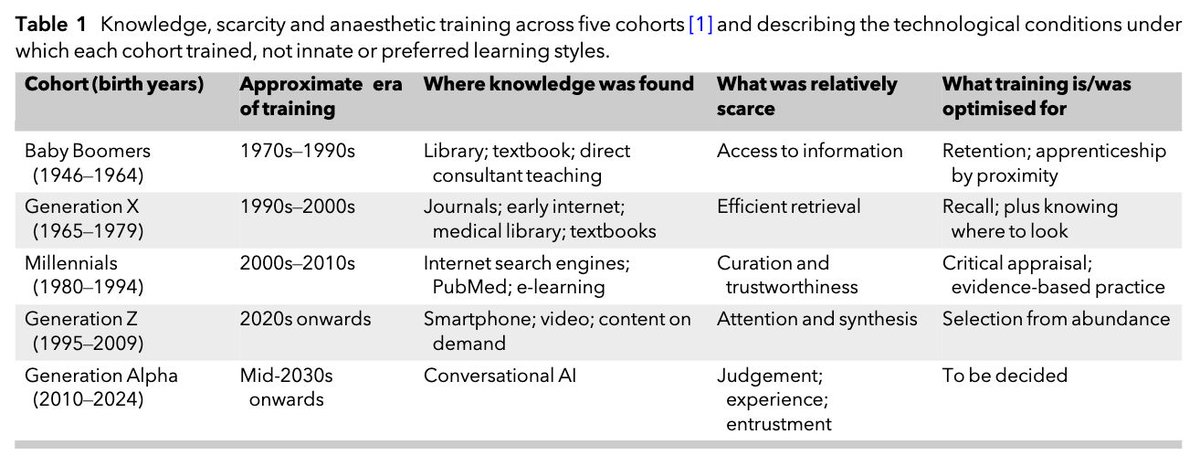
Cheap knowledge, scarce experience: training Generation Alpha. https://t.co/QEHRnYkwii
This is a brilliant paper - how the @RCoANews exams ensure ‘AI-proofing’ on knowledge application.
Scary to read though! #FOAMed#FOAMcc@Assoc_Anaes
@Anaes_Journal@CardiacOutputMC Thanks! AI literacy for us trainers would go a long way too. We can only judge the trainee output if we are aware of the caveats.
Cheap knowledge, scarce experience: training Generation Alpha
"There is also a paradox that anxiety about this generation tends to miss. Knowledge may be cheap to those who arrive after us, but experience is not, and they will know the difference."
#anaesthesia#MedX #MedTwitter
https://t.co/ONDfZYPRYm
The Right Ventricle, Part 1: Anatomy, Physiology and Views👇
https://t.co/Xuq2SKHKat
The Right Ventricle, Part 2: Function and Congestion👇
https://t.co/qgjvQrPRPY
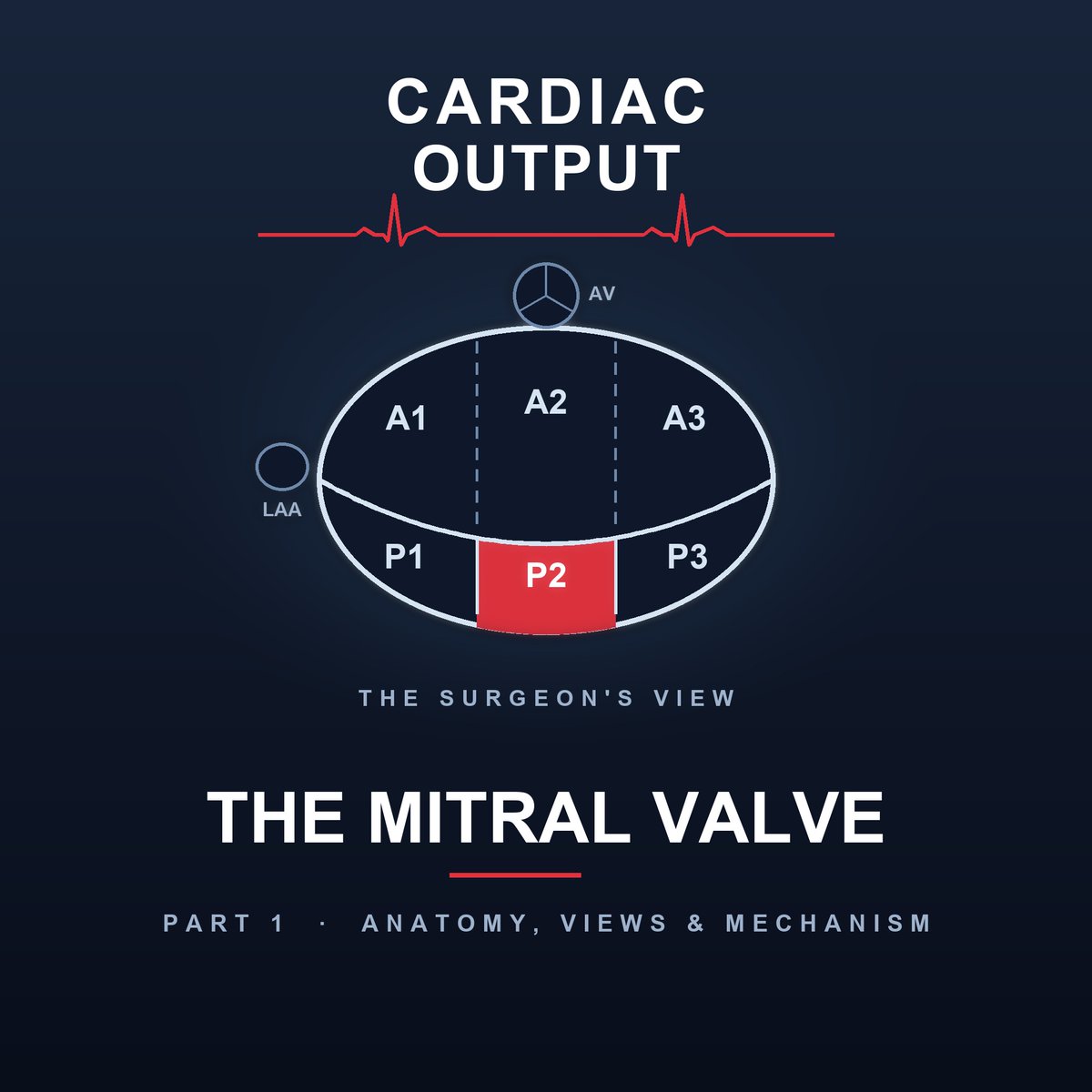
The Mitral Valve, Part 1: Anatomy, Views and Mechanism👇
https://t.co/nZyPutfZ8k
The Mitral Valve, Part 2: Grading Regurgitation and Stenosis👇
https://t.co/DxPzgsFBMr
This episode is about anaesthesia for primary PCI — one of the few places where you're surrounded by people and still somehow on your own.
We cover the range of patients the call can mean, and why the walk to the lab is the time to make your plan.
https://t.co/AbXOTch0Vc
In carcinoid syndrome, you must never give adrenaline.
Most of us were taught that — but it comes from decades-old experiments in end-stage patients who had never been near octreotide.
So does the rule still stand?
https://t.co/W2vttqoeTo
Sixty-five per cent of patients on standard-dose heparin on ECMO have a severe bleed.
This is a journal club on RATE, published in @TheLancet: the first adequately powered randomised trial of anticoagulation intensity on ECMO.
https://t.co/Olj0sJ5diz
In this editorial, @dr_imranahmad & @doctimcook consider the PUMA tracheal extubation guidelines and ask - towards clarity or complexity?
"Should we continue to develop guidelines tailored to specific clinical scenarios, considering factors such as location, speciality and patient characteristics? Or is it possible for a single, universal guideline to be applied globally, like the PUMA group envisages?"
#anaesthesia @NicholasChrimes@UniversalAirway
https://t.co/Q3ycrqWDbY
This episode is the cardiomyopathies: the main types, how they present, what they look like on echo, and why getting the label right changes what you do with your hands.
6 pictures, 6 diagnoses and 6 different treatments for the same low blood pressure.
https://t.co/djysGzK7sN