🧠🫀 LLMs for heart failure research dataset curation
In DELIVER + PARAGON-HF, an LLM extracted 16 admission features from 1,534 first HF hospitalization dossiers with ~0.96 accuracy.
@JCardFail@akshaydesaimd@patrick_ellinor@scottdsolomon
Paper: https://t.co/JBd6J15wGE
Sorry, to put numbers on this:
How many ECGs do you read more than 48 hours after the ECG was done or after the patient is discharged?
Among these ECGs, how many have you called the patient and ordered an echo?
Cardiologists are inundated with reading ECGs many days after a clinic encounter, and the friction to do any intervention (diagnostic or therapeutic) is tremendous.
An AI safety net is helpful because there is burn-out, fatigue, and an increasing volume of diagnostic tests. The burden of clinical care is increasingly pushed up to the imaging interpreting physicians as the front line is tired and overworked.
The comparison isn't against a well rested cardiologist - the comparison is often against nothing.
@drjohnm@PierreEliasMD@oziadias@EricTopol
🚨 Can AI help adjudicate clinical trial endpoints?
In this study, Auto-MACE used an LLM + Clinical Longformer to adjudicate CV death, MI, and stroke from trial records.
In confident cases, agreement with CEC was:
CV death: 97%
MI: 89%
Stroke: 88%
Treatment effect for MACE was nearly identical: HR 0.91 with AI vs 0.90 with CEC.
Manuscript link: https://t.co/FIzHrlLkCf
#AIinMedicine #DigitalHealth #ClinicalTrials #CardioX #Cardiotwitter
Can digital twins help answer whether RCT results apply to real-world patients?
New in npj Digital Medicine: RCT-Twin-GAN simulates how SPRINT/ACCORD treatment effects shift across populations.
https://t.co/PD6fuOcHhh
#AIinMedicine#DigitalHealth
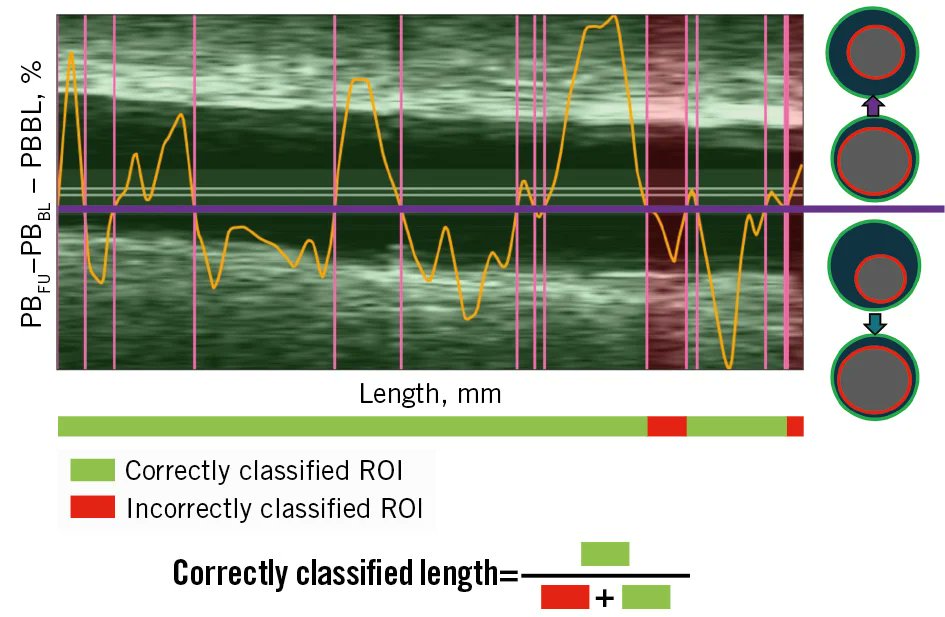
Can artificial intelligence detect coronary plaque progression before it becomes clinically evident? This is the first deep-learning model designed to detect changes in plaque progression by quantifying frame-to-frame changes in plaque burden across adjacent IVUS images. https://t.co/bZti6jVp1B
🚨🫀 JACC: can a routine 12-lead ECG + AI predict future HF?
In 14,126 participants from Framingham, CHS, and MESA, a positive composite ECG-AI screen tracked with ~25x higher 1-year HF risk and still >10x higher 10-year risk.
Even better, adding ECG-AI improved PREVENT-HF risk stratification.
Congrats @akshaydesaimd@FarazAhmadMD@DrLopezJimenez@JavedButler1@SvatiShah@HFpEF and team 👏 @JACCJournals
#CardioTwitter #HeartFailure #ECG #AIinMedicine #PreventiveCardiology
🚨🫀 Wearable cardiology AI just got a lot more interesting.
This EHJ Digital Health paper introduces Wearable-Echo-FM — a foundation model that learns from paired 1-lead ECGs + echo reports to improve screening for structural heart disease.
Big takeaway:
With the full dataset, performance was similar to a standard CNN.
But when labels were scarce, the pretrained model really separated itself.
With only 0.5% of training data, it still achieved:
⚡ 0.86 vs 0.55 for low EF
⚡ 0.82 vs 0.58 for diastolic dysfunction
⚡ 0.86 vs 0.50 for composite structural heart disease
That is what makes this exciting: contrastive pretraining may make 1-lead wearable ECG models far more label-efficient.
Great work by @rohan_khera@ekoikonomou@AryaAminorroaya@af_pedroso and team 👏
#CardioX #AIinCardiology #DigitalHealth #Wearables #ECG #Echo
We've released a #new State-of-the-Art Review, "Left Atrial Strain in Pediatric Cardiology: Evidence to Date and Future Directions."
Read our @JournalASEcho article: https://t.co/VN49CkAqtf
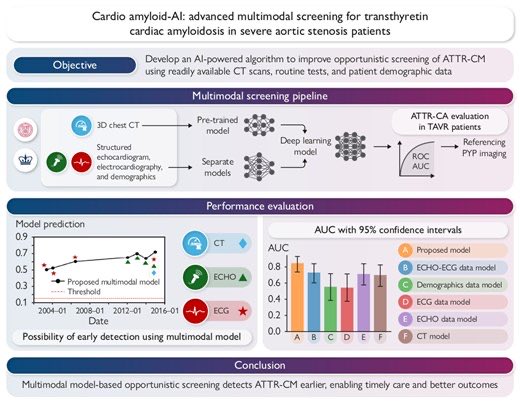
🚨 Introducing Cardio amyloid-AI — a multimodal AI pipeline for early detection of ATTR-CM (transthyretin cardiac amyloidosis) in severe aortic stenosis patients.
Using routine CT scans, echocardiograms, ECGs & demographics — no extra tests needed. 🫀
Our multimodal model outperforms every single-modality baseline (CT alone, Echo alone, ECG alone) on AUC — validated against PYP imaging (gold standard) in TAVR patients.
Trend data from 2004–2016 shows rising detection probability over time. The model catches what humans miss.
ATTR-CM is routinely missed until it’s too late. Opportunistic AI screening using already-collected clinical data = earlier diagnosis, timely treatment, better outcomes.
No added cost. No extra scans. Just smarter use of existing data.
#CardioAI #AmyloidHeart #AIinMedicine #TAVR #Cardiology
🫀✨ Really exciting AI-echo work in congenital heart disease.
EchoFocus-CHD is a multitask model built from ~3.6 million echo videos across ~58,000 studies, with data spanning 58 countries and 6 continents 🌍
The model showed:
🔹 Excellent internal performance for critical CHD
🔹 Important real-world testing across outside referral studies
🔹 Better international performance after retraining on broader data
@sgcard@jmayour@JohnTriedmanMD@FraSperotto@BostonChildrens
#CardioX #PedsCardiology #Echocardiography #AIinMedicine #DigitalHealth #CongenitalHeartDisease #ASE #ACHD #Congenitalheartdisease
🫀⚡ EchoNext-Mini is a big deal for open-source cardiology AI
✅ 100k ECGs
✅ 36,286 patients
✅ Echo-confirmed structural heart disease labels
✅ Public baseline model
This is the kind of dataset that can accelerate external validation, benchmarking, and future model training 🔓📈🚀
@jwestonhughes@timpotsMD@PierreEliasMD
#CardioX #AIinCardiology #OpenScience #DigitalCardiology @NEJM_AI
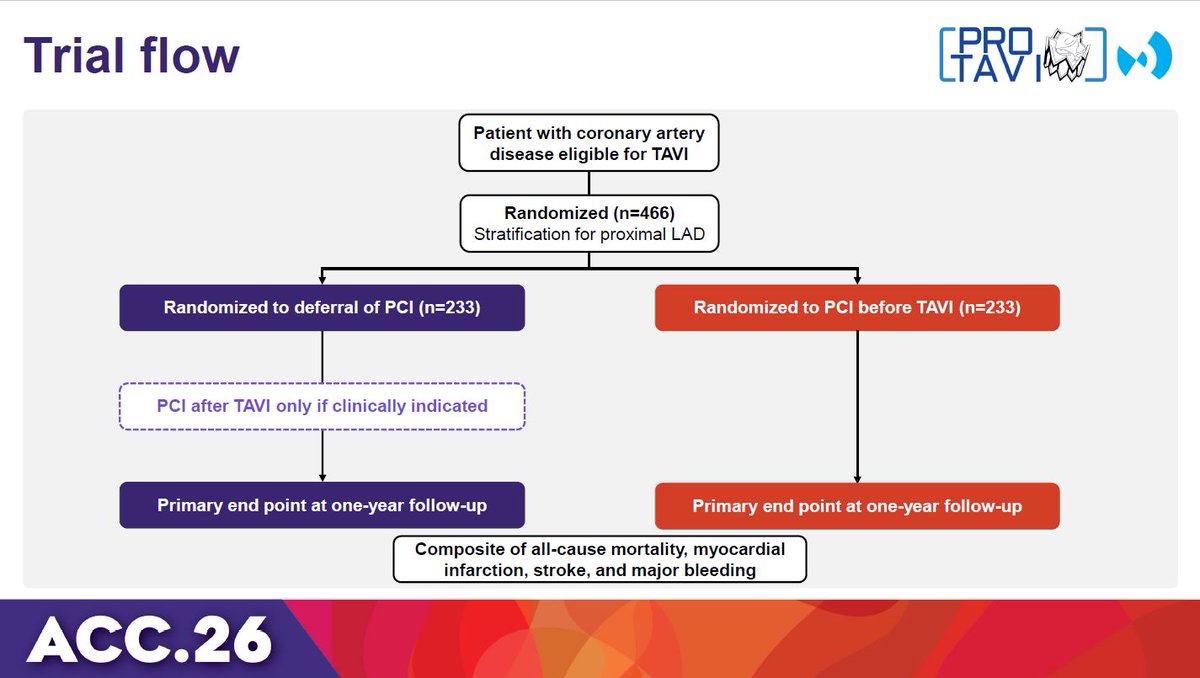
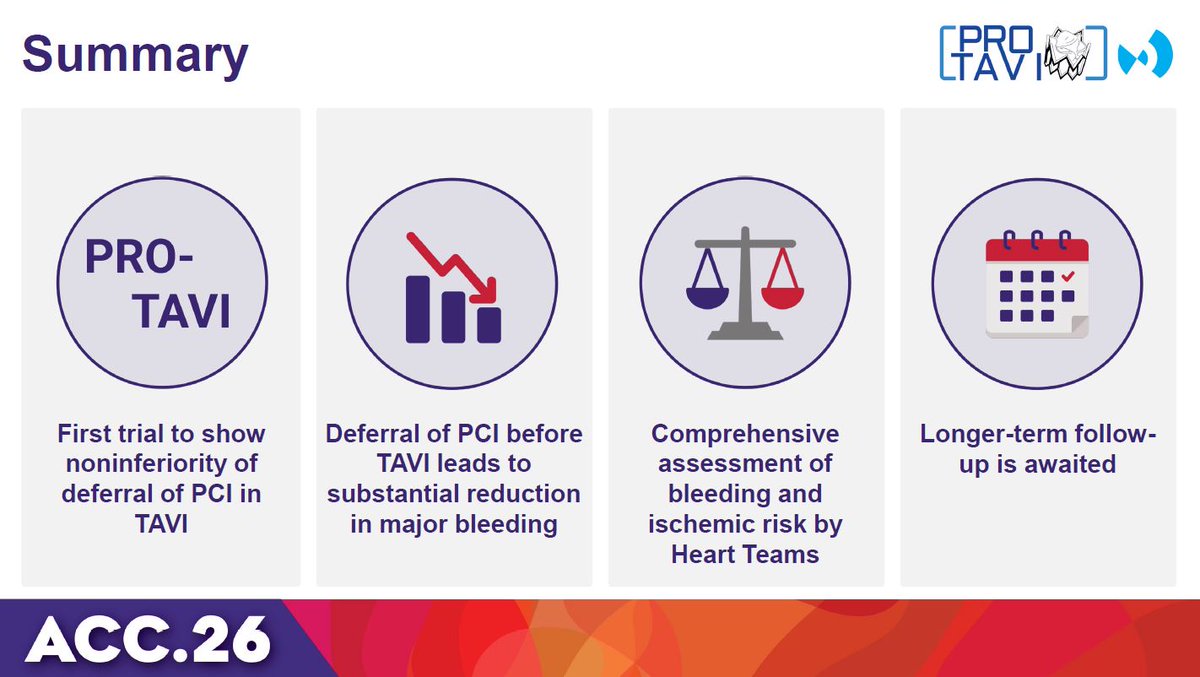
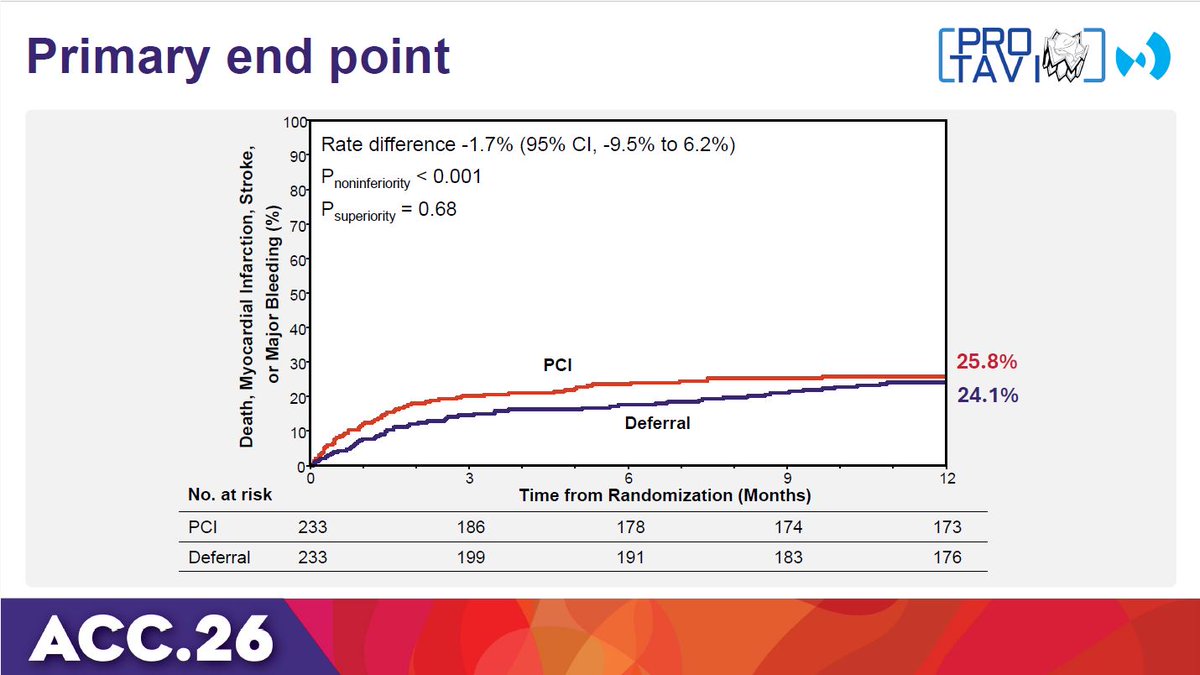
PRO-TAVI trial: Deferring PCI was non-inferior to routine PCI before TAVI for the 1-year composite of all-cause mortality, MI, stroke, and major bleeding, suggesting its appropriate role in selected CAD patients. #ACC26 View slides here: https://t.co/YhMHn8HumV
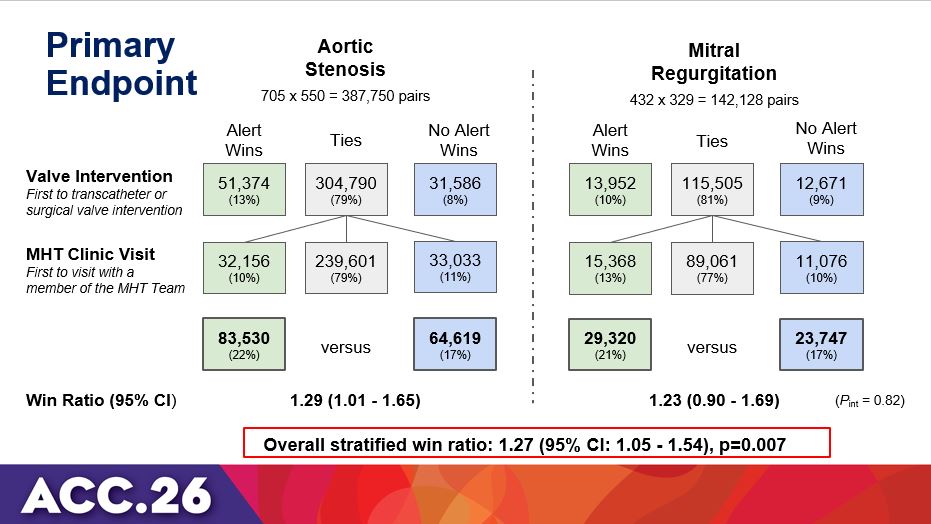
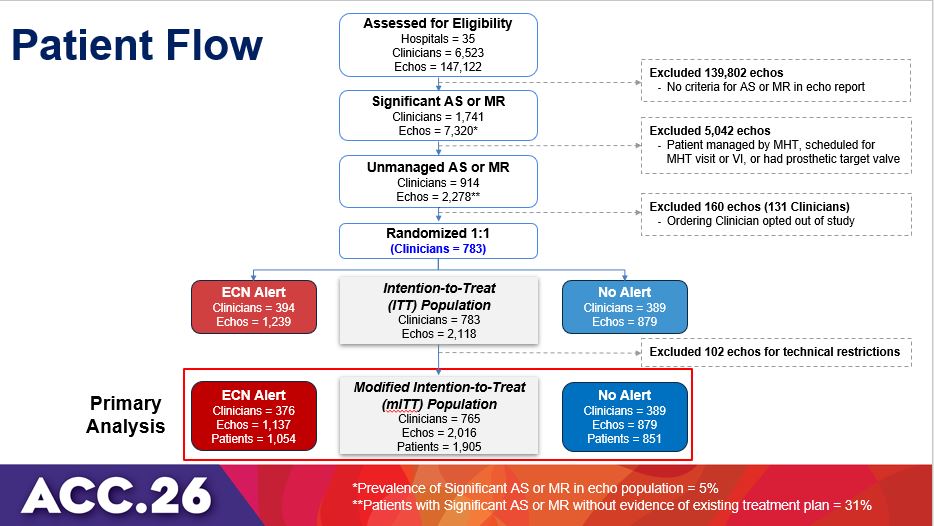
ALERT trial: AI-driven automated electronic clinician notifications for severe valvular heart disease accelerated and improved rates of cardiac specialty referrals and interventions vs. usual care. #ACC26 View the slides here: https://t.co/uJIpmrewOd
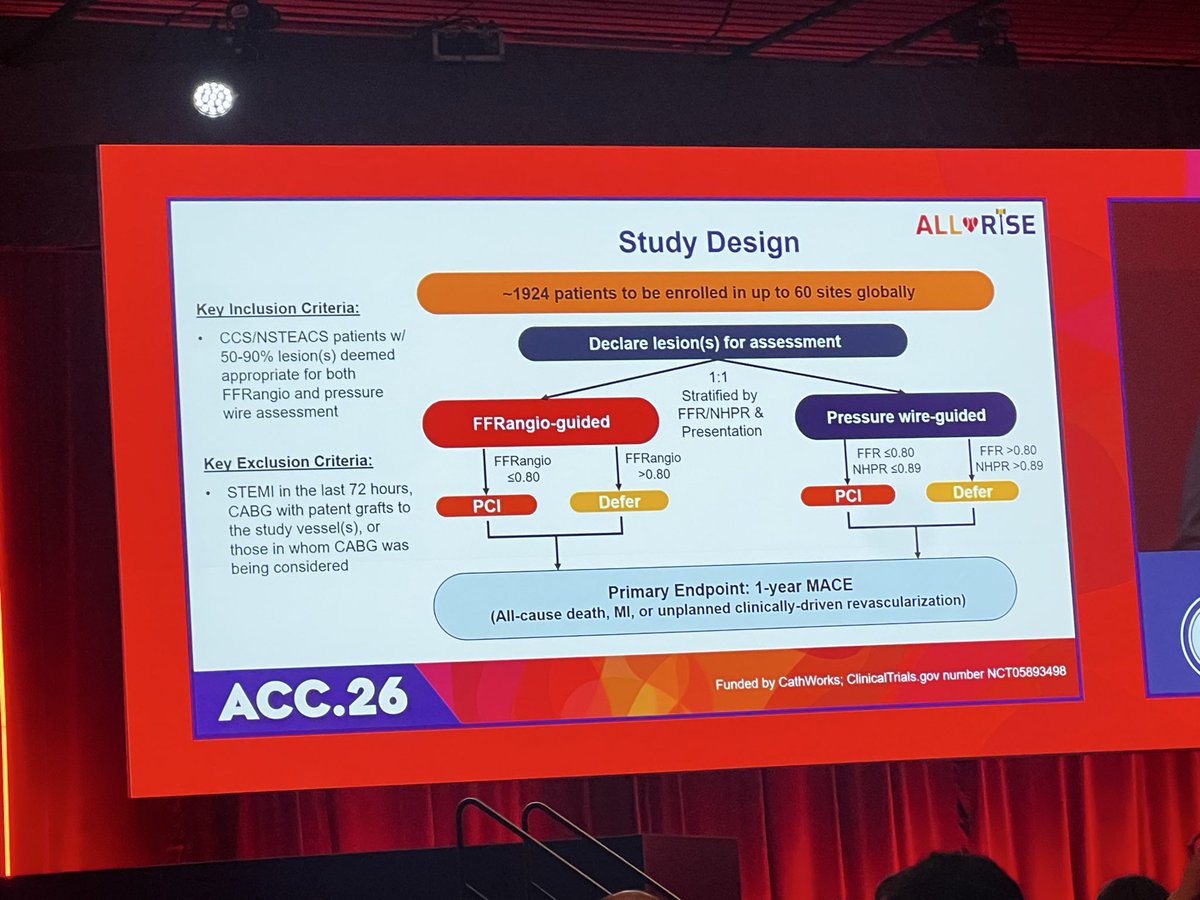
Can we get physiologic lesion assessment without a pressure wire?
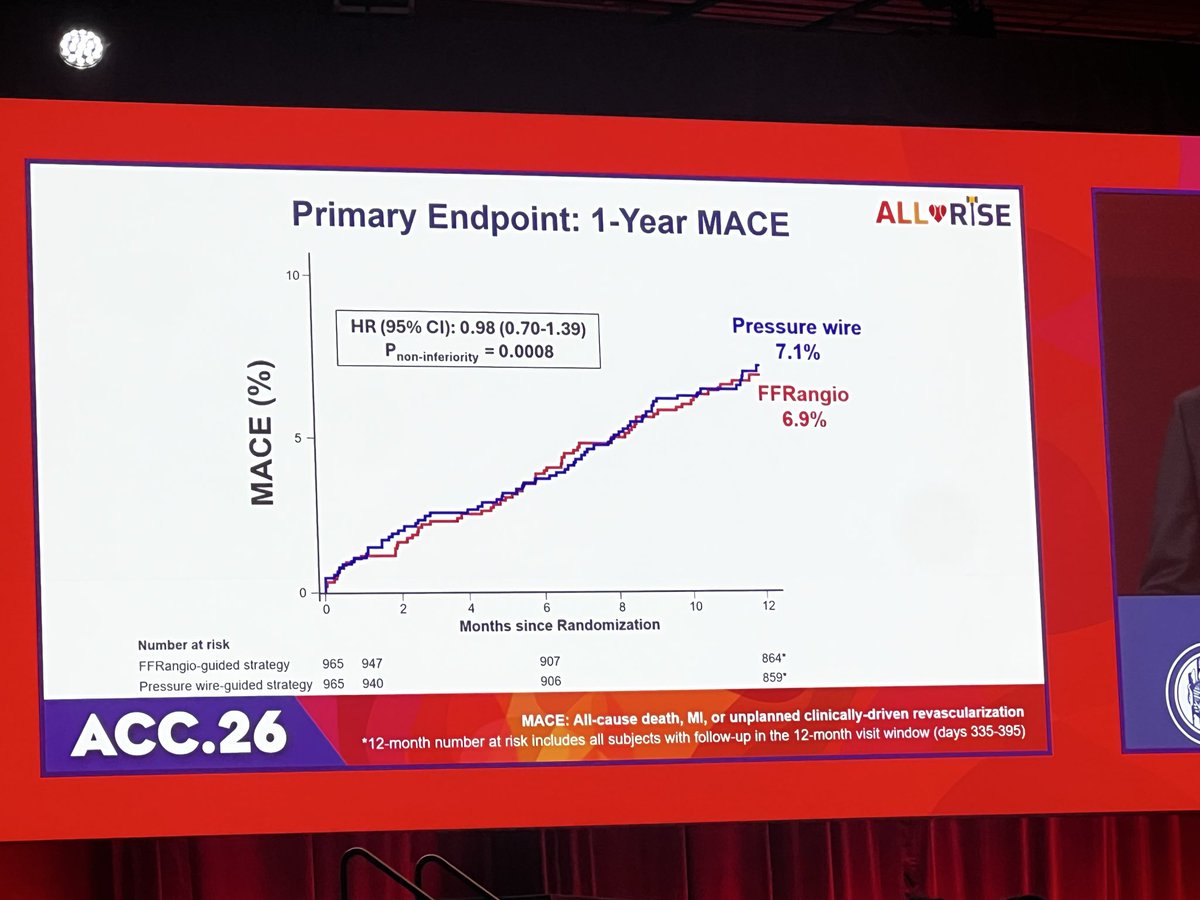
ALL-RISE: FFRangio vs pressure-wire for intermediate lesions
🧠 Design:
• N=1930 randomized
• Intermediate coronary stenosis (50–90%)
• FFRangio = @CathWorks software that uses AI + computational modeling to derive physiologic lesion assessment from routine angiograms, without adenosine or invasive pressure wires
• Compared with standard pressure-wire physiology
• Primary endpoint = 1-yr MACE (death, MI, or unplanned revascularization)
📌 Primary outcome:
✅ Noninferior
(6.9% vs 7.1%; HR 0.98, 95% CI 0.70–1.39; P<0.001 for NI)
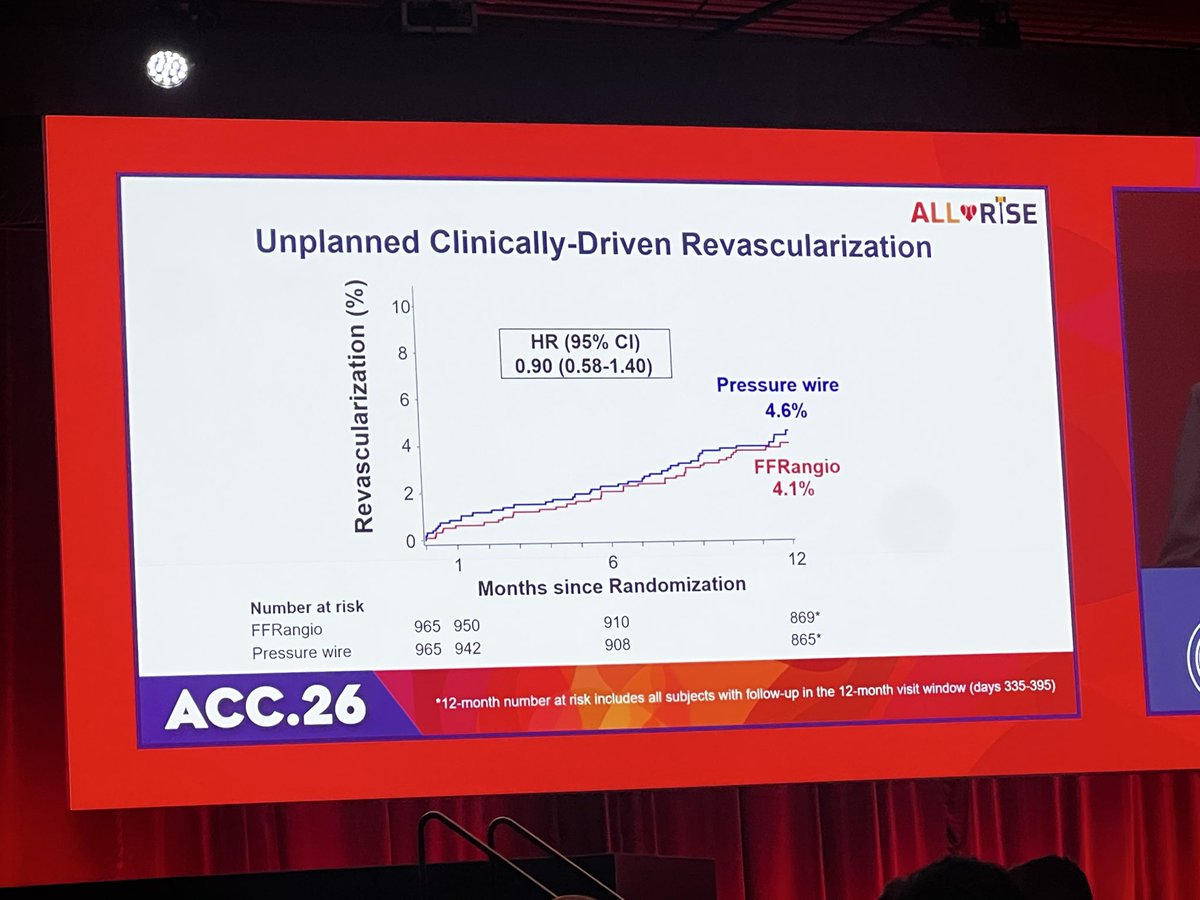
📌 Components:
• Death: 2.3% vs 2.1%
• MI: 1.6% vs 2.5%
• Revasc: 4.1% vs 4.6%
📌 Workflow advantage:
⏱️ Faster physiology assessment
💉 Less contrast
☢️ Less fluoro
⚖️ Takeaway:
#AI-enabled angiography-guided physiology assessment achieved similar 1-year composite end point of death, myocardial infarction, or unplanned clinically indicated coronary revascularization, with a simpler cath lab workflow.
https://t.co/db9Q3cqdZy
#CardioX #ACC26 #PCI #FFR @ACCinTouch #AIinMedicine
One of the most awaited trials at #ACC26
CHAMPION-AF tests LAAO vs NOACs as a first-line strategy in AF patients eligible for anticoagulation.
🧠 Design:
• N=3000, open-label RCT
• Mean CHADS VASC 3.5, HAS-BLED ~1
📌 Primary efficacy (3y):
CV death, stroke, systemic embolism → noninferiority met (5.7% vs 4.8%)
📌 Primary safety (non-procedure-related bleeding):
Lower with LAAO (10.9% vs 19.0%; HR 0.55)
📌 Net clinical benefit (primary efficacy + non-procedure-related bleeding):
Favors LAAO (HR ~0.66)
⚖️ CHAMPION-AF, among patients with AF, left atrial appendage closure was noninferior to NOACs for CV death, stroke, or systemic embolism, and superior for non–procedure-related bleeding. @ACCinTouch
https://t.co/B9kzdrK8NL
🚨 Late-Breaking @ACCinTouch#ACC26
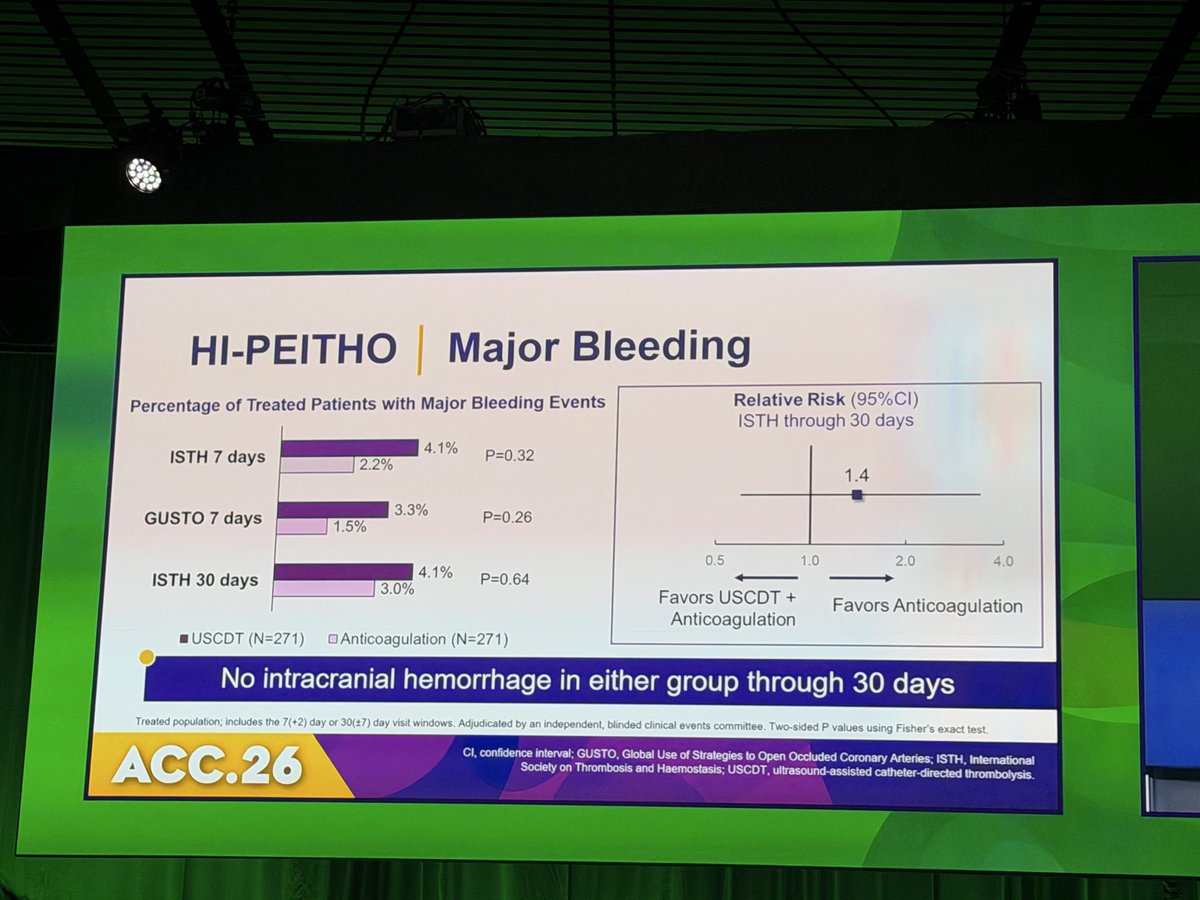
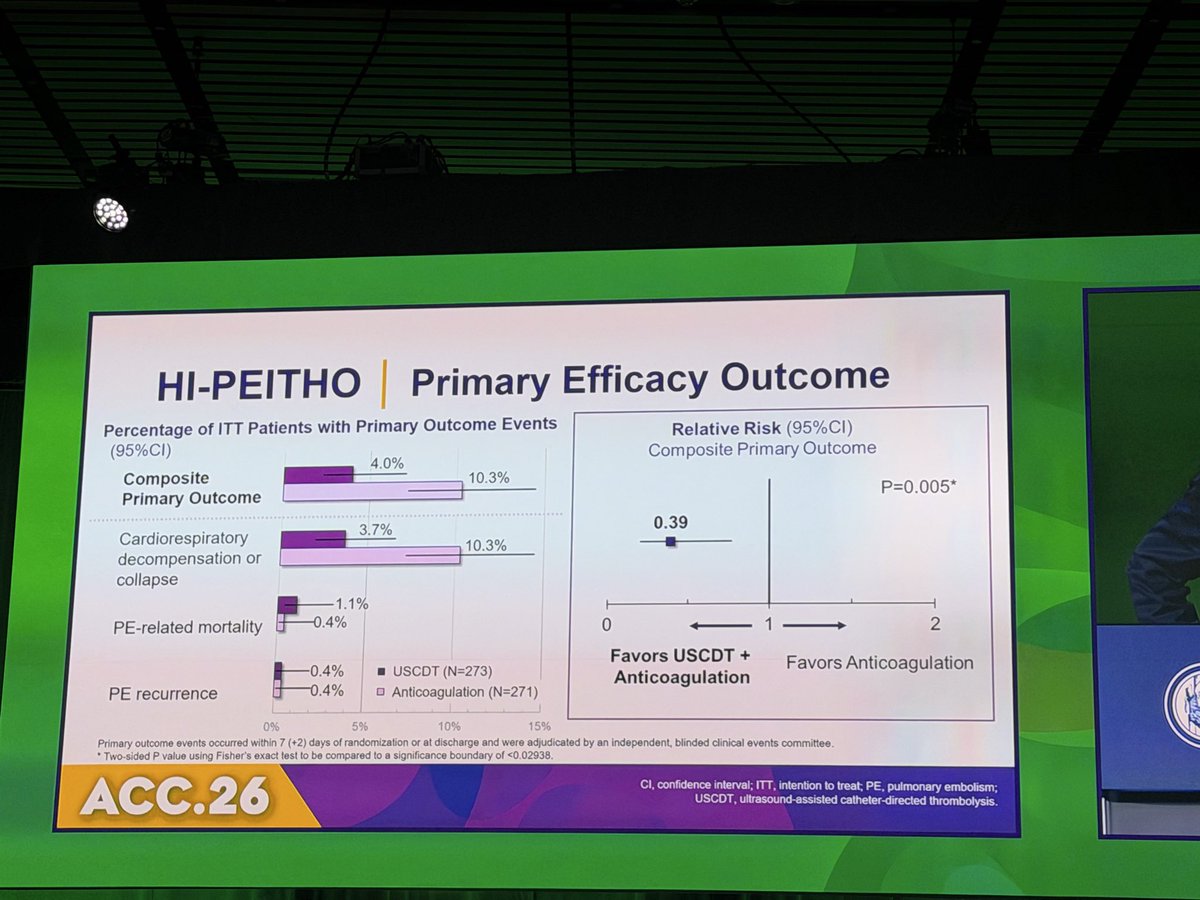
HI-PEITHO trial: In intermediate-risk PE, ultrasound-assisted catheter-directed thrombolysis (USCDT) + anticoagulation significantly reduced early clinical deterioration vs anticoagulation alone (4.0% vs 10.3%, RR 0.39, p=0.005).
💥 No increase in major bleeding
🧠 No intracranial hemorrhage
A potential shift in how we manage submassive PE.
#CardioX #PERT #PulmonaryEmbolism
AMIE, a conversational medical #AI tool for clinical reasoning and dialogue, moves diagnostic AI from simulation → real patients 🏥
A prospective single-arm study showed results comparable to PCP reasoning 👩⚕️
Very interesting feasibility study. Looking forward to what comes next.
https://t.co/c8bdzREVZo
@AdamRodmanMD@GoogleDeepMind@BIDMChealth@DemisHassabis
#CardioTechX #AIinMedicine