Los invito a no polítizar la tragedia y a solidarizarnos lo que más se pueda y sumar fuerzas para ayudar a los más afectados. Del gobierno actual esperamos que haga lo propio y del pasado también, ya que todavia estamos en transición. Necesitamos acción, no shows mediaticos. Juntemos fuerzas. Somos un solo país.
En Suesca tenemos un equipo muy fuerte de escaladores con WFR especializado en rescate y primeros auxilios en zonas remotas dispuestos a movilizarnos a las regiones que se requiera apoyo. Si alguna aerolínea nos pone un vuelo llenamos un avión de rescatistas WFR ya.
CONCLUSIÓN. Sismo tectónico, natural y esperable para la zona. No depende de actividad humana (minera o de explotación), no depende del calentamiento global, de la temperatura ni de la época del año. Solo sigan fuentes oficiales y no compartan desinformación,
La 'Guía de propagación de especies amenazadas' contribuye a la toma de decisiones por la conservación de la flora y la biodiversidad del país. Léela en el #RepositorioHumboldt 📚➡️https://t.co/ZFSnMUBZhm
Instead of listing my publications, as the year draws to an end, I want to put pressure on the commonplace assumption that productivity must always increase. Good research is disruptive and thinking time is central to high quality scholarship and necessary for disruptive research
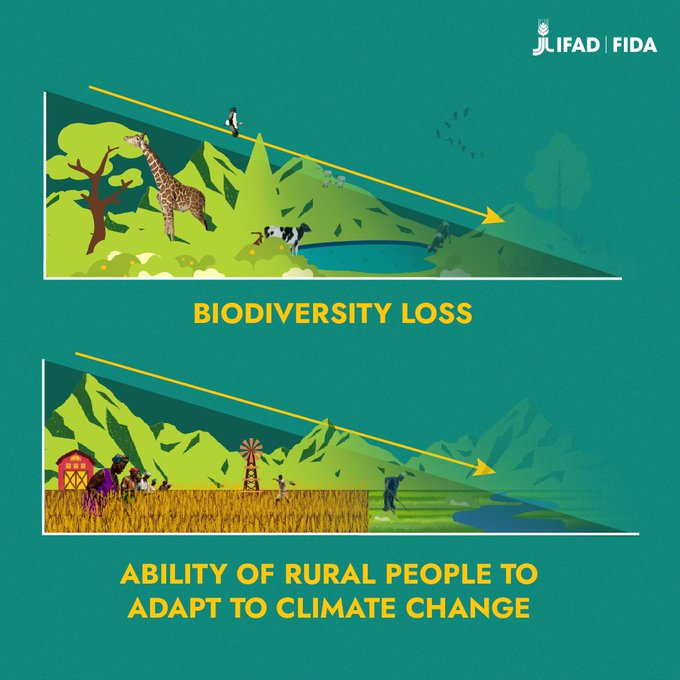
Rural people and nature are interlinked.
So when biodiversity declines, so too does their ability to adapt to climate change.
We can't let this happen ⬇️
via @IFAD
🌍🌱 It’s often believed that plant communities with greater phylogenetic diversity also have higher functional diversity. In other words, the more evolutionary lineages present, the greater the range of traits. But is this always true?
🌿 In our Preslia article last year, led by Martin Večeřa and Zdeňka Lososová, we discovered that in European grasslands, these two measures of diversity are often decoupled. Now, in our latest study led by Georg Hähn, published in Nature Ecology & Evolution, we expanded the scope to a global scale using 1.8 million vegetation plots from the sPlot database.
🌿 The results were unexpected and challenged conventional wisdom: globally, plant communities with high phylogenetic diversity often have low functional diversity.
📖 Read more in our study:
https://t.co/IO8fXVVmZZ
Very happy that our paper on how to estimate seed dispersal interactions (https://t.co/cAkPdb1noc) is featured on the cover of @Oikos_Journal illustrated by this shot I took from this gorgeous Red-legged Honeycreeper (Cyanerpes cyaneus) 🤠
I recently discovered the tidyplots package in R, and it’s impressive how effortlessly it enables you to create beautiful, publication-ready plots. Designed with scientific papers in mind, tidyplots lets you build, adjust, and refine plot components gradually, all with a consistent and intuitive syntax that takes the complexity out of visualization.
✔️ Simple Syntax: Tidyplots offers user-friendly functions for creating polished visuals with minimal coding, saving you time and effort.
✔️ Consistent Style: Achieve a cohesive look across all visuals, eliminating the need for repetitive adjustments.
✔️ Flexible Customization: Easily customize colors, labels, and themes to align with your project’s goals, resulting in professional and engaging data displays.
✔️ Enhanced Data Storytelling: Built for clarity, tidyplots helps you convey insights effectively, making your data stand out.
The example visualizations shown here were created by the package author, Jan Broder Engler, and are featured on the tidyplots website: https://t.co/fgIWzxFVZI
For a deeper dive into R data visualization, join my Data Visualization in R Using ggplot2 & Friends course, starting November 25, 2024, where we’ll explore ggplot2 and related tools in depth! Check out this link for more details: https://t.co/ztlEzoEDWv
#DataAnalytics #RStats #tidyverse #Rpackage #pythonprogramming #DataScientist #Python #database #DataVisualization #datasciencetraining #ggplot2
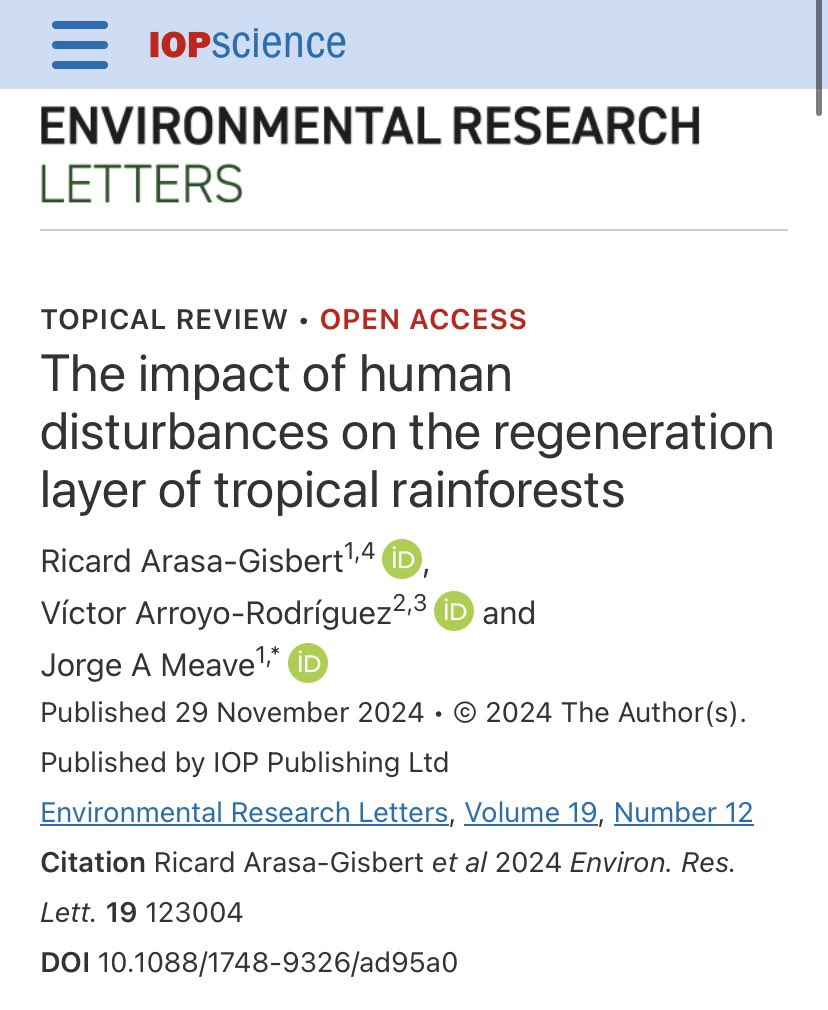
Finally our meta-analysis on human impacts on regenerating tropical plants has been published in Environmental Research Letters (@IOPenvironment)!🎉 you can freely access freely the article via https://t.co/ki0TSRVXP4
#Forests do more for the climate than store and sequester carbon. 🌳 🌴
For example, they:
✅ regulate rainfall
✅ provide cooling benefits
✅ protect coastal areas
✅ provide forest products for local communities facing climatic threats
via @FAO
#TansleyReview Source vs sink limitations on tree growth: from physiological mechanisms to evolutionary constraints and terrestrial carbon cycle implications
Trugman and Anderegg
📖 https://t.co/yPWtPTzYxh
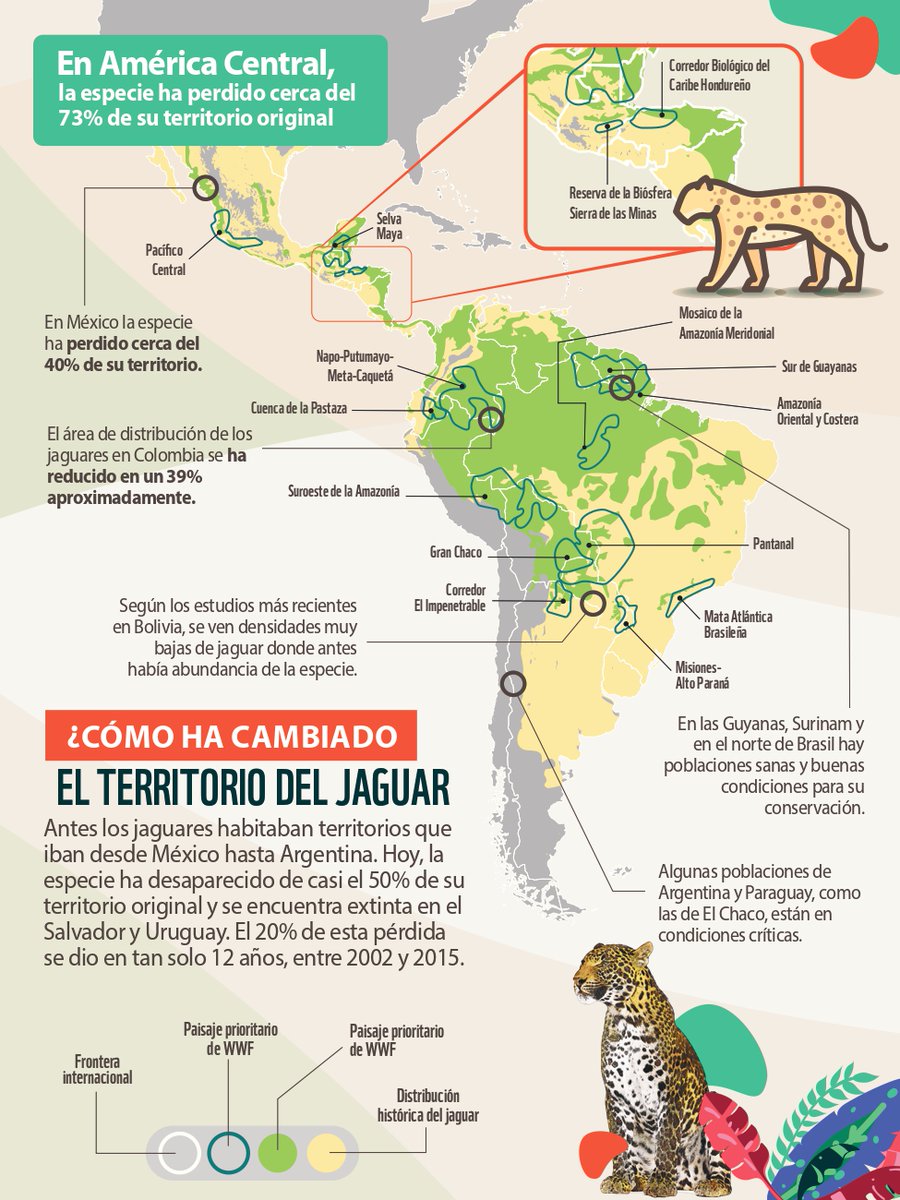
¿Por dónde se mueve el jaguar en América? 🐆⁉️ Los jaguares necesitan grandes territorios para vivir, por eso, protegerlos implica conservar amplias extensiones de bosque interconectadas
Así ha cambiado su presencia en la región: https://t.co/3KBIv7d43Z
#DíaDelJaguar
🌍 Earth’s natural carbon sinks are vital for mitigating #ClimateChange.
🌱Did you know soil holds more carbon than you think? Understanding carbon storage in ecosystems is essential for advancing climate action and conservation.
Via @VisualCap
Tune in to our upcoming Funk Biogeography Seminar this month, presented by Dr. Robin Chazdon! To register or get more information, please visit the TIBS website: https://t.co/3Utbd9s8yn
Busco estudiante ya sea de pregrado (pasantía o trabajo de grado) o estudiante que esté inscrito a una maestría que quiera desarrollar su tesis para muestrear hormigas en 24 fincas cafeteras de Cundinamarca. El proyecto es financiado por la universidad de Melbourne (Australia).