Real manufacturer. Factory-direct pricing.
Consistent high-purity peptides with verified quality.
We do not sell to individual buyers.
Only supplying online and offline distributors & agents.
DM for bulk pricing and current catalog.
Aggregation during SPPS is one of the most common reasons couplings fail on longer or hydrophobic sequences.
When the growing chain collapses on the resin, reagents cannot reach the N-terminus efficiently, leading to deletion sequences that are difficult to remove later.
Practical measures that frequently help: • Switch to lower resin loading (0.2–0.3 mmol/g)
• Add chaotropic salts or use elevated temperature with microwave assistance
• Insert pseudoproline or Dmb dipeptides at strategic positions
• Alternate between polar and non-polar solvents during coupling
Have aggregation issues forced you to redesign a sequence or switch to fragment condensation?
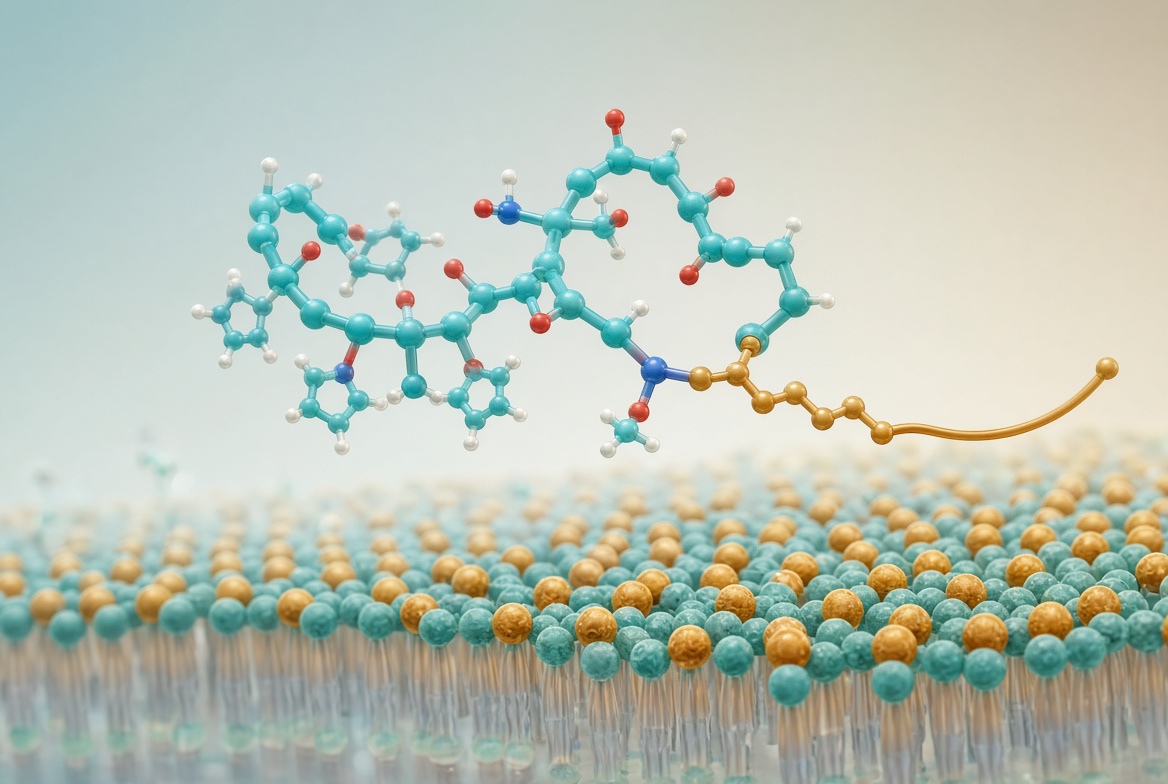
Lipidation remains one of the more unpredictable modifications in peptide synthesis.
Attachment of fatty acids (C12–C20) or PEGylated lipids can improve half-life and membrane interaction, but it also introduces new challenges: reduced solubility, aggregation during SPPS, and difficult HPLC purification.
Common practical approaches: • Late-stage lipidation on resin after the main chain is complete
• Use of orthogonal protecting groups on Lys side chains
• Temporary solubilizing tags when the lipidated intermediate becomes too hydrophobic
What lipidation strategy has worked most reliably in your hands?
Purification is often the real bottleneck in peptide synthesis, not the coupling steps.
Even when the crude purity looks acceptable by LC-MS, reverse-phase HPLC can struggle with closely related impurities such as deletion sequences, aspartimide-related species, or epimers.
Practical observations from process work: • Early analytical method development pays off more than pushing coupling efficiency alone
• Counter-ion exchange (TFA → acetate or chloride) frequently improves solubility and chromatographic behavior
• Crystallization or precipitation steps, when feasible, reduce the load on preparative HPLC
Have you seen cases where the synthesis looked clean but purification became the limiting step?
Epimerization Risk
Epimerization at the C-terminal residue remains a quiet but high-impact risk in peptide synthesis, especially during fragment activation or cyclization.
It is most commonly observed when:
• Strong activating agents are used with His, Cys, or Ser at the C-terminus
• Prolonged pre-activation times are employed
• Basic conditions promote oxazolone formation
Practical controls that consistently help:
• Minimize pre-activation time
• Prefer additives such as Oxyma or HOAt in sensitive cases
• Use lower temperatures when possible
• Validate optical purity early (chiral HPLC or enzymatic digestion) rather than relying solely on mass spectrometry
Even a few percent epimerization can become a purification bottleneck or a regulatory issue at scale.
What coupling or activation conditions have you found most reliable for avoiding epimerization?
#PeptideSynthesis #Epimerization #SPPS #MedicinalChemistry
Aspartimide Formation
1/5
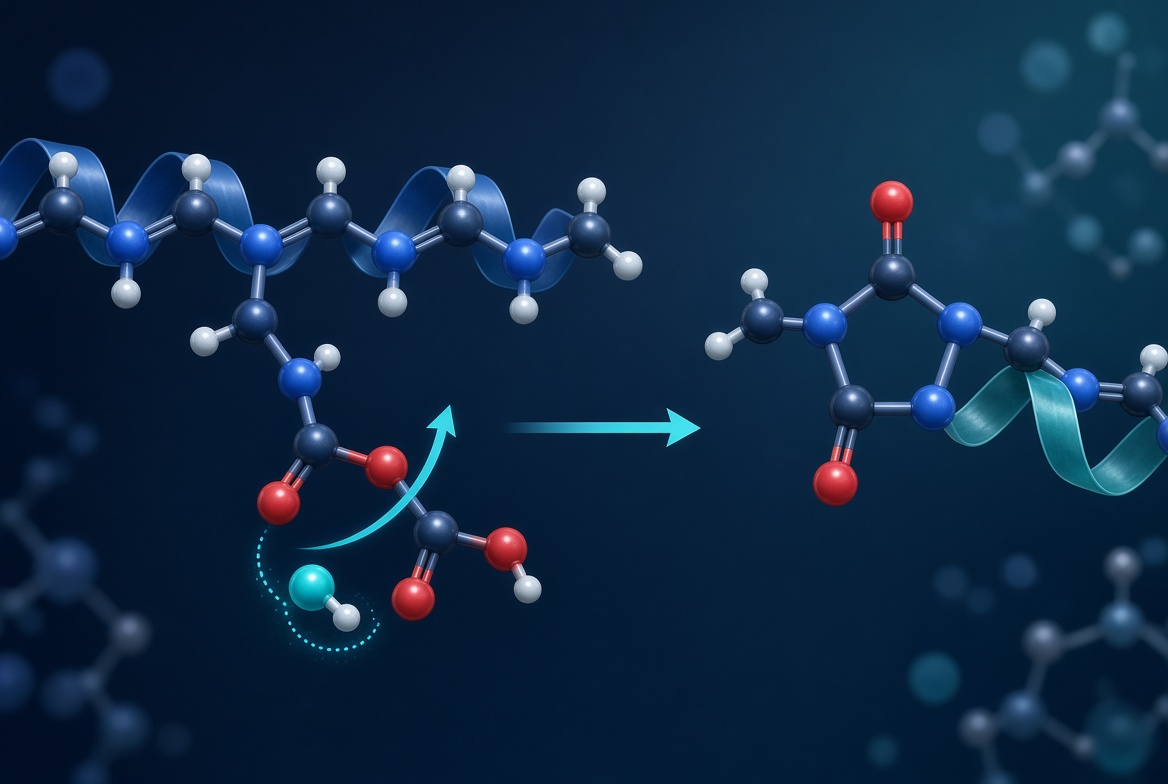
Aspartimide formation is still one of the most stubborn side reactions in Fmoc-SPPS, especially with Asp–Gly, Asp–Ser, and Asp–Asn motifs.
It not only lowers yield but generates hard-to-separate impurities (including β-aspartyl peptides and epimers).
2/5
Why it happens:
Under basic conditions (piperidine deprotection), the Asp side-chain carbonyl is attacked by the backbone nitrogen, forming a five-membered imide. Subsequent ring opening gives a mixture of α- and β-peptides.
Risk increases with longer sequences, elevated temperature, and prolonged exposure to base.
3/5
Practical prevention strategies used in both research and process settings:
• Switch to bulkier side-chain protecting groups
• Use milder or shorter deprotection conditions (e.g., 20% piperidine + 0.1 M HOBt or Oxyma)
• Insert backbone-protecting groups (Dmb or Hmb) on the residue preceding Asp
• Consider Asp-to-Glu substitution when the biology allows
4/5
Process note:
Aspartimide-related impurities are often not fully resolved by standard reverse-phase HPLC. Analytical methods that can distinguish α/β and D/L forms become critical once the peptide moves beyond the research stage.
5/5
Bottom line: Aspartimide is usually sequence- and condition-dependent rather than inevitable. Early detection and protecting-group choices save the most time later.
Have you found a particular motif or condition that consistently triggers this in your lab?
Enzymatic / Biocatalytic angle
Recent work continues to show that enzyme-enabled routes can solve selectivity and scalability problems that classical SPPS struggles with, particularly for complex cyclic scaffolds.
Key advantages observed in process settings:
• High chemoselectivity under mild conditions
• Reduced need for extensive protecting-group manipulation
• Better control over macrocyclization geometry
• Potential for crystallization-based purification instead of heavy chromatographic steps
While still sequence-dependent, these approaches are moving from specialized academic tools toward practical manufacturing options for certain peptide architectures.
Curious whether anyone here has successfully transferred a biocatalytic cyclization or ligation step into a process chemistry workflow.
#PeptideSynthesis #Biocatalysis #CyclicPeptides #ProcessChemistry
Long Peptide Synthesis
1/5
Long peptides (>40–50 residues) remain one of the hardest problems in chemical synthesis. Linear SPPS yields drop sharply due to aggregation, incomplete couplings, and purification challenges.
Fragment ligation strategies are now the practical standard, but they introduce their own constraints.
2/5
Key issues with fragment approaches:
• Solubility of protected or semi-protected fragments
• Epimerization during activation of the C-terminal residue
• Low efficiency of thioester formation or activation
• Difficult separation of unreacted fragments from the product
These become especially problematic when the target contains multiple hydrophobic stretches.
3/5
Currently effective solutions:
• Native chemical ligation (NCL) or related thioester-based methods for unprotected fragments in aqueous buffer
• Hydrazide intermediates for more stable storage and on-demand thioester generation
• Temporary solubilizing tags (e.g., poly-Arg or poly-Lys) on difficult fragments
• Continuous-flow setups to improve kinetics and control of ligation reactions
4/5
Process perspective (relevant for scale-up):
Trace metal residues and residual thiol catalysts often complicate downstream purification. Immobilized catalysts and crystallization-friendly intermediates are gaining attention precisely for this reason.
5/5
Bottom line: successful long-peptide synthesis is usually decided by fragment design and solubility management more than by the ligation chemistry itself.
What length or sequence features are currently limiting your projects?
#PeptideSynthesis #NativeChemicalLigation #SPPS #ProcessChemistry
1/5
Cyclic peptides are increasingly attractive in drug discovery, but macrocyclization remains one of the biggest practical bottlenecks in their synthesis.
Yields drop, side reactions appear, and scale-up becomes unpredictable. Here’s a concise breakdown of the main challenges and the approaches that actually work.
2/5
Common problems during head-to-tail or side-chain cyclization:
• Dilution-dependent intermolecular oligomerization
• Epimerization at the C-terminal residue during activation
• Incomplete cyclization due to conformational constraints
• Difficult purification when linear precursors and cyclic products have similar properties
These issues become especially severe above ~15–20 residues or with constrained scaffolds.
3/5
Practical solutions currently used in both academic and process settings:
• On-resin cyclization (after selective deprotection) to avoid high-dilution conditions
• Native chemical ligation (NCL) or KAHA ligation for larger rings
• Use of turn-inducing residues or temporary backbone modifications to pre-organize the linear precursor
• Pseudoproline or Dmb dipeptides to disrupt aggregation during assembly
4/5
Process considerations that often get overlooked early:
• Protecting-group strategy must be compatible with both chain assembly and the final cyclization conditions
• Trace metal contamination can promote unwanted side reactions in some ligation methods
• HPLC purification of cyclic peptides is frequently more demanding than the cyclization step itself
5/5
Bottom line: successful cyclic peptide synthesis is rarely about a single “best” method. It depends on matching the ligation chemistry, protecting-group scheme, and conformational control to the specific sequence.
I’ll continue breaking down real literature examples and scalable solutions in this area.
What cyclization challenges are you currently facing in your projects?
#PeptideSynthesis #CyclicPeptides #MedicinalChemistry #SPPS