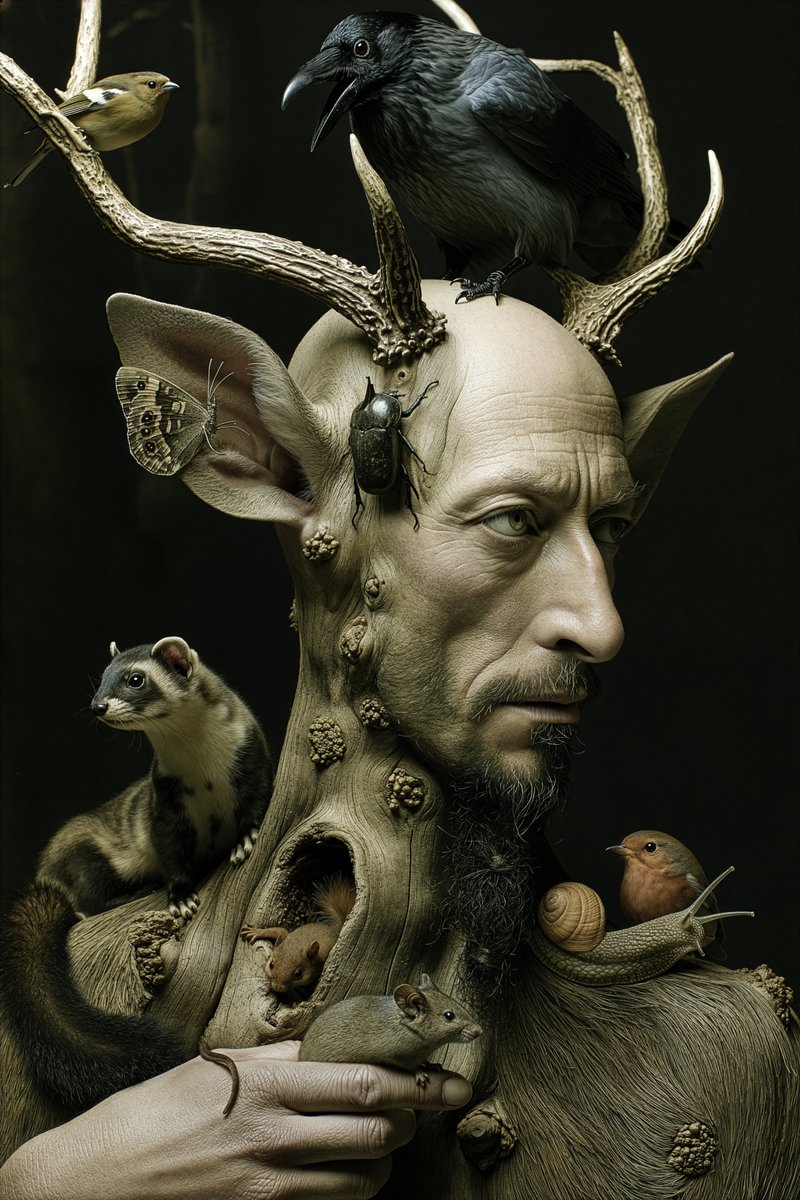
These are the species I meet on the my walks and field excursions here. West-coast woodland, not stock animals. The figure is the wood they already live in.
Raven (Corvus corax) — common on the cliffs and in the taller trees.
Red squirrel (Sciurus vulgaris) — prolific here as we have no greys at all.
European robin (Erithacus rubecula) — in the understorey everywhere.
Pine marten (Martes martes) — rare but present in the older stands.
Wood mouse (Apodemus sylvaticus) — under the leaf litter.
Peacock butterfly (Aglais io) — they hide in the tree trunks in winter.
Garden snail (Cornu aspersum) — on the wet trunks after rain.
Dor beetle — in the dung and decay layer.
The Yew is not so common, but we do have some an excellent example in the castle grounds.
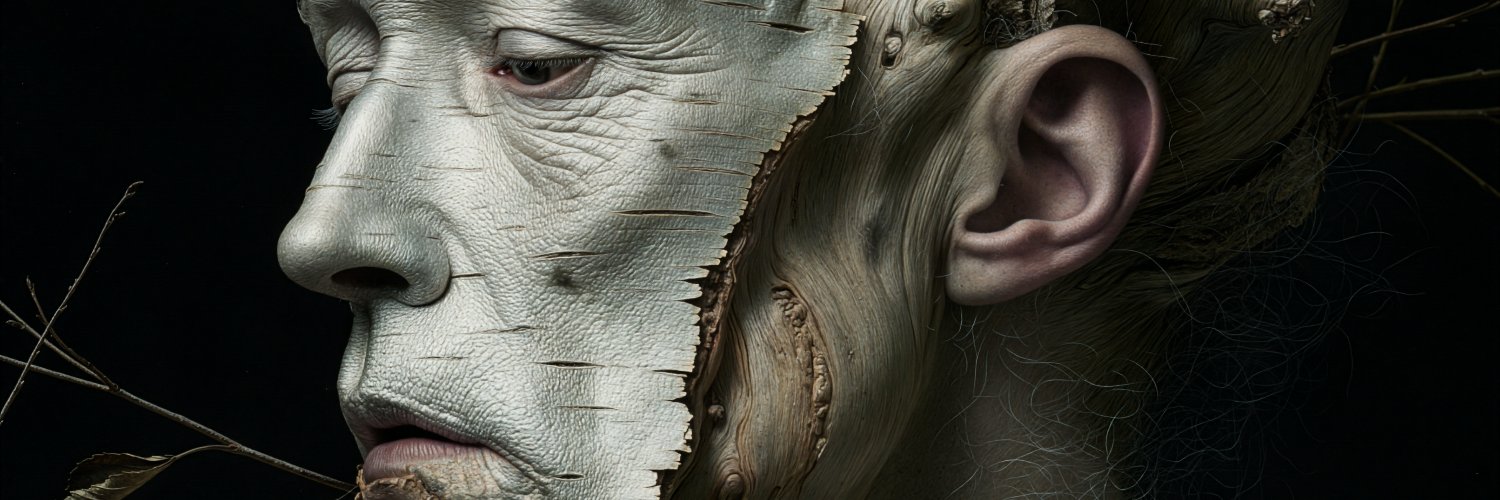
@helmortart Distance I want. The species has to define the years though, birch is relatively young, the pioneer - compared to pine, oak and yew. If I stack that many wrinkles on birch I'll struggle with the elders . I’ll push the cheek and keep the eye heavy.
@gricp The way this figure is both crucified by and composed of the same twisted matter - divinity and decay made from the same substance. That’s the kind of truth only art can hold. Masterful.
@dskott Thank you Dave. That is the test I am building toward, a run of these on rag paper, same join, same sheet. Herald and Dormant are the first two that would sit in a line.
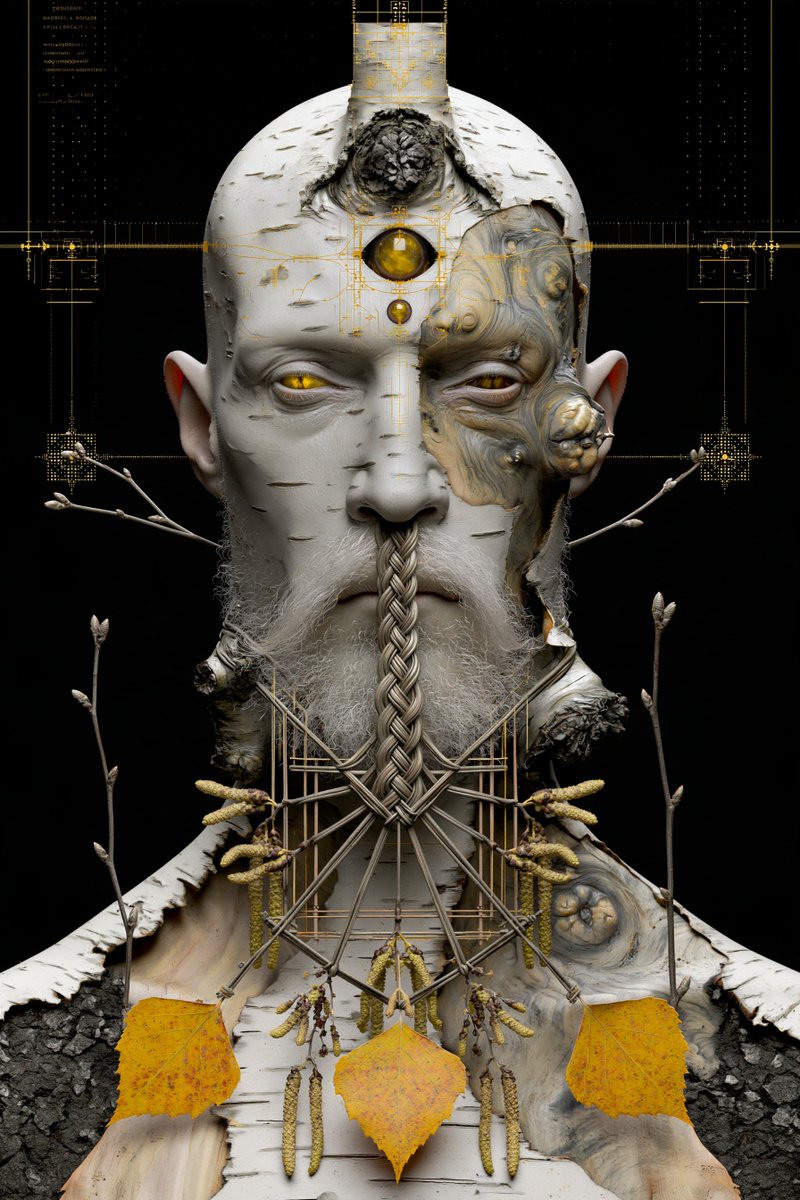
Floraforms — Specimen 26
Birch Herald
Eyes for the Sovereign. The braid binds the message. This is office, not skin.
#Floraforms#SurrealArt#EcoSurrealism