Big false dichotomy energy on this app lately. You can indeed be PRO getting more out of the grid and PRO putting steel in the ground. Not sure why that is so provocative.
We love to say "costs fall X% every time capacity doubles." This paper looks at 87 technologies and says: actually, no. Past learning rates are not reliable predictors of future learning.
As Federal regulators struggle to craft a framework to connect data centers to the grid faster, @RockyMtnInst put out a summary of state-level models on how to protect ratepayers from the financial risk these massive users pose.
https://t.co/ngD6xFF7Q3
Things didn’t just get more expensive, the composition of costs changed.
Food spending collapsed. Housing, childcare, and healthcare exploded. Yet our measure of poverty is built entirely around food.
Critical read on the outdated metric that hides real economic precarity/rage.
The US poverty rate--set at 3x the minimum cost of food in 1963-- doesn't measure poverty. It measures hunger. And 11% of people are still below it.
With homes, healthcare, and childcare so expensive these days, a household really needs about $130,000 to not feel "poor"...
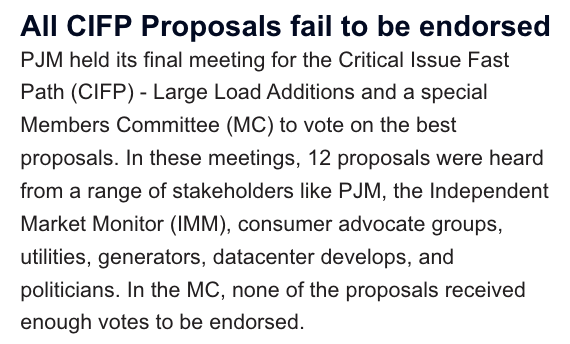
Update: PJM’s 3-month stakeholder process on large loads completed a final vote yesterday
Despite multiple proposals to address the reliability gap, NOT a SINGLE proposal got enough votes
Disagreements on mandatory vs optional BYOG, impact of load flex on energy prices, curtailment allocation
Notably, market monitor’s proposal to force BYOG for data centers got the highest sectoral support score (1.99/5), in an indictment of the purpose of electricity markets
We’re launching Right Of Way, a podcast about energy policy, energy politics, and above all the upcoming permitting reform fight.
Hosted by me and @ppavnr, presented by @IFP and @JoinFAI.
First episode dropping next week — stay tuned.
Interesting update from PJM: 46 GW of new resources out there with completed studies and signed interconnection agreements yet not clear if/when they will come online.
28 GW of solar
6 GW of wind
4 GW of storage
Held up by permitting, siting, supply chain..
📉 The U.S. built just 322 miles of major transmission in 2024.
That’s less than 10% of what’s needed annually to keep the grid reliable and affordable.
If we don’t build the grid, strategic industries can’t build their future.
Learn more: https://t.co/g4cy1ve00k
Key point from @MichaelGiberso3: electric rates are rising across the board, not just in states that have deployed renewable energy generation at higher rates like Texas.
WSJ: "The claim that [renewable] tax credits reduce electric rates is contradicted by experience.... All of this is why Texas’s residential power prices have risen some 40% over the last seven years."
Chart shows change in average rates in TX, AL, MS, and WV over last 7 years.
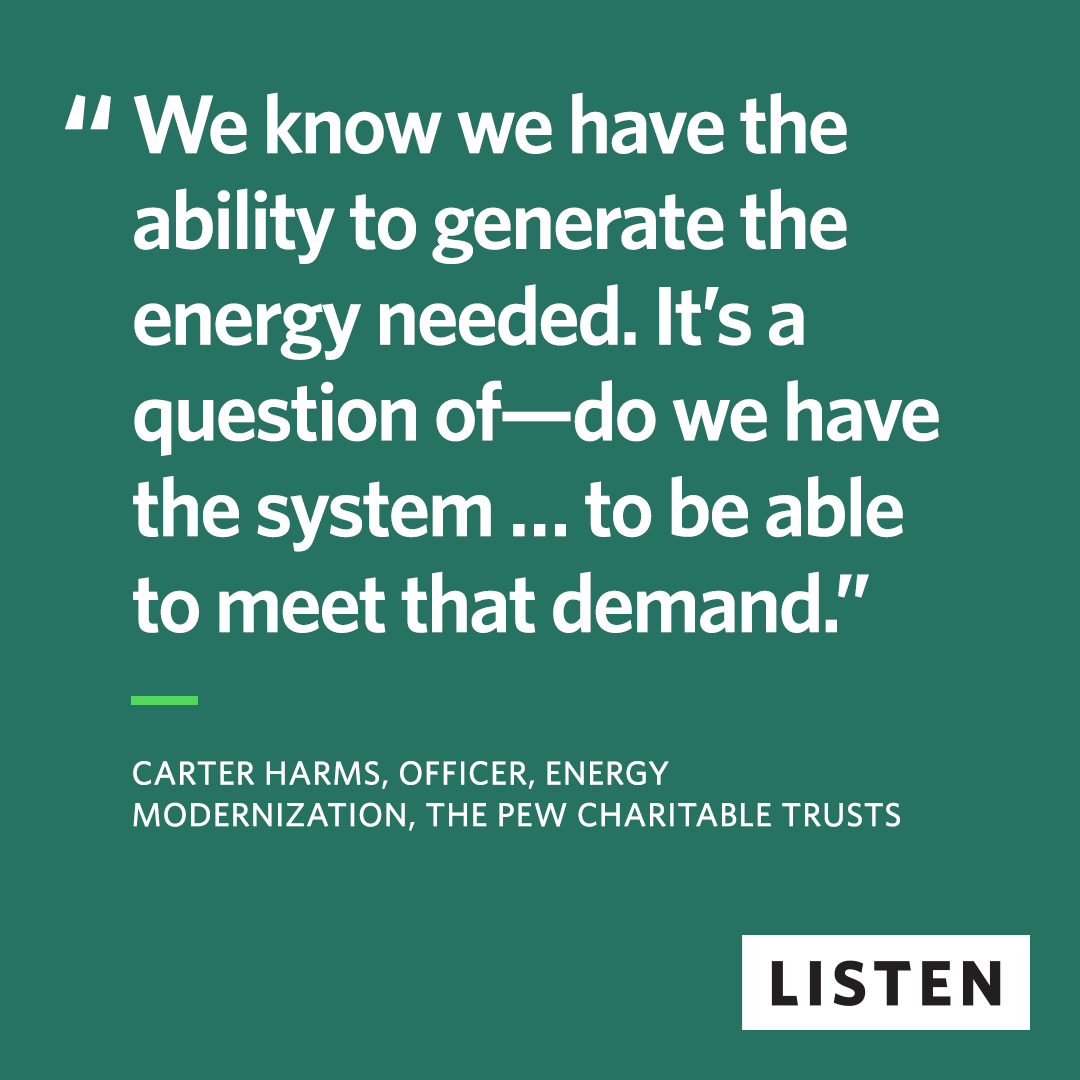
🎙️ Quick yap session with Pew's After the Fact Podcast. Listen to me talk about the grid, technologies that can help us get more out of it, and why vintage works for my apartment but not for the engine powering our economy. https://t.co/uas3klujul
And here are the wraparound changes!
Excise tax out, solar/wind get another year before placed in service goes into effect, FEOC changes
From @SiegelScribe@kelseytam
https://t.co/Wa0J1uxadV
What Tucker Carlson says here about whites being replaced by the "Third World" lines up with what the New Zealand terrorist wrote in his 2019 manifesto.
Society condemned that document and pushed it off the web. This we feed to millions every night.







![MichaelGiberso3's tweet photo. WSJ: "The claim that [renewable] tax credits reduce electric rates is contradicted by experience.... All of this is why Texas’s residential power prices have risen some 40% over the last seven years."
Chart shows change in average rates in TX, AL, MS, and WV over last 7 years. https://t.co/PERFUtgclP](https://pbs.twimg.com/media/GwYnvMVXcAAcWSd.jpg)