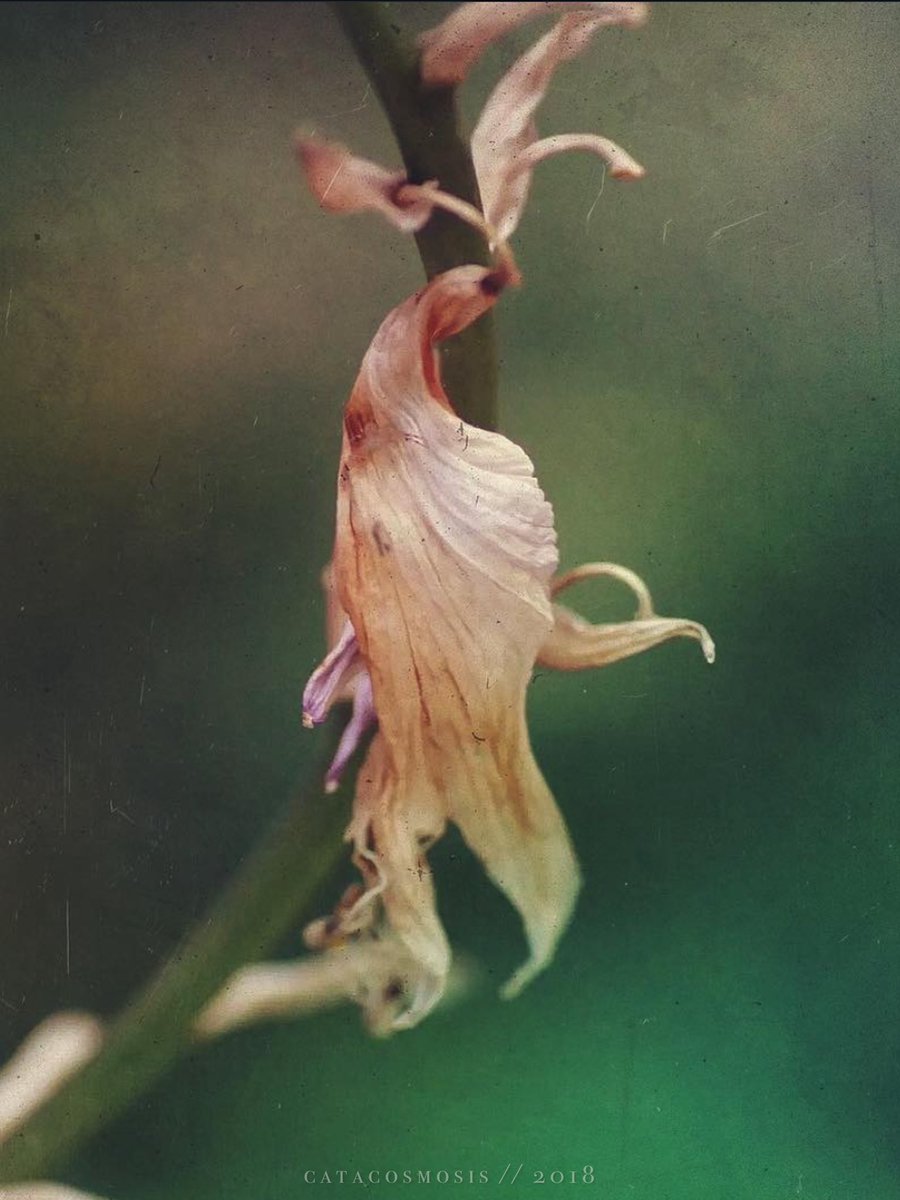
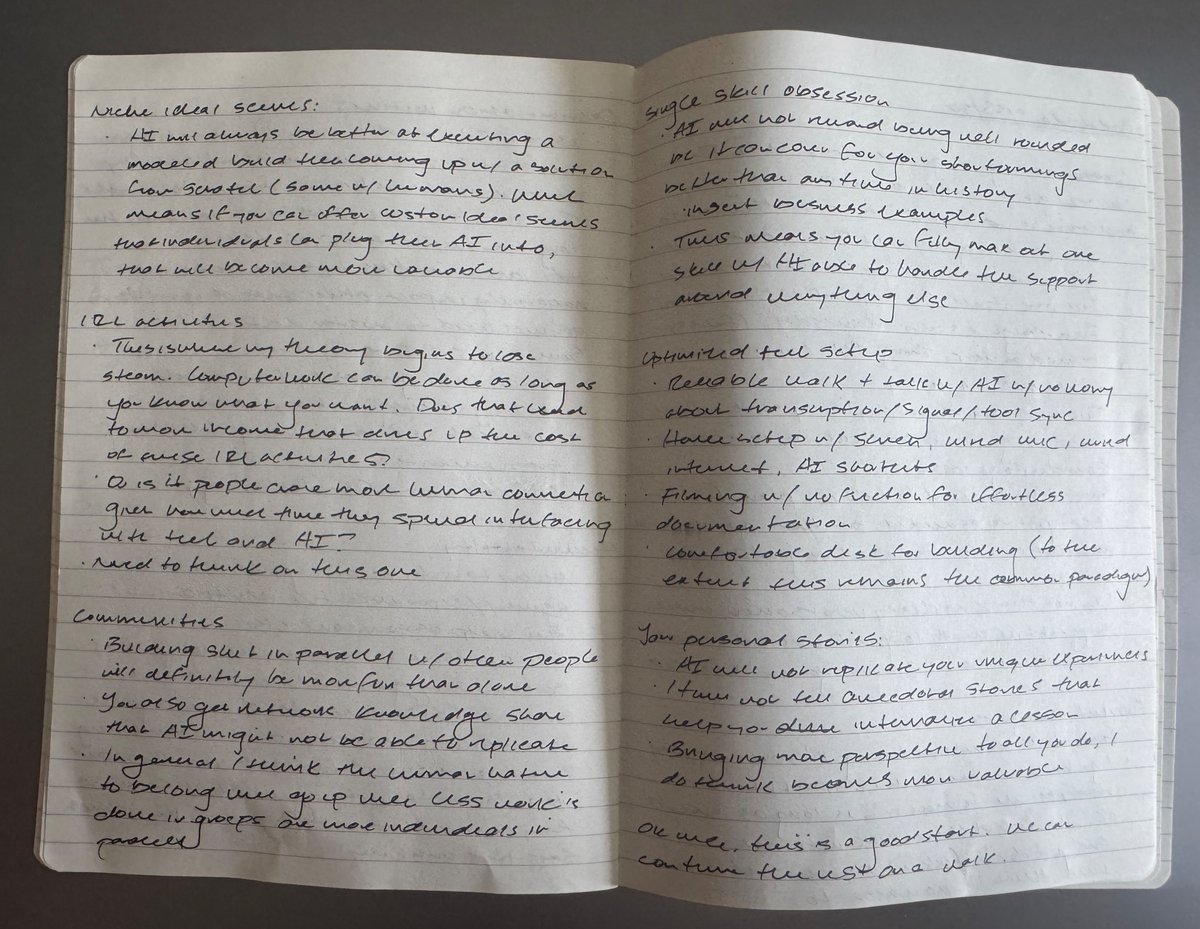
Get a glimpse into how nature photographer and videographer Christy Grimes (@catacosmosis) showcases her work with #VSCO Sites.
From Galleries to Blogs, scroll through her portfolio site - https://t.co/yRJ9P18FK1
Right now, your greatest responsibility is getting your life back on track and becoming the strongest, healthiest version of yourself. Dont waste your energy worrying about who stays, who leaves, who understands you, or who changes. This chapter is about choosing yourself. Heal your mind, rebuild your discipline, protect your peace, and reconnect with who you truly are. The people who are meant to be part of your next chapter will find you when you get there. Chase what makes you feel alive. Ask the questions others are afraid to ask.
Build your dream life now.
@FullAsMuchHeart Yeah, a lot of these comments generalize and ignore how the brain actually works for many people. My severely autistic, nonverbal son for example - self-discipline is a moot point for him. That’s exactly why he’s considered disabled to begin with.
@justbeingmendy@aloca997@ayojoestar This isn’t always true. Your take doesn’t apply to everyone. It would never work for my severely autistic, nonverbal son, regardless of medication or specialist support. When the brain itself isn’t wired to “choose” adversity the way you’re describing, it simply is what it is.
In 1988 Dolly Parton pulled every 7th and 8th grader in Sevier County into a room and told them to pick a buddy.
She made them sign a contract.. if BOTH graduate, she hands you both $500. One fails, nobody gets paid.
The county dropout rate went from 35% to 6%.
She handed out the checks herself.
In 1989 she offered $500 to every kid in the county who wanted to go to the local college.
When Gatlinburg burned in 2016, she sent 900 families $1,000 a month for six months.
You've probably heard that part.
Here's the part you haven't:
The fund raised more than expected, so she showed up in May and handed every one of those families another $5,000 on top.
Then she quietly put $3 million into the recovery group that handles the years after the news trucks leave.
She built her county an entire hospital.
She played a benefit concert in 2007, Dollywood and the Stampede matched it, and LeConte Medical Center opened in 2010 with a birthing unit and a women's center in it.
In 2022 she started covering 100% of tuition, books, and fees for Dollywood employees.
Full-time, part-time, AND seasonal.
In 1991 she paid for a bald eagle sanctuary because the birds couldn't be released back into the wild, no press release.
And when Hurricane Helene came through here in Western North Carolina, she wrote a personal check for $1 million and her companies matched it.
She didn't owe North Carolina anything, but she helped us anyway.
She started the Imagination Library because her daddy couldn't read or write. Before he passed, he told her it was the most important thing she ever did.
Rest in Peace, Dolly 🇺🇸
Put together a few raw clips from outings over the past couple of years and was reminded how often life offers moments of beauty, even during the most difficult times. We only need open our hearts & make space to receive them.
God loves you.
He is for you.
God bless you.
I am often accused of being depressed because of this.
I’m peaceful, not depressed.
I’m also often accused of settling.
I have not settled for anything, I have simply understood acceptance.
Winston Churchill fought his depression with bricks. He'd lay them for hours at his country home in Kent. He joined the bricklayers' union. And in 1921 he wrote about why it worked. It took psychology another 75 years to catch up.
He called his depression the "Black Dog." It followed him for decades. His method for fighting it back was as basic as it sounds: laying brick after brick, hour after hour.
Churchill spelled out his theory in a long essay for The Strand Magazine. People who think for a living, he wrote, can't fix a tired brain just by resting it. They have to use a different part of themselves. The part that moves the eyes and the hands. Woodworking, chemistry, bookbinding, bricklaying, painting. Anything that drags the body into a problem the mind can't solve by itself.
Modern psychology now calls this behavioral activation. It's one of the most-studied depression treatments out there. Depression sets a behavior trap. You feel bad, so you stop doing things, and doing less means less to feel good about. Feeling worse makes you do even less. The loop tightens until you can't breathe inside it.
Behavioral activation breaks the loop from the action side. You schedule the activity first, even when every part of you doesn't want to. Doing it produces small rewards: a wall gets straighter, a painting fills in, a messy room gets clean. Those small rewards slowly rewire the brain. Action comes first, and the feeling follows.
Researchers at the University of Washington put this to the test in 2006. They studied 241 adults with major depression and compared three treatments: behavioral activation, regular talk therapy, and antidepressants. For the people who were most severely depressed, behavioral activation matched the drugs. It beat the talk therapy. A 2014 review of more than 1,500 patients across 26 trials backed up the result.
Physical work like bricklaying does something extra on top of this. It crowds out rumination, the looping bad thoughts that grind people down during the worst stretches of depression. Bricklaying needs both hands and gives feedback brick by brick: each one is straight or crooked. After an hour you can see exactly how much wall you built. No room left for the mental chewing.
The line George Mack used in his post, "depression hates a moving target," is good poetry. The science behind it is sharper. Depression hates a brain that has somewhere else to be.
I love New Orleans and its layered history. My insomnia led me down a rabbit hole on that topic tonight, and I unexpectedly ran into an old friend: Clarence John Laughlin. I’ve long admired his moody, surreal work.
I’d love to stumble on a good condition 1948 first edition copy of Ghosts Along the Mississippi at an estate sale or similar “they don’t know what they have” type situation. 😅
The only dealer copy I’ve seen was priced at $750 - but that’s far from unreasonable for a beautiful, out-of-print rarity like this still wearing a good condition original dust jacket.
https://t.co/XDGdAzzEsO
#RareBooks #Photography #NewOrleans #ClarenceJohnLaughlin
Description, from Dalkey Archive Press:
“Otohiko Kaga’s Marshland is an epic novel on a Tolstoyan scale, running from the pre-World War II period to the turbulence of 1960s Japan. At forty-nine, Atsuo Yukimori is a humble auto mechanic living an almost penitentially quiet life in Tokyo, where his coworkers know something of his military record but nothing of his postwar criminal past. Out of curiosity he accompanies his nephew to a demonstration at a nearby university, and is gradually drawn into a friendship, then a romance, with Wakaka Ikéhata, the brilliant but mentally unstable daughter of a university professor. As some of the student radical groups turn to violence and terrorism, Atsuo and Wakaka find themselves framed for the lethal bombing of a Tokyo train.
During their long imprisonment the novel becomes a Kafkaesque procedural, revealing the corrupt intricacies of the police and judicial system of Japan. At the end of their hard pilgrimage to exoneration, Atsuo and Wakaka are finally able to return to his original hometown, Nemuro, on the eastern-most peninsula of Hokkaido island. Here is the marshland of the title, a remote and virtually unspoiled region of Japan where Kaga sets a large number of extraordinarily beautiful pastoral scenes.
Marshland is a revelation of modern Japanese history and culture, a major novel from the hand of a master well-known in his own country, but virtually unheard-of—so far—in the United States and Anglophone world in general.”
I have been searching for a book titled “Marshland,” by Otohiko Kaga (English translation), for months and haven’t been able to find an available copy.
Miracles never cease. I’ve just seen it is planned for reprint on Dalkey Archive Press, Summer 2026.
I am so excited. This is one night I’m perfectly happy to have insomnia. This news worth sharing! 😆👏