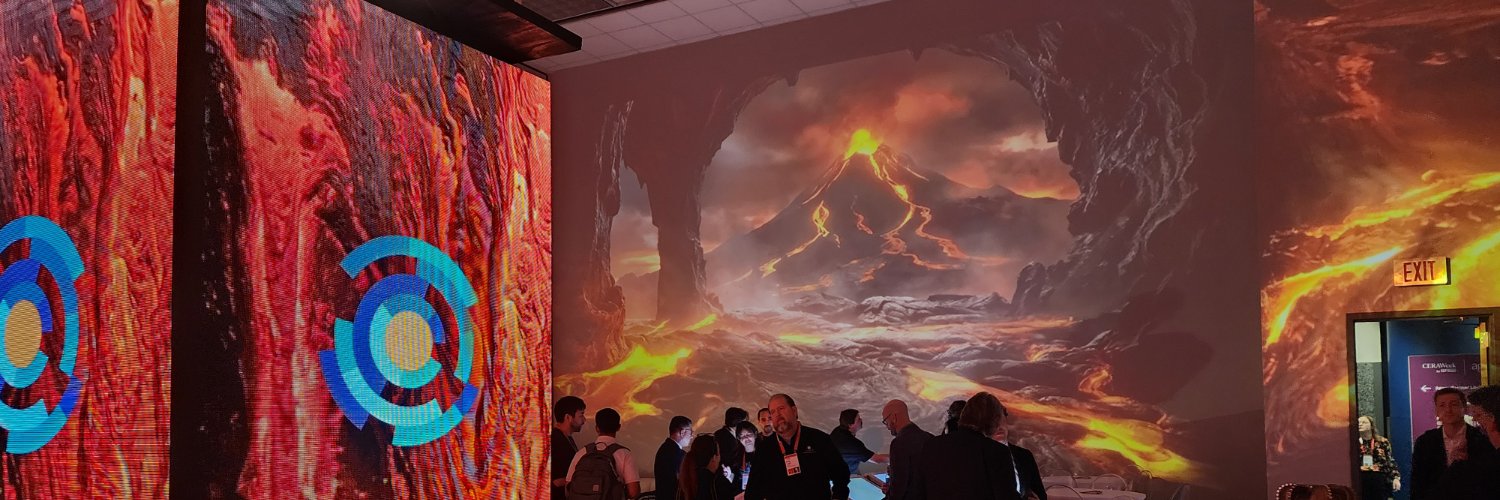
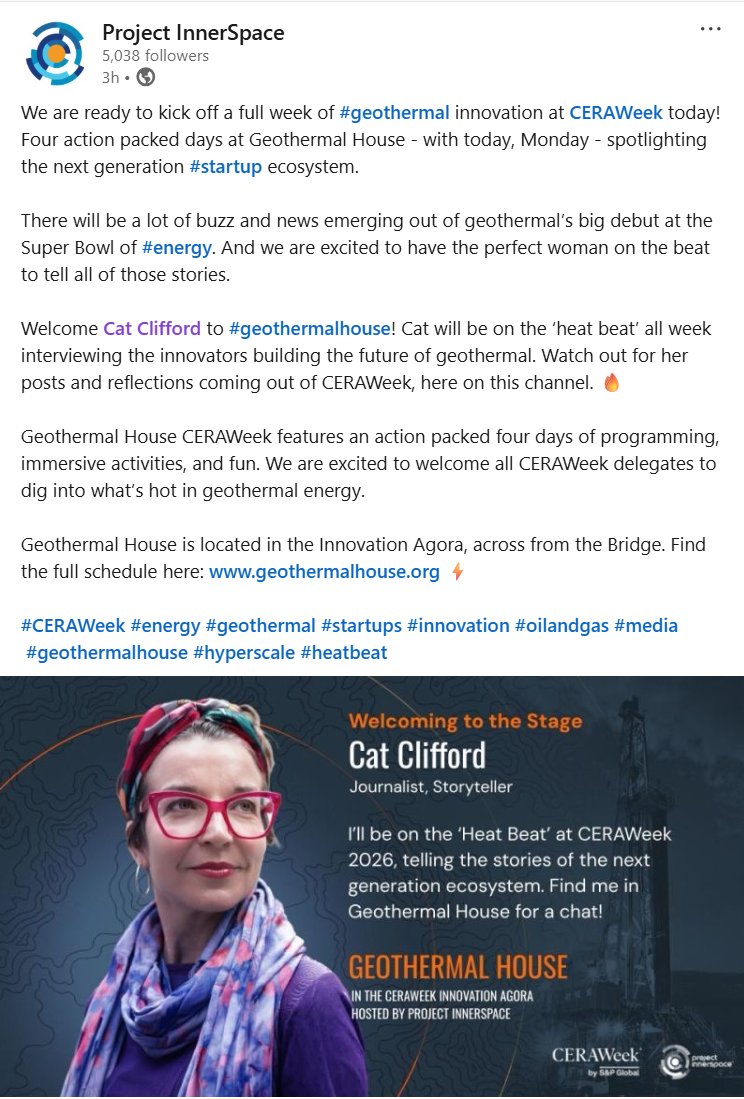
I spent the week embedded in the Geothermal House at the @CERAWeek conference in Houston last week on behalf of Project @innerspace2030.
One highlight was interviewing Rod Colwell, CEO of Controlled Thermal Resources Holdings, Inc., in a fireside chat: https://t.co/0NKoOLJKF6
The deeper I get into geothermal, the more I learn that the story of geothermal is a story of UNTAPPED POTENTIAL.
When I came across this chart (below) in @innerspace2030 report on The Future of Geothermal in Texas, it stopped me in my tracks.
https://t.co/TxSiUaWASw
Geothermal is one of the most exciting stories in energy right now. I am in Houston at #CERAWeek on behalf of @innerspace2030. The full rundown is here: https://t.co/nMhjwIjyzO
How's this for energy abundance? Millions of Aussies will start receiving three hours of free power each day in 2026. This is what happens when you make rooftop solar less than a buck a watt!!
"Rooftop solar installations cost about $840 (U.S.) per kilowatt of capacity before rebates." 🤯
Install costs on the USA are $2.5/Watt (higher in many states). 💩
Let's make rooftop solar cheap and energy clean and abundant.
🚨 NEW REPORT:
A major @FERC rulemaking on large load interconnection is likely imminent, and anyone who wants to understand its potential should read @NichInstitute's new brief by @MilesFarmer@ClementsFERC@azevin@Smaczni et al. https://t.co/Lq3ZGcOhpM
First Google in Indiana and now Microsoft in Wisconsin. The local and political pushback against data centers is just getting started and will quickly snowball if there isn’t more education around the composition of residential electricity rates and what’s driving the increase region to region. Hyperscalers need to get serious (even though they very much are) on get in in front of this issue with bringing on new capacity, singing clean sources of power, and/or putting up the capital or providing it through a bilateral deal to ensure that ratepayers are not on the hook for their needed new energy infrastructure for AI.
This seems bad for both California and geothermal.
Back in the spring, a leading researcher told me geothermal represented “probably California’s best-shot at cost-effective total decarbonization.” The state already has The Geysers, the world’s largest geothermal plant, and the energy source provides 5% of the grid’s power. But it could do much more, especially since droughts hamper hydro and the state is far behind on fission, only just shedding its hacky Hollywood antinuclearism.
Given how big and important a market California is, it’s hard to see the technology taking off the way most people hope it will without the state taking some serious initiative. That means policy change.
As it is, California is losing to neighboring states. It is the only state in the West that hadn’t held bids for geothermal development on public lands in something like seven years as of earlier this year. And that’s before you even get to the broader permitting issues. It’s no wonder Utah, Nevada, and Texas are attracting all the next-generation startups.
“The company’s 21 nuclear reactors at 12 sites from the Midwest to the Mid-Atlantic and Northeast collectively operated 98.8% of the time during the months of June, July and August, keeping the lights on and air conditioners humming for the equivalent of 16 million homes.”
Constellation Energy Corp, the US's largest nuclear operator, announced that it plans to build a new reactor on the site of one of the three upstate NY plants that they already operate. Article link in reply.
The did not specify which reactor design they will build, or which site it will build at.
In a clear sign of interest in restarting the Duane Arnold nuclear plant, NextEra is acting to reclaim the shuttered plant's grid connection rights. After the plant closed, the grid connection rights were transferred to a solar project. Article link in reply.
What makes @Google's data center flex announcement today so significant, in my view:
(1) These are the first known contracts between a hyperscaler and US utilities around AI data center flexibility;
(2) This is the first known case of US data center flexibility being incorporated into the utility planning realm, instead of limited to operations;
(3) This is the first time Google is providing data center flexibility via machine learning workloads;
(4) The contracts are definitive and long-term in nature; and
(5) The announcement notes that flexibility applies to “certain hours or times of the year,” indicating a time-limited arrangement.
🚨 Historic News for Nuclear Energy! 🚨
The U.S. Nuclear Regulatory Commission (NRC) officially reauthorized the operating license for the Palisades Nuclear Plant—the first time in U.S. history a previously shutdown nuclear facility has been approved for restart.
This monumental achievement sets a precedent for clean energy innovation and proves what’s possible with vision, dedication, and perseverance.
Palisades is now on track to return over 800 MW of carbon-free baseload power to Michigan’s grid—enough to power 800,000+ homes. A huge win for energy reliability, sustainability, and our future.
👏 Congratulations to the Palisades team and everyone across Holtec who made this possible!
👉 Read more about this historic milestone:
https://t.co/0XxuROBOnC
#PalisadesRestart #HoltecInternational #NuclearEnergy #CleanEnergy #EnergyIndependence #CarbonFreeFuture #NuclearInnovation #USNuclear #AGenerationAheadByDesign
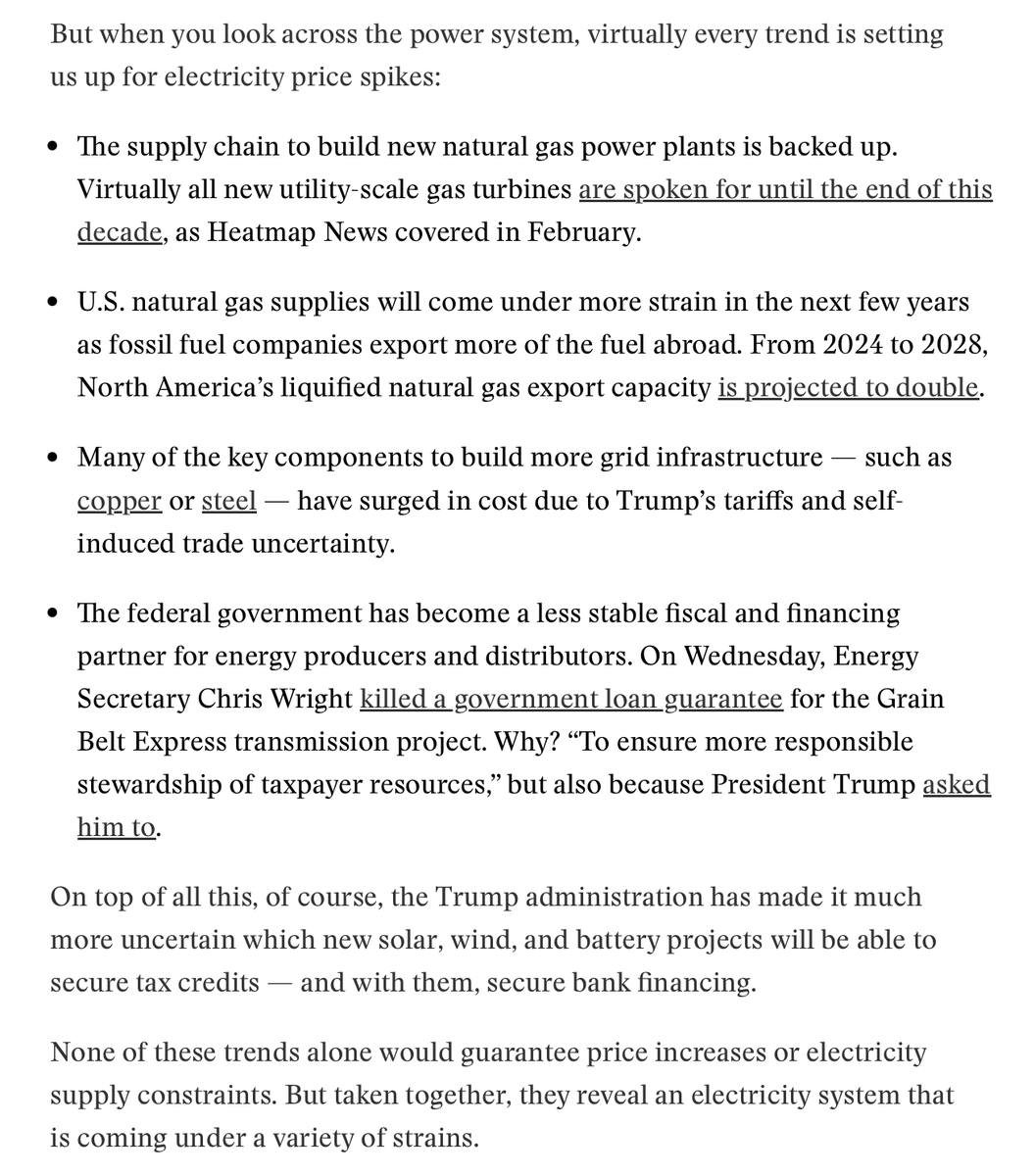
It’s hard to find a trend in the electricity system right now that *doesn’t* point to near-term price increases if not a broad affordability crisis. The setup is bad and getting worse. I wrote about it for @heatmap_news:
🔌💡 Our @brendanpierpont's recent piece in @UtilityDive examines the negative impact of propping up uneconomic "zombie power plants" 🧟🏭
https://t.co/UZIaSIoGLR
Today, Westinghouse Interim CEO Dan Sumner shared with @POTUS@DonaldTrump and U.S. Sen. @DaveMcCormickPA our bold plans to deliver on the President's vision to have 10 large reactors under construction across the U.S. by 2030, which is expected to create $75 billion in economic value.
“We’ve taken the call-to-action under your executive order to partner with companies across our industry to mobilize a plan to deliver 10 AP1000® reactors in the US with construction to begin by 2030,” Dan Sumner said during the CEO Roundtable at the inaugural Energy Summit and Expo in Pittsburgh, Pa. “When we deploy a fleet aligned to your vision, we’ll drive $75 billion of economic value across the United States with $6 billion of value here in Pennsylvania. Implementing your vision will create or sustain over 55,000 jobs across the country and over 15,000 jobs in the Commonwealth alone, and these are great jobs across manufacturing, engineering, and construction.”
The time for home-grown nuclear energy is now and Westinghouse is ready to deliver. Thank you, President Trump and the many leaders who came to the summit today. @WhiteHouse
Listen in to Dan’s full speech during the CEO Roundtable this afternoon: