@HandtevyMD Thanks for posting and leading the discussions...love watching the cutting edge lectures dedicated to prehospital care. Are Dr. Pepe's webinars viewable?
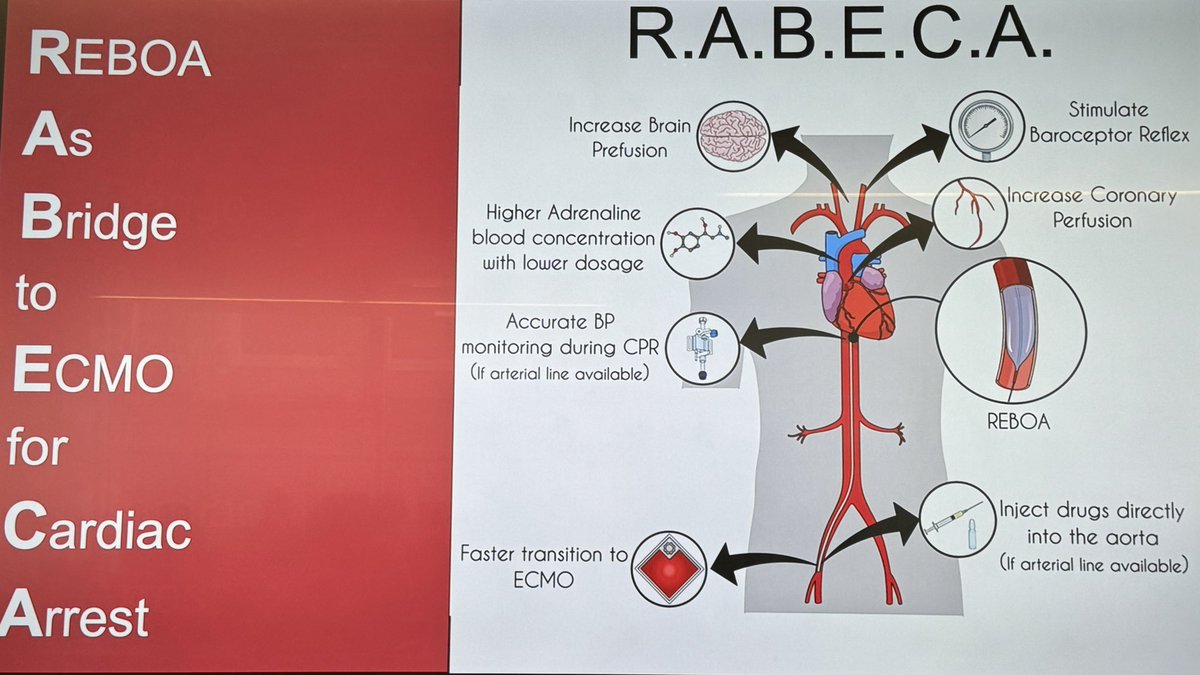
RABECA #REBOA as bridge to #ECMO in cardiac arrest
🧠 to increase brain prefusion
🫀 to increase coronary prefusion
💉 to achieve higher adrenaline blood concentration with lower dosage
🩸to provide accurate BP monitoring during CPR (if arterial line available)
🩸to stimulate baroceptor reflex
⏱️ to achieve faster transition to #ECLS
#Parisrescue
Brant-Zawads G @UofUHealth
“You can intubate anyone with a Mac 4. I can also eat my breakfast with a spade, doesn’t mean I should.”
- @EMManchester
Superior FPS and glottis view with Mac 3 in this study of 979 ICU and ED.
#TBS24
https://t.co/IFu9UrgEz0
ABCs of CS:
Access, Basic hemodynamics, Circulatory Support, Decrease Vasopressors, Early Escalation
Takeaways: CS from AMI has high mortality, multidisciplinary teams improve outcomes and early MCS before deterioration improves mortality.
ECMO-CS Trial: VA ECMO in Rapidly Deteriorating or Severe Cardiogenic Shock (SCAI D/E)
There was no difference in the very early ECMO versus conservative therapy. The takeaway is implement MCS in these pts before they escalate to severe
Impella CP up to 5.5
Flows of 3.5-5.5 but risks include vascular complications (14-23F)
Niche: High risk PCI and moderate Cardiogenic shock
A local observational study by Hritani et al noted the hemodynamic yield of the Impella may not be as advantageous as noted by industry
IABP: Cheap and easy but in CS from AMI use is limited
Flow: 0.5 Lpm, Shealth size 7-8F
Counterpulsation ( decrease afterload and augment diastolic filling)
There are three broad categories for MCS
a. Initial support: Impella CP and IABP
b. LV escalation: Impella 5.0/5.5, ECMO, tandem heart, Surgical LVAD
c. RV escalation: Protek duo and Impella RP
Another hemodynamic marker for pts with CS with concern for RV failure is PAPi or Pulmonary Artery Pulsatility Index. A PAPI of <1 with CS suggest the need for RV MCS support
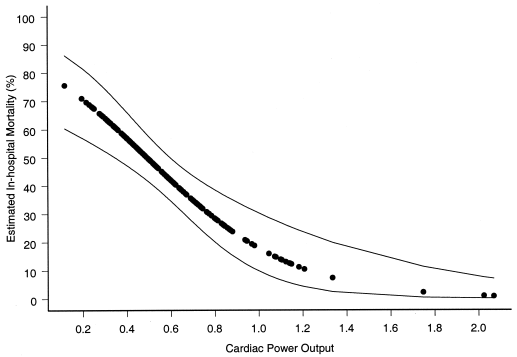
Cardiac Power Output is the strongest predictor of in hospital mortality. In the SHOCK trial, CPO of less than 0.6 was associated with a mortality of 58%. Using a cut point of CPO <0.6 for MCS initiation is suggested
When deciding to pull the trigger on MCS a number of factors should be considered including
Selection: BMI, Able to be on AC, Able to accept large bore access
Appropriate: Bridge to recovery or Bridge to DT LAD or OHT
MCS Support Needed: Left/Right/Biventricular
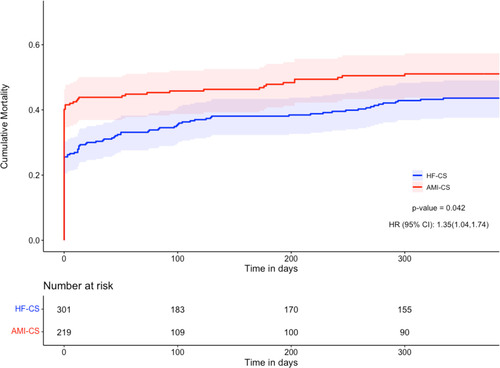
CS is not created equal. CS from AMI carries a higher mortality as compared to pts with decompensated HF. HF pts have mechanisms for compensation as compared to a pt with AMI. NCSI data suggest CS in the AMI group, mortality is around 50% compared to 25% in the HF group
The ESCAPE trial showed that PACs in pts with CS had no difference in outcomes; which is unsurprising as the majority of these pts were HF. Whereas in patients with AMI, data suggests that PACs do help drive management and improve outcomes especially in advanced SCAI stages
A Team Sport: CS patients require multidisciplinary teams to achieve the best outcomes. Tabel et al showed decreased mortality with shock teams and importantly no difference in time to MCS
Defining and communicating severity of cardiogenic shock can be challenging across disciplines. Using the SCAI shock criteria helps to clearly convey the degree of cardiogenic shock