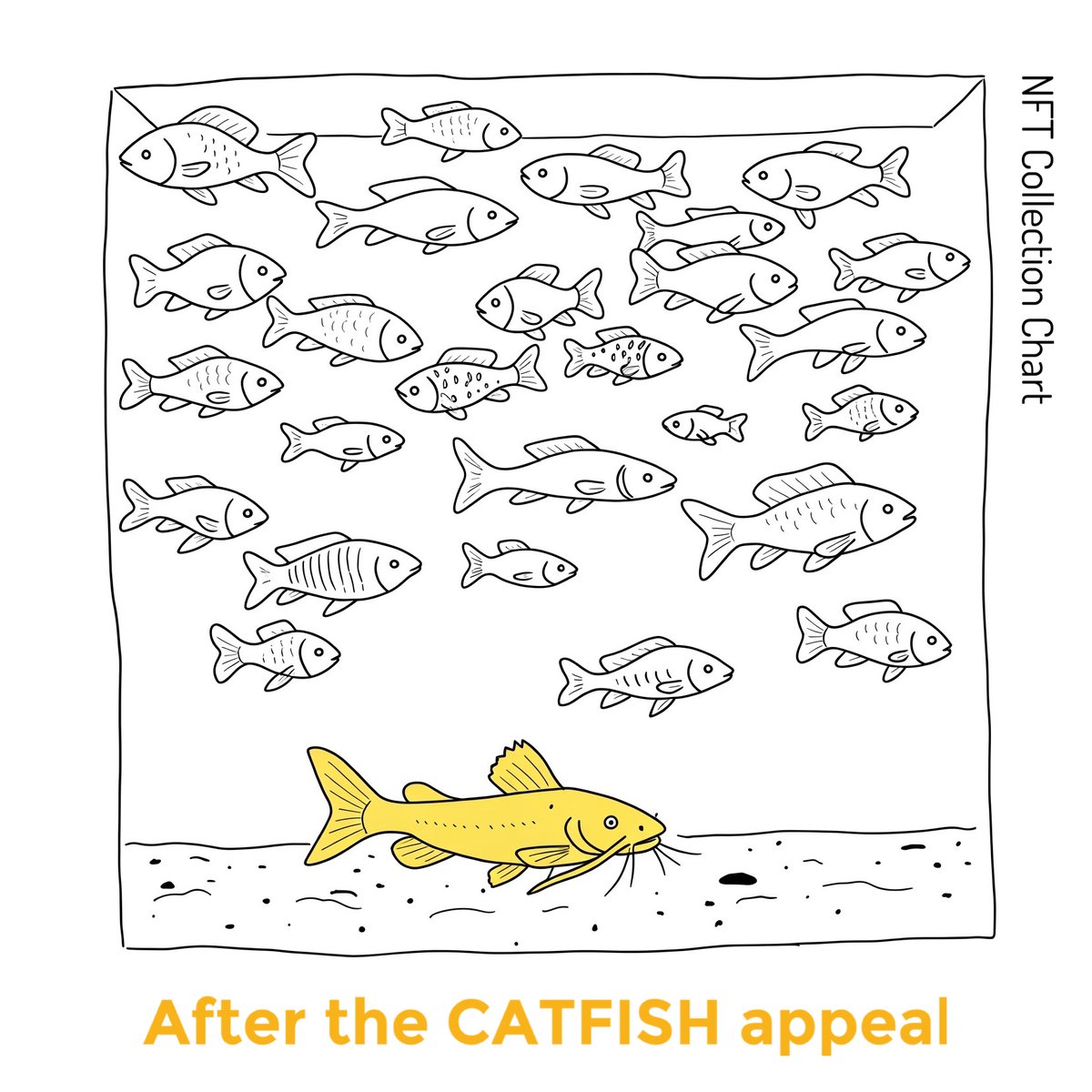
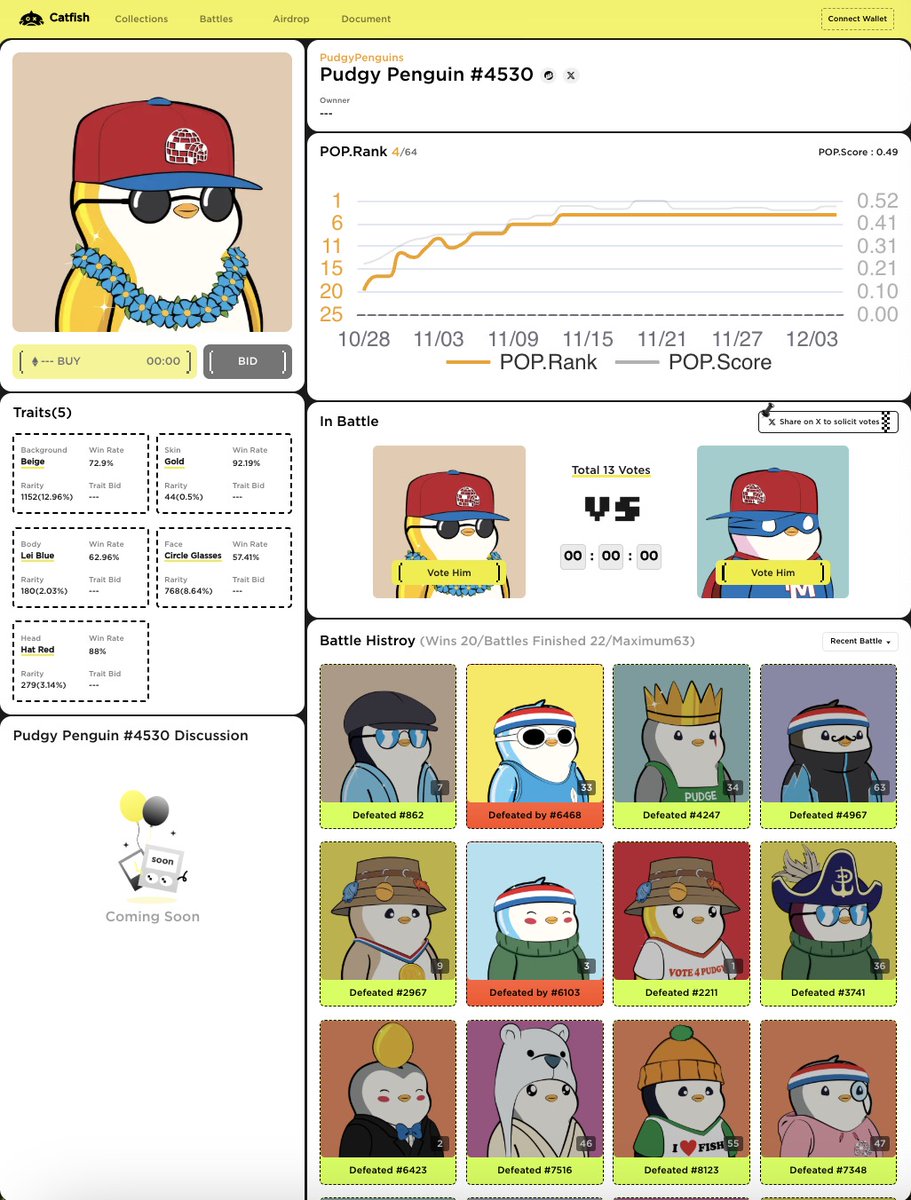
What is Catfish Market?
🎯 Goal: Provide liquidity for high-quality NFTs through AMM bids.
💻Solution:
1. NFT Battle: All NFTs in listed collections can join battles.
2. Vote: Vote for your favorite NFTs after logging in. Holders have more voting power!
3. Rank: NFTs are ranked based on battle scores (POP. Score).
4. AMM Bid: Bids are made for each NFT based on its rank. Higher rank = higher bid price!
We hope https://t.co/MyVSBNKJVm can help with trading high-end NFTs.
#CatfishMarket #NFTs 🐟✨
.@opensea has paused the rewards for listing and bidding, so the farmers can take a break for now.
Will this help the floor prices in the NFT market stop the decline and stabilize?
we've heard the feedback on the current XP system, and we're putting a pause on XP given directly for listing and bidding
while we don’t think liquidity rewards are inherently bad (see more below), we understand that there are a lot of strong emotions towards point systems, and that the NFT market as a whole is in a unique spot right now. we’re building OS to support this space long term, so we’re pausing this part of the rewards program while we think through the best path forward
in the meantime, we'll focus the rewards program on XP shipments -- which were designed as a flexible way to reward broad participation in OS2, such as buying and holding
users that joined our beta early and gave feedback in Discord earned the first round of shipments because they helped us make the product better (thank you!)
our second round of shipments is going out now to a subset of the users that bought an NFT on OS2 -- with XP multipliers if you held an NFT from a top volume project for more than 3 months (the longer the time held, the bigger the boost). check your rewards tab on OS2 to see if you got one
if you didn’t get a shipment this time around, more are on their way. we’ll continue to reward buyers and holders that use OS2
regarding liquidity incentives, I want to be clear about our thinking here: we're operating a business in a competitive space, and liquidity is fundamental to any marketplace. we’re going to be thoughtful about adjustments / enhancements, but liquidity rewards in some form are important to offering a strong product in the market
lastly: I appreciate the feedback. we’ll continue to work closely with those who have helpful ideas. but some of the vitriol I saw on X this weekend appeared to be primarily motivated by extraction / attempts to bring OS down. we’re listening closely as we build, but we won’t be bullied. if you want to help us build the future constructively, we’re all ears.
What’s Catfish Market?
Catfish Market is a truly non-fungible token (NFT) trading platform that uses public voting by collectors as the pricing mechanism for each NFT, helping NFT collections establish automated market makers (AMM) and creating comprehensive liquidity for NFT collections beyond just floor prices.
How to achieve it?
Battle to earn scores
NFTs within the collection will battle each other one-on-one, with the public voting (especially collection holders' voting) to determine the winner. The higher the number of net wins and win rate, the higher the score and ranking of the NFT.
Score-based pricing AMM
Eligible collections will be able to establish a "Collection AMM Pool" (Automated Market Maker), offering individual bids for each NFT participating in battles, allowing the collection to break free from the current situation where only floor-priced NFTs have liquidity.
The unique bid for each NFT is calculated automatically based on its battle score as a variable, combined with the collection's pricing provided by the AMM pool's LPs (Liquidity Providers), following a predefined function.
LPs earn trading spreads and mining rewards
LPs can choose collections they are optimistic about and deposit ETH into the collection's AMM pool to provide liquidity, earning trading spreads from NFT price differences and token rewards from the Catfish platform.
However, LPs must also bear the potential losses caused by a decline in the collection's price or difficulty in selling NFTs they bought, similar to the risks faced by market makers on most platforms.
Then, non-floor prise NFTs will have buy orders available for immediate sale.
Bringing comprehensive liquidity to the NFT market
Catfish Market aims to comprehensively solve the liquidity issues for outstanding collections and high-quality NFTs, breaking free from the current situation where only the 10% of NFTs at floor price have liquidity. It seeks to help the NFT market identify and highlight higher-quality NFTs and collections.
The current NFT market has two big problems:
1. Non-floor price NFTs have almost zero liquidity.
2. The "Sell+Royalty" model creates a built-in conflict between creators and holders.
At this stage, Catfish Market will focus on fixing the liquidity issue for non-floor NFTs.
In the second phase, we aim to build a "Free Mint + 0 Royalty" platform to make NFT drops fair for everyone.
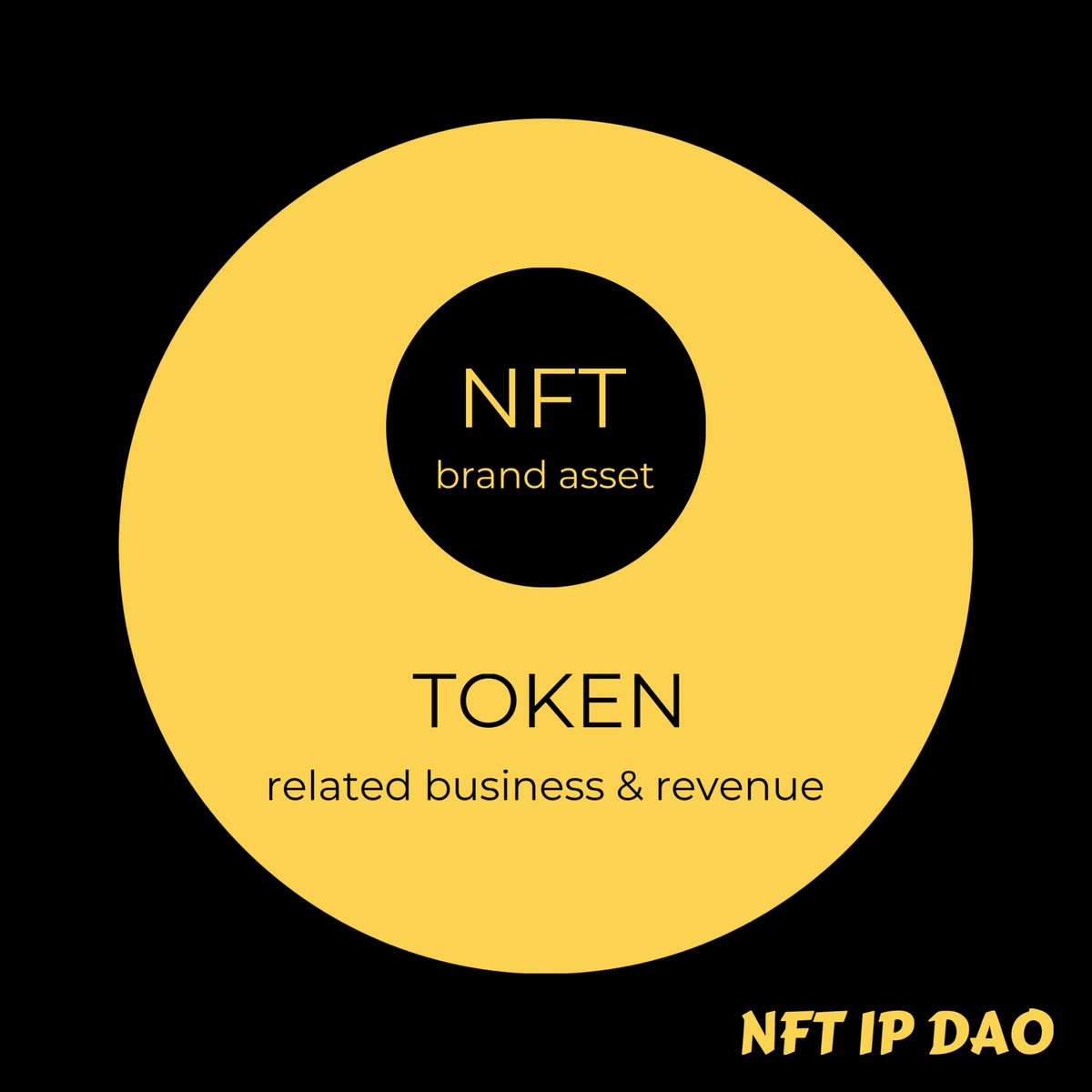
NFTs are essentially brand assets, and collection tokens should help drive and capture revenue from products tied to the growth of the NFT brand.
When both sides work together, they can push the collection DAO forward in a positive cycle.
The relationship between collection operators and the holder DAO should not feel like a seller-buyer dynamic. Instead, it should work more like different teams in a company:
operators focus on building brand awareness, while the holder DAO uses the brand and their own skills to create and grow businesses around it.
A lot of people believe NFTs are making a comeback, and it seems they’re on track to be recognized as valuable assets. I think so too.
However, I don’t believe that many new NFT projects have a real chance of becoming blue chips anytime soon. In the last cycle, many holders lost money because most NFT prices plummeted to near-zero levels after the bubble burst.
So, where are the real opportunities for NFTs now?
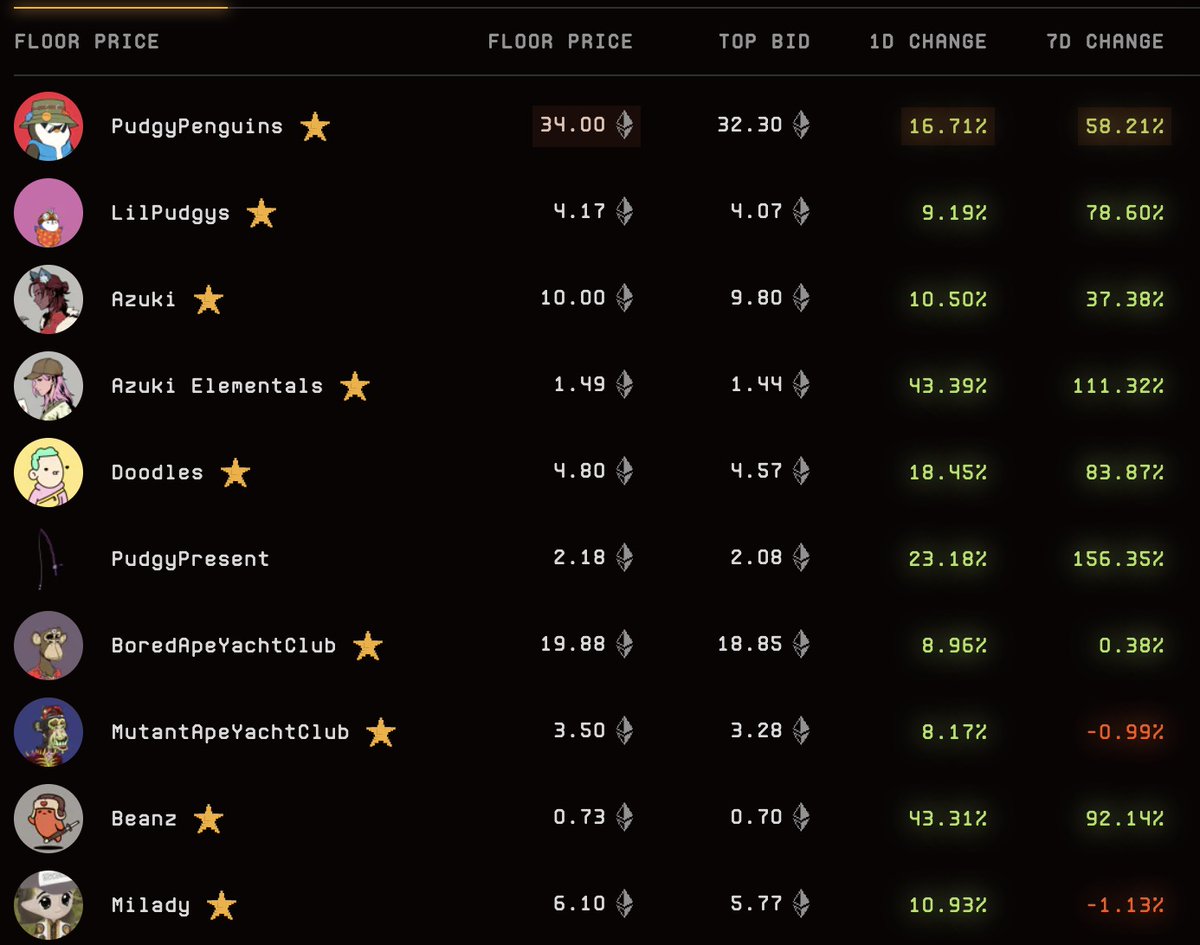
In my opinion, the best strategy is to keep focusing on blue-chip collections like Cryptopunks, BAYC, MACY, @pudgypenguins, @LilPudgys, @Azuki, Elementals and @doodles. These projects account for over 50% of the trade volume and have the potential to become global IPs in the future.
Meanwhile you could also consider putting some money into second-tier collections, such as @milady, mfer, @moonbirds, @coolcats, etc. Because these established projects have already proven their value, especially after surviving the past three years of a bear market.
If you're aiming for big wins, like a ten-bagger, you can try your luck with newer collections. But before you do, make sure to check these key factors:
The team's ability
The strength of the community
#NFTs are kind of like a game. The projects that successfully grow their IP and market themselves well are the ones that will win in the end. It all comes down to strong marketing and a long-term vision.
1/ On UNP (Unified NFT Physics)
Or: “So Few NFTs, So Many NFTs” wif Math
We will go with a single post from the beginning this time, the way the big boss now wants us to do it
I am happy with the spirit of the discussion we had this week about how few good NFTs there are vs fungible tokens.
I am less happy about our attempts to categorize them. They are low resolution, incomplete and do not capture disagreements well.
Today I will propose a unified mathematical framework that I think can capture the full breadth of anyone's views about NFTs (or art) in a way that is transparent, comparability and supportive of enriching discussions, not reductive ones.
2/ NFT Collectors Do Know Some Things
Serious NFT collectors have a quite sophisticated understanding of NFT importance at any given point in time, how it changes over time, and how different collections serve different purposes.
Even when we disagree among ourselves about any specific piece or any specific collection, it is a limited disagreement within a broader agreed framework.
It is not like we are living in universes with different laws of physics.
3/ Spreadsheets: Good and Bad
The spreadsheets that people are making are good first attempts but they are at least 2 orders of magnitude lower resolution than how I think about it.
So very logically people are saying “wait, what about this and what about that and you forgot this and it is not that simple” and obviously that is all true.
And the spreadsheet does not have a straightforward / computable way to express disagreements within a broader agreed physics.
4/ All Concepts In One Framework
So, I did a little thinking yesterday about how we can integrate all the concepts into a unified physics where you can disagree about any specific value but do not disagree about how to do math.
The Concepts:
a) Collection power laws
b) Individual NFT power laws
c) Fractal power laws (global, national/regional/industry, local)
See here: https://t.co/JVZ4zhsurD
d) 1/1s vs Editions
e) PFPs vs Generative vs 1/1s of various types vs even utility and fun NFTs. They all fit in here just fine.
f) Works for any chain
The idea is that we can argue about values, but we do not argue about the physics.
5/ Objections!
Let me also deal with all the objections upfront:
a) People will disagree about which NFTs are important and which collections and artists are important!
True! Of course people will disagree. I disagree with myself half the time! The idea here is to allow you to express what you believe in a way that is legible to someone else.
b) The values will change over time!
No kidding, everything in the whole world changes over time. Why would NFTs be an exception?
c) Not everything can be quantified!
True! But a lot of things can be roughly quantified.
d) Art is not about lists, come on, this is so crypto/tech bro stuff!
Well, yes and no. I don’t have lists for everything, there are many things I can’t quantify about my art feelings. But if anyone tells you they have no actual preferences, no ranking, everything is a random function, including how they feel about trad art and NFTs, well that is a lie.
6/ Which One Would I Pick
The way I think about it is very simple. I do pairwise selection. I think about two NFTs and think which “one I would prefer to see in my wallet”.
The reasons that I prefer one may be purely qualitative, emotional, ineffable, but I obviously have preferences.
Everyone has preferences. Some people collect Monet, some people collect Picasso. That is a preference. Whether you write it down or not, it is an objective fact about the world that you either have Picassos or Monets on your wall or Rare Pepes or Cath Simards in your wallet.
So the goal here is not to replace our views on what you like but make them more legible, more comparable, allow us to express our agreements and disagreements in a more precise way than Pepe Bad, Aversano Good!
7/ First Draft
Consider this a first draft and then we can plug some actual figures into it and see how it works.
Some of the formulas need values for the parameters to determine the slope of the various curves. There will be some trial and error to figure those out, but I think they are broadly right.
Don’t be intimidated by the math formulas. They look scarier than they are. Once we get to the point that they are final, we will explain how they work and make tools. Also, X does not support LaTex so the formulas look ugly written out.
8/ Two-Layer Scores
We need to have two-layer scores – One for Collections and One for Individual NFTs within collections.
Collection-Level Score
Let C_Cj(t) be the Importance Consensus of collection Cj at time t, constrained to the range [0,1].
A high C_Cj(t) close to 1 means near-universal agreement that this collection is historically/culturally “important/blue-chip/socially constructed”
A new or unknown project might have C_Cj(t) around 0.01.
The ungrouped 1/1s of a specific artist can also be considered grouped as a single Collection for this purpose
NFT (Token-Level) Score Within a Collection
Within collection Cj, each token n has a local “importance” factor r_n(t), also in [0,1].
For a typical “floor” piece, r_n(t) might be about 0.2. For a best piece in the collection, r_n(t) might be > 0.9.
9/ Overall “Importance”
In plain English:
- for a 1/1 or 1/1/X, we multiply Collection Score x Token Score
So if a collection has a collection score of 0.5 and the Token has an in-collection score of 0.3, the token score is 0.15.
- for a 1/X (edition) we reduce the score but not linearly because I don’t think it works that way.
The reduction in importance for editions is much less harsh than linear and this is best described with an example.
Imagine that I think that the Rare Pepes have a Collection Score of 0.95 and the Nakamoto Pepe has an in-collection score of 0.98. This would mean that Nakamoto Pepe has a score of 0.931 before accounting for edition size.
Given the Naka has an edition size of 300, if we divided equally, the score for each individual edition token would be 0.931/300 = 0.003103. This is obviously wrong. 0.003103 is a very low score and individual Naka editions are very valuable and desirable and, yes, important.
The score should be something like 0.7 instead.
10/ Overall Importance (Formulas)
Same thing with a bit of math - define each NFT’s total score as:
C_tilde(n, t) = C_Collection(n)(t) * r_n(t) * E_factor(n)
where:
• C_Collection(n)(t) is the collection’s brand score in [0,1].
• r_n(t) is the token’s local rarity in [0,1].
• E_factor(n) = 1 / [1 + alpha * ln( edition_size(n) )].
Explanation of E_factor(n):
• If the edition_size(n) = 1 (a true 1/1), then ln(1) = 0, so E_factor(n) = 1 (no dilution).
• If the edition_size(n) is large (e.g., 300), E_factor(n) = 1 / [1 + alpha * ln(300)].
The parameter alpha > 0 controls how steeply the factor drops for bigger editions (can be tweaked for a larger or smaller penalty
The alpha parameter determines the penalty. For the Naka in my example to be 0.7, the alpha parameter should be 0.058. I think the right answer for editions is in that range – I need to plug in a few more to see.
11/ Infinite Minting but Power-Laws Hold
Obviously there is no limit on how many collections and how many NFTs will be minted
Let M_coll(t) be the number of collections minted by time t.
Let M_token(t) be the total NFT tokens minted by time t.
As t goes to infinity, both can grow arbitrarily large.
12/ Distribution Assumptions (Power-Law Tail)
Collection Distribution:
C_Cj(t) is distributed according to some heavy-tailed distribution F_{C_t}(x), x in [0,1].
In plain English: “Most collections have low Importance Consensus, but a tiny fraction approach household-name status.”
Token Rarity Distribution (within a collection):
r_n(t) is distributed according to G_{Cj,t}(r), r in [0,1].
Typically also skewed, though often less extreme than the collection-level distribution.
This can be analyzed per collection because it is different in one collection vs the other. Punks absolutely have highly skewed distribution. Incomplete Controls have almost no skew at all.
You can think of collection-level skew as: “how happy are you to be allowed to pick your specific NFT from a collection vs receiving a randomly selected one”.
Overall Score C_tilde(n, t) = C_{Collection(n)}(t) * r_n(t):
When the product (multiplication) is near 1, that event is extremely rare (a remarkable NFT from a remarkable collection or remarkable artist).
13/ Local–National–Global Tiers
I believe only 5 to 50 NFT artists or collections or pieces will become truly global memes will make it into the global pantheon of cultural memes (there are only a xxx to low xxxx truly global memes) but thousands / tens of thousands / hundreds of thousands will make it up to the national, local, niche level.
This is represented by thresholds.
tau_local(t): threshold for “local/niche success.”
tau_national(t): threshold for “regional/national brand.”
tau_global(t) ~ 0.95 or 0.99: near-universal brand recognition.
At time t, an NFT is in the global pantheon if:
C_tilde(n, t) > tau_global(t).
Likewise for local/national thresholds.
Because of the power-law tail, the probability of crossing something like 0.95 is extremely small, so only a handful of tokens or collections achieve it.
Or in plain English, we have tiers for the scores.
We can also have category tiers as some categories may be less developed and have lower scores. So the most important gaming NFT will be less important than most important art NFT but would still be interesting to now.
14/ Time & Lindy-Like Stickiness
Lindy’s Law: The Longer Something Survives, The Longer It Will Continue To Survive
This absolutely applies to NFT collections. The more years an NFT collection remains recognized at a high tier, the more years it is likely to remain at that tier.
This is true for chains, it is true for tokens, it is true for many things in life. The longer it survives, the longer its future survival will be.
We can model this via a survival probability that increases with “time in tier.”
15/ Time in Tier Formulas
Time in Tier, Delta_tier(n, t)
Define Delta_tier(n, t) as the continuous amount of time that NFT n has alreadyspent above threshold tau_tier. For example:
Delta_global(n, t) = integral from s = t0 to s = t of [ 1 if C_tilde(n, s) > tau_global else 0 ] ds,
where t0 is the time it first crossed into that tier.
In plain English, how long has it been at a certain score.
Hazard Function / Stability
Once you are in a tier, define a “hazard rate” for dropping out:
lambda_tier(Delta) = lambda_0 / (1 + alpha(hazard) * Delta),
where lambda_0 and alpha are positive constants. This means the longer you have been in that tier (the bigger Delta is), the lower the hazard rate. In simpler terms:
“If a collection has already spent 2 years as top-tier, it’s more likely it’ll remain top-tier for at least 2 more.”
This is the fair way to express that Rare Pepes or Punks are more Lindy than any new collection, but any new collection might emerge and if it also stays strong over time, it becomes Lindy too.
It also is a way to account for the pump-y flash-in-the-pan nature of most crypto assets, including most NFTs. They won’t spend much time in tier.
16/ The Concepts Again
Infinite Supply: Both collection-level and token-level minting are unbounded.
Two-Layer Score: Each NFT’s “importance” = (collection brand) * (local rarity). Getting near 1 on both factors is very unlikely, with a reducer penalty for the individual tokens of editions.
Local–National–Global Tiers: We have thresholds tau_local < tau_national < tau_global. The measure of NFTs that cross tau_global ~ 0.99 is infinitesimal, explaining the “5 to 50 global memes,” “3,000 apex tokens,” etc.
Lindy Stickiness: Once a token or collection stays in a high tier for months/years, the hazard of losing that status declines. The set of “Impossibly Rare” or “Global Pantheon” pieces gets increasingly locked in if they can keep their cultural relevance
Slow Supply Expansion at the Apex: New good collections do appear, but the road to the highest tiers is tough, and the road to stay in the highest tiers is tougher (needs time).
Consumer vs. Apex: Meanwhile, billions of “Fun NFTs” never approach tau_global. They function like fan merch or ephemeral mints — great use cases, but not “global culture-grade” assets. There is no hard breaks, just a continuous expansion of collections and individual tokens as you go to the “lower” levels.
17/ Equation Summary
The equations in one place
Collection Score Distribution (heavy tail near 1):
P( C_C(t) > x ) ~ k * (1 - x)^alpha, with alpha > 1.
Token Local Score:
r_n(t) ~ G_{C,t}
(Likewise heavy-tailed but usually less extreme than the above.)
Overall Score:
C_tilde(n, t) = C_{Collection(n)}(t) * r_n(t).
(Near 1 is super rare.)
Edition Factor:
E_factor(n) = 1 / [1 + alpha * ln( edition_size(n) )]
(This penalizes large editions but not as severely as dividing by the full edition size.)
Tier Threshold:
Suppose tau_global(t) is about 0.99. Then the expected number of tokens crossing that threshold is:
M_token(t) * P( C_tilde > 0.99 ).
Lindy Hazard:
lambda_global(Delta) = lambda_0 / (1 + alpha * Delta),
(The older your apex status, the less likely you lose it.)
18/ Next Steps
This is a much more accurate mathematical expression of how I think people think about NFTs.
What are next steps:
a) I want to read reactions, comments, ideas and sleep on them for a few days
b) I will write this up formally in a “white paper” that is implementable by anyone who wants to do this
c) I have already spoken to someone who may be able to do a proof of concept for us to play with
In a few days, we can play around with something specific.
Look forward to everyone’s thoughts
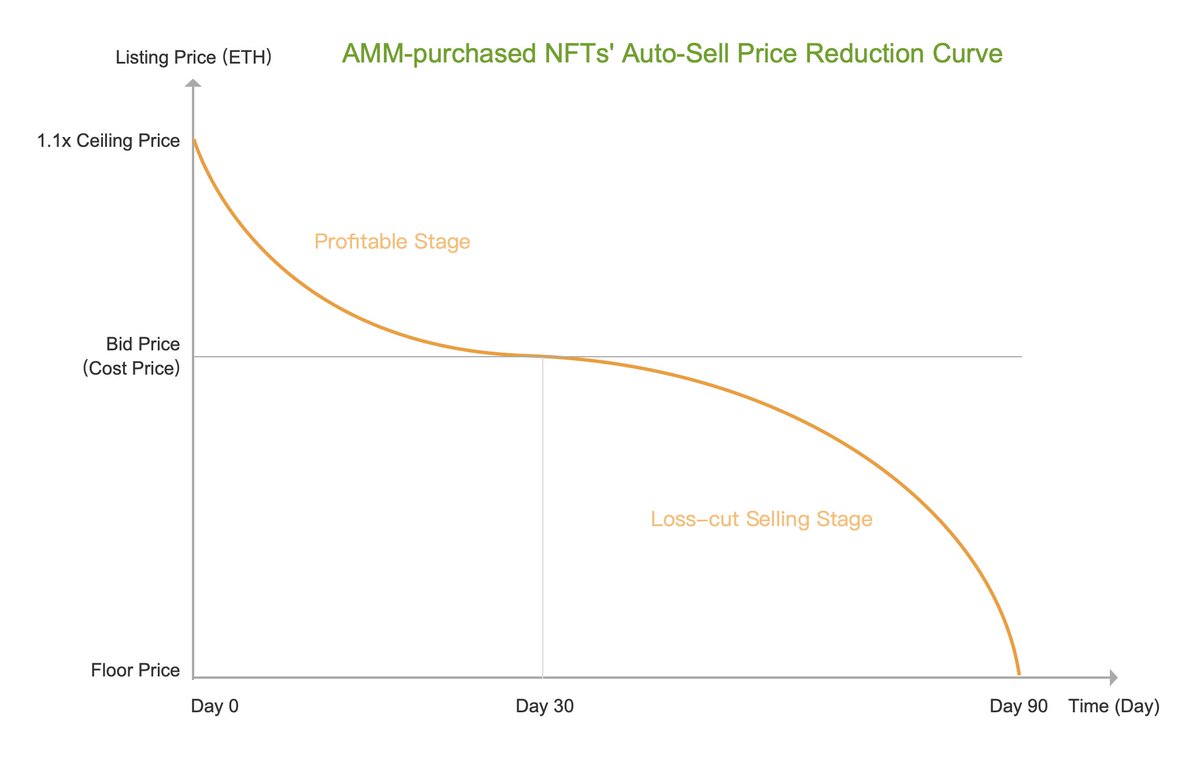
On @Catfish_Market , when a collection AMM pool buys an NFT via pre-bid, the NFT will automatically be listed for sale on the collection's shelf with a price strategy that similar to a Dutch auction.
The price reduction curve shown below👇
The number of people participating in the global cryptocurrency industry in 2024 compared to 2023.
In 2023, there were about 420 million crypto users worldwide, which is roughly 4.2% of the global population.
By 2024, this number is expected to jump to 562 million, around 6.8% of the population—a solid 34% growth year-over-year.
Asia is leading the charge, with crypto users growing from 268.2 million to 326.8 million. North America follows with about 72.2 million users.
Interestingly, 34% of crypto holders are between 24 and 35 years old, making this the most active age group in the space.
It’s clear that crypto is catching on fast globally, especially among younger generations!
Everything points to the crypto industry and NFTs getting better and better in the future.
The @pudgypenguins and @LilPudgys NFT collections have a strong connection to their $PENGU token.
As one of the most successful NFT projects, @pudgypenguins boasts a large, loyal community, providing a solid foundation for $PENGU's success.
Meanwhile, the token's launch has introduced more people to the Penguins ecosystem, increasing its influence and demand, which in turn has positively impacted the floor price of the NFTs.
This creates a mutually reinforcing dynamic.
Today's simultaneous surge in both the NFT collections and the $PENGU token exemplifies this relationship.
This scenario also sets a precedent for other collections, such as @Azuki, potentially launching their own tokens $ANIME.
We can anticipate that this new trend may usher the #NFTs market into a bullish phase.
Promising NFT Investment: @Azuki Elementals
Since the last recommendation to purchase Elementals at 0.9 ETH, the price has surged to 1.5 ETH.
Although the short-term gains are significant, there’s still substantial room for growth. Here's why:
Investment Potential:
1. Elementals still hold strong upside potential.
For example, after the @pudgypenguins announced $PENGU token airdrop, @LilPudgys NFTs increased nearly 4x in value.
As a top-tier IP, Azuki’s upcoming $ANIME token airdrop is a key catalyst. When the announcement happens, Elementals could follow Lil Pudgys' trajectory with similarly strong upward momentum.
2.Value for PFP Use:
Elementals offer excellent value compared to Azuki.
While Azuki is priced at 10 ETH, Elementals—with a similar aesthetic—trade at a fraction of the cost.
For newcomers or those seeking a budget-friendly entry point in the 1–3 ETH range, Elementals are the most visually and financially appealing option.
3.Post-Airdrop Capital Flow:
After the $PENGU token airdrop, a significant amount of profits from Pudgy Penguins holders is likely to flow into Azuki collections.
This is because the Azuki NFT series is one of the few collections in the market capable of absorbing large liquidity, potentially replicating Pudgy Penguins’ price surge.
Pro Tip: If you’re unsure about Elementals’ visuals, refer to rankings on https://t.co/5znrTmnjvt for inspiration.
👉https://t.co/BiRJarQvJf
Wishing you all the best in your investments!
Here’s a reference suggestion for collectors or investors looking to buy PFPs:
A month ago, the sub-brands of three well-known names— @Azuki, @pudgypenguins, and @BoredApeYC priced as follows: Azuki Elementals around 0.4 ETH, @LilPudgys around 0.8 ETH, and MAYC around 1.9 ETH.
Back then, both Elementals and @LilPudgys were great low-cost targets.
Fast forward to now, with the NFT market heating up and the news of $PENGU, @LilPudgys and MAYC have both surged to around 3.2 ETH, while Elementals are only around 0.9 ETH.
Purely from a price perspective, Elementals now stand out as a strong value play. Add to that the expectation of an $ANIME token launch, and there’s more clear upside potential.
It seems like a pretty good time to consider investing in @Azuki Elementals.
Never fade the power of a truly strong community.
Let's end the year with a bang. 🚀
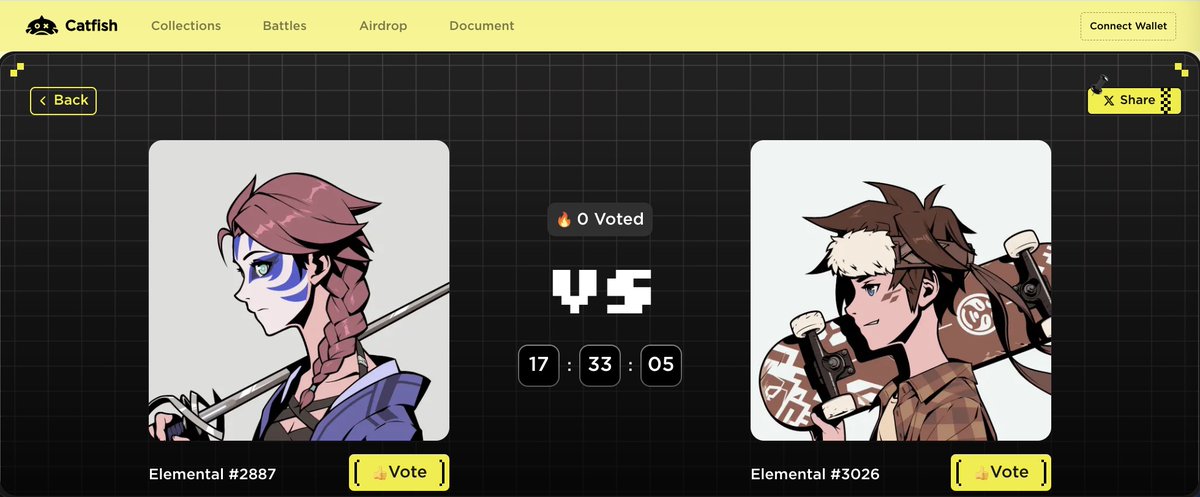
If you’re a fan of the @Azuki series but not too familiar with it, here’s some advice when choosing between these two Elementals.
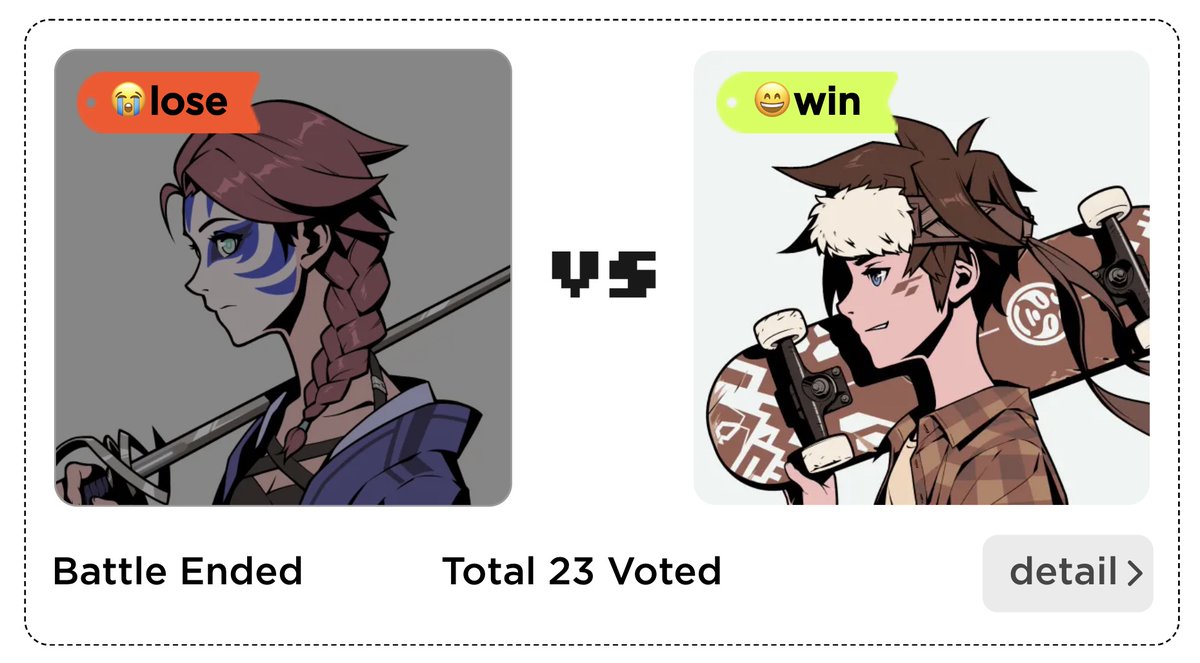
Currently, Elementals’ floor price is 0.52 ETH, while the Elemental on the right is a Kid, and the top bid for Kids is 0.79 ETH.
Based on that alone, it’s likely the one on the right holds more value.
Do you agree, @Azuki fam?
Vote👉:https://t.co/WcdITIHICD
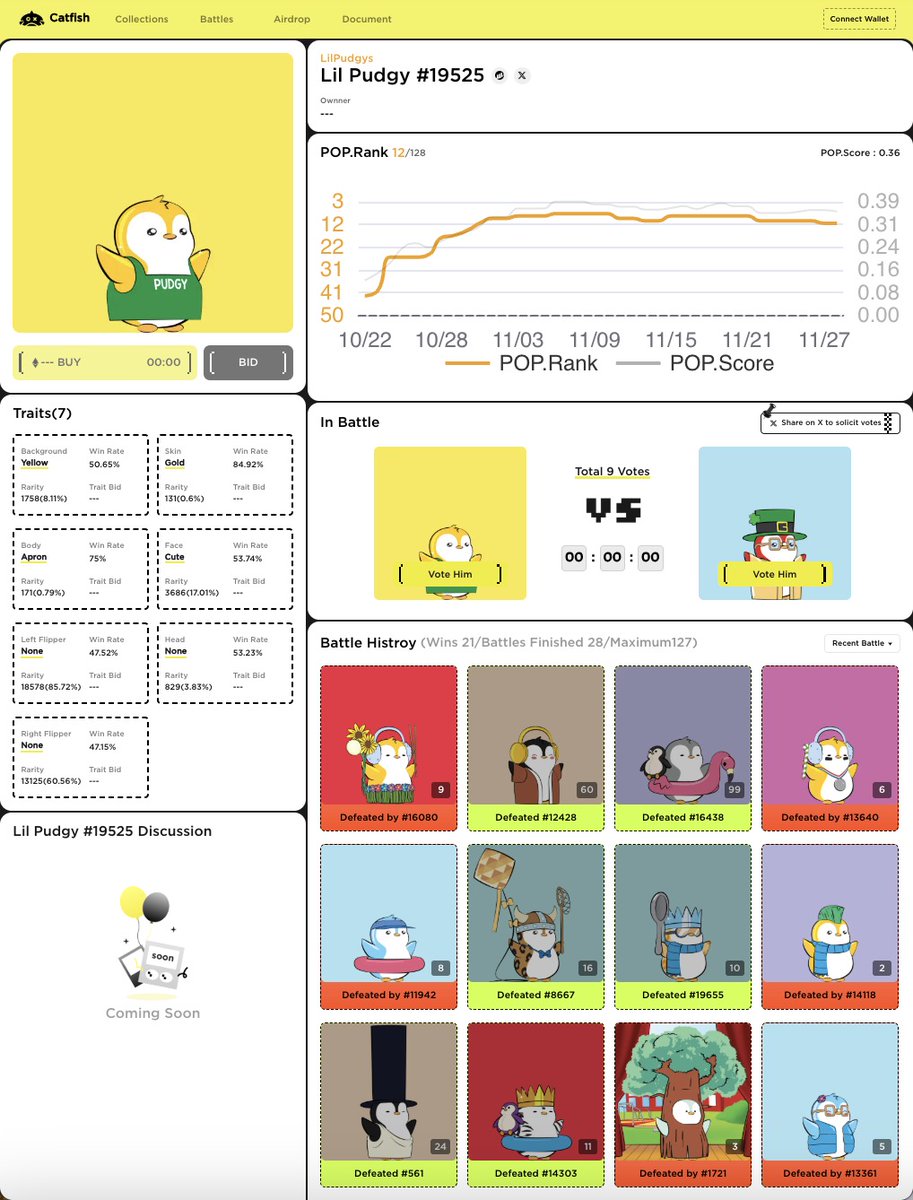
This @LilPudgys just sold for 17 ETH.
Based on its battle record on @Catfish_Market, it’s one of the top in the whole collection.
The buyer is smart and snagged an undervalued gem.
Congrats! 🎉🥳
https://t.co/1o4WY80Qwc
This Lil Pudgy just sold for 17 ETH.
Rods and Lils are so underpriced and behind atm, but honestly, that’s where the alpha is.
Lils at 1.6 ETH and Rods at 0.59 ETH? It’s a no-brainer.