Give the character a personality, lock in the look, keep putting him in new situations, and double down on whatever people actually share.
I think a lot of people will try to copy this. Almost none of them will create a character anyone remembers.
Dude built an audience around a haircut.
kwonblazekim has ~6M views across eight reels. Same suit, same impossible hair, a different everyday situation every time.
Three clips did most of the heavy lifting, and the rest barely moved. Which is kind of the point.
Is it making money? No idea. Views aren’t revenue, and I’m not gonna pretend they are.
But the character is the product, not the clip. A face people recognize in one second can get more reach than plenty of real marketing campaigns.
For creators, marketers, and designers, this could make producing polished short-form content significantly more accessible.
AI isn't just generating clips anymore. It's moving deeper into the creative workflow.
Would you try Katana for your next video? 👀
Higgsfield just introduced Katana — AI video editing inside Claude.
Forget switching between multiple tools to bring a video idea to life.
Powered by Claude Motion and integrated through Higgsfield MCP, Katana lets you upload a reference and create:
Introducing Higgsfield Katana, powered by Claude Motion.
Our most powerful AI video editing tool, inside Claude.
Upload a reference and create editable motion graphics, product launch videos, or aura-farming edits.
Available now in Claude via Higgsfield MCP.
This is a step toward a different creative workflow: instead of manually building every visual element from scratch, you can use AI to help turn a concept or reference into a finished visual piece.
People are already following AI influencers like they’re real people.
Brigitte Macaron is a good example of how fast this shit is moving.
A few weeks ago, almost nobody knew who she was. Now the account is sitting around 300K followers and 7M+ likes, with millions of views coming from short videos.
And the crazy part?
A lot of people still don’t realize she’s AI.
They comment, argue, vote on her outfits and come back for the next episode like she’s an actual creator.
The production cost of traditional influencers keeps getting harder to justify when one AI character can be dropped into an endless number of situations and generate this much attention.
And people are already turning that attention into money through brand deals, ads and other monetization.
This is probably one of the clearest examples yet that you don’t need a real person to build a real audience.
The character is fake.
The attention isn’t.
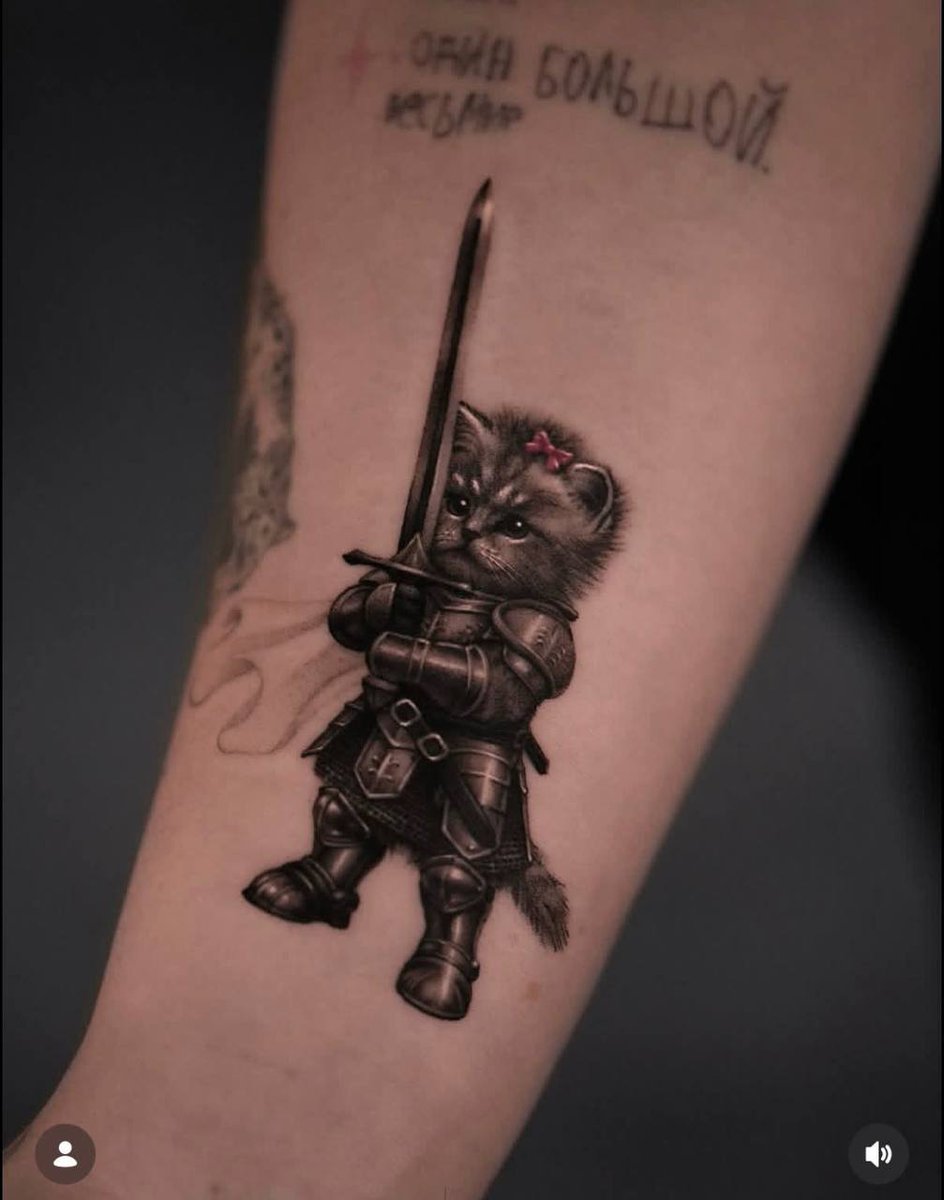
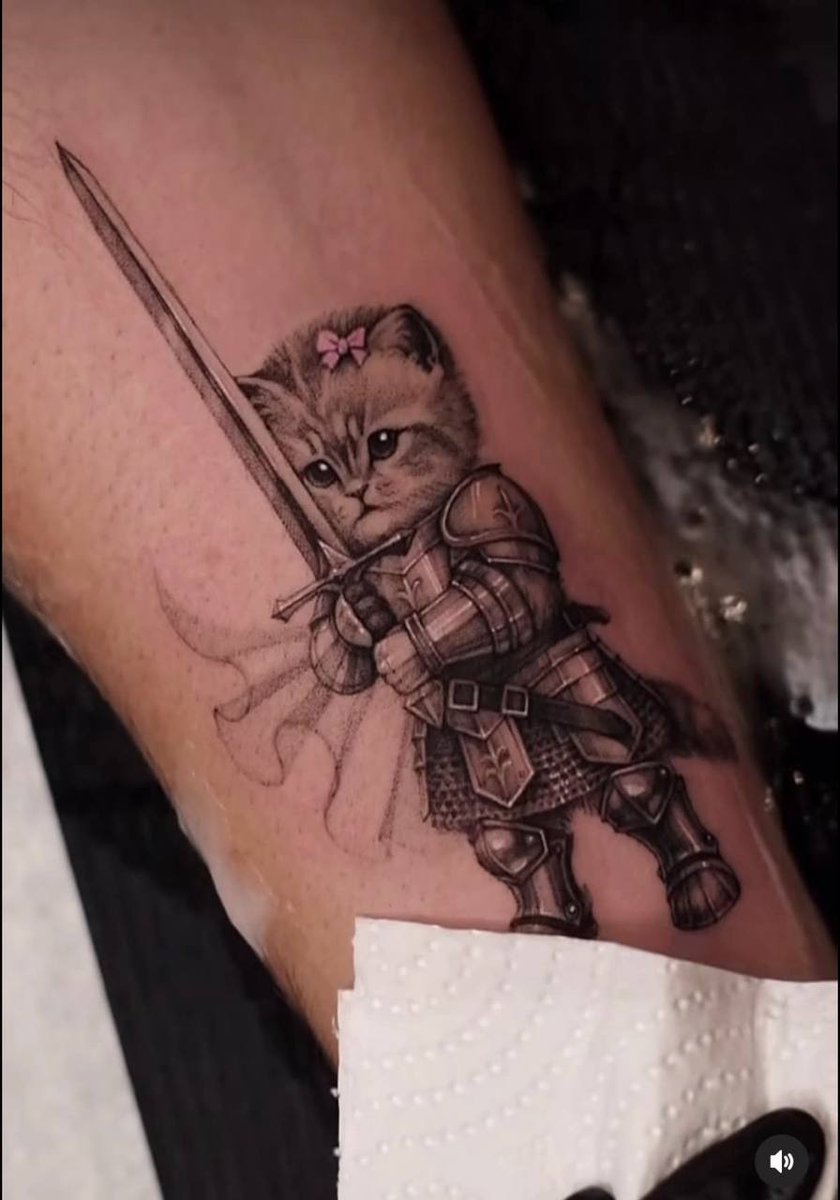
Swordcat went from tattoos to 3D prints and honestly it's getting normal. people print the little armored cat at home like it's a regular hobby. no drop, no merch, nobody even asked. this cat has better distribution than half the projects in my feed
Not every AI influencer needs to be a weird character to go viral.
Look at Margosa.
Instead of making another bizarre persona like Jean Phil, her creator went in a completely different direction: a young ballerina living in a cramped communal apartment in Saint Petersburg, sharing her everyday life, training, struggles and little moments from her life.
And it works.
Her videos are pulling hundreds of thousands, sometimes millions of views, and the account has already grown to tens of thousands of followers.
What’s interesting is that there isn’t really any crazy gimmick here.
The hook is the story.
People aren’t just watching because “this looks like AI.”
They’re following a character. They’re getting familiar with her life, her surroundings, her personality. Basically, they’re getting invested in a world that doesn’t even exist.
And I think this is something people miss when they look at the current AI influencer wave.
You don’t have to copy whatever is going viral right now.
Jean Phil created one formula, then dozens of people copied it. Someone else went in the opposite direction with a rich-looking character. Now Margoša is doing something completely different again.
Same technology. Completely different idea.
That’s probably the most interesting part to me.
AI is starting to feel less like a content style and more like a new medium where you can build almost any character, story or world and test it incredibly fast.
We still have no idea what kind of ideas will hit next.
And honestly, that might be the best part.
Swordcat really went from a random AI meme to an actual tattoo.
People are literally putting this little armored cat on their skin now 😭
A few weeks ago it was just another viral AI character.
Now people are getting emotionally attached enough to make it permanent.
AI memes move fucking fast.
Everyone copied @JeanPhilMadame
One guy did the exact opposite.
While the timeline was getting flooded with weird AI characters, dozens of accounts started doing basically the same thing. Same formula, different face, hoping the next character would catch.
Then this guy showed up and took a completely different angle.
Instead of making another absurd AI persona, he made a normal-looking guy and put him into crazy luxury situations.
A random dirty-looking dude suddenly walking around with supercars, expensive clothes and a life that looks ridiculously rich.
And somehow it works insanely well.
The account went from basically nothing to 280K+ followers in just a couple of days.
That’s what I find most interesting about all of this.
The AI itself isn’t really the impressive part anymore. The tools are getting good enough that everyone can make realistic videos.
The real edge is coming up with a simple idea that people haven’t seen 50 times already.
Everyone was asking: “how do I make the next Jean Phil?”
This guy basically asked: “what happens if I do the complete opposite?”
And apparently, the answer is 280K followers.
Sometimes it really is that simple.
while everyone was busy making bizarre AI characters,
this creator found a MUCH bigger angle.
he made poor person look filthy RICH. 😭
and this guy looks 100% real,
crazy part is that - he grew this account to 280K+ followers in just 2 days posting multiple times a day.
these videos are EXPLODING right now because they immediately catch the attention.
and these videos are soo simple to make.
here is the step by step workflow:
STEP 1:
find an interesting character reference on Pinterest and use it as inspiration to create your own original character.
then attach the reference to ChatGPT and ask:
"create a realistic character sheet for an original character inspired by this reference. use 3 panels against a clean studio background: full-body front view with no head visible, full-body back view with the head visible, and a close-up shot of the face."
STEP 2:
find a viral luxury or rich lifestyle video, then swap your character into it with Higgsfield Genjutsu.
use this prompt:
"replace the person in @ video1 with the character from @ image1. keep the same motion, camera movement, lighting, framing, color grading, environment, and overall video quality."
this prompt makes it look 100% real.
DONE. this is it.
Jean Phil is no longer just a meme. He seems to have started an entire factory of AI characters.
Over the past couple of weeks, we’ve seen a ridiculous number of copycats pop up: Archibald Brown, Derek Mercer, Benjamin Stachio, and a bunch of other characters nobody had even heard of before.
And the craziest part is how fast they’re getting attention.
Some of them are pulling tens or even hundreds of thousands of followers within days, while individual videos are already getting millions of views.
Then Swordcat shows up and you realize this isn’t just about Jean Phil anymore.
One character spawns dozens of others, then completely new characters start popping up, they go viral too, tokens get launched around them, and the whole cycle starts again.
It’s almost like AI has finally made memes capable of reproducing.
At the same time, people seem pretty split on all of this.
Some look at it and think, “fuck, this is hilarious.”
Others are already talking about the dead internet and seeing this as another step toward the internet being flooded with endless AI-generated content.
And honestly, I’m still not sure which camp I’m in.
But the fact that one fictional character managed to create an entire genre of similar characters in just a few weeks is pretty fucking crazy.
And I think we’re only starting to see how quickly AI can create new internet personalities and turn them into actual meme economies.
AI influencers are getting fucking weird
@JeanPhilMadame is probably the funniest example right now. A completely made-up AI character goes viral, starts pulling millions of views, people start making their own versions, and then someone launches a token around him.
And somehow there’s real money flowing into all of this.
The crazy part is how easy the whole loop is becoming.
Create a recognizable character → put him into whatever is trending → people copy it → the character becomes a meme → token launches → suddenly the meme has a market cap.
Higgsfield is basically showing this with Jean Phil right now. Take a viral video, replace the person with your own AI character, keep the movement, keep the format, and you can manufacture another internet personality in minutes.
So now you don't really need an actual person to create an influencer.
You just need a character people remember.
And if that character gets enough attention, someone will probably put a token on it.
We're going to see some absolutely insane shit from this.
Born in Higgsfield. All over your feed.
Introducing Higgsfield AI Influencer.
Create your own AI influencer and bring them into any trend.
Try now with up to 5 FREE generations on Higgsfield and in the ChatGPT extension.
Powered by Genjutsu.
Credits: @JeanPhilMadame
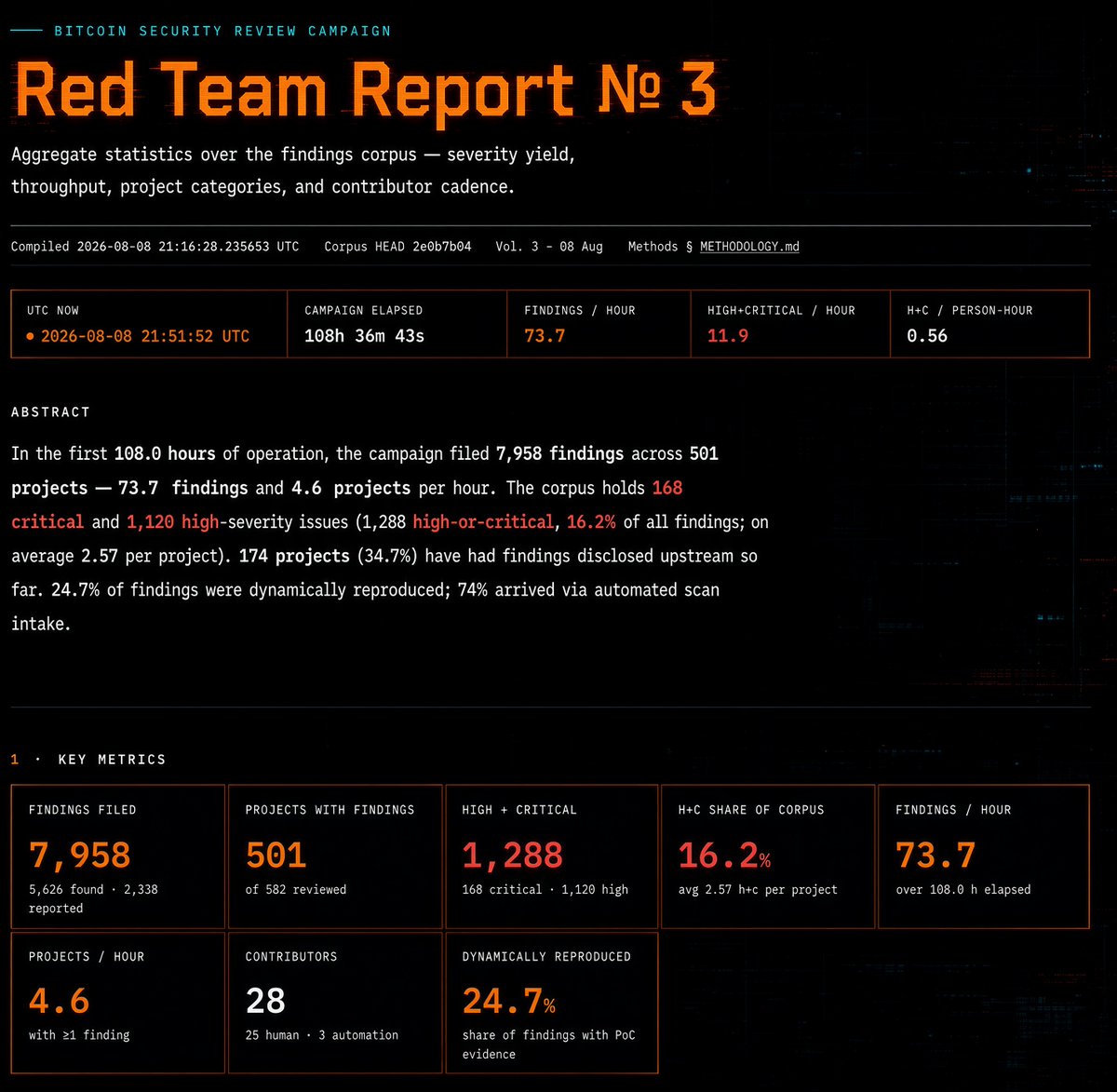
AI models conducted a massive audit of the Bitcoin ecosystem — and uncovered nearly 8,000 potential issues.
Bitcoin Red Team ran Kimi K3 and other models across 501 open-source BTC projects, from wallets and Lightning infrastructure to libraries and payment software.
The results:
— 7,958 potential issues found
— 1,280 rated high or critical
— Working PoCs were created for roughly 25% of the findings
— Nearly 30% of the findings have already been reported to project developers
The whole operation cost researchers more than $58,000, with 74% of the spending going to Kimi K3.
And this wasn't just AI generating a list of theoretical bugs. Some findings have already been confirmed by developers. For example, BTCPay Server released an emergency update after a critical vulnerability was discovered by the Bitcoin Red Team.
AI is starting to look less like just a tool for finding bugs and more like a full-fledged participant in auditing crypto infrastructure.
We just hired a million bad employees.
And the funny thing is, they’re not human. AI was supposed to replace human labor, but so far, something almost opposite is happening: companies are adopting AI and, along with it, creating a new class of workers that are even harder to manage. Every employee can now effectively hire a hundred digital workers almost instantly — and almost nobody knows how to manage them properly.
To understand why this is happening, the author of an a16z essay goes back to the 1840s. In the 1830s, railroads in the US began expanding at an insane pace: over the course of a single decade, the length of the rail network grew roughly 120x. But scale brought chaos. On October 5, 1841, two trains collided on the Western Railroad in Massachusetts. The cause wasn’t a technological failure. It was a simple coordination failure. The system had become too complex for the existing ways of managing it.
Over the following decades, companies began hiring regional managers, formalizing roles, building hierarchies, and defining lines of authority. Modern management gradually emerged. Railroads became one of the largest industries of their time and, at their peak, represented around 60% of the US stock market. The technology scaled first. The management system came later.
The same thing is happening with AI.
We’ve given every employee an almost unlimited budget and an infinite workforce — except that instead of people, they’re tokens and agents. And the problem is that AI doesn’t just scale intelligence. It scales dysfunction too. A good employee becomes dramatically more productive with an agent. A bad employee gets the ability to produce bad work at industrial scale.
That’s where the endless loops come from. An agent completes a task, checks its own work, decides it wasn’t good enough, rewrites it, checks again, and rewrites it again. Sometimes dozens of times. Not necessarily because the model is stupid, but because the human failed to define the task properly in the first place. The model starts exploring different interpretations of what it was supposed to do, and you end up spending tokens just to spend more tokens.
Once you look at it this way, it makes sense to stop thinking about tokens as software and start thinking about them as labor. Tokens have a cost, a level of productivity, wasted effort, and managers who may or may not know how to use them. Hiring a hundred people is slow and expensive. Launching a hundred agents can happen almost instantly. That makes the cost of bad management dramatically higher: one bad decision can be replicated thousands of times.
And this leads to perhaps the most important idea in the whole story: evals are becoming the new OKRs. To manage a person effectively, you need to know what a good outcome looks like. The same is true for an agent. If you can’t evaluate the result of its work, you can’t really delegate that work to a machine.
That’s why software engineering has become the first major market for AI agents. Code comes with a built-in eval: it either works or it doesn’t. Tests pass — good. Tests fail — bad. Most other professions don’t have such a simple feedback loop. What exactly is a good legal document? A good marketing plan? A good sales strategy? Until a company can define the answer with enough precision, it won’t be able to scale that work through agents.
This leads to a rather uncomfortable conclusion: the most valuable asset of an AI company may not be the model itself, or even the prompt. It may be the system used to evaluate results. The company that gets better at defining what “good” looks like will be able to manage thousands of agents more effectively. Everyone else will simply burn more tokens.
There’s another problem: knowledge. The most valuable context inside a company usually lives inside employees’ heads — and those are precisely the people with the least incentive to hand it over to a machine. Informal knowledge has been one of the strongest forms of job security for centuries. Medieval guilds guarded their techniques. Craftsmen protected the secrets of their trade. Modern employees carry around knowledge that never makes it into documentation. AI is the first technology asking companies to hand all of that knowledge over at once. But very few people want to train their own replacement for free.
That’s why the next conflict around AI may not be between humans and machines, but between companies and the employees who possess the most valuable context. And as automation spreads into traditional industries, that conflict is likely to become much more intense.
Meanwhile, Silicon Valley is already funding companies that want to capture roughly $21 trillion in service spending from existing businesses. But the paradox is that the most valuable assets needed to automate those businesses are already inside them: working processes, data, expertise, context, and established distribution channels.
That’s what makes the story of Palantir so interesting. On paper, its software should be one of the categories most vulnerable to AI. But Palantir has never really sold software. It has sold business transformation. And that may be the next big market.
AI won’t necessarily replace people. The winners will be the companies that learn how to turn a functioning business into a system that thousands of digital employees can operate.
First, we learned how to build agents.
Now we have to learn how to manage them.