The IMF has reaffirmed confidence in the UAE economy, saying it has remained resilient despite the Iran conflict and disruption to trade through the Strait of Hormuz.
Strong economic fundamentals, swift policy measures, and well-capitalised banks have helped cushion the impact of regional tensions.
While the IMF expects private sector credit growth and non-oil activity to moderate, it also forecasts stronger oil growth in the second half of 2026 as exports recover and production increases.
The main area to watch? Real estate. Property activity has slowed after years of rapid growth, although prices have largely remained stable across the UAE.
Newsletter: https://t.co/wnhe4GGtSb
WhatsApp: https://t.co/UQYNJobW3O
Instagram: https://t.co/lvyguoTJr4
Tiktok: https://t.co/FKfe0T2f4x
Smashi Business Show (Mon-Friday): https://t.co/d9KNTibiHs
#UAE #Economy #IMF #RealEstate #MiddleEast
@offshoreenergyt@OEUK_ The Hormuz 'blockade' is really just Lloyd's pulling war-risk cover. Traffic dropped 70% in hours. Commercial reality, not naval power.
🌄 Looking for something to listen to this summer?
@MatBauerEcon is joined by Nicky Stewart, Senior Advisor at @OpenCloudCo, to discuss cloud markets in Europe, switching barriers, portability, lifecycle design, and why resilience and cybersecurity matter for Europe’s digital future.
🎧 Listen to the episode: https://t.co/TPvop3anri
'The UK has a unique role in being able to hold European and American support together.'
In this clip from RUSI Reflects, Dr Andrew Gee examines the foreign and defence policy challenges facing Andy Burnham.
Watch the full members-only episode: https://t.co/MTYhhsc95N
Not a RUSI Member? Join today: https://t.co/KuNiUgLOM0
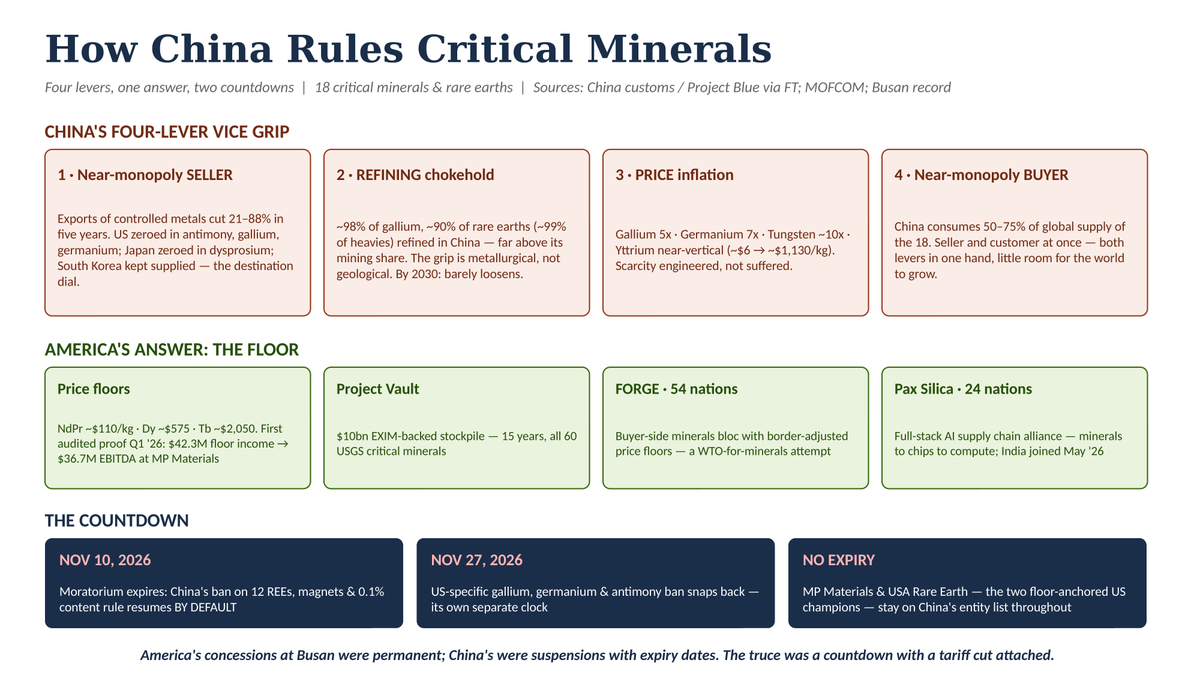
The seven-stage G2 Cold War over Strategic Minerals since 2022 will get nastier from November 10, 2026, advantage China.
Has China successfully substituted hard power with its power of strategic minerals?
4 Critical Minerals and 14 Rare Earths form the core of this largely silent War.
https://t.co/enY4zSP2lM
@TheMinuend Bongs got no chill 😂 But why is a liberal arts dept at an IIT producing work on nuclear policy? Not what these institutions were built for.
@raji143 Real issue isn't Xi's speech. Democracies left a governance vacuum and are now surprised someone's filling it. Can't complain about the rulebook if you haven't written one.
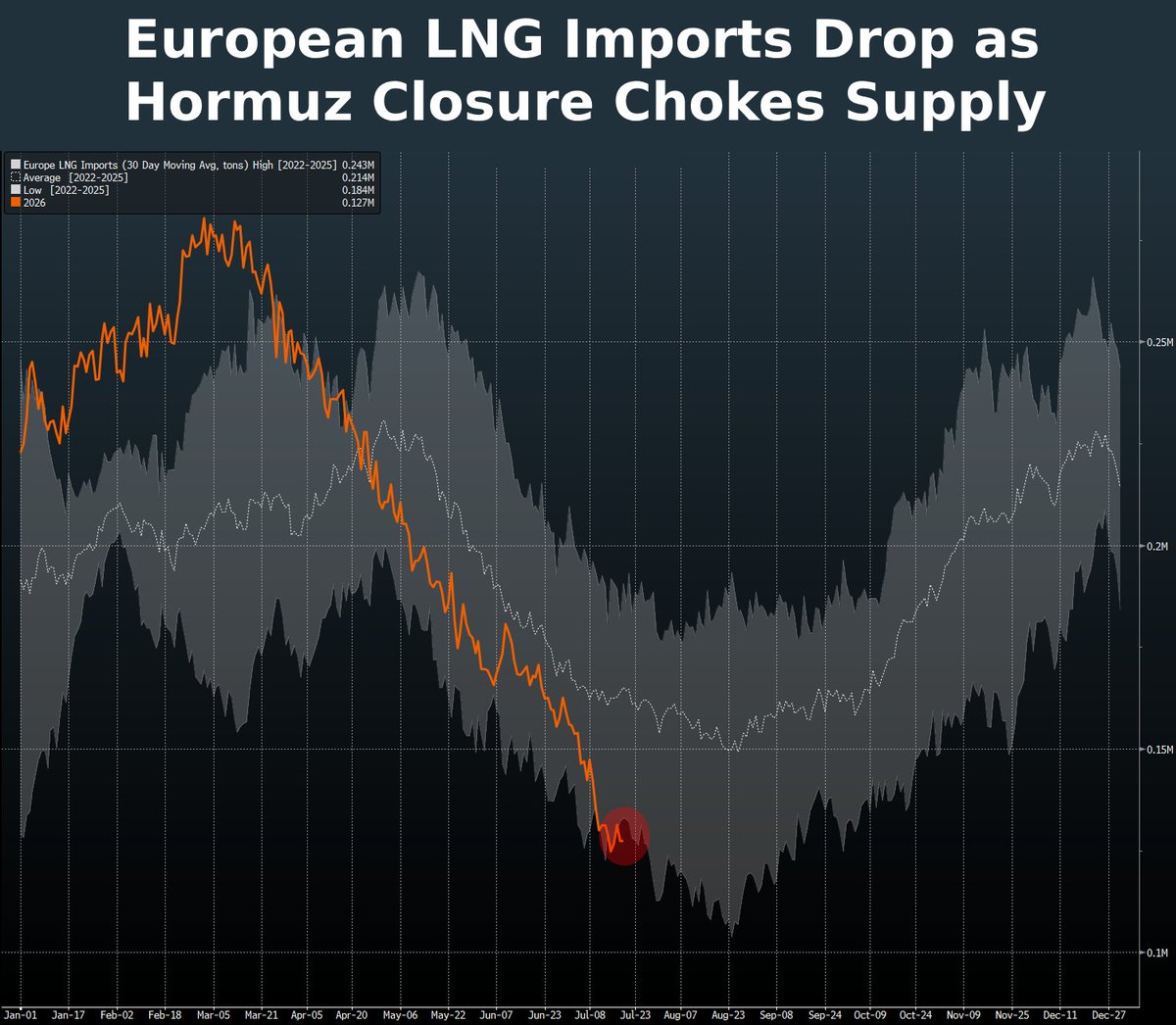
The Hormuz closure is choking LNG supplies to Europe 🇪🇺⚠️
European imports are down 33% year-over-year (on a 30-day moving avg basis). That's because Asia is taking more US LNG to replace supply stuck in the Persian Gulf
Also, Europe imports at lowest seasonal level since 2021
@JuneGoh_Sparta Article gets the buffer problem right but misses that the Hormuz constraint is insurance-driven not infrastructure failure.Different recovery problem entirely
@RichardMeyerDC This. We've been building gas infrastructure for decades. Permitting is what kills these projects. Jurisdictions that actually fix it will capture the datacenter build.
.
Have AUSTRAIAN supermarket prices become detached from costs????
What are product margins?
Product margin (also called gross margin) is the difference between what a supermarket pays for goods and what it sells them for, after removing taxes like GST. It shows how much profit the company makes on each dollar of sales before operating costs (wages, rent, etc.).
Nominal product margin = Total profit in Australian dollars (AUD million).
Average product margin (%) = Profit as a percentage of sales revenue.
Why it matters
Rising product margins mean supermarkets are keeping more money from every sale. This is especially important in Australia because the supermarket sector is highly concentrated, Coles and Woolworths dominate the market.
Higher margins can signal stronger pricing power, reduced competition, or cost efficiencies, but they also raise concerns about whether consumers are paying higher prices than necessary.
Key insights
Woolworths (red bars): The strongest performer. Its nominal margin rose sharply to over AUD 18 billion in 2023–24, with average margin approaching 34–35%. It has consistently increased both total profit and percentage margin.
Coles (blue bars): Also growing steadily. Nominal margin reached about AUD 12.8 billion in 2023–24, with average margin around 32–33%.
ALDI (green bars): Much smaller scale. Nominal margin is significantly lower (around AUD 2.5–3 billion), but its average margin has stayed relatively stable and slightly increased.
Metcash (orange bars – supplies independent stores): Moderate growth in nominal terms, but lower than the big two.
Australia’s two largest supermarket chains, Woolworths and Coles, have significantly increased their product margins over the past five years. This means they are earning more profit per dollar of sales, contributing to record-high profits while the cost-of-living pressures remain high for many Australian households.
Source: @OECD
This is a good essay from Chris Curtis on why growth must remain Labour's priority. It would be reassuring if anyone remotely near the Burnham operation was saying anything remotely similar. https://t.co/zu7JuDSvQo