@poetryenjoyer@XiJinpingThot69@plateauscave I agree with Nietzsche's suspicion about our concept of knowledge, but I have difficulty grasping how any alternative could turn out to be a fruitful research program, so to speak. As sciences or even as basic cognitive touch with the world.
Mathematics -is- a human endeavour.
There is something which maybe you're calling mathematics that has nothing to do with humans, some 'platonic otherworld' of abstract ideas. But what I call mathematics is the human attempt to explore and understand this world.
@davidbessis@JSimonsvu35 This "phenomenal" consciousness is something difficult (maybe impossible?) to define; the best we can get is to gesture at it (the best example: Nagel's ''What Is It Like to Be a Bat?''). But wittgenstein taught us to be suspect about mental content that we can only "point to''.
@wesleyhotdog A profundidade metafísica. Dostoiévski está falando da salvação da sua alma. No Brasil, os únicos que chegaram perto disso foram Rosa, Osman Lins, Murilo Mendes, Jorge De Lima, Tolentino e, quiçá, Suassuna.
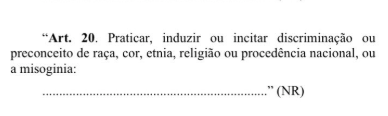
Essa lei da misoginia tem um retrocesso civilizatório extra que ninguém tá comentando.
A lei contra discriminação nunca escolheu "favoritos" antes. Quando ela cita preconceito de raça, cor, etnia a Lei não diz que só vale pra negros. Quando ela diz sobre procedência nacional, ela não diz que só vale pra estrangeiros ou só pra brasileiros ou, sei lá, só pra oriundos do Sul Global.
Independente de estatísticas ou berros de militantes, a Lei sempre foi para todos. Como toda Lei deveria ser.
Nessa mudança, em vez de incluir a discriminação por "sexo", eles tão incluindo especificamente a palavra "misoginia".
Em outras palavras, a Lei agora explicitamente diz que é proibido odiar mulheres, mas tá liberado odiar homens.
Porque foda-se a isonomia, estamos na época do identitarismo.