They Are Shaping What Your Children Think. They Are Funding Where The Men Come From. They Have Signed The Contracts Until 2039.
A producer of Pickle Storm, a CBBC comedy aimed at children aged seven, is on record saying it plainly. The charity that met with the production team described its purpose with equal clarity: to "tap into children's media and directly impact framing of migration in children's content." The producer confirmed the intervention had worked. "It really will inform our writing," they said. The show's second series was edited accordingly.
The charity is called Heard. It has received more than £4.5 million in grant funding since 2021. A second charity, Imix, has placed hundreds of sympathetic migration stories in national outlets including the BBC, the Mirror and the Guardian, and claims more than 11,000 bookings on programmes including Newsnight and Good Morning Britain. A third, Counterpoint Arts, received more than £400,000 from Arts Council England, a publicly funded quango, and oversees an initiative seed-funded by George Soros's Open Society Foundations whose stated aim is to use pop culture to "shift the way we talk, think and feel about migration." Comic Relief has funded both Counterpoint and Heard.
The BBC says it has full editorial control. The producer of Pickle Storm says the intervention really will inform the writing. One of those statements is more specific than the other. Now look at what is happening outside the television screen.
Britain sends £171 million a year to Afghanistan. The Taliban has banned women from working for NGOs, who previously made up forty percent of the aid delivery workforce. The government's own parliamentary documents acknowledge its ability to support people in Afghanistan is "limited" as a result. Its own aid watchdog found that 94% of NGOs fully or partially ceased operations after the ban. Britain sends the money anyway, to a regime that has banned girls from secondary education, stripped women from public life by decree, and announced the enforcement of stoning and flogging for women accused of adultery. The Treasury writes the cheque. The Foreign Secretary says it saves lives. Neither will explain how, given the delivery mechanism has been banned by the regime it is supposed to work around.
Afghanistan, Somalia, Sudan and Ethiopia are among the top five recipients of British bilateral aid. They are also among the leading countries of origin for Channel crossings. Britain sends money to the countries the men are leaving, then spends £4.27 billion of the same aid budget classifying the cost of housing them in UK hotels as overseas development spending. The taxpayer funds the sending and the receiving, and both are counted as aid.
Heard, Imix and Counterpoint are shaping what British children see on television. The Foreign Office is writing cheques to the governments the arrivals are fleeing. The Home Office has signed accommodation contracts running to 2039 for the hotels housing them when they get here. The government's own project delivery guidance ties equality, diversity and inclusion policy to the UN's 2030 Agenda for Sustainable Development. And the Technology Secretary has announced new powers to remove content about all of this during times of crisis, with the definition of crisis set by ministers.
A government trying to stop the boats does not sign hotel contracts until 2039. A state trying to manage public consent for permanent settlement funds charities to condition 7 year-olds before they are old enough to vote. A political class that intends to reverse this does not build, fund and protect the institutional machinery designed to make reversal unthinkable.
The Pickle Storm producer confirmed the intervention would inform the writing. So it has. So does everything else.
"George Soros's Open Society Foundations seeded Pop Change, an initiative whose stated aim is to use pop culture to 'shift the way we talk, think and feel about migration.'"
A little story of ‘keeping your chin up’ in retail.
Last week a customer came in to browse our bed selection. They left saying they can buy a cheaper bed at the ‘big pet store’.
That’s true, they can.
But our beds are made in the U.K. (not far up the road from us), using top quality upholstery fabric, they are deep filled with channels of padding. They are washable too. I think they are great value for that.
I felt a little disappointed that they chose to tell me they were leaving for another shop.
However, on Saturday they came back and purchased one of our beds.
Of the many things I’ve learnt owning our own empawrium is, that you sell what you believe in. And the people will find you.
💕 🐾
Woman of the Day journalist Evelyn Graham Irons, born OTD in 1900 in Glasgow, the first woman war correspondent to reach Eagle’s Nest, Hitler's retreat at Berchtesgaden (she helped herself to a bottle of his wine) and the first woman to be awarded the Croix de Guerre.
After graduating from Somerville College Oxford, Evelyn began working as a journalist for the Evening Standard (now the Daily Mail) and was promptly assigned to the beauty page. It wasn’t her ideal job. She had no interest in make-up, had never worn any in her life, and was eventually sacked for “looking unfashionable” but she ended up editing the “women’s interests” pages.
That’s how she came to interview poet and novelist Vita Sackville-West. They began a short and tangled affair in 1931 (Vita dedicated her "Collected Poems" to Evelyn) but it ended when Evelyn fell in love with Joy McSweeney. I mention this only because newspaper articles of the time fixated on her private life and not on what she actually achieved, yet she was a woman of immense courage.
She had already won the Royal Humane Society's Stanhope Gold Medal for “the bravest deed of 1935” for rescuing a drowning woman in very courageous circumstances at Tresaith Beach, Cardiganshire. It was the first time the medal had been awarded to a woman since Grace Darling.
Work was humdrum — the “women’s interests” pages still weren’t to her taste — and she was tired of desk work so when WW2 broke out, she told the news editor, "From now on I'm working for you”. The Standard made her a war correspondent.
I can’t help but wonder whether they set her up to fail. Field Marshal Montgomery refused point blank to have any women war correspondents with the British forces but that didn’t deter her. She wangled accreditation to the Free French Army, crossed the Rhine with Charles de Gaulle, accompanied French troops through Germany and Austria, and was one of the first journalists to reach liberated Paris. En route, she helped to capture a village in Bavaria.
"We somehow had got ahead of the advance, and four of us in a jeep came to this village and found no Allied troops had arrived. So we took it ourselves. We were armed - the French would have none of this nonsense about war correspondents not carrying weapons - so we held up everyone at gunpoint and accepted their surrender. Then we helped ourselves to all the radios, cameras and binoculars we could find and drove off."
That’s how Evelyn earned the Croix de Guerre with Silver Star, the first awarded to a woman. She was also the first woman war correspondent to reach Hitler's mountain retreat, Eagles Nest at Berchtesgaden, after it was captured. She crawled through snow to get there and helped herself to some of Hitler's "excellent Rhine wine” on arrival.
In 1952, she moved to the US to cover the Eisenhower v Stevenson presidential election and settled there with Joy.
By 1954, she was working for The Times when she became a bit of a journalistic legend, breaking a news embargo in Guatemala to stop any reports of the overthrow of its president. Journalists were forbidden to cross the border while the revolution was in progress so they hung around in a bar in Honduras.
Not Evelyn. She bought a mule for £9 to carry her to Chiquimula in rebel territory, and was the first journalist to reach the HQ of the provisional government. This prompted a rival editor to cable his idle reporter: "OFFGET ARSE ONGET DONKEY SOONEST".
Evelyn retired at 68 after many years as the Sunday Times New York bureau chief. She died in April 2000, just two months short of her 100th birthday.
Janet, this is well documented, and for those who aren't aware: in December 2025, Bloomberg Philanthropies launched a three year programme to train UK metro mayors, developed with the London School of Economics. Andy Burnham himself said he'd been "a partner to Bloomberg Philanthropies since his first year as mayor" and that the region had "benefitted enormously."
Steve Reed, the Housing and Communities Secretary, welcomed it too, saying it showed influential international bodies recognised the importance of devolution. Bloomberg has trained 387 mayors worldwide, including 9 of England's 11 Mayoral Strategic Authorities.
Now compare that to @elonmusk. He doesn't train ministers, fund government programmes or shape devolution policy. He owns a platform people use to hold this government to account, and occasionally weighs in himself. For that, he gets cast as a singular threat to British democracy, which is exactly the framing we see in posts from politicians like Ed Davey.
That's why Bloomberg, an American billionaire actively embedding his own staff, his own university partners and his own policy preferences into British local government, receives a warm welcome from a government minister and Elon Musk gets vilified.
So the real distinction isn't foreign billionaires influencing British politics. It's which billionaire, and what they're saying. One funds programmes that align with the government's agenda. The other owns a platform where people who disagree with it can be heard. Once you see that as the actual dividing line, Ed Davey's framing makes a lot more sense.
The Department for Business and Trade is arguing with the Treasury about suspending the new carbon tariffs on fertilisers. These could add £100 per tonne to fertiliser costs currently trading at £618 a tonne.
Needless to say the Treasury wants to keep the tax even though farmers may choose to leave fields fallow, as applying fertiliser at the higher prices will cause them to have to sell their crops at a loss. According to analysis from the Central Association for Agricultural Valuers (CAAV), a 500-acre wheat farm could make a loss of £70k in 2027
Jeremy Moody, the secretary of the CAAV, told the Guardian that suspending the carbon border adjustment mechanism “would stop us adding self-inflicted damage to an already difficult situation."
"Makerfield votes on Thursday. Reform holds every council ward in the constituency. A government that spent eleven weeks explaining why two hundred tankers could not be touched found, four days before a by-election it cannot afford to lose, that the first one could be."
Sixteen Year Olds Get the Vote. They Do Not Get X.
Today Keir Starmer announced a ban on under-16s using ten social media platforms. TikTok, Instagram, Threads, Facebook, X, YouTube, Snapchat, Reddit, Twitch and Kick. Bluesky is not on the list. Neither is Discord.
This matters because of what we know about both platforms, and because of what Australia did about one of them. Bluesky has publicly acknowledged a "predictable uptick" in child sexual abuse material as its user base grew, serious enough that it partnered with the Internet Watch Foundation to deal with it. Discord was the subject of an NBC News investigation that found hundreds of active servers being used to groom and exploit children, a finding its own chief executive called "horrifying." The Australian government, the model Britain says it is following, agreed with that assessment of Bluesky. It was added to the restricted list there in November 2025, with the same minimum age of 16 that applies to the rest of the ban. The UK's preliminary list does not include it.
This is not a case of Britain simply replicating that approach. The policy has been described as "Australian-style" and "Australia-plus," going further on curfews and chatbot restrictions than the original. On the one platform with a documented child safety problem that the original restricted, Britain has chosen to diverge. That is not an oversight in a policy carefully benchmarked against another country's model. It is a choice.
X, meanwhile, made the list. The government itself uses X. So do the Green Party, the Liberal Democrats and Your Party. None of them are leaving the platform, yet figures from all four have called for tighter restrictions on it or for it to be banned outright. What changed is not who uses the platform but what gets said there and who says it. Footage of the Belfast stabbing first spread on X to millions of people within an hour of it happening. The government's record on immigration, asylum and policing is challenged there daily, by people it cannot easily silence. Bluesky, by contrast, has become known as a space where that kind of challenge is rare. The platforms are not being separated by risk to children. They are being separated by how comfortable the political class is with what gets said on each.
A government can claim this is coincidence once. The pattern across this entire policy says otherwise. Yesterday it emerged the announcement had been brought forward by weeks. Ian Russell, Molly Russell's own father, could identify no reason for that beyond the Makerfield by-election. Today it emerges the platform list does not track the evidence of harm, even when that evidence comes from the government's own template. Reem Ibrahim of the Reason Foundation has already asked the obvious question. Is this overt political censorship. Sources tell the Guardian the government may face judicial review over precisely this inconsistency.
Then there is the contradiction nobody in government has addressed. Starmer has discussed extending the vote to sixteen and seventeen year olds, on the basis that they are mature enough to weigh arguments and choose a government. The logic of this ban is that the same sixteen year olds cannot be trusted to read X without the state intervening on their behalf. A government that believes both of these things at once does not have a coherent theory of childhood. It has a theory of which platforms it would prefer young voters not to encounter before an election.
The timing was political. The platform list, sparing on its own template's terms the platform that most deserved scrutiny, is harder still to explain. This was never only about Molly Russell and child safety. It is about who gets to talk to whom, and when, in the run-up to an election this government is increasingly afraid of losing.
"Bluesky has publicly acknowledged a "predictable uptick" in child sexual abuse material as its user base grew"
The Navy That Could All Along. It Just Needed A By-Election.
On Sunday morning, Royal Marine Commandos and National Crime Agency officers boarded the Smyrtos, a Cameroon-flagged Russian oil tanker, in the English Channel. The operation took six hours, supported by Chinook, Merlin and Wildcat helicopters, an RAF P-8 Poseidon, and the warships HMS Sutherland and HMS Ledbury. Keir Starmer ordered it personally and called it "yet another blow to Russia." It was the first UK-led boarding of a Russian shadow fleet vessel in British waters.
The authority for this operation has existed since March. That month, Starmer agreed that British armed forces and law enforcement could stop, board and detain sanctioned shadow fleet vessels in accordance with international law. That is the legal framework. It has sat in place for eleven weeks.
In those eleven weeks, more than two hundred sanctioned tankers sailed through Britain's exclusive economic zone. Checked. Unchallenged. Three days ago, Britain's role in shadow fleet enforcement was still limited to supporting others, while France carried out its fourth such boarding, commandos rappelling onto a tanker four hundred nautical miles off Brittany.
Two weeks ago, a former Royal Marine MP told the Defence Secretary that France had again demonstrated seizing these vessels was "both legal and achievable," and that the gap between Britain's permissions and Britain's actions came down to the Attorney General's hesitation. Finland, Sweden, Estonia, France and the United States, he said, have no such hesitation.
In April, the explanation on offer was that the constraint was never legal capability. Lord Hermer's framework required an individual legal case for each boarding, and the government used that requirement to explain months of watching sanctioned vessels pass through British waters. A Russian frigate escorted tankers through twenty-one miles of Channel while Iran closed a strait of similar width with a single announcement. The Navy was ready. The law, we were told, was not.
The law was ready in March. What changed on Sunday was not the framework. It was the decision to use it.
Makerfield votes on Thursday. Reform holds every council ward in the constituency. A government that spent eleven weeks explaining why two hundred tankers could not be touched found, four days before a by-election it cannot afford to lose badly, that the first one could be.
This is not really a story about Russia, or about the Channel. It is the same story as Britain's asylum backlog. 87,450 people. A four percent removal rate. Years of unused levers. It is the same story as Hungary, which received 47 asylum applications in the same six months Britain received roughly 50,000, and as America, where border crossings fell from 1.6 million to under 240,000 within months of a government choosing to act. The tools existed throughout, in every case. The decision to use them was the only variable that was ever missing. On Sunday, for four days' worth of reasons, it stopped being missing.
"Agency officers boarded the Smyrtos, a Cameroon-flagged Russian oil tanker, in the English Channel. The operation took six hours, supported by Chinook, Merlin and Wildcat helicopters"
Woman of the Day Ruth Cowan Nash, born in OTD 1901 in Salt Lake City, one of the first two American female war correspondents. She was embedded with the Women’s Auxiliary Army Corps and reported on major battles during WW2. In peacetime, she covered murders and gangster activities in Chicago.
Ruth didn’t have a birth certificate which was a bit of a problem when she later applied for a passport. Her father had died when she was ten and her mother, after relocating to Texas, went travelling in search of work. 13 year old Ruth stayed put, attending high school and doing odd jobs. Elva Cunningham, president of the San Antonio PTA, gave her a home and the Cunninghams became her second family.
She taught for a while after graduation — in the 1920s, 80% of teachers in Texas were women — but Ruth wanted more.
“When one is young and has dreams in one’s eyes, one of the biggest is apt to be a desire to set the world on fire.”
She did a spell as a part-time film critic “in order to afford coffee” and became a full-time journalist but knowing that sex discrimination would rear its head over and over (“A woman reporter is fine for the feminine angle, but it takes a man for the news”) she wrote as “R. Baldwin Cowan” and it brought in writing commissions from any editors who had never met her. United Press was happy with her reports but once it realised she was a woman, it fired her, so she wrote to the head of Associated Press:
“Dear Mr. Cooper, first, I am a girl. Sight unseen I pass for a man. But notwithstanding my femininity, I need a job, want one with the AP and can hold it. I never wrote a weather story that wasn’t rewritten. I snore at women’s luncheons but I have no objection to exploiting the ‘woman’s angle’ in any field. But I like murders, politics, gang-wars and whatnot with plenty of action. Never sat through a baseball game in my life…Am afflicted with ambitions. Want plenty of opportunity to train for big assignments and eventually want foreign service.”
Kent Cooper hired her. In fact, he hired at least seven women — his critics sneered that it was “an invasion of women” critics sneered — and placed Ruth on general assignment in Chicago covering “murders, gangsters, and of course, ‘the women’s angle.’” She started work on 11 April 1929, soon after the Valentine’s Day Massacre.
“Somebody at the AP thought it may be smart to find out just exactly how much this newcomer could take. They shipped me down with several other reporters to this inquest…One thing that I do remember is the smell of formaldehyde. I didn’t like that and I never have liked that. It was the first time that I’ve seen that you could take a body, put it in formaldehyde in a drawer, stuff it on a shelf, and deep freeze it. They reached over and pulled one of the bodies out…I went back and wrote about it. They said, ‘She did all right. She didn’t faint at all. Nor did she get sick.’”
In 1942, Ruth and columnist Inez Robb were the first two women officially granted credentials by the American government to cover WW2. Unusually for a journalist, Ruth was required to wear the same uniform as the WAC women and to comply with all the regulations of a member of the Armed Forces. She made it work for her: the helmet was useful for mixing her hair dye. Well, there was no rule against that.
On her first posting to Algiers, the AP editor greeted her by telling her no woman could stay there and she was convinced that he deliberately placed her on an assignment he knew was going to be bombed.
The icy welcome was compounded by her male colleague who wrote “Women war correspondents would be wonderful if they just weren’t women. Many of them are braver in the field than men reporters, many are better writers, but sooner or later they show that underneath their correspondent’s patch lurks ‘womanhood.’ And ‘womanhood’ has no place in an active war zone.”
The Army did its bit too, portraying women as a threat to men, morally unfit, or too weak to fight. There were complaints about the “burden” of separate toilets for them. Ruth said, “Latrines are an alibi. It is just a way to keep women including their own women away from war zones.” However, General George Patton proved to be an unexpected ally. He asked her what the first rule of war was. She said, “Kill him before he kills you.” He said, "She stays."
Ruth covered the war from 1943 to 1945 without a break, reporting directly from the Battle of the Bulge and from Paris when it was liberated.
In those days, if the marriage bar or pregnancy didn’t cut short a woman’s career and send her back into the kitchen, a new way had to be found.
In 1956, she was forced to retire from AP on her 55th birthday. Policy, you know, a policy that applied only to women: men’s compulsory retirement age was 65. But for that, she would have carried on.
Ruth died in 1991, aged 93.
“I didn’t regard myself as a woman and therefore should be limited in what I could think and what I could do and what I wanted to do. And I think that’s a mistake so many gals make; they feel, ‘Well, I’m a woman, and they push me around.’ They don’t push you around any such thing; you push them back and go do your job, and you’ll get on the front page. And that was the thing to do.”
“Something I’ve noticed A LOT is foreign researchers being awarded UK taxpayer funding to study complete nonsense. Take the fact that one of the researchers behind the infamous study The Europe that Gay Porn Built, 1945-2000, is a Portuguese man who lives in Sweden.” https://t.co/0JbwrSqRFM
It Took Eight Years to Listen to a Bereaved Father. It Took a By-Election to Act.
Molly Russell died in November 2017. Her father has spent the years since asking governments of both colours to act on the algorithms that fed his fourteen-year-old daughter suicide content until she took her own life. Eight years. The most recent stage of that process was a three-month consultation that closed last month, attracting some 100,000 responses. The Prime Minister told bereaved parents gathered in Downing Street that responding properly would be challenging given the volume, and that he would move as fast as possible by the summer recess.
That timeline has now collapsed to days. On Monday Starmer will announce what he calls a "game-changing" ban on under-16s using social media, complete with facial age scans, curfews for teenagers and restrictions on addictive features. The announcement lands three days before the Makerfield by-election, in which Andy Burnham, the man positioning himself to challenge Starmer for the Labour leadership, is standing as the party's candidate.
Ian Russell does not believe this is a coincidence. He told the Telegraph there was "no reason other than maybe a by-election in Makerfield" for the sudden acceleration, and called it "political opportunism." From a man who buried his fourteen-year-old daughter and has spent eight years pleading with successive governments for exactly this kind of action, the word "disgraceful" carries weight no opposition politician could match.
What makes the timing more damning is the evidence Russell is citing against it. Australia introduced its own under-16s ban in December 2025. Six months on, six in ten Australian under-16s remain on the banned platforms because the tech companies have failed to enforce it and children have found ways around it. Russell's own charity, the Molly Rose Foundation, has just published research showing 47 percent of girls aged 13 to 17 are still being shown high-risk content relating to suicide, self-harm and eating disorders every week, under the existing Online Safety Act that was supposed to have already fixed this. Ofcom admits nine in ten children aged 8 to 12 are using platforms with a minimum age of 13, because nobody enforces the limit that already exists.
Russell's argument is not that nothing should be done. It is that the government is choosing a headline-grabbing ban it knows does not work, over the harder regulatory work, forcing platforms to redesign addictive features, that experts say would. He fears that when the ban unravels as it has in Australia, the Prime Minister will be left asking why nobody warned him in advance. They did. This week.
There is a precedent for how fast this government can move when it chooses to. Liz Kendall's powers to remove "incendiary" online content during a "crisis" went from announcement to legislation within forty-eight hours. Jonathan Hall, the government's own terror watchdog, raised the national security implications of mass migration through proper channels and received silence that has now lasted for weeks, in the same period that Belfast burned. Eighty-seven thousand four hundred and fifty people sit in the asylum appeals backlog, a figure larger than the population of Carlisle, with no comparable urgency attached to it at all.
Two different forms of harm to children and to the country. One produced legislation in two days. The other has waited eight years and counting, and finally moved only once a leadership rival's name appeared on a ballot paper. The question Ian Russell is too polite to ask directly is the one that matters most. What, precisely, does this government consider urgent, and for whose benefit?
"Ian Russell does not believe this is a coincidence. He told the Telegraph there was "no reason other than maybe a by-election in Makerfield" for the sudden acceleration, and called it "political opportunism.""
I will continue to repeat myself a thousand times.
To date no candour, no resignations…no accountability.
You responsible have no shame.
You take positions but think position is devoid of responsibility.
Midlands mental health director, chief exec ICB lead the way…..
@GHRNewsUK@nottm_post@redrumlisa@jk_rowling
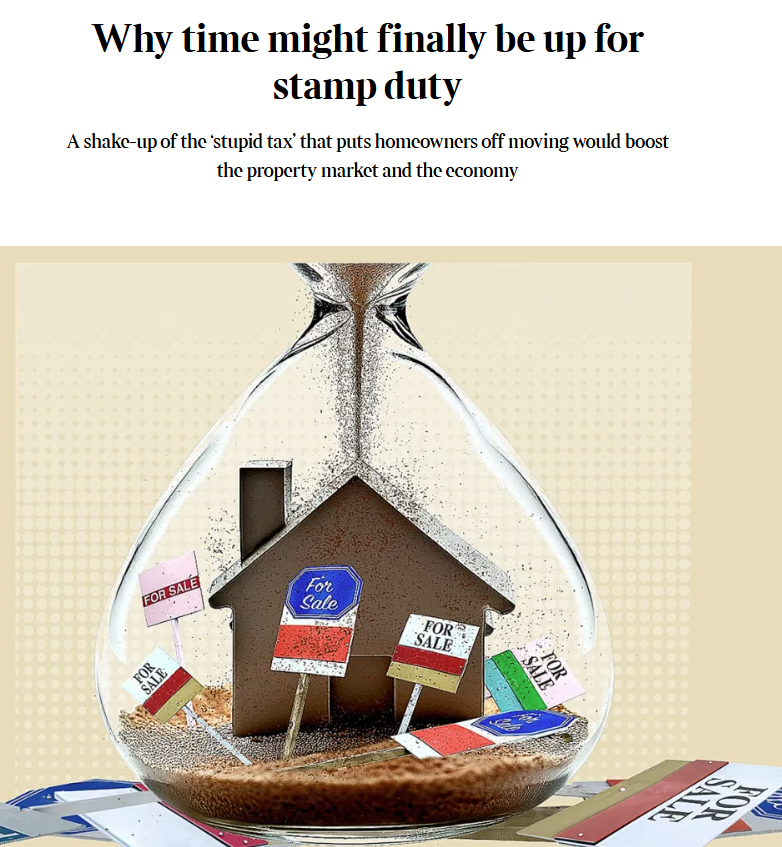
Great analysis of Stamp Duty's failings in the Times.
The average UK stamp duty bill has soared 760% in 30 years — nearly 1,900% in London.
The Treasury earned £10.3 bn in 2024-25 from stamp duty on residential property. It is forecast to be £20.7 bn by 2030-2031.
Stamp duty is paid by 1 in 3 first-time buyers, while 1 in 4 homeowners say it is stopping them from moving.
Brown & Osborne are responsible for the problem. Brown started hiking the rates in 1997 from 1% to 2%. Osborne went much further, taking the top rate to 12%. Osborne's thresholds have remained the same since 2014 despite 42% inflation since that time.
Paula Higgins from the Homeowners Alliance said: “When a family faces a £10,000 stamp duty bill just to move to a £400,000 home, it’s no wonder potential movers are staying put.”
It's a dreadful tax which deters people from moving house and changing jobs.
Arise, Sir Kevin Sinfield 🗡️
England Senior Men's assistant coach has been awarded a knighthood for services to Rugby League, Rugby Union and Fundraising in the King's birthday honours.
13th June, anniversary of the worst day in my life when I lost my brave & beautiful daughter Grace in the Nottingham attacks. Grace was the love of my life. The best of me and the best of my wife Sinéad. Thank you all for coming to grieve with us, the Coates family and a special I’ll thanks to @redrumlisa for being there and representing the warm people of Nottingham. Rev Dr Alan Mair gave a beautiful homily at St Paul’s Church, Lenton. We then walked across and laid a rose for my rose Gracie at Ilkeston Road. 🌹
This is the text of Rev Dr Alan Mair’s homily: beautiful words:
my Homily for victims Grace, Barney and Ian June 13th 2026
We need few words to express why we are gathered here on the third anniversary of the brutal attack that left Grace, Ian and Barney dead and Sharon and Wayne who received life changing injuries.
We gather with heavy hearts. We come before God carrying grief, anger, confusion, and sorrow. We remember, Grace, Barney and Ian whose lives were cruelty taken. We pray for each other whose lives have been forever changed.
In moments like these, words can seem inadequate. We ask questions that have no easy answers. Why did this happen? Why were precious lives lost? Why does violence continue to wound our communities?
The Gospel does not pretend that suffering is easy to understand. Even Jesus stood before the tomb of his friend Lazarus and wept. The Son of God Himself entered into human grief. This reminds us that our tears are not a sign of weak faith. They are a sign of love. And God receives every tear we shed.
We entrust them to the mercy of God, confident in the promise of Christ who said, "I am the resurrection and the life." Death does not have the final word. Through His death and resurrection, Christ has opened the way to eternal life. A tough concept to understand. But last Saturday at the hockey tournament I felt the presence of Grace. On the stands at the City Ground, I am certain Ian was cheering the fact that Forest stayed up while West Ham were relegated. I am certain too that Barney’s cricket club feel his gentle presence as they go out to bat.
Yet our prayer today extends beyond remembrance. We also pray for healing. We pray for parents whose hearts have been broken, for brothers and sisters, sons and daughters who miss a loved one, for friends carrying trauma, and for communities living in fear.
The Christian response to violence is not indifference. Nor is it revenge. St Paul tells us: "Do not be overcome by evil but overcome evil with good." This is one of the hardest commands in the Gospel. Yet history shows that hatred never heals hatred. Violence never truly defeats violence. Only love, justice, mercy, and truth can break the cycle.
We are called to become instruments of peace. In our homes, schools, parishes, and communities, we must build a culture where every person knows they are valued and loved. We must support young people, strengthen families, and work for justice. We must refuse to accept violence as normal or inevitable.
The Church stands alongside all who suffer. We believe that even in the darkest moments, God has not abandoned His people. The Cross itself seemed like a victory for violence and death. Yet God transformed it into the source of salvation and hope. The resurrection assures us that darkness does not overcome the light.
And we ask the Lord to make us bearers of His peace, so that through our words, actions, and witness, we may help build a society where life is cherished, communities are healed, and every person can live without fear.
May the souls of all who have died through violence rest in peace.
And may the peace of Christ, which surpasses all understanding, guard our hearts and minds, now and always.
Amen.
@EmilyMayTV@ITVCentral@SkyNews@MartinDaubney@redrumlisa@nottm_post@downingstreet@wesstreeting@jamesmurray_ldn@AlexDaviesJones
Barnaby Philip John Webber
11/01/2004-13/06/2023 💔
If you can, share these images of the beautiful soul stolen from us by the worst of humanity.
Let his face today burn bright.
Barney, I promise you there will be accountability 💛💚
For You. For Grace. For Ian.
🇬🇧 When you say the word tarmac... You have just said a Scotsman's name.🏴
Tar, laid over macadam. The macadam is the man.
John Loudon McAdam was born in Ayr in 1756. The Britain he grew up in moved at the speed of mud.
He was not an engineer and never trained as one. He was a merchant who could not stop studying roads, and he travelled Britain at his own expense to learn why they failed.
His answer was almost insultingly simple.
No grand foundations. Just small broken stones on a raised, drained bed, and let the traffic itself pack the surface tight. Cheap enough for any turnpike trust in the country.
🏛️ You were told great roads take an empire. Rome needed legions. McAdam needed broken stone and drainage.
In 1816, nearly 60, he got his chance at Bristol and remade the roads. The carts stopped sinking.
In 1823 Parliament examined his system and adopted it.
The work had cost him his own fortune. Parliament moved to repay him 5,000 pounds sterling, and rivals cut it to 2,000. He kept working anyway, and turned down a knighthood.
His method spread across Europe, then America. In 1902 a Welsh surveyor bound macadam with tar. Tarmac. 2 centuries on, the world walks and drives on his name.
An Ayrshire merchant paid his own way to fix everyone's road.
Britain moves because people like him refused to wait for permission.
Are you one of them? 👇
👉 https://t.co/rih7iKwnvf 👈
Be part of us. ☝️🇬🇧
Be Proud Of Us. 🙏🇬🇧