My phone hit 2% in a coffee shop in Columbus, and I had already made peace with dying alone.
The woman at the next table saw my face.
"You need a charger?"
"I could never ask that."
"You didn't. I offered." She tossed a cable across like it was nothing. "iPhone, right?"
In Japan, you do not borrow from a stranger. If you do, you owe that person. Possibly for generations.
So I plugged in and sat very still, guarding her cable like a family sword.
Ten minutes later she stood up. "Watch my laptop? Bathroom."
Now she owed me. I felt enormous relief.
I watched that laptop harder than I have ever watched anything. A man walked by too close. I stared at him until he apologized to a chair.
She came back. "Thanks, man."
"Now we are even."
She laughed. "Even? Keep the cable. I have like nine."
Nine. American women carry spare cables the way my grandmother carried spare candy for other people's kids.
I tried to give her five dollars. She looked at it like I had handed her a live fish.
"Dude. It's a cable."
I went home with 100% battery, a free cable, and a debt I will be paying off for the rest of my life.
Last Tuesday a guy at the airport was at 3%. I had my cable out before he even looked up.
🔥🚨DEVELOPING: This song titled “Mace Fell Out of a Windu” has been going viral and created a discussion among entertainment fans on how ‘good AI’ is starting to become accepted after Star Wars fans instantly started sharing the track.
Overanalysis has been my life story. It can be far worse than laziness, as overanalysis leads to the same lack of action but ALSO self-loathing.
What helped me quite a bit was studying military history, military strategy, and decisive battles. The stories informed how I overcame paralysis by analysis.
Step one is set deadlines for decisions.
In warfare, you rarely have complete information, and if you wait to push certainty from 75% to 85%, say, that lag time could cause you to lose advantage and opportunity. It's the same in many parts of life.
So I set deadlines. By X point in time, I must make a go or no-go decision, no matter how much or how little information I have. Furthermore, I try and figure out small, short-term, low-risk experiments I can run as "go" decisions, so that I don't perceive action as high-risk.
In short: Set deadlines for decisions (put them in your calendar or they aren't real) and break large intimidating actions/projects into tiny mini-experiments that allow you to overcome fear of failure.
Once you have a little momentum, the paralysis usually disappears on its own.
modern texting has basically created a new kind of social perception which is insanely fascinating.
i.e. after enough exposure you stop reading the literal words & start reading all of the deltas instead. those start to matter a lot more. stuff like response latency, even punctuation, message length, whether someone answers every part of a text, emoji usage, emoji tags, sudden changes in warmth, initiation frequency, when they stop asking questions, whether their cadence feels effortless or managed, etc.
the content becomes almost secondary. it’s remarkable how much human meta data flows through even a medium that mostly removes the non verbal stuff by default.
How to end traffic deaths? Mount a steel dagger in every steering wheel, aimed at the driver's heart.
With that absurd proposal, Gordon Tullock explained one of the most important mechanisms in economics. 🧵
Whenever someone makes a claim, ask three boring questions: Who pays them? What happens to them if they're wrong? What happens to them if they're right?
You could move to New York City.
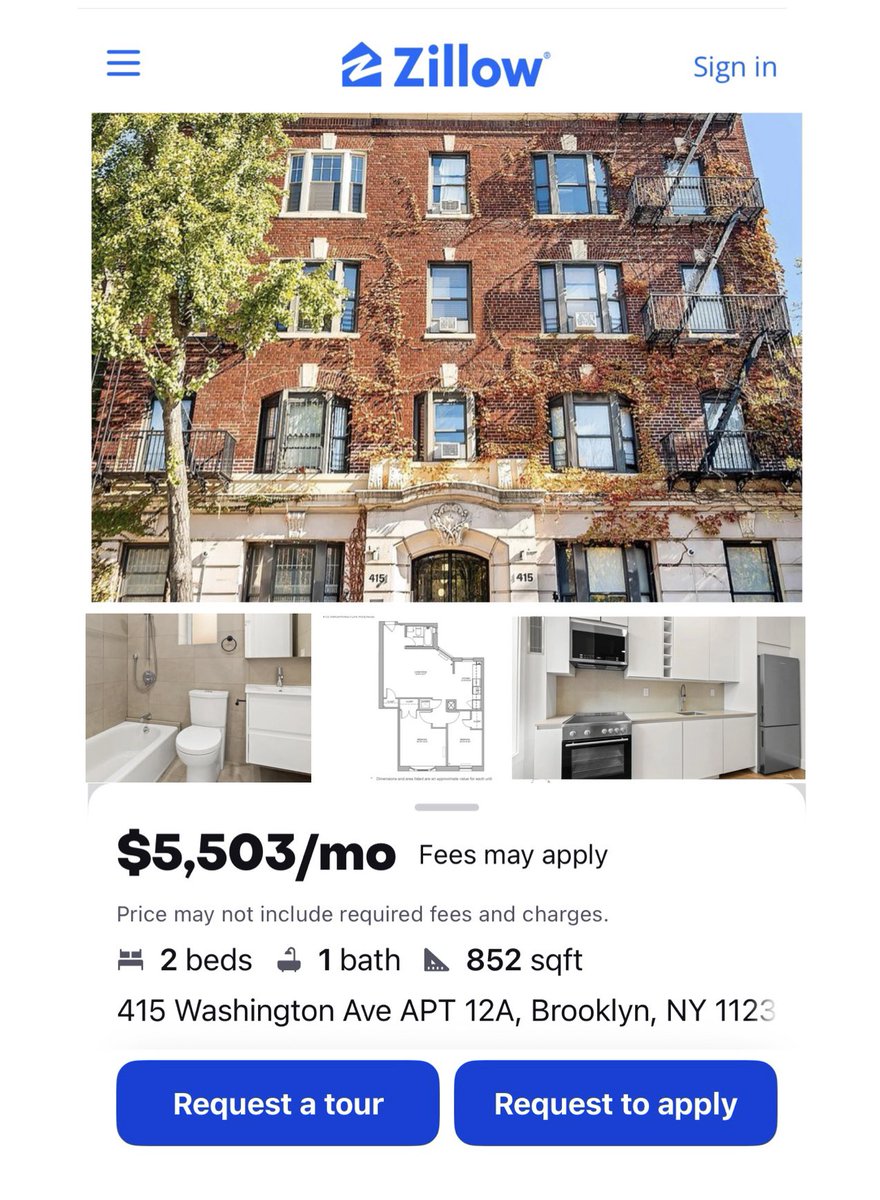
Rent an 852-square-foot apartment for $5,503 a month.
Blow $500 on three “first dates” a week and somehow remain single for six years.
Finally meet someone you like, then discover they’re “not really looking for anything serious right now.”
Get a master’s degree so you can qualify for an internship.
Apply to 147 jobs, get 93 automated rejections, and finally find an “entry-level” position requiring five years of experience.
Eventually land a six-figure job and still need a roommate to make rent.
Pay federal income tax, New York State income tax, AND New York City income tax because apparently living there is a three-level subscription.
Learn that a “quiet neighborhood” means the sirens only come by every 20 minutes.
Pay $27 every day for a sandwich (no sides) because the place has exposed brick and a handwritten menu.
Take the subway to work every morning and develop the useful skill of pretending not to notice absolutely anything happening around you.
Spend 45 minutes traveling three miles.
Carry your groceries home six blocks because parking near your apartment is more of a philosophical concept than an actual possibility.
Have “owning a washer and dryer” become one of your primary measures of generational wealth.
Walk past a mountain of trash bags on your way to a restaurant with a Michelin star.
Tell your friends back home you don’t need a car while spending $46 on an Uber because the subway is delayed again.
Go to Central Park when you want to remember what trees look like.
Spend your twenties telling everyone you could NEVER live anywhere else.
Then one day you visit your cousin in Iowa.
He has a house with four bedrooms, a garage, a yard, two cars, four kids, and somehow pays less than you do for the apartment where your refrigerator touches your couch.
But hey.
The NYC bagels are incredible.
When you hear that data is the new oil, this is ultimately what that looks like. AI has such a thirst for data that we’re entering an era where it’s valuable almost in any form.
In a world of AI, information actually belongs as an asset on the balance sheet. This data sale is just one example of the implications of what that will look like.
Ultimately, the way that companies manage and mine their organization’s intelligence will be one of the deciding factors for competitiveness and value creation in the future.