Police Respond to “Break-In” Call, Find Bear Getting Beat Up by House Cat
Officers were called to a home after neighbors reported a loud crash and a possible break-in.
When police arrived, they found the back door smashed open, but it wasn’t a burglar.
It was a black bear in the kitchen, trying to get into a bowl of cat food.
Body-cam footage shows the homeowner’s cat standing between the bear and the food before suddenly swatting the bear in the face. The bear immediately turned around and ran back out through the broken door.
No one was hurt, and wildlife officials say the bear was likely attracted by the smell of pet food.
Police later posted a public reminder:
“Lock your doors, secure pet food, and please do not rely on your cat as home security.”
The cat, however, is reportedly undefeated.
A 33-year-old woman at MIT wrote the code that ran inside the Apollo 11 lunar lander, and 20 seconds before Neil Armstrong touched the moon, her program made a decision the astronauts didn't know was happening that was the only reason the mission didn't crash.
Her name was Margaret Hamilton.
She led the team writing every line of code that would fly humans to the moon and back. The part almost nobody knows is that she had to fight to be allowed to do the work at all.
Code in 1965 was not treated as real work.
Rockets were serious. Circuits were serious. Writing code was something the men at NASA thought secretaries could do on the side. Hamilton was told this to her face more than once.
So she started calling what her team did "software engineering."
She used the phrase on purpose. In meetings. In memos. To force people to treat it as a discipline instead of a chore. Colleagues laughed at her the first few times she said it out loud.
That phrase is now the name of the biggest engineering profession on earth.
The story of what her code did on July 20, 1969 is the one every kid should be taught.
Neil Armstrong and Buzz Aldrin were 3 minutes from touching down when the computer inside the lunar module started flashing an alarm.
1202.
Then again. Then 1201. Five alarms in four minutes. The computer was telling the astronauts it could not finish everything it had been asked to do.
The computer they were flying with had less memory than a modern microwave.
Someone on the checklist had left a switch in the wrong position, and a radar the astronauts did not even need right then was flooding the computer with data. It was eating around 13% of the machine's brain at the exact moment every second mattered.
In almost any other system, that overload would have frozen the machine.
A frozen machine 30,000 feet above the moon means a crash. It means two dead astronauts and a third one orbiting alone above them, waiting for a signal that would never come.
Hamilton's code did something else.
She had built the software with a rule almost nobody in her field was using at the time. When the machine ran out of room, it would not treat every task as equally important. It would look at the list of jobs it had been asked to do, throw out the ones that could wait, and keep running only the ones keeping the crew alive.
The radar was the low priority job.
The landing was the highest.
So the computer did what she had told it to do. It dumped the radar. It kept flying. The alarm was not a failure. It was the machine reporting that it was handling the overload exactly the way she had designed it to.
Down in Houston, a 24-year-old engineer named Jack Garman recognized the alarm from a test his team had run months earlier. He shouted "Go" to the flight controller. The controller shouted it up to the crew. The landing kept going.
Armstrong touched the surface with 25 seconds of fuel left.
The part that gets lost in every retelling is why Hamilton had built that safety net in the first place.
NASA had not asked for it.
She had added it on her own, years earlier, because her 4-year-old daughter Lauren had once crashed the simulator by pressing a button during a test. The button was one the astronauts had been told they would never press.
Hamilton wanted the code to survive that button press anyway.
Her bosses told her it was a waste of time. Astronauts do not make mistakes.
She insisted. The safety net went in.
Two years later, on the way to the moon, an astronaut left a switch in the wrong position. The exact class of mistake she had been told would never happen.
There is a photograph of her from that period.
She is standing next to a stack of paper as tall as she is. Every page in that stack is the code her team wrote for the mission. She is smiling at the camera like she knows something the rest of the aerospace industry has not figured out yet.
In 2016, Barack Obama put the Presidential Medal of Freedom around her neck and said the astronauts did not have much time, but thankfully, they had Margaret Hamilton.
Every autopilot in every plane you have ever flown on uses a version of what she invented. Every pacemaker. Every self driving car. Every satellite in orbit.
The idea that a machine should know which job matters most and drop the rest when it runs out of room is now the foundation of almost every safety system on the planet.
She wrote it because a 4 year old crashed a simulator and nobody else thought it was worth fixing.
The men in the room laughed at her for calling it engineering.
Then her code was the only thing in the sky that did not fail.
Bob Geldof did not want them on the bill.
He had agreed to include Queen in the Live Aid lineup only reluctantly, pushed by promoter Harvey Goldsmith. By the summer of 1985, Geldof was not alone in thinking their moment had passed. Their biggest hits were nearly a decade old. Critics had started writing them off. Privately, the band itself was wondering if it was finished.
Then came July 13, 1985.
What nobody watching that day knew was what had happened the week before. Queen had booked the 400-seat Shaw Theatre near King's Cross in London and rehearsed their 21-minute set down to the exact second. Not the general shape of it. The exact second. Six songs, every beat drilled until nothing could go wrong.
And then, reportedly, their roadies disabled the sound limiters on the PA before the set. Every other band on that stage was capped. Queen was not.
At 6:41 PM, Freddie Mercury walked out. White jeans. White tank top. Studded armband. Seventy-two thousand people erupted.
He sat at the piano and played the opening of Bohemian Rhapsody, not the whole song, just enough to set the crowd on fire. Then he stood. Strode to the microphone.
Radio Ga Ga filled the stadium. Seventy-two thousand people raised their hands in perfect unison, one of the most iconic images of the entire decade.
Then Freddie stopped the band. He turned to the crowd. He opened his mouth and sang a single sustained note.
""Aaaaaaay-o.""
And waited.
Seventy-two thousand people sang it back. He went higher. They followed. Higher still. They stayed with him. Back and forth, the note climbing, the crowd holding on, the moment stretching into something that felt almost sacred.
It would later be called The Note Heard Round the World.
They tore through Hammer to Fall, Crazy Little Thing Called Love, a shortened We Will Rock You, and finally We Are the Champions. The stadium shook.
Twenty-one minutes after they walked on, Queen walked off.
Bob Geldof, the man who had not wanted them there, said afterward: ""Queen were absolutely the best band of the day. They played the best, had the best sound, used their time to the full. It was the perfect stage for Freddie: the whole world.""
An estimated 1.9 billion people across 150 nations had been watching. In 2005, music industry insiders voted it the single greatest rock performance in history. Not one of the greatest. The greatest.
Authors and musicians who were there have said those 21 minutes may have saved the band itself, that Queen was on the verge of a permanent split, and that afternoon reminded all four of them what they were still capable of together.
Freddie Mercury died on November 24, 1991. He was 45 years old.
But on July 13, 1985, for 21 minutes, standing before 72,000 people under a London summer sky, he was the most alive person on earth.
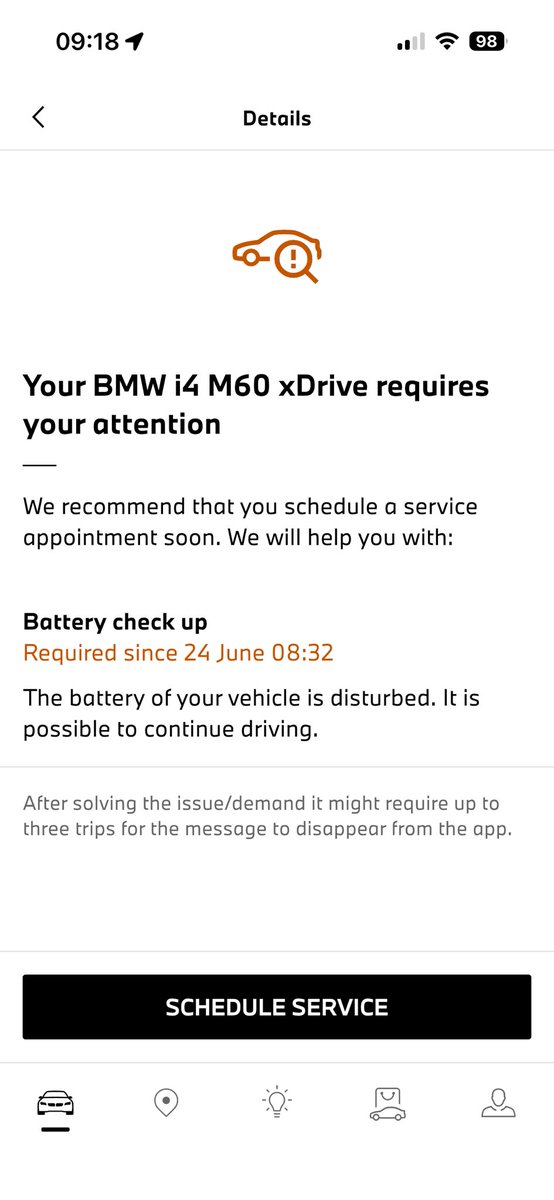
@BMW_UK had been planning on taking this car to Ireland imminently when this popped up this morning. I’ve had the car for 2 months!! Is this a glitch as I know other owners who have same issue #bmw#i4
@MattyDread There were none!! They were warned from the outset that they only had one chandelier and they had to nail it in one take. That makes it all the more impressive!!!
I'm a cardiologist. A 42-year-old mother of two came to my office complaining of jaw pain and crushing fatigue. She ran half-marathons. Her EKG was normal. Another doctor had sent her home with anxiety medication.
When I got her into the cath lab, I found severe microvascular disease — plaque choking the tiniest vessels of her heart, the ones standard angiograms routinely miss.
Her heart had been starving in silence while everyone told her she was stressed.
She is alive today. Too many women like her are not.
Heart disease kills more women than every cancer combined. And medicine is still diagnosing it through a male lens.
84% of cardiologists report having patients in the past year whose heart disease was misdiagnosed by another physician. Women with a STEMI heart attack have a 59% greater chance of being misdiagnosed compared to men. Women with an NSTEMI — 41% greater chance.
The reason is structural. For decades, we screened, tested, and treated women using a template built for men.
Men's heart attacks announce themselves — the crushing chest pain, the clutched fist, the Hollywood collapse. Women's hearts whisper. Crushing fatigue that feels like wearing a lead vest. Jaw pain written off as TMJ. Nausea blamed on a stomach bug. An ache between the shoulder blades blamed on a long week. Shortness of breath blamed on being out of shape.
For years, medicine called these "atypical" symptoms. They are not atypical. They are female-typical. Half of humanity is not a variant.
And the biology runs deeper than symptoms.
Women have smaller hearts and narrower coronary arteries. Plaque doesn't only clog the big highway vessels — it hides in the microvasculature, the tiny branches feeding the heart muscle itself. A woman can have a heart attack with a completely "clean" standard angiogram.
SCAD — spontaneous coronary artery dissection — occurs 90% of the time in women. Often young, fit women with zero traditional risk factors. It's the leading cause of heart attack in women under 50, accounting for roughly one quarter of all cases in that age group. Most doctors have never diagnosed one.
And some of the most dangerous cardiac risk factors are hidden in women's medical histories where no one thinks to look:
Preeclampsia or gestational hypertension doubles to quadruples lifetime heart disease and stroke risk. Pregnancy is the body's first cardiac stress test — and these complications are early warning sirens, not closed chapters.
Autoimmune disease — lupus, rheumatoid arthritis, psoriasis — far more common in women, turbocharges inflammation and plaque formation at any age.
Cardiovascular disease in women aged 20-44 is projected to surge nearly 50% by 2050.
The youngest patients in my practice keep getting younger.
What every woman should ask her doctor — and what every doctor should be asking:
"Given my pregnancy history, autoimmune status, and family history — what is my full cardiovascular risk?" If they don't ask about preeclampsia or gestational diabetes, volunteer it.
"Should I have an Lp(a) test and a coronary calcium score?" Standard cholesterol panels miss too much. Lp(a) is genetic, one-time, and most women have never been tested.
"My tests came back normal but my symptoms haven't stopped — what's next?" Normal stress tests and angiograms can miss microvascular disease, spasm, and SCAD. Persistent symptoms warrant coronary CT angiography or cardiac MRI.
And if something feels wrong — say these exact words to your doctor: "I am concerned this could be my heart."
That single sentence changes the workup. Do not soften it. Do not apologize for it.
80% of heart disease is preventable. But the playbook has to be built for female biology.
Two decades ago, I wrote one of the first books warning that heart disease was the number one killer of women and that medicine was diagnosing it through a male lens. It was recognized by First Lady Laura Bush at the White House during the early years of the national conversation about women's heart health.
I'm haunted by how much of that book I could republish today unchanged.
The science has advanced. The awareness has grown. But the gap between what we know and what happens in the exam room is still costing women their lives.
Share this with every woman you love — and every doctor who treats them. READ MORE: https://t.co/4LRugiY8q2
This footage came from a home security camera inside a house in Knoxville, Tennessee.
The elderly man in the pajamas is Harold.
He’s 79 years old and lives with a progressive memory condition that sometimes causes severe nighttime confusion something doctors often call “sundowning.”
Late at night, Harold occasionally wakes up believing he still has somewhere important to be.
Work.
An appointment.
A meeting from decades ago.
He’ll quietly get dressed and head toward the front door.
Before last year, it happened several times a week.
Twice, he actually made it outside before his wife Carol could stop him.
Once, a neighbor found him wandering down the street at 11 PM wearing slippers.
The family tried alarms.
Harold learned how to disable them.
Then everything changed because of a dog named Samson.
Samson was a two-year-old Golden Retriever their daughter brought over temporarily after a housing issue.
Nobody expected him to become Harold’s nighttime guardian.
A few weeks after Samson arrived, Carol checked the security footage from the previous night after realizing she hadn’t heard Harold get up.
At 1:17 AM, the camera showed Harold walking slowly toward the front door.
But Samson was already waiting there.
Harold tried to move around him.
Samson stepped sideways and blocked the path.
Harold tried again.
Samson calmly repositioned himself a second time.
Then the dog gently took Harold’s pajama sleeve in his mouth and slowly guided him back down the hallway toward the bedroom.
And Harold followed him.
The family later showed the footage to Harold’s neurologist.
The doctor reportedly watched it twice before explaining:
“This is recognized redirection behavior used for memory-related wandering. The dog is doing it correctly — instinctively — without training.”
Now Samson sleeps at the foot of Harold’s bed every night.
When Harold was told what Samson had been doing for him, he looked at the dog for a long moment and simply said:
“Well… somebody has to look after things around here.”
Sometimes the right soul arrives at exactly the right moment.
And sometimes it walks in on four legs.
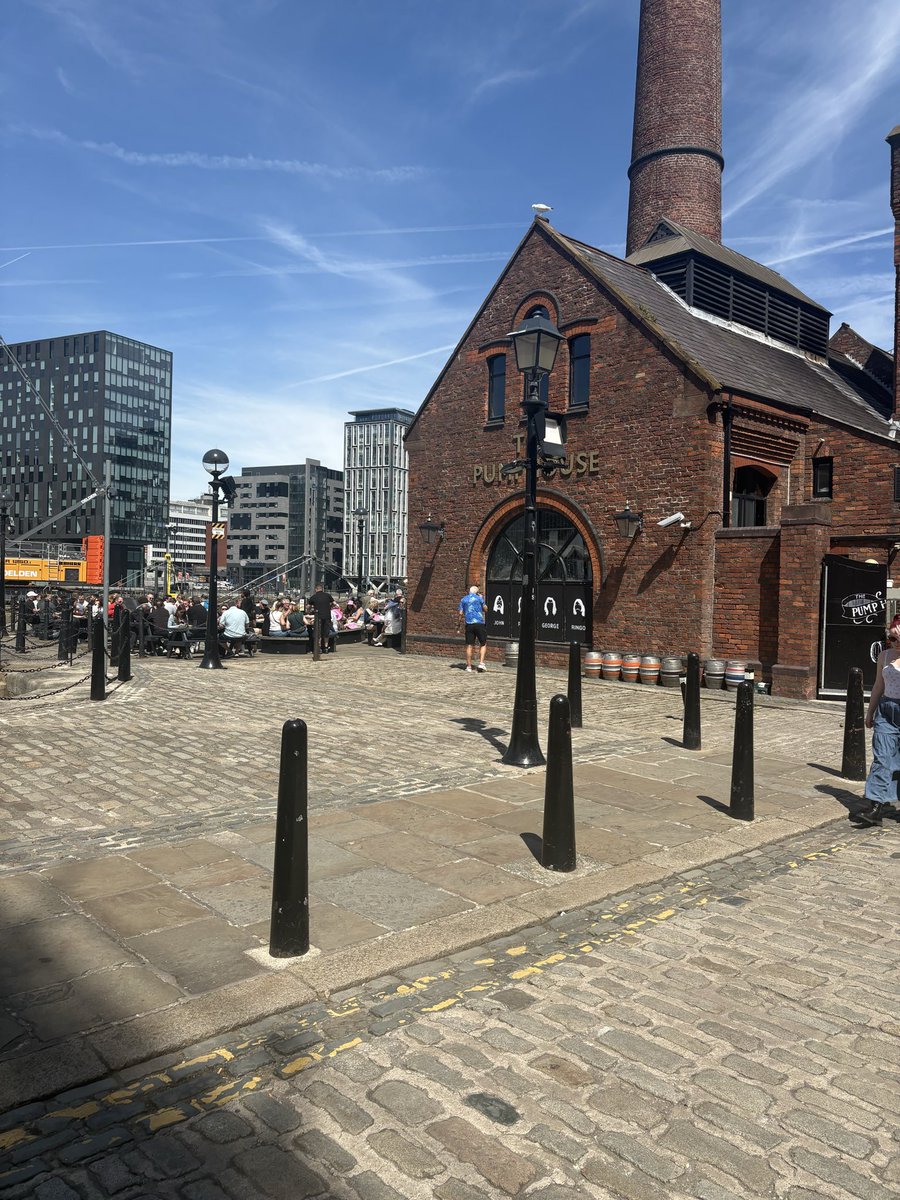
Spent the day in Liverpool, and I have to say: I am seriously impressed by that city. I lived there for a year more than a decade ago, but it has changed in all sorts of subtle ways since I was last there.
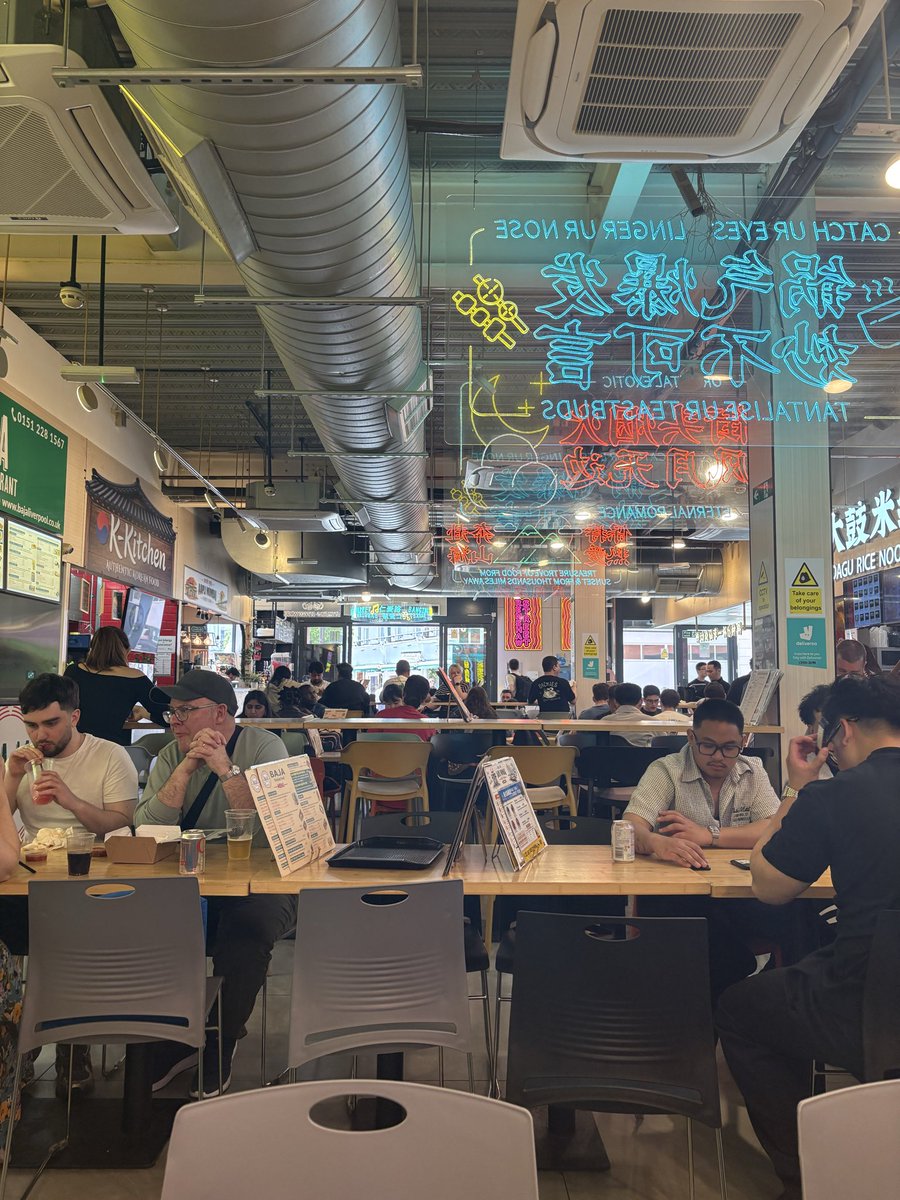
The university campus is more or less the same, complete with hilariously dishevelled towers like the Roxby Building. But the city centre is now absolutely buzzing. It is immaculately clean and packed with some of the best places in the North to eat and drink. If you like Chinese food, as I do, it is close to perfect.
There is also much more of an artsy-fartsy atmosphere now, but I actually prefer it to places in London like Camden Town or Shoreditch. It feels less self-conscious and more relaxed.
Another thing that really struck me was just how clean everything is. Not just the streets, but the shops and cafés themselves. It is a total contrast to London, which increasingly feels a bit grubby by comparison.
Liverpool is also incredibly pedestrian-friendly. Everything is compact and walkable, so you barely need public transport at all. I genuinely cannot recommend the city highly enough.