@getrizon@sumsub Hello Rizon support, I subscribed to Rizon Emerald by mistake on Oct 29 (USD 65.90). I thought it was card activation. Please cancel the subscription, refund me, and release the hold on my funds. I will send the transaction ID by DM. Please check your DMs. Thank you.
We'll be spending a lot more time trying to understand the outputs of language models. A few thoughts, tips & tricks:
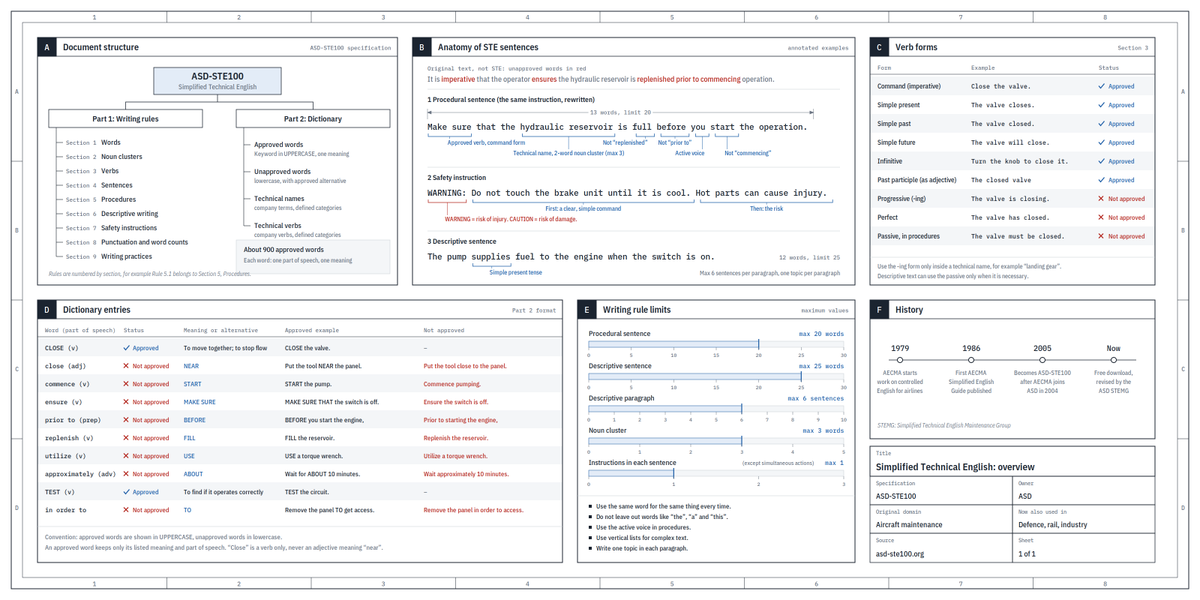
Writing. Something I've had success with: Ask your LLM to explain something in ASD-STE100, it's a controlled language specification originally developed for aerospace maintenance documentation. LLMs well-versed in this language and it comes with heavy constraints on clean writing style that I often find a lot more readable. Sometimes I've tried to soften it a bit e.g. ask for "80% of the way to ASD-STE100" because the spec is quite stringent. But even better:
Diagrams / images. Instead of writing, ask your LLM to create a diagram. These can be a lot easier to process, parse, and understand. But even better:
Web pages. Ask for output "in HTML" to get a beautiful, interactive webpage. LLMs are getting really good at frontend and can create beautiful experiences, animations, etc. But even better:
Explainer videos. The output format I am most bullish on is fully custom / bespoke explainer videos generated on any arbitrary topic. Experiment with things like "Create a 3b1b style video explainer on X. Use my ElevenLabs API key for audio narration". (you'd need an API key for the latter or you can ask your LLM to find you decent free alternatives that use your local compute). This is actually starting to work!
In summary:
- As LLMs get better, they will do more and more of the legwork autonomously, and a lot more of our work will rise up the abstractions into oversight and understanding.
- Luckily, LLMs can help here too because as intelligence and code are increasingly abundant, you can ask for large, custom, discardable software artifacts (e.g. web apps, video explainers) that would have never made sense to create before. Push the boundaries here and you'll be surprised.
A BBC interviewer asked a Nobel physicist the simplest question in the world: why do two magnets push each other apart. He refused to answer it. What he did instead is the best seven minutes on thinking ever filmed.
The man is Richard Feynman, at home in 1983, no blackboard, no notes, sitting in an armchair.
He does not dodge because he cannot answer. He dodges because he wants you to see what the question is actually asking. So he takes an ordinary sentence, that a woman slipped on the ice and broke her hip, and starts asking why, and every answer opens another why, until the ground gives way.
Then he turns it around on the interviewer with a question about ice that sounds trivial and is not.
The point he arrives at is the uncomfortable one. Every explanation is only a translation into something you already accept without explanation. Magnets have no such translation. There is nothing more familiar than magnetism to reduce magnetism to, which is why every answer you were given at school was a picture, not a reason.
It matters more now than it did in 1983. Any tool will hand you a fluent answer in a second. Knowing which questions actually have a bottom is the part that is still yours.
One question. Seven minutes. It is in the video.
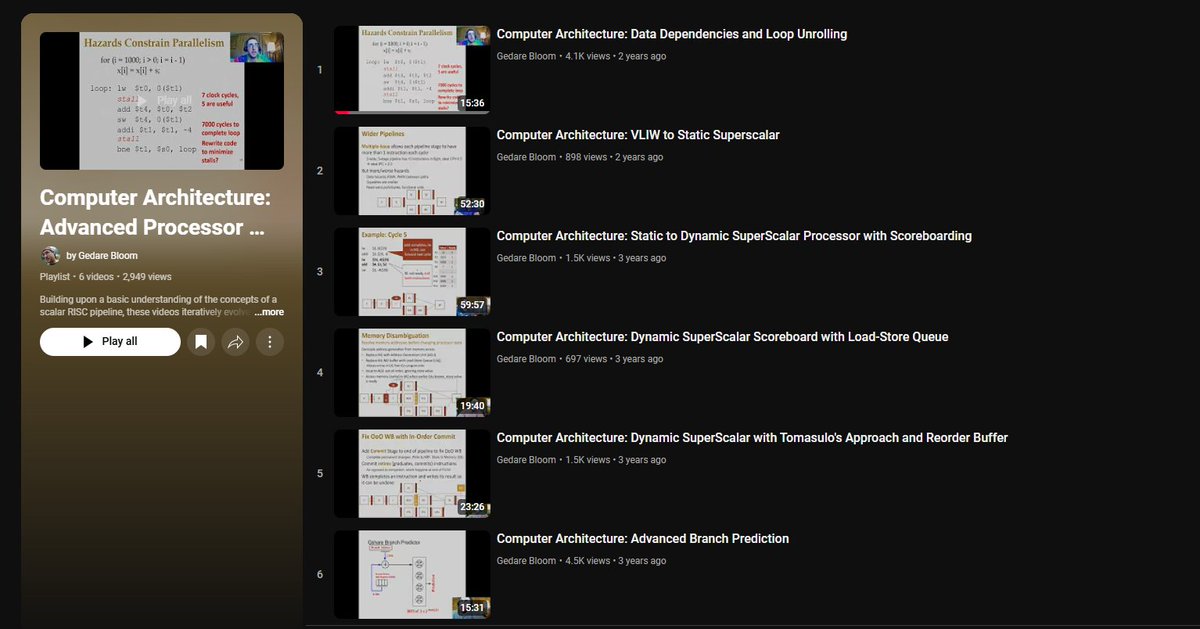
Computer Architecture: Advanced Processor Design
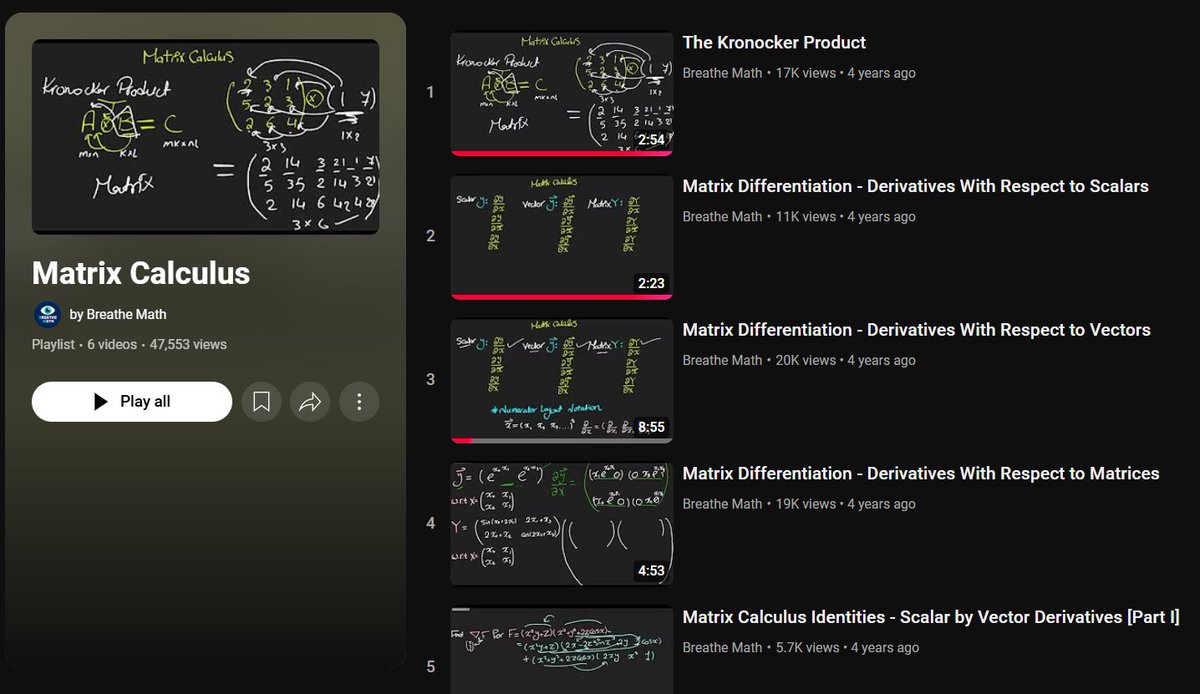
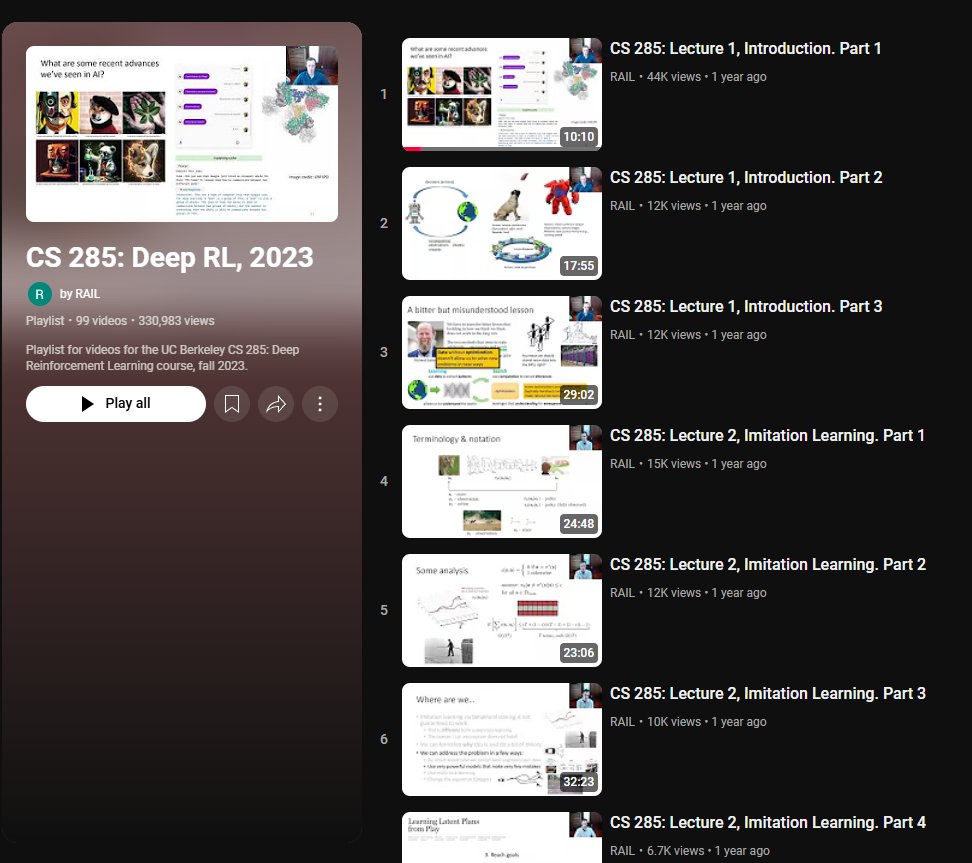
Building upon a basic understanding of the concepts of a scalar RISC pipeline, these videos iteratively evolve through the concepts leading to the underlying technology of modern out-of-order dynamic superscalar processors.
Top 8 data structures we use every day:
Data structures are the building blocks of software, helping to organize and store information efficiently.
They are not just theoretical concepts; they are used in the applications that we interact with daily.
Here are some real-world examples of how these data structures are used:
🔸 List
Online shopping cart — an ordered collection of items with the ability to access items at specific positions.
🔸 Linked List
Browser history — enables quick and efficient traversal backward and forward through the history.
🔸 Hash Table
Caching — Many caching algorithms, like in web browsers and content delivery systems, use hash tables to quickly look up values based on a key.
🔸 Stack
Undo functionality — Last In, First Out (LIFO) the last element added is the first one to be removed.
🔸 Queue
Printer queue — follows the First In, First Out (FIFO) principle, print jobs are processed in the order they are received.
🔸 Graph
Social media network — helps in suggesting new friends, finding mutual connections, and disseminating posts through the network.
🔸 Matrix
Pathfinding — utilizes a two-dimensional array to represent a grid and determine the shortest path from one point to another.
🔸 Tree
File system — trees are hierarchical in nature, mirroring the organizational structure of directories and subdirectories. Many file systems are represented as trees with directories as nodes.
🔸 Heap
Priority queue — efficiently ensures that the element with the highest priority is always readily accessible.
Of course, these are just a few examples of the many data structures used in software engineering.
Understanding how and where to use these data structures is a fundamental skill for any software engineer to create effective and efficient solutions.
💭 I’d love to hear your thoughts. What data structures or use cases would you like to add? 💬
~~
Thank you to our partner Kickresume who keeps our content free to the community.
Is your resume opening doors for you? Make sure it does with Kickresume’s proven templates, trusted by hires at Google, Microsoft, and more (industry-specific, and ATS-friendly).
Use their AI to refine and elevate your resume. Check it out: https://t.co/N0rD1UwV87
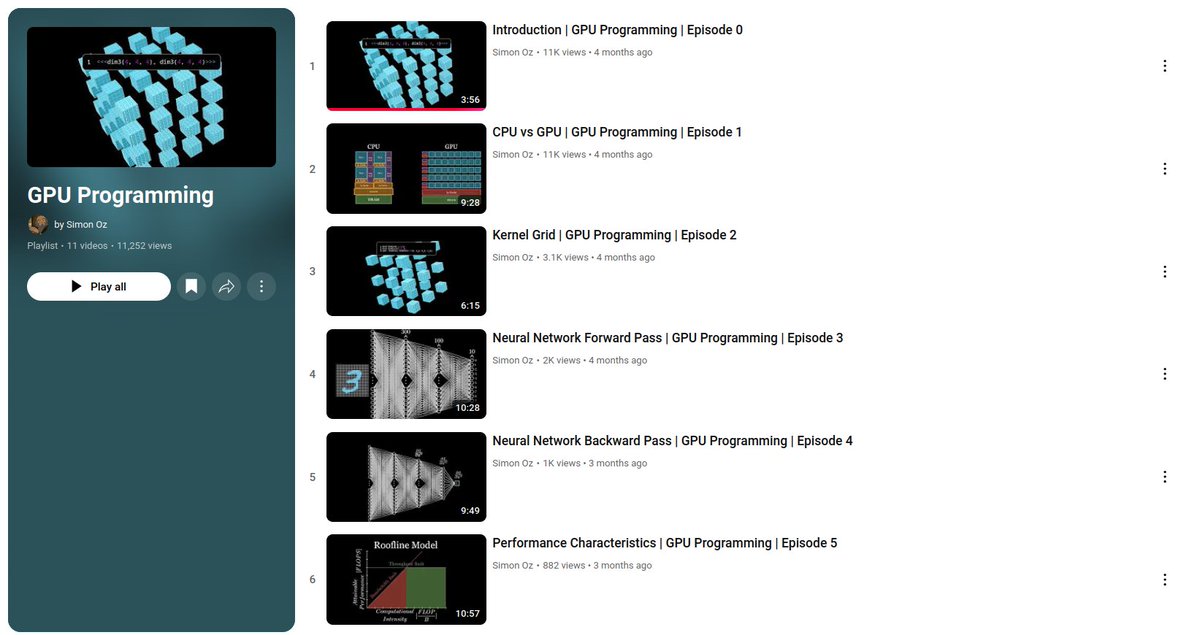
The Ultimate Channel for Building Game-Changing Projects in C
-really great channel for programmers
-who really wants to build projects
-just try this, you will love it
-just have some fundamental knowledge of C