A brief history of Quantum computers 👇
1905: Albert Einstein explains the photoelectric effect and suggests that light consists of quantum particles or photons
1924: Max Born uses the term quantum mechanics for the first time
1925: Werner Heisenberg, Max Born, and Pascual Jordan formulate matrix mechanics, the first formulation of quantum mechanics
1925-1927: Niels Bohr and Werner Heisenberg develop the Copenhagen interpretation, one of the earliest and most common interpretations of quantum mechanics
1930: Paul Dirac publishes The Principles of Quantum Mechanics, a standard textbook on quantum theory
1935: Albert Einstein, Boris Podolsky, and Nathan Rosen publish a paper highlighting the counterintuitive nature of quantum superposition and arguing that quantum mechanics is incomplete
1935: Erwin Schrödinger develops a thought experiment involving a cat that is simultaneously dead and alive, and coins the term “quantum entanglement”
1944: John von Neumann publishes Mathematical Foundations of Quantum Mechanics, a rigorous mathematical framework for quantum theory
1957: Hugh Everett proposes the many-worlds interpretation of quantum mechanics, which suggests that every possible outcome of a quantum measurement actually occurs in a parallel universe
1961: Rolf Landauer shows that erasing a bit of information dissipates a minimum amount of energy, known as Landauer’s principle
1965: John Bell proves that quantum entanglement cannot be explained by any local hidden variable theory, known as Bell’s theorem
1973: Alexander Holevo proves that n qubits cannot carry more than n classical bits of information, known as Holevo’s theorem or Holevo’s bound
1980: Paul Benioff proposes a model of a quantum Turing machine, a theoretical device that can perform any computation using quantum mechanical principles
1981: Richard Feynman suggests that simulating quantum systems would require a new type of computer based on quantum mechanics
1982: David Deutsch generalizes Benioff’s model and proposes the concept of a universal quantum computer
1984: Charles Bennett and Gilles Brassard develop a protocol for quantum key distribution, which allows two parties to securely exchange cryptographic keys using quantum states
1985: David Deutsch and Richard Jozsa devise an algorithm that can solve a specific problem faster than any classical algorithm, known as the Deutsch-Jozsa algorithm
1991: Artur Ekert proposes another protocol for quantum key distribution based on quantum entanglement, known as the E91 protocol
1992: David Deutsch and Richard Jozsa extend their algorithm to handle multiple inputs, known as the Deutsch-Jozsa algorithm
1994: Peter Shor discovers an algorithm that can factor large numbers in polynomial time using a quantum computer, known as Shor’s algorithm
1996: Lov Grover invents an algorithm that can search an unsorted database in square root time using a quantum computer, known as Grover’s algorithm
1997: Isaac Chuang, Neil Gershenfeld, and Mark Kubinec demonstrate the first implementation of Shor’s algorithm using nuclear magnetic resonance (NMR) techniques
2000: David DiVincenzo proposes five criteria for building a practical quantum computer, known as the DiVincenzo criteria
2001: IBM researchers implement Grover’s algorithm using NMR techniques and achieve a modest speedup over classical algorithms
2007: D-Wave Systems claims to have built the first commercial quantum computer, but its validity is disputed by many experts
2019: Google announces that it has achieved quantum supremacy by performing a calculation on a 53-qubit quantum processor that would take a classical supercomputer thousands of years to complete
2020: IBM demonstrates that its 65-qubit quantum processor can perform calculations beyond the reach of any classical computer
📷 An IBM QC photographed by James Estrin
Planck's Law for Blackbody Radiation ✍️
Every object in the universe with a temperature above absolute zero constantly radiates energy outward as electromagnetic waves. What makes this intriguing is that the nature of that radiation, including the wavelengths it contains and where peak intensity occurs, depends only on temperature, not on the object's composition. Physicists simplified this into the idea of a perfect blackbody. This is an object that absorbs all radiation that strikes it and, therefore, also emits radiation with perfect efficiency when heated. This is why the Sun, glowing coals, and even the faint cosmic afterglow of the Big Bang behave similarly.
In the late nineteenth century, physicists attempted to predict what this spectrum should look like using classical physics, but they faced a major problem. Their calculations suggested that as wavelengths got shorter, radiation intensity should soar toward infinity, implying that a hot object should emit infinite energy every second in the ultraviolet range. This impossible result was called the ultraviolet catastrophe, and no one could resolve it.
In 1900, Max Planck discovered the formula that matched experimental data perfectly. However, to derive it, he made an assumption that troubled him: electromagnetic energy can only be emitted or absorbed in distinct packets, not in smooth, continuous amounts. The size of these packets is proportional to the radiation's frequency. High-frequency light, like ultraviolet, comes in large packets, while low-frequency light, such as infrared, comes in small packets. You cannot emit half a packet; only whole ones. The equation in the image consists of three main components working together: one that classically predicts increasing radiation at shorter wavelengths (the source of the catastrophe), a quantum correction factor that sharply lowers emission at short wavelengths, and a scaling factor that connects the body's total energy to its mass.
The suppression occurs because emitting a short-wavelength photon needs a large energy packet. At any given temperature, such large packets are statistically rare, so the exponential factor significantly reduces intensity at short wavelengths. This overtakes the classical factor and produces the correct hump-shaped spectrum, with a peak that moves toward shorter, bluer wavelengths as temperature rises.
The most important part of the entire equation is the "minus one" in the denominator, labeled as the quantum correction term. This single algebraic element represents the precise mathematical rule that photons follow when distributing themselves among energy states. Its presence compelled physicists to abandon the classical view of energy as a smooth flow and accept that energy at the atomic level is granular and discrete. Initially, Planck hoped this was just a mathematical trick, not a fundamental physical truth, but it proved to be one of the most significant discoveries in science. It paved the way for Einstein's explanation of the photoelectric effect, Bohr's atomic model, Schrödinger's wave mechanics, Heisenberg's uncertainty principle, and the entire framework of quantum mechanics that now forms the basis of our understanding of atoms, chemical bonds, transistors, lasers, solar cells, and almost all modern technology. The practical implications are everywhere. The shifting of the spectral peak with temperature explains why heated metal glows dull red at low temperatures and bright white at high temperatures. It also allows astronomers to measure a star's surface temperature from millions of light-years away just by analyzing its color. Additionally, infrared cameras can detect living things' body heat in complete darkness. All of this arises from the discovery that the universe provides energy not as a smooth continuum but as discrete packets of specific sizes.
maxwell’s equations are physics compressed.
electricity, magnetism, and light looked separate.
maxwell showed they were one system.
charges create electric fields.
moving charges create magnetic fields.
changing magnetic fields create electric fields.
changing electric fields create magnetic fields.
put the four equations together and the math says:
light is an electromagnetic wave.
not a metaphor.
electric and magnetic fields oscillating through space at the speed of light.
radio, wifi, antennas, motors, generators, optics, electronics.
all sitting on four equations.
good math does not just describe reality.
it reveals the architecture underneath it.
Diagram that maps the nested universe of numbers; from counting 0, 1, 2… all the way to complex numbers; showing precise relationships and examples at each level.
Natural numbers N (0, 1, 2, 3) ⊂ Integers Z (…, −2, −1, 0, 1, …) ⊂ Rationals Q (½, −2/3, …) ⊂ Real algebraic numbers A_R (√2, −√3, …) ⊂ Reals R (π, e, …), with transcendentals outside algebraics. Extending upward: pure imaginaries and algebraic complexes A, culminating in full complex numbers C (a + bi).
The structure accurately reflects set inclusions and classifications used in mathematics.
🌐From areas to volumes and flows, integrals have specialized types.
The single variable integral ∫_a^b f(x) dx computes curve areas. Line integrals ∫_C f(x,y) ds sum along paths. Lebesgue integrals ∫_E f dμ generalize for complex functions. Double integrals ∬_R f(x,y) dx dy find surface volumes. Flux integrals ∬_S F · dS calculate surface flows. Triple integrals ∭_E f(x,y,z) dx dy dz determine volume contents.
They calculate volumes of custom 3D printed objects in manufacturing and analyze airflow in aircraft design.
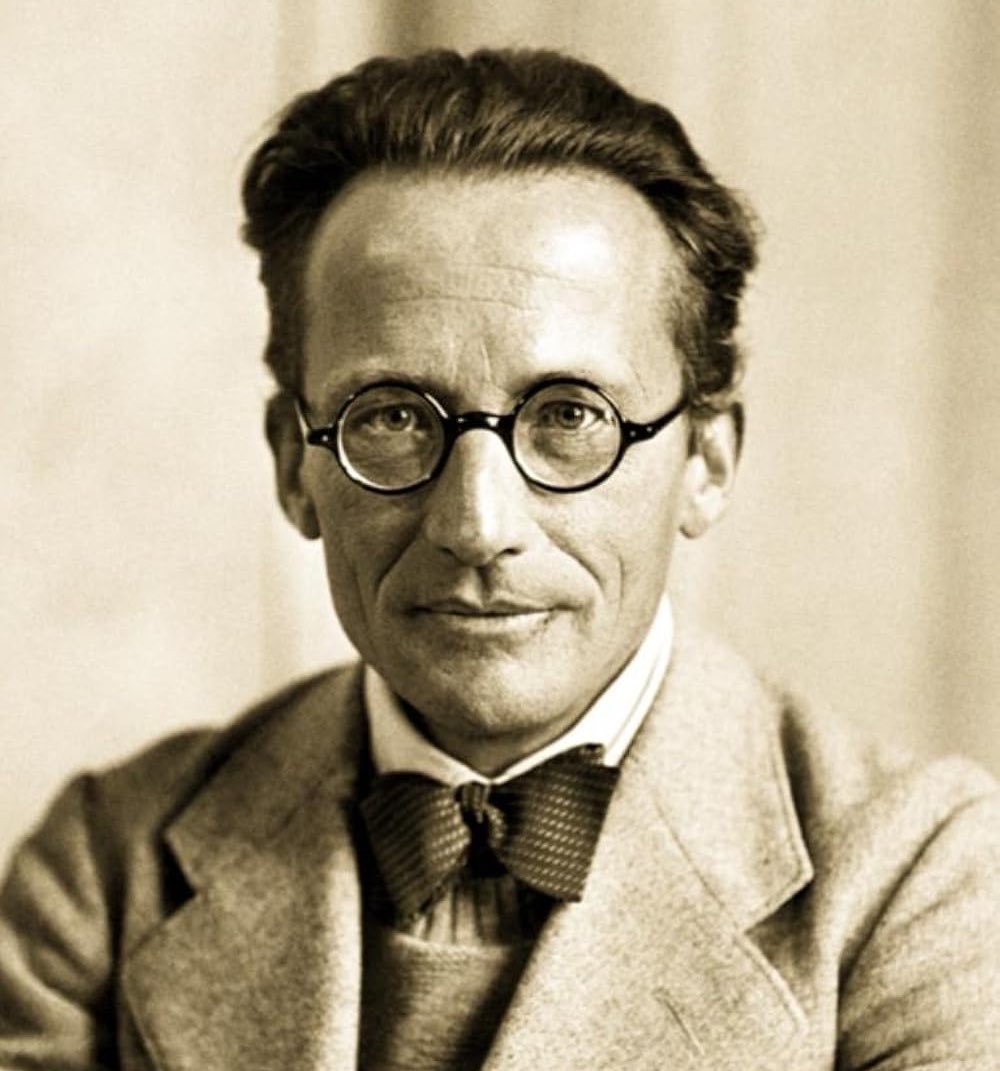
"The task is not to see what has never been seen before, but to think what has never been thought before about what you see everyday."
- Erwin Schrödinger
A few matrices, a strange-looking equation, and a prediction that rewrote physics.
The Dirac equation remains one of the most beautiful examples of mathematics uncovering reality.
The Jacobian matrix J(s,t,h) captures how small changes in parameters s, t, and h translate to movements in 3D space (x, y, z).
You can see the columns of this matrix visualized directly as the colored tangent vectors (blue for t_s, purple for t_t, red for t_h) lying along the parameter grid lines of the hemisphere.
This setup is a core tool in differential geometry for working with tangent spaces on curved surfaces. It lets you compute surface normals (via cross products of the vectors), area elements, and coordinate changes; exactly what’s needed for everything from realistic 3D rendering in graphics engines to modeling fluid flow over spherical domains in physics or handling spherical data in scientific computing.
Distance metrics help quantify how similar or different data points or sets are. This image shows visual examples of nine popular ones used across data science and machine learning.
It covers Euclidean, cosine, Hamming, Manhattan, Minkowski, Chebyshev, Jaccard, Haversine, and Sørensen-Dice, each with a simple diagram of how the calculation works.
These metrics sit at the core of clustering algorithms, nearest-neighbor methods, recommendation systems, natural language processing tasks, and geospatial analysis.