What does our testing process look like? Scroll through our thread for a look into our process.
From sample collection to consultation, our tests are designed to simplify heart attack risk assessment and the diagnosis of coronary heart disease (CHD) so that you can take more proactive control of your heart health.
Learn more here: https://t.co/e5WgOXzYF9
#LaboratoryWorkflow #ClinicalLaboratory #MachineLearning #PrecisionMedicine
Nobody waits for a failure to pit. Don't wait for a heart attack to check your heart.
Heart disease is the leading cause of death in the United States across men, women, and people of most racial and ethnic groups (CDC). Many times, it’s unsuspecting: About 1 in 5 heart attacks are silent (American Heart Association). For many, it’s not a matter of if, but when.
Epi+Gen CHD™ fills in this gap for patients with no previous history of coronary heart disease, heart attack, or angina. By combining AI, epigenetics, and genetics, our test predicts with high sensitivity a patient’s risk of having a coronary heart disease event, such as a heart attack, within the next three years.
Learn more: https://t.co/SkRvPbPKdW
#Formula1 #F1 #GrandPrix #PreventiveMedicine
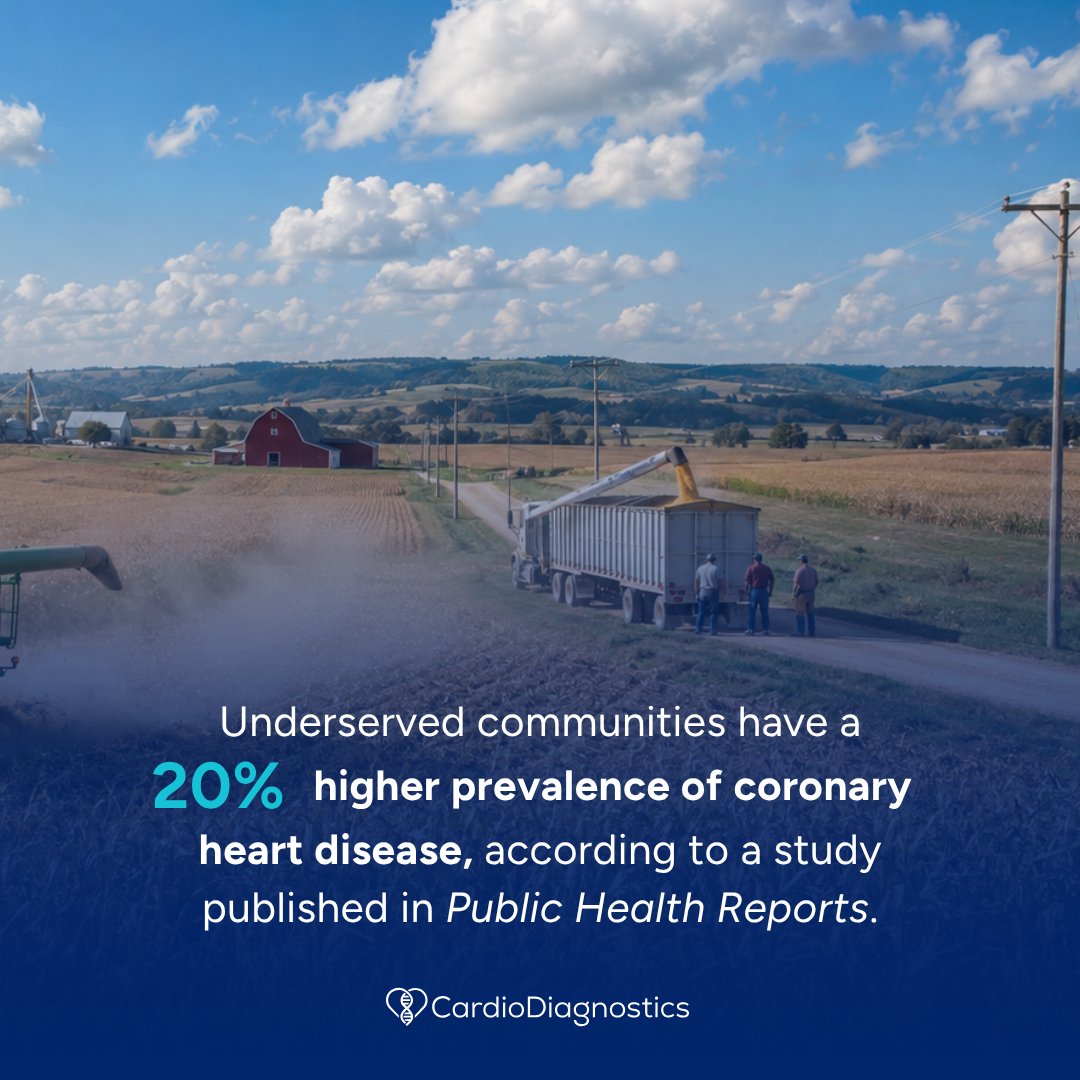
Individuals living in underserved communities face a 20% higher prevalence of coronary heart disease than their urban counterparts, according to a study published in Public Health Reports by Kulshreshtha et al. Mortality rates follow a similar pattern.
Rural hospitals face a disproportionate burden of cardiovascular disease, and yet often lack the resources to deliver adequate care. Innovative approaches are needed with limited funding and staffing challenges.
Our State of Rural Hospitals and Cardiovascular Care report breaks down a scalable, translational model of care delivery to support healthier communities in rural areas, including:
• Upskilling primary care clinicians
• Using advanced precision medicine technology
• Implementing population-wide risk stratification strategies
• Integrating remote care options
Access the complete report here: https://t.co/Db7HJUfEfs
#RuralHospitals #RuralHealth
Hybrid work, AI and analytics, preventive care, and more — five trends are shaping the future of employee health and wellness programs in 2027. Benefit leaders need to prepare for the workplace of the future. Is your organization ready for change?
Read our latest blog and see how your employee wellness program stacks up to 2027 trends. Learn more: https://t.co/R5yYI5MxI9
#EmployeeWellness #EmployeeBenefits #PreventiveHealth #CorporateWellness
What if you could see your cardiovascular risk score move?
A 2021 study co-authored by our CMO, Robert Philibert, MD, Ph.D., and CEO, Meesha Dogan, Ph.D., used Epi+Gen CHD™ to track DNA methylation changes in patients going through smoking cessation therapy. After 90 days, an epigenetic marker associated with smoking showed significant reversion for those that completely quit.
With epigenetics, your markers reflect what’s happening in your biology at the time you test, which means they can change as you make lifestyle changes. Epigenetics can reveal whether targeted interventions made based on insights from the initial test are impacting the biology of disease.
Reference:
Philibert W, Andersen AM, Hoffman EA, Philibert R, Dogan M. The Reversion of DNA Methylation at Coronary Heart Disease Risk Loci in Response to Prevention Therapy. Processes. 2021; 9(4):699. https://t.co/ZIrj8x2AlV
#Epigenetics #PrecisionMedicine #PreventiveCardiology
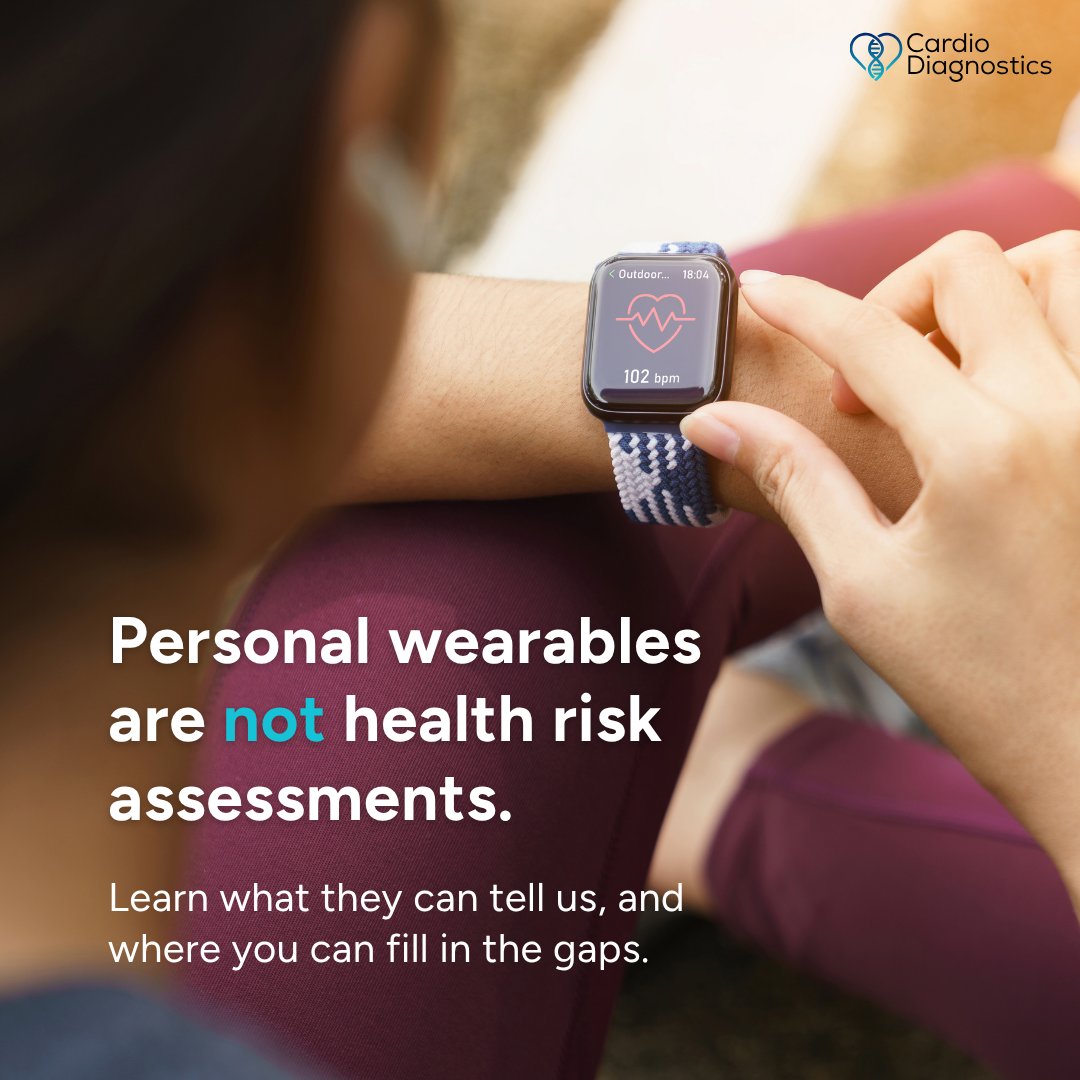
Personal wearables are not health risk assessments.
Personable wearables like smart watches, fitness trackers, and smart rings have gained increasing popularity as a way to measure physical health and fitness performance. But when it comes to heart health, what insights can they actually tell us?
Certain wearables can provide insight into heart metrics such as heart rate, heart rhythm, blood oxygen, and VO₂ max (cardio fitness). While these measurements are useful for tracking general fitness and activity levels and personal trends over time, they are not a replacement for physician-ordered assessments and guidance.
Wearables on their own can vary in accuracy and provide limited insight into some of the most important indicators of heart health. However, precision cardiovascular medicine can complement these tools and fill in the missing data gaps, supporting more comprehensive insights into your health.
Our clinically validated blood tests, Epi+Gen CHD™ and PrecisionCHD™, help your physician get a more thorough picture into your unique molecular profile and how it may impact your heart health.
#WearableTechnology #DigitalHealth #HealthTech
September is #HealthyAgingMonth — a reminder for adults that longevity isn’t just about living longer but staying active, healthy, and independent as you age.
Cardiovascular health is one of the most significant areas for adults to monitor as they age. The @American_Heart reports that nearly half (48.9%) of adults over 20 have some kind of cardiovascular disease (CVD).
We offer two clinically validated blood tests to assess cardiovascular risk and aid in the diagnosis of coronary heart disease (CHD), the most common type of CVD:
• Our Epi+Gen CHD™ test assesses the three-year risk of a CHD event, such as a heart attack, with twice the sensitivity of traditional risk calculators.
• Our PrecisionCHD™ test aids in the diagnosis of CHD and provides insights into the unique mechanistic drivers of disease.
With our tests, you can work with your physician to establish targeted interventions based on the results of your specific molecular profile, helping you to better prevent and manage CHD before a life-threatening event occurs.
This healthy aging month, take a proactive approach to your heart health. Request a test today: https://t.co/e5WgOXzYF9
Rural hospitals are a lifeline for their communities, but the current rural healthcare landscape brings both opportunity and setback.
In 2025, the One Big Beautiful Bill Act (OBBB)’s Rural Health Transformation Program (RHTP) committed $50 billion to states from 2026-2030, placing renewed focus on the vital role of rural healthcare. The OBBB also cut about $1 trillion in Medicaid over the same decade, impacting 16.1 million rural Americans living who rely on Medicaid (@GeorgetownCCF, @ahahospitals).
Between this shifting landscape and already-strained resources, rural hospitals need practical strategies to protect health outcomes in their communities.
Our State of Rural Hospitals and Cardiovascular Care report breaks down the unique challenges rural healthcare faces today, and the concrete actions hospitals can take to elevate cardiovascular care, even with limited budgets and overstretched capacities.
Get your copy here: https://t.co/kiM6TxXYpj
Sources: Georgetown University Center for Children and Families, American Hospital Association
#RuralHospitals #RuralHealth #RHTP
We take a personalized approach to almost every part of our health. We choose a moisturizer based on our skin type, take vitamins and supplements based on our diet and blood work, build exercise routines around our fitness level and lifestyle, and eat according to our dietary needs.
Yet our approach to evaluating our heart health often lacks personalization.
Our clinically validated tests, Epi+Gen CHD™ and PrecisionCHD™, are complementary solutions to conventional forms of assessing risk for a heart attack and detecting coronary heart disease (CHD).
Traditional risk assessments and diagnostic methods for CHD often take a one-size-fits-all approach that can overlook patient-specific disease drivers.
Our tests combine genetics, epigenetics, and AI, to evaluate your unique DNA information to reveal the molecular underpinnings of cardiovascular disease.
Your heart deserves the same individualized attention as the rest of your health. Learn more: https://t.co/LISYVTnOFO
#HeartHealth #PrecisionMedicine
At the Next Generation Dx Summit last week in D.C., our Chief Technology Office, Tim Dogan, PhD, spoke to over 400 professionals about the role of our multi-omics technology in bending the trajectory of coronary heart disease.
It was a great opportunity to make meaningful connections with diagnostics professionals, clinicians, industry peers, and healthcare leaders and share how Cardio Diagnostics is shaping the preventive medicine landscape.
We’re proud to be part of the future of diagnostic advancements in healthcare. Learn more about our cardiovascular technology here: https://t.co/meeh70Yj1l
#HealthcareConference #AdvancedDiagnostics #NextGenerationDxSummit #NGDx
September is National Cholesterol Education Month. Are you up to date on the latest cholesterol guidelines from @ACCinTouch (ACC) and @American_Heart (AHA)?
Earlier this year, the ACC/AHA issued joint guidelines aimed at preventing the development of high cholesterol and shifting treatment earlier in life.
While the guidance has several takeaways for physicians and patients, we highlight three core insights from the report:
• Lifestyle counseling for cholesterol is recommended for children with high cholesterol that is linked to lifestyle factors.
• Cholesterol-lowering treatment can be considered at a 10-year heart disease risk of just 3% (previously the bar was roughly 7.5%).
• “Risk enhancers” for cardiovascular disease events, such as underlying conditions and family history, affect an individual’s risk category and the intensity of treatment.
The overarching message of the new guidelines: earlier detection and treatment, personalized based on an individual’s risk factors.
Managing your cholesterol plays an important role in your heart health. But several factors can affect your cardiovascular risk, even when your cholesterol levels are normal.
Getting care that’s personalized to your risk demands a comprehensive overview of your health, not just a cholesterol number. Advanced diagnostics can help build a fuller risk picture. Learn more: https://t.co/meeh70XLbN
#NationalCholesterolEducationMonth #HeartHealth
AI in healthcare is becoming more prolific — according to the @ONC_HealthIT, about 7 in 10 hospitals reported using predictive AI in 2024.
But as AI becomes more embedded in healthcare, the stakes of a weak AI governance policy — data breaches, bias, and legal liability — are especially high.
Read our thread to identify strategies for AI governance and review where your organization stands.
#AIGovernance #AIHealthcare
What is the longevity economy, and how is preventive medicine driving it?
Older adults comprise an increasingly significant portion of the economy — a 2026 report from the @AARP demonstrated that adults over 50 accounted for 43% of U.S. GDP.
A longevity economy empowers older adults to live healthy and financially resilient, longer lives through strategies like financial education, health and well-being benefits, and workforce designs to support older adults (@wef).
Employers play a key role in the longevity economy. By offering health benefits that prioritize preventive care and building an inclusive, multigenerational workforce, organizations can tap into this growing demographic, and cardiovascular health is one of the most valuable areas to start.
Cardiovascular risk has been shown to increase steeply after age 50 and the disease remains a leading driver of healthcare costs as people age (@ACCinTouch, @CDCgov). Early detection can help older employees stay healthy, active, and working longer.
We help employers build preventive care strategies focused on the detecting and preventing coronary heart disease earlier. Learn more: https://t.co/t8ZEr2J4cv
#LongevityEconomy #Longevity #PreventiveCare