#Cdnag: It’s time to #ShowYourReceipts. Let’s show policymakers the real impact of the carbon tax on propane and natural gas on your operations.
Upload your receipts here: https://t.co/Hrnx5vpzYL
Canada’s rich biodiversity isn’t just good for nature—it’s good for the bottom line. Research highlights that beneficial insects, soil organisms, shelterbelts and wetlands all deliver clear economic gains to farmers.
#CdnAg#SustainableAg
The Ag Carbon Alliance’s (ACA) members are stewards of roughly 62 million hectares, which represents >7% of the land in our country — and includes 190,000 farm businesses.
#cdnag
As part of Canadian Beef Goals 2030, cattle producers are pledging to maintain the 35 million acres of native grassland in the care of beef producers.
#Cdnag
To improve biodiversity across the country Canada should position itself as an agri-innovation hub to encourage investment, support new technologies and innovative solutions. #cdnag
Did you know? The #cdnag sector reduced its intensity of GHG emissions by 50% from 1997 to 2018? Farmers are continually innovating to steward natural resources while feeding Canada and the world.
Incentivizing farmers to adopt best management practices (BMPs) goes hand in hand with protecting food security, competitiveness and advancing sustainable outcomes.
#cdnag
Did you know? While emission levels in Canada have remained relatively stable over the past 20 years, the volume of agricultural production has nearly doubled. Farmers are increasing production while focusing on lowering their environmental footprint.
#cdnag
Farmers need to be at the table to help shape biodiversity policies. The most effective ecosystem health and best management practices programs include Canadian farmers as stewards of the land.
#cdnag
Canadian pulse farmers lead the world in soil-smart practices: 65% of soils have gained carbon since 1981, and conservation tillage covers 73% of cropland.
#CdnAg#SustainableAg#PulseCrops
ECONOMIC DRIVER: Canada’s primary agriculture industry contributes $32 billion to our gross domestic product, while the entire agri-food industry represents $150 billion and provides 1 in 9 Canadian jobs.
#Cdnag
Wetland preservation isn’t only environmental—it’s economical. Maintaining or restoring wetlands in #Saskatchewan enhances flood control, nutrient filtering and biodiversity, benefiting both #Cdnfarmers and society via reduced damage costs and improved water quality.
#CdnAg
The alliance consists of 16 farm organizations committed to meaningful and collaborative dialogue with the federal govt to ensure a policy environment that maintains farmers' competitiveness, supports their livelihoods, and leverages their critical role as stewards of the land.
Shelterbelts aren’t just scenic—they’re lucrative. Studies across the Prairies found that mature windbreaks boost spring wheat yields by roughly 8%, and alfalfa by 20–25%, while preventing soil erosion and enhancing pest control.
#cdnag#SustainableAg
Cattle producers are always striving to improve their environmental footprint. Between 1981 and 2011 farmers produced 15% less greenhouse gases.
#cdnag
Governments must work with farmers, growers and ranchers to create incentives that increase adoption of best management practices (BMPs) that maintain, protect and promote biodiversity #Cdnag
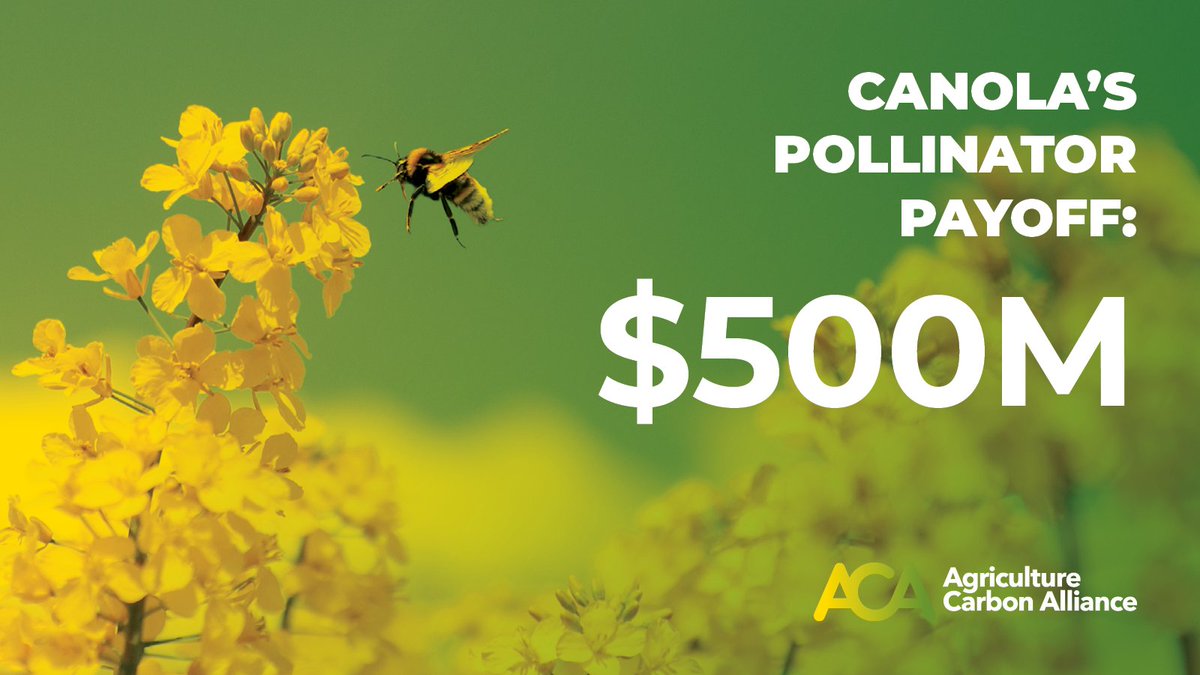
Did you know? Across #Alberta alone, wild pollinators contribute a staggering $500 million/year to #canola yields! #Cdnfarmers who maintain natural habitats not only support biodiversity—they enable stronger yield + revenue outcomes.
#CdnAg#SustainableAg
Increased support and investment from government and industry will help farmers advance sustainable agricultural practices and continue to support biodiversity conservation.
#cdnag