The judges vote (thanks @Tony_Bromley & @ProfLukeWindsor for being the judges!) for the best #cdttwecon entry goes to @DarbarYatin for "Multi-scale Understanding of Real-Life Performance of Masks and Visualising Their Effectiveness" from our very own @CDTFluidsLeeds! Congrats! 🥳
#CDTTweCon Thank you to all students who have taken part and submitted their entry for "Tweet your Thesis" today. You can select your favourite, and give them the chance to win a prize, go to https://t.co/iEzvSOBgGN
I am currently working on a new feature-based method that I can use to gain further insight into regime behaviour. A video of my method in action is shown below!
#CDTTweCon
Forecasting these events is particularly difficult due to the high amount of variability the jet stream displays.
Recent studies have shown however that the jet stream occupies one of three central, southern and northern regimes (https://t.co/Y93H5AKSCS).
#CDTTweCon
PhD Title: Regime Behaviour of Earths Jet Streams and role for recent extreme weather.
The jet stream is responsible for extreme weather events, such as the current heatwave in the UK and “Beasts from the East” during the winter.
#CDTTweCon
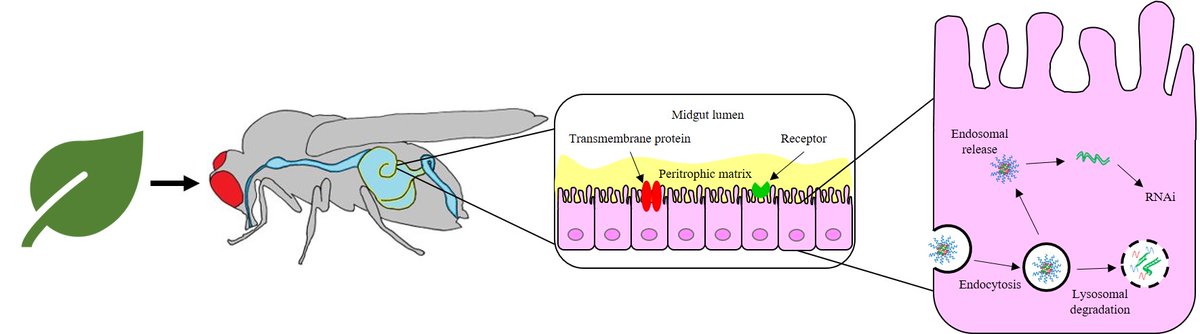
3/3 We have found that with longer block copolymers, we need to add more polymer chains into the samples to fully bind to dsRNA. But, once bound, all of our block copolymers prevent degradation of dsRNA by enzymes! Now, let’s see if they work as an insecticide! #CDTTweCon
2/3 Unfortunately, enzymes in the environment can degrade dsRNA so it no longer works. We make block copolymers (chains of different molecules joined together) in a controlled way so we can change their length. We use these polymers to bind and protect the dsRNA! #CDTTweCon
1/3 Saving the bees: Protecting species-specific insecticides with polymers! Double stranded-RNA can act as an insecticide by stopping chosen proteins from being made. Delivering this dsRNA can kill the pest insect, but not other species such as bumblebees! #CDTTweCon
All of this makes it hard to incorporate PCM in novel aircraft designs. I am still at the start of the project, but the goal is to create new tools to better understand and control PCM. This could be used to develop concept designs of heat exchangers in the future. #CDTTweCon 3/3
PCM absorb and release the heat at phase change so that it can be used for cooling or heating. They are chemically stable and absorb huge quantities of heat but at a slow rate. The phase change also makes it harder to measure or simulate the micro-scale properties. #CDTTweCon 2/3
Managing heat in future advanced aircrafts with Phase Change Materials (PCM): Heat exchangers in fight jets are the biggest components of the aircraft, but are designed for only a fraction of the flight where lots of heat is being produced. PCM could change that. #CDTTweCon 1/3
So far, we’ve imaged potato CWs from several varieties on the new substrate and shown that there’s a difference in stiffness between them. Soon, we will be able to test CWs from all sorts of plants as well as look at the effects of external stimuli (salt, enzymes…) #CDTTweCon