Our new paper led by @FluidsJacob suggests a method to diagnose the North Atlantic jet using moment analysis: https://t.co/xmsmCgwpEB
Really pleased to see this work finally come out. We hope it will be used by others. Well done Jacob! @ICASLeeds
Discussion open for comments on @EgUsphere: Minimal influence of future Arctic sea ice loss on North Atlantic jet stream morphology https://t.co/CEOoWyKIpD
Weak eddy feedback has been proposed to explain the NAO signal-to-noise problem. Our new study highlights limitations of the diagnostic used in some earlier studies and question the interpretation in past work @mckennach@CONSTRAIN_EU @ICASLeeds
https://t.co/lBKWtA541l
Discussion open for comments on @EgUsphere: A new characterization of the North Atlantic eddy-driven jet using 2-dimensional moment analysis https://t.co/LM7bD7YAST
By considering different Jet characteristics, leads to different surface impacts!
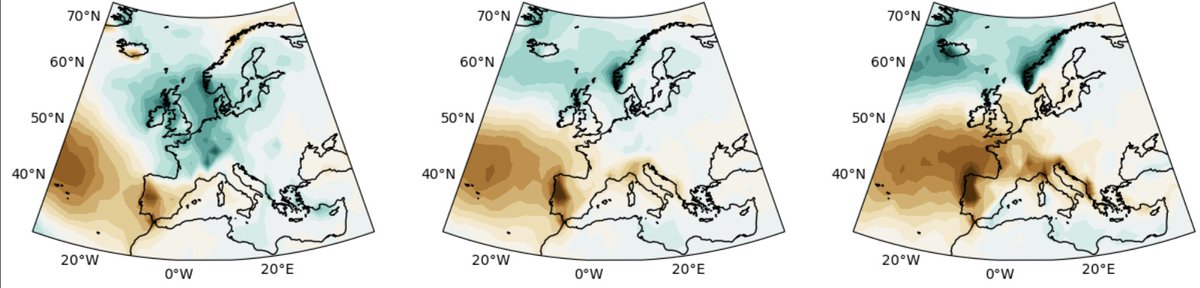
Below is a plot of the rainfall (blue-wetter, brown -drier) where the tilt is increasing from left to right. Changes in the tilt lead to different wet and dry areas in Europe. (3/3) #CDTTweCon
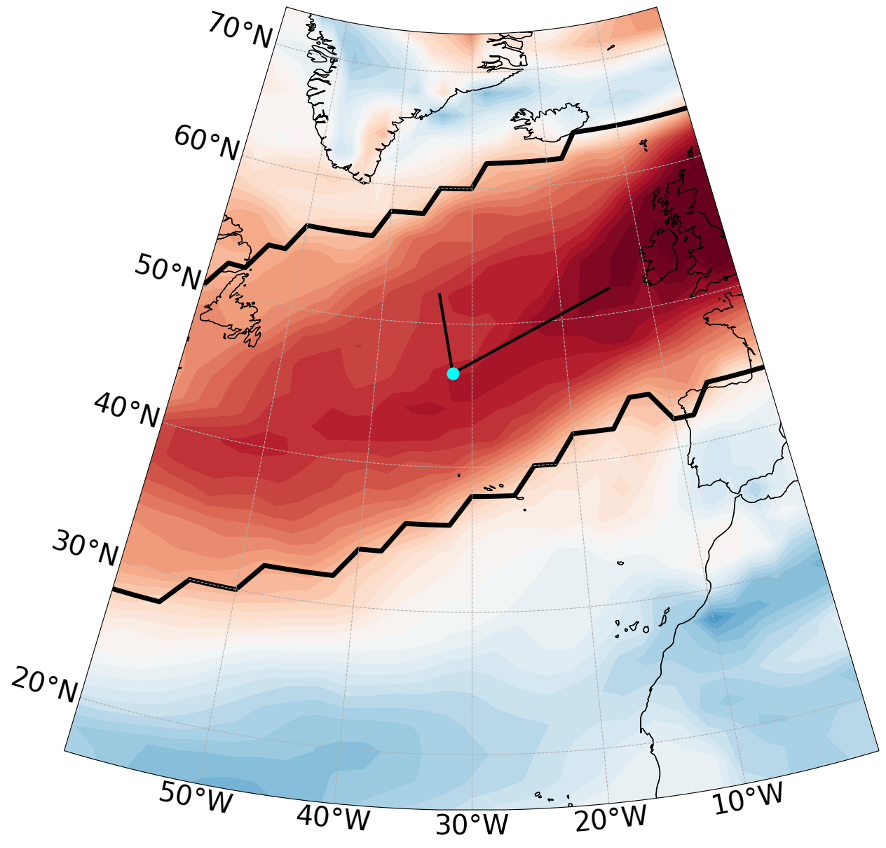
In my work we have developed a new way to characterise the Jet, by extracting what we call Jet objects from the wind data.
The Jet position (blue dot), tilt and strength are all calculated by using the winds within Jet object. (2/3) #CDTTweCon
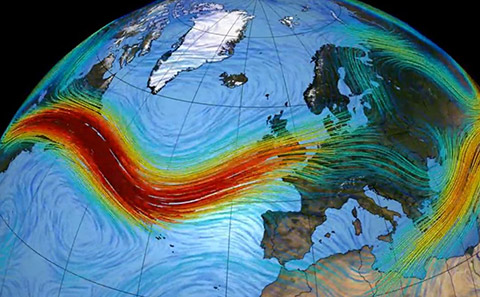
The Jet stream is a band of winds coming the west, that has large impacts on our surface weather.
My research involves developing new methods to characterise the jet position, strength and tilt and how these features alter the location of extreme weather (1/3). #CDTTweCon
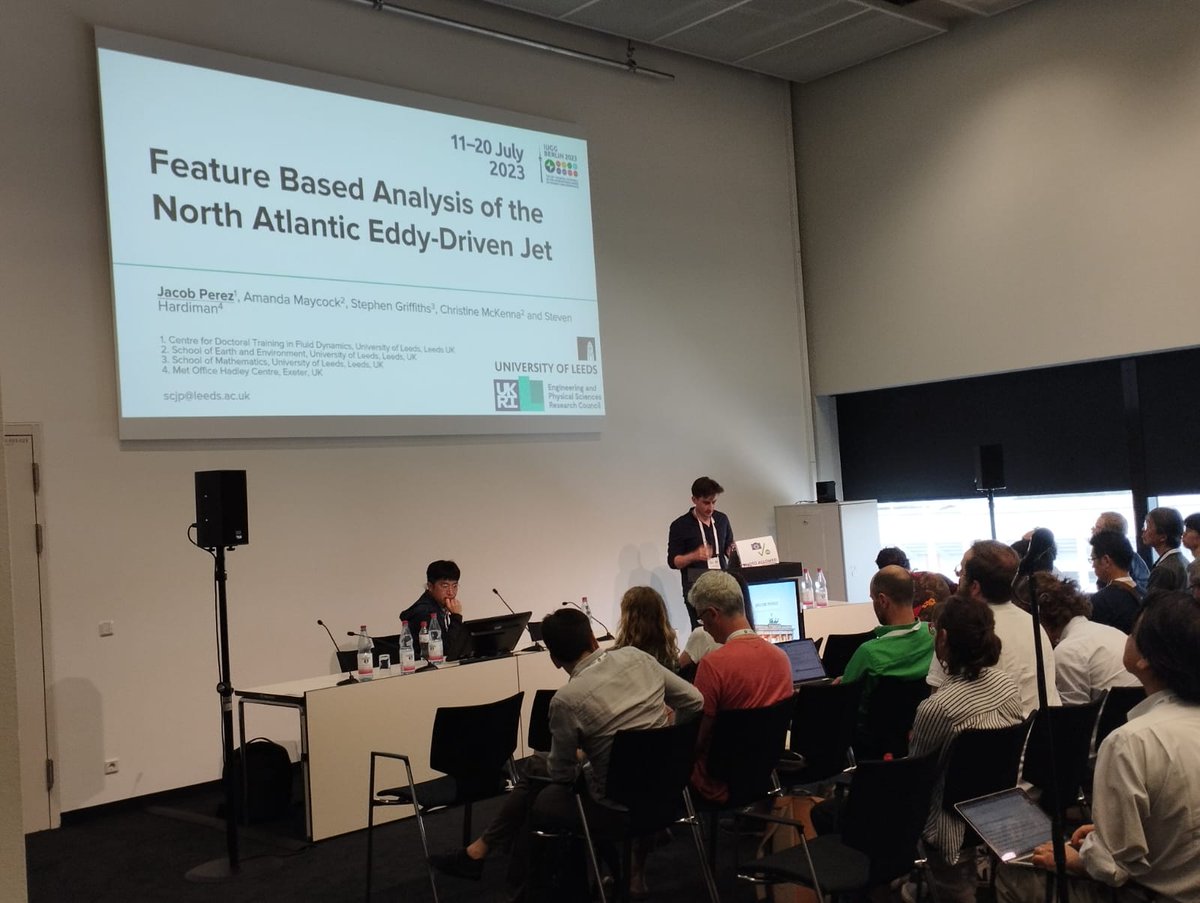
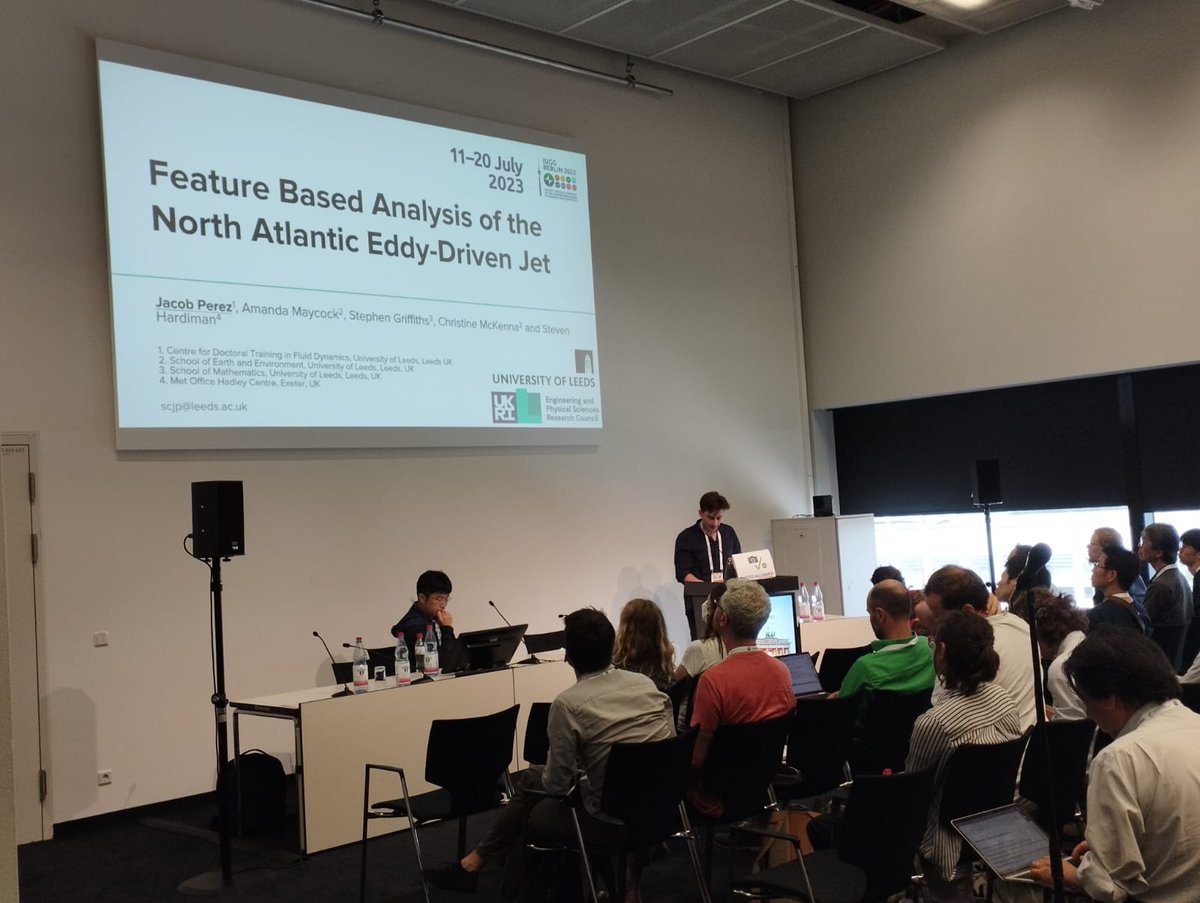
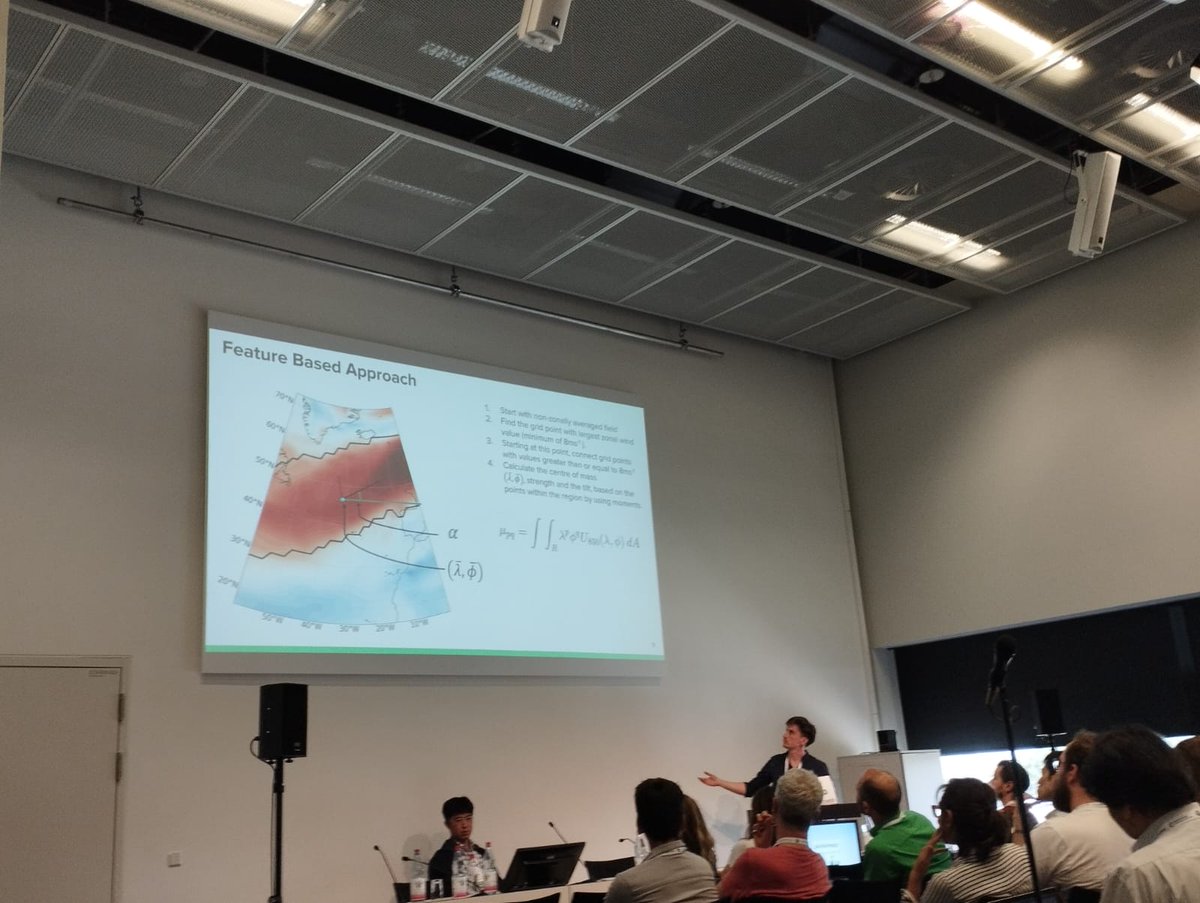
@FluidsJacob presenting his interesting work developing a new approach for diagnosing the North Atlantic eddy driven jet at #iugg2023@CDTFluidsLeeds @ICASLeeds
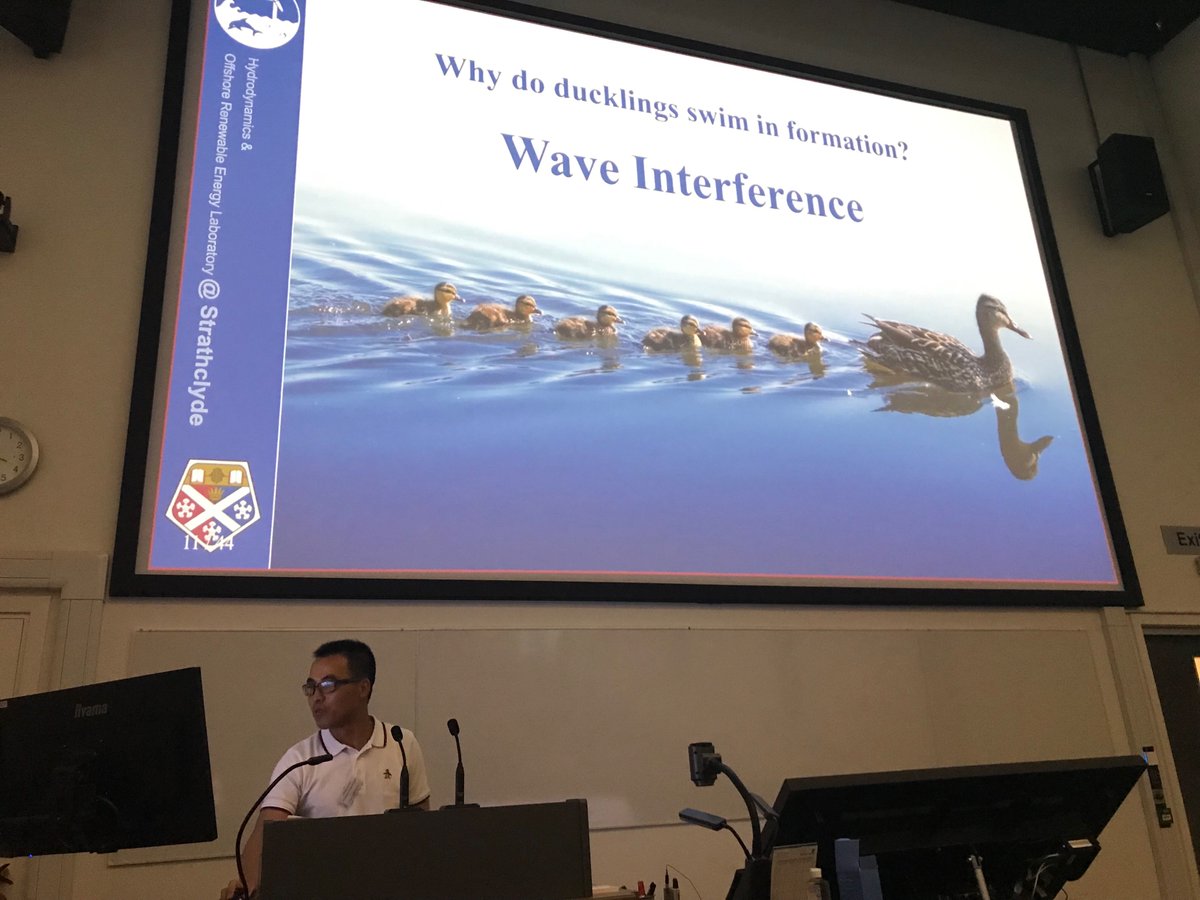
Congratulations! Zhi-Ming Yuan, Minglu Chen, Laibing Jia, Chunyan Ji & Atilla Incecik on winning the The 2022 Ig Nobel Physics Prize for the article WAVE-RIDING AND WAVE-PASSING BY DUCKLINGS IN FORMATION SWIMMING
Read the #openaccess article in #JFM ☑️https://t.co/ppanD1Y9RB
WALL OF WATER! 🌧️👀
Crazy time-lapse today showing severe weather with heavy rain and strong wind blowing into Fort Myers, Florida. Looks like the Mothership! @WINKNews@StormHour@StephanieAbrams@JimCantore
The 2nd part of our @AMSJCLi study on drivers of biases in CMIP6 storm tracks was recently accepted and now available online!
In this part we looked into the Southern Hemisphere and tried to understand the influence of SSTs and temperature gradients ⤵️
https://t.co/v3HOuPqNtp
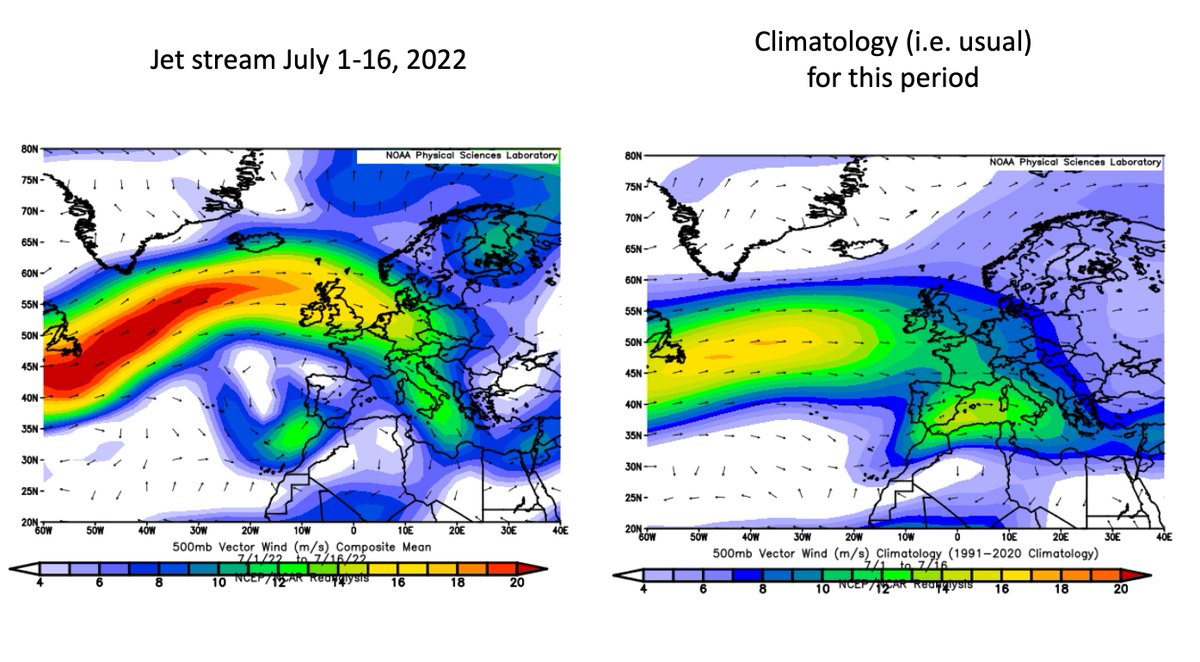
Since folk have asked, here's how the jet has been in July - bent north over W. Europe, setting the scene for the heatwave to develop to its south.
In the UK the jet has protected us from most of it, but it just let a little of the hot air slip north.
(anyone notice? 😉)
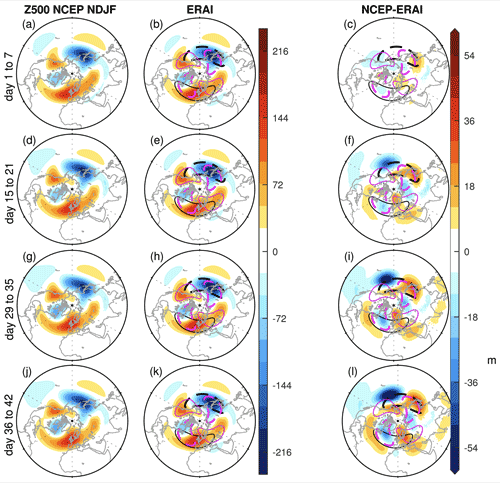
Just published: Schwartz, Garfinkel et al, incl @Priyanka_AY: Model biases in extratropical stationary wave patterns lead to significant forecast errors. Improving on these biases will likely improve the long-range prediction of extreme events.
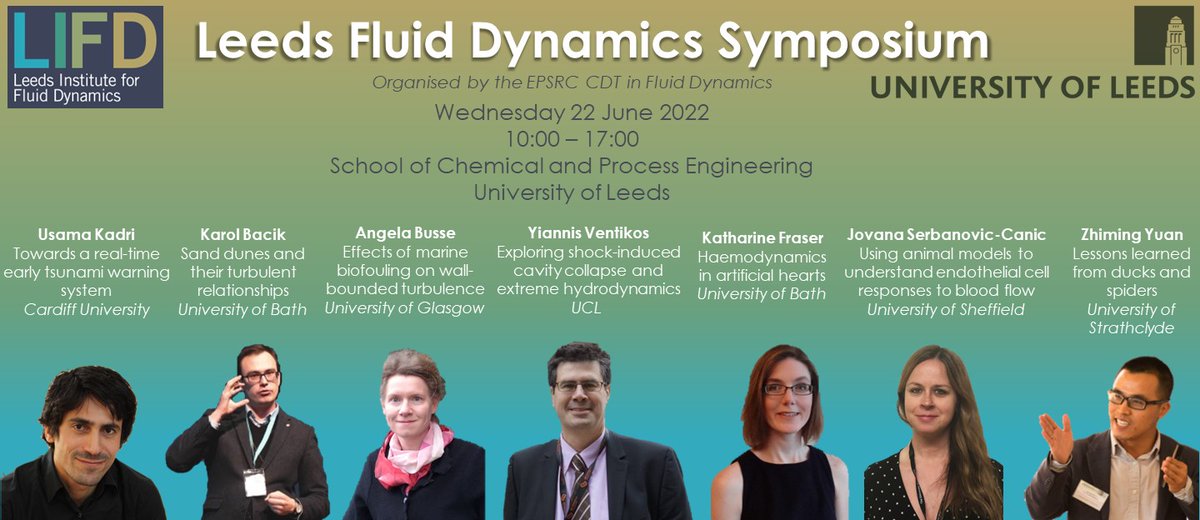
Whoop!🙌 Fluids Symposium 22 @UniversityLeeds Leeds was a great success! Fantastic speakers, great attendance and really well organised by the postgraduate team @rm_collet @MichaelMacRaild@FluidsJacob 👏
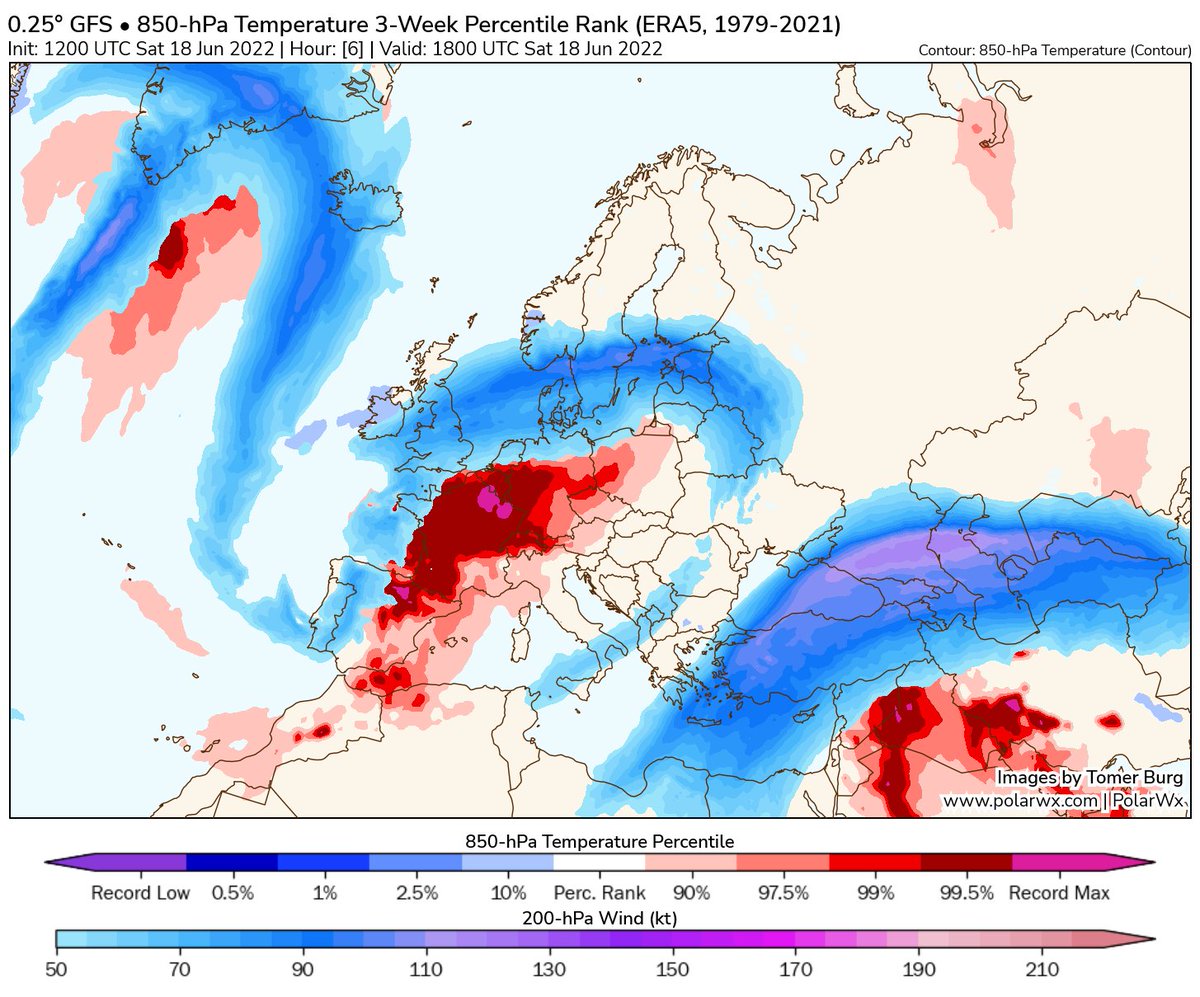
The elegant weather maps by @burgwx point out that the mid-June European heatwave is "partnered" with two other anomalously hot areas: one SE of Greenland, the other over Middle East ♨️
These hot spells are joined by a single, NW-SE oriented Rossby wave packet in the jet stream〰️
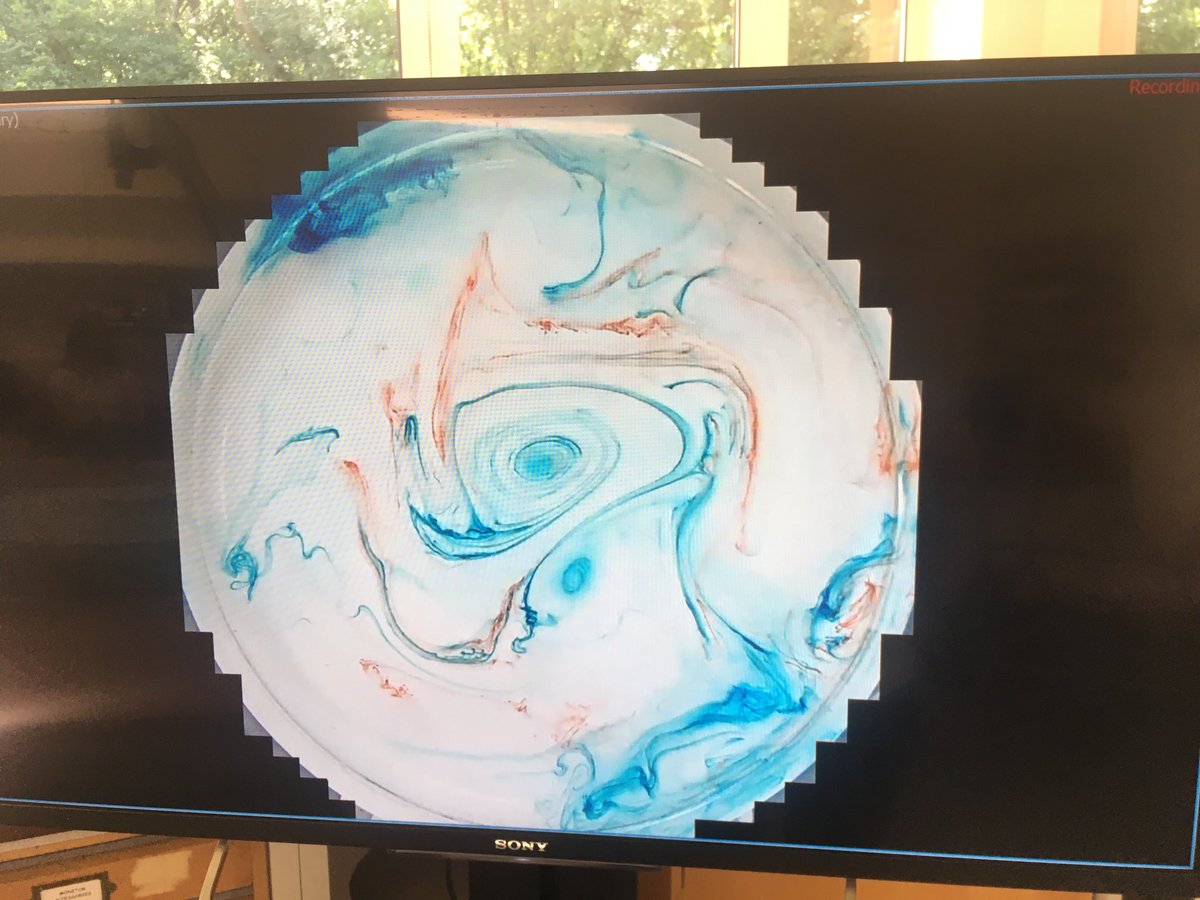
Open day @UniofReading - rotating tank experiment in fluids lab in meteorology department illustrating Taylor columns and delayed dissipation of coherent structures