Ireland and the US have a special relationship going back generations. How nice to celebrate St Patrick's day with the publication of a joint paper involving @tilda_tcd@hrsisr and @NICOLA_QUB. https://t.co/tw0pz7Dj96
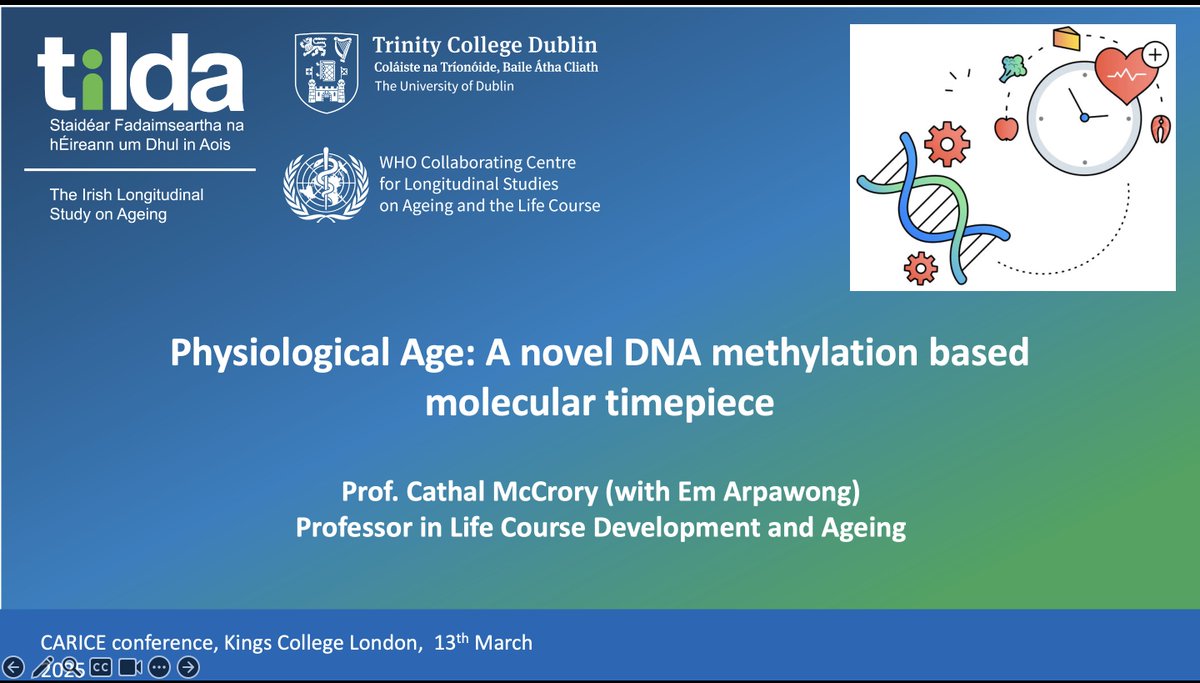
Looking forward to presenting our new epigenetic clock work @tilda_tcd@hrsisr@ce_potter at the Centre for Ageing Resilience in a Changing Environment (CARICE) conference in Kings College London. Thanks @DrClaireSteves for the invitation
Looking forward to presenting our new epigenetic clock work @tilda_tcd@hrsisr@ce_potter at the Centre for Ageing Resilience in a Changing Environment (CARICE) conference in Kings College London. Thanks @DrClaireSteves for the invitation
The randomized trial results are in for the GLP-1 drug Exenatide for Parkinson's disease. Spoiler: NO symptomatic or disease modifying effect. Tom @foltynie@DavidStandaert and I interviewed in the @nytimes@ginakolata on the latest paper just published in @TheLancet by Tom and his colleagues.
Key Points:
- 'Rigorous' study randomly assigned Parkinson’s folks to take exenatide (a relative of Ozempic).
- 194 folks enrolled in the UK.
- "No benefit or slowing of the course of Parkinson's after 96 weeks."
- "No effect on patient symptoms, no effect on brain scans, no subgroup that showed any benefit. No matter how the researchers sliced the data the results were the same."
My take: “This is a sobering moment. This is a really well done study, and it came up empty-handed.” Animal studies and small human studies previously suggested benefit. Another recent smaller study of a similar drug, lixisenatide, in the @NEJM was positive. “Researchers started digging into claims databases...and asked if patients who had taken GLP-1s might be less likely to get Parkinson’s or, if they had it, would have a disease that progressed more slowly...the results were promising." "They looked at epidemiological studies. They found that people with diabetes who took GLP-1s were less likely to have Parkinson’s." When the first study came out Gina quoted me as saying we were “nibbling at the edges of disease modification.” We were however all humbled and this reminds us how important it is to do the science, and not to rush to market or judgement. Dave commented that “he wouldn’t do another study like this unless you learn what is the target...what is the biochemistry you are trying to change in the brain? How do these drugs work, anyway?” Good science means replication. Good science protects the public and in the case of GLP-1s, there can be associated weight loss and loss of muscle mass, and that is something we probably want to avoid in Parkinson's. Ab uno disce omnes – from this one example we learn (all the rest). Let's stay humble, but keep learning and advancing the science for the benefit of those w/ Parkinson's and beyond.
https://t.co/7N3xmGkqwH
NYTimes article:
https://t.co/FvVMm3spo7 #Parkinsons #GLP1 #ozempic #diabetes
A privilege to listen to Sir Michael Marmot talk on inequality in the UK. Some very stark data, but a message of hope for change if the social and political will is there. @rcpsychNI@drjulespsych
Delighted to have contributed to this paper w/ @SeoyounKimPhD @calhalvorsen & Jessica Faul @umisr examining potential benefits of social participation on bio ageing.
Productive summer during my @Fulbright_Eire and further replication between @NICOLA_QUB & @hrsisr coming soon 👀
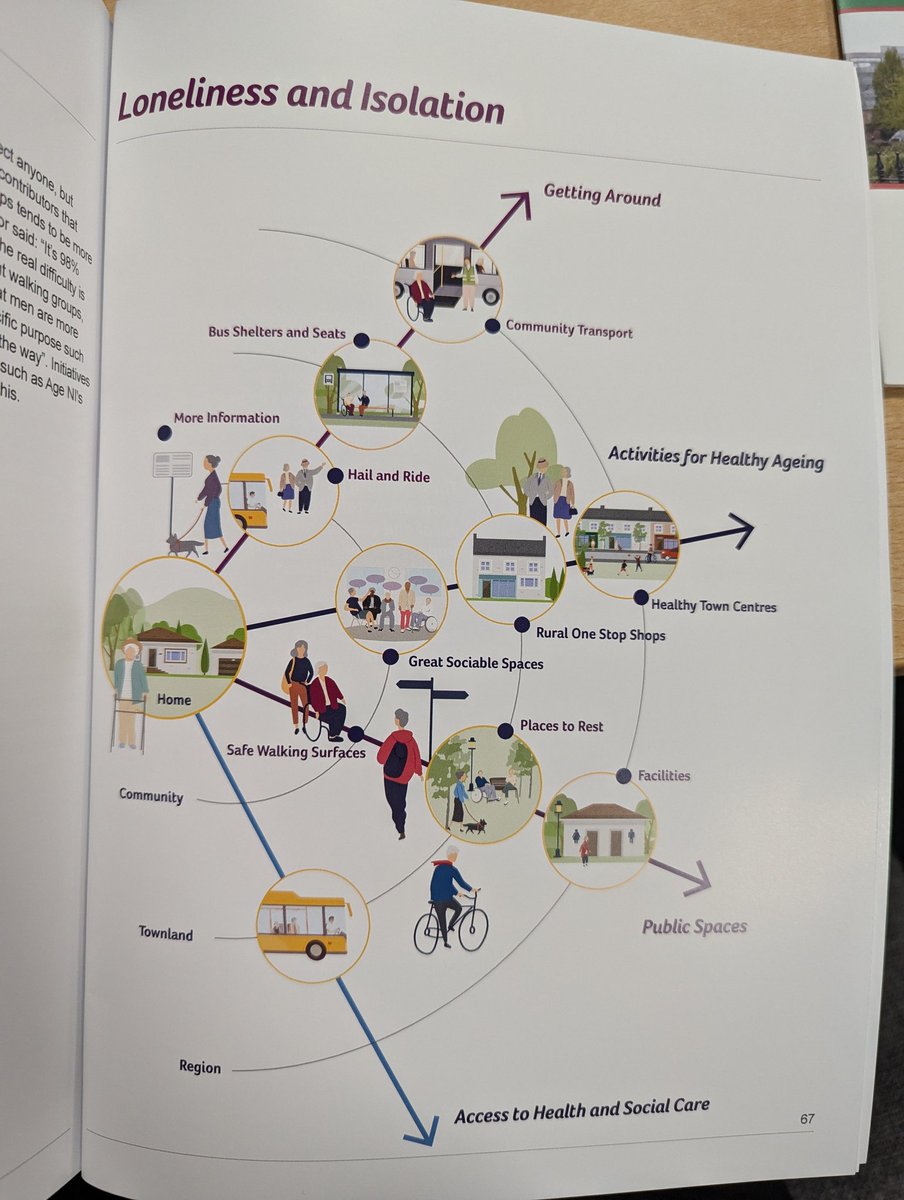
How we plan our areas and infrastructure could impact risk of loneliness and isolation, major challenges to health and wellbeing in older age
@ESRCFestivalNI@spacequb@PaulHogarthCo@Age_NI
Five main themes came out of conversations during focus groups:
1. Getting around
2. Access to health and social care
3. Activities for healthy ageing
4. Public spaces
5. Loneliness and isolation
#LetsChangeHowWeAge@ce_potter@okaneniamh
Our first speaker is Claire Potter, academic clinical lecturer at @CPH_QUB
Claire discussed findings from the @NICOLA_QUB study and what we have learned about healthy ageing
#ESRCFestival
How can two people have the same genetic build up, but face different health issues as we age? 🧬
It's like baking - we might have the same ingredients, but the way we prepare them will impact the outcome 🎂
How we live our lives impacts how we age
@ce_potter
Researcher @ce_potter gives context for the @spacequb piece of work.
“Studies have shown that rural ageing can be associated with less age acceleration. There are measurable differences between health behaviors and health outcomes based on whether a participant lives in an urban or rural area.”
We’re thrilled to be at @FermanaghHouse in Enniskillen today to launch the @spacequb report “Healthy Ageing in Rural and Coastal Areas of Northern Ireland”, which aims to answer the question of how does where we live affect how we age.
#LetsChangeHowWeAge@ce_potter@okaneniamh
How does living in a rural or coastal area impact our ability to age healthily? 🌊
Sneak peek of findings from our report with @Age_NI and @PaulHogarthCo in @SluggerOToole
🔗 https://t.co/LiMawHWw0U
TWO days to go until our @ESRCFestivalNI event "Healthy Ageing in Rural and Coastal areas" @FermanaghHouse from 11am.
Open to all, final few tickets for this free in person event available here ▶️ https://t.co/K6doAU249A
@qubengagemhls_d
An interactive workshop, I will be presenting results from @NICOLA_QUB & we will hear about the brilliant work done in collaboration with people living in these areas and @spacequb, @Age_NI and
@PaulHogarthCo on the issues important to them, challenges and potential solutions
My amazing friend and colleague, Dr Isabelle Scott, has just published this fantastic viewpoint in @JAMAPsych, discussing the limitations of current psychiatric nosologies for the development of clinical prediction models: https://t.co/fufjoDRjHf