Meet Kristen Padavic
As the Chief Design Officer at Cedar, Kristen is responsible for the design ethos of the company. Beginning her journey at the University of Michigan and then Harvard’s Graduate School of Design, Kristen has spent the past decades honing her precision craft of housing design and community planning.
Her work spans the nation, as well as all typologies, from custom single-family homes to 50-story skyscrapers on Michigan Avenue in Chicago, and she is a leading expert in housing design and development.
Kristen joined Cedar in 2023, and helped the company build what is now the foremost infill architecture firm in the country. She is a passionate believer that well designed housing should be at everyone’s fingertips, and that through technology and intentional partnerships with America’s most ambitious developers, Cedar will be able to achieve this goal. When not designing homes or running companies, Kristen enjoys cooking and watching cooking programs.
Glad to have you leading the way, Kristen.
Sneak peek at another project I'm incredibly excited about here in Austin.
It's the kind of home that could (almost) only be built here, and by @buildingoptimal - an honor to be a part of.
More to come soon!
We're proud to be recognized on the @thegeneralistco Future 50 highest-potential startups in the world.
"Cedar is turning architecture into a business that scales, starting with infill housing where repeatable buildings meet stubborn local rules."
See the full list here: https://t.co/oYurF0J0U5
We’re excited to announce our partnership with Carr Residential to bring beautiful, thoughtfully designed infill homes to Central Austin.
Over the past decade, Carr has built more than 200 homes across Austin, establishing itself as one of the city’s leading infill builders.
Our first project brings three new homes to a single lot on Jinx Avenue in South Manchaca. Each is designed to be at home in Texas, with local, natural materials, warm colors, plenty of daylight, and porches surrounded by native plants.
Meet Jake Allen, Chief Operating Officer at Cedar.
Jake’s goal is to enable Cedar to move faster, both in how it designs architecture and in how we grow as a company. That means finding the right people, building the systems that let them scale, and proving Cedar’s thesis through product.
He works across operations, strategy, product, and finance. A systems thinker by nature, he starts from how architecture is traditionally delivered, then looks for the manual, repeatable parts that can be done in a more automated way.
Jake was an early employee at Cameo, and he brings that experience in rapid growth to help Cedar do the same. His approach is practical and measured, focused on what the business needs to do well next.
Glad to have you with us, Jake.
What if better housing could be designed and built at scale?
We’re looking for a Project Designer to join Cedar and help rethink how urban housing comes to life. Working at the intersection of architecture, technology, and housing, you’ll develop new housing prototypes, refine project designs, and help build a catalog of homes that bring great design and constructability together.
Join Cedar: https://t.co/EZxPALjR8o
SB 1116 opened new doors for California housing, but most developers we've talked to aren’t sure which rules apply to them.
We built a checklist to help developers evaluate their projects. Start here: https://t.co/3c7w8412fh
Our monthly permit brief for Austin shows housing activity picking up. There were 177 permits issued in October, a 94% increase compared to October last year.
The median permit issue time for single family stands at 60 days while 2-4 unit projects stand around 128.
Explore Austin permit data or sign up for our monthly market monitor here: https://t.co/onPDsqxQAW
California's housing rules are changing fast. We built the definitive checklist for building with SB 1116.
Parcels that failed because of the density minimum, a two-story cap, a deep front setback, or a title covenant may work under the new rules.
Run our checklist: https://t.co/K93E6yg3fO
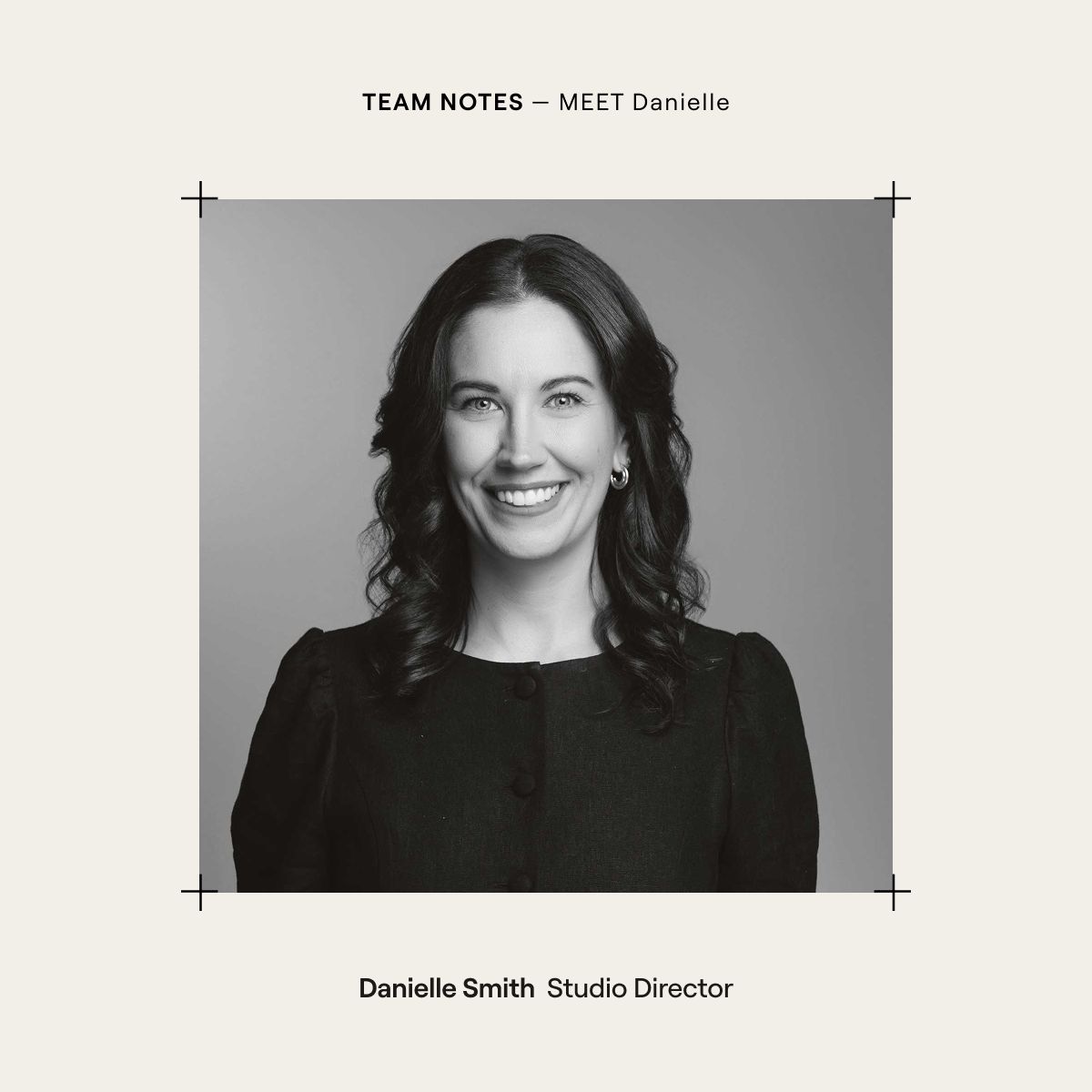
Introducing Danielle Smith, Studio Director at Cedar.
Danielle brings deep architectural experience to our design practice. At Cedar, she is helping advance a more rigorous, integrated model for urban infill housing. Her team has the judgment needed to make each project responsive to its site, community, and residents.
Building on more than a decade of experience, Danielle gives the team the professional focus that turns design intent into built outcomes. That approach is grounded in a belief that good design is not defined by a big budget, but by thoughtful decisions that improve daily life.
She is especially excited by Cedar’s ability to use technology to make quality more consistent and repeatable, while preserving architects’ capacity to focus on the details that make a home or community memorable.
We’re glad to have you, Danielle.
California’s small-lot subdivision law just got a cleanup.
Now that SB1116 has been signed into law, we took a closer look at how to use these new development rules to build infill housing in California.
Read more in our latest blog: https://t.co/3c7w8412fh
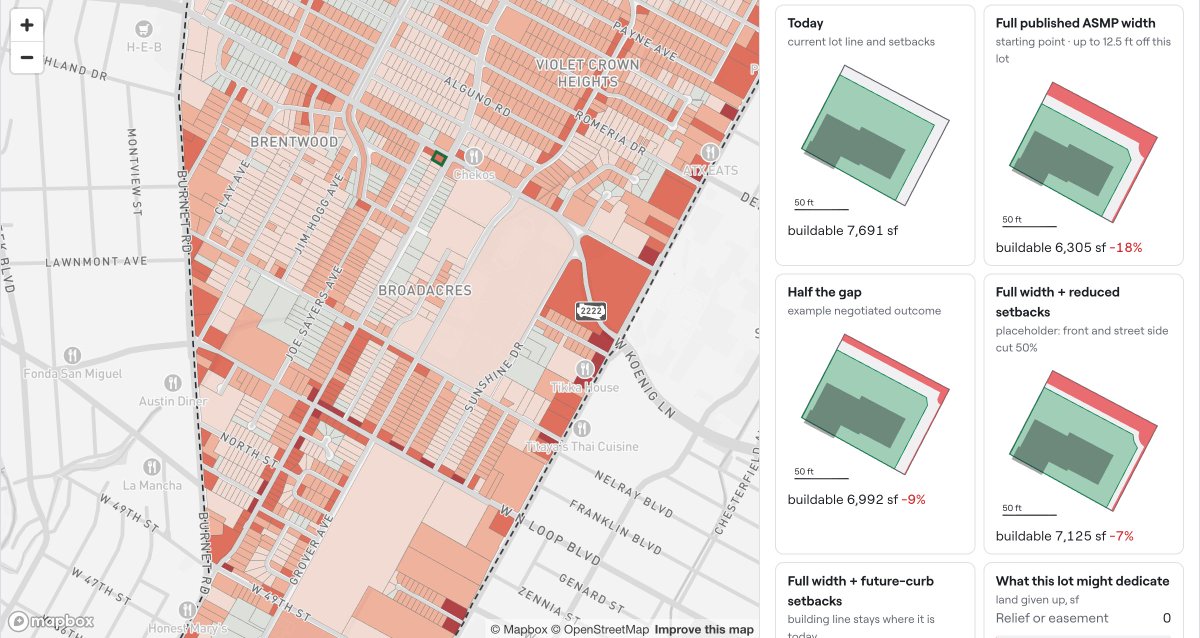
How much land does Austin's street plan take away from infill lots?
Right-of-way dedication comes up on nearly every infill project we work on in Austin. When a site redevelops, the city can ask the owner to give up a strip along the street so it can someday reach the width set in the Austin Strategic Mobility Plan (ASMP). The question we kept hearing was whether that adds up to a meaningful amount of land, or just a few feet here and there.
We built a tool to understand that impact lot by lot and what it does at the neighborhood scale. Try it here: https://t.co/QtvtMpq4Od
Your civil engineer is going to love this.
New In CedarOS: topography layers help you assess grading challenges, anticipate stormwater infrastructure needs, and identify potential slope-related limits on buildable area, all directly in the map view.
Take a closer look at: https://t.co/OQbdEomyc7
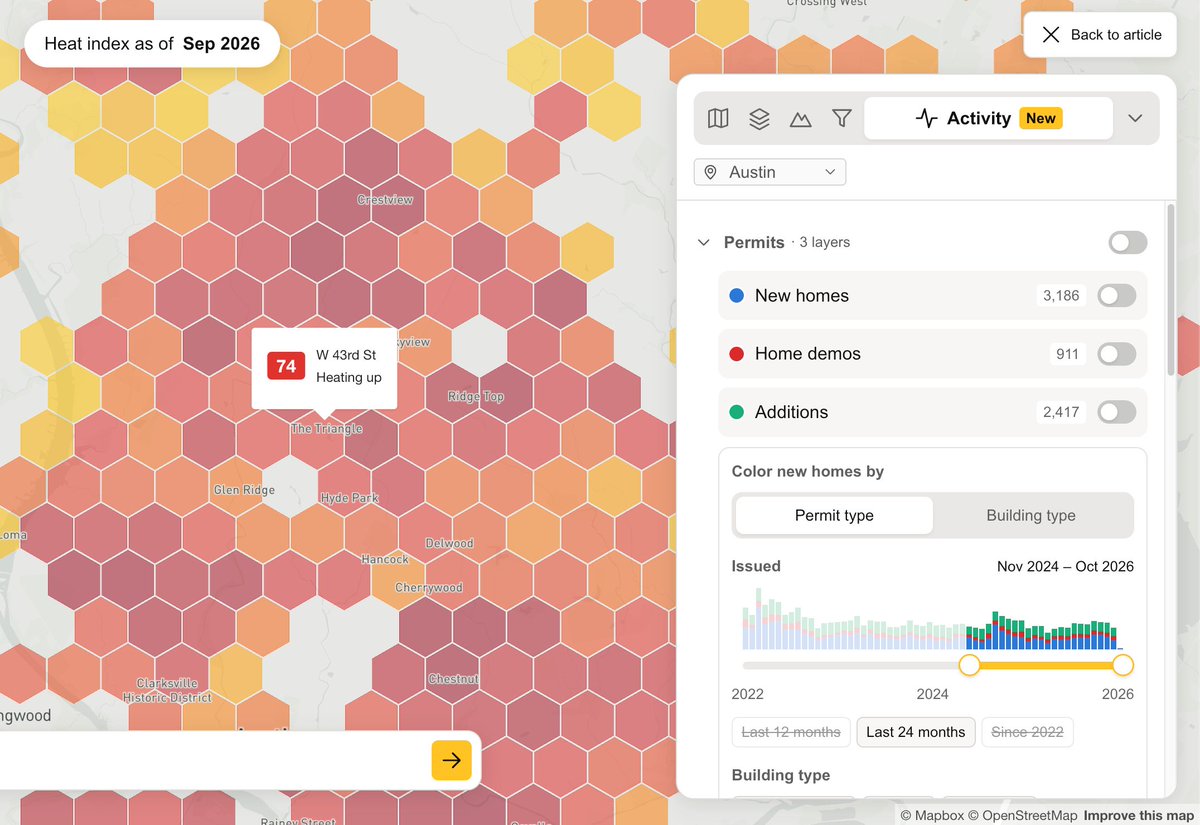
We think permitting data is one of the most important (and hardest to use) inputs in early feasibility and underwriting for infill projects. Much of it is public, hiding in plain sight across city databases, application records, and project descriptions, but turning those records into something useful for a development decision still takes substantial work.
Our new research tool unlocks better answers to some of the most important development questions at the earliest stages. See our preview for Austin: https://t.co/lH8kWAcrxD
Today we’re releasing a research preview of Cedar’s permitting data tools, starting with an interactive map showing where new homes are being permitted and how development activity is changing in your market.
We’re sharing it early to get feedback from developers and explore how this data can support better decisions, especially at the feasibility and underwriting stage.
Visibility into an accurate housing pipeline can help you understand supply and demand in your market, assess competing projects, and evaluate what to build on a specific site.
This is a work in progress. We want to learn which questions matter most to you, what information you need to trust the answers, and how to make this useful in your next feasibility study.
https://t.co/lH8kWAcZnb
Your civil engineer is going to love this.
Cedar’s new topography layers help you assess grading challenges, anticipate stormwater infrastructure needs, and identify potential slope-related limits on buildable area, all directly in the map view.
If you believe it’s our destiny to design and build great buildings in very short periods of time, again
.
If you’re an engineer that believes agentic design systems will make it possible, come build that future with us here at @cedarbuild
DMs open
Meet Jake Hawkins, Architect at Cedar.
Jake’s background spans hands-on trade work, woodworking, custom residential design, and years leading projects in Austin. That range shows up in how he thinks: as both a designer and a fabricator, with a strong belief in drawing, iteration, and the craft of making places people truly want to live in.
He joined Cedar to help rethink housing from the inside out. Jake is particularly drawn to infill housing and the challenge of creating thoughtful homes on tight urban sites, where every decision matters. His work combines design discipline, permitting expertise, and a clear commitment to building better communities.
Glad to have you with us, Jake.
Meet Sho, one of two residences sharing a single lot in Tarrytown. Today, we’re showing you Sho; its counterpart, Seki, will come next.
Sho and Seki reflect different instincts, an old balance of yin and yang. Beneath their differences, both are grounded in stillness, serenity, and a quiet connection to the Texas Hill Country.
The darker of the two, Sho takes its name from the character 生, depicting a sprout pushing through soil toward the light. That idea of emergence shaped the house, with simple forms rising alongside mature live oaks, wrapped in dark timber and broad roof planes. A cantilevered volume shelters the entry below, while restrained forms allow the home to settle quietly beneath the tree canopy.
A collaboration with Gossett & Co., the project is rooted in the idea of legacy, a home shaped by the land, lived in, and loved across generations.
📍 Tarrytown, Austin
2 Residences | 10,700 SF
Expected Completion: 2027
Meet Xuan, Computational Design Lead at Cedar.
Xuan’s background is in architecture, with a focus on computational design, automation, and fabrication. Before joining Cedar, he worked at United Network Studio in Amsterdam, where he helped tackle complex facade design and the kind of workflow challenges that demand speed, precision, and iteration.
At Cedar, he works at the intersection of architecture and technology, both building tools as an engineer and using them through the lens of an architect. His focus is feasibility: how much of the process can be automated, how quickly the loop can be closed, and how expertise can be built into a system that scales.
He’s especially excited by the opportunity to help build a product this market has been chasing for years: a solution that helps owners, architects, and policymakers make better housing decisions, faster.
Welcome to the team, Xuan.