OTD in 1941 Soviets started forcibly deporting 50,000 of the Baltic people we had ‘liberated from fascism’. 60% died. 75% were women & kids
Imagine mass deportations happening today..
Publicēts mūsu stāsts no Minirallija Karosta 2026. Visu var izlasīt šeit: https://t.co/RhMFFX2EDT
Īsumā - gāja ļoti labi. Pat pārāk labi. Un jā, kaķis ir ārā no maisa - jaunā ekipāža Māris Egle/Mārtiņš Berts turpinās savas minirallija gaitas arī Talsos un Gulbī 😎
ASV kongresmenis Dons Beikons sarunā ar Latvijas Televīziju brīdina, ka Krievija turpina izmantot iebiedēšanu un dezinformāciju pret savām kaimiņvalstīm. “Ja Ukraina kritīs, draudi Baltijai tikai pieaugs, tāpēc nepieciešamas spēcīgas atturēšanas spējas, lai Krievija saprastu, ka konflikts ar Latviju nozīmētu arī konfliktu ar ASV,” uzsvēra Beikons.
🇱🇻🏒 Latvijas hokeja izlase sestdien agrajā spēlē pasaules čempionātā iztur amerikāņu uzbrukuma spiedienu, izmanto savas iespējas un pieveic ASV ar 4:2.
Vai mēs arī varētu lūdzu? 1. uzdevums jaunajam Satiksmes ministram. Izdarāms nedēļas laikā. Nulle ietekme uz budžetu. Noliks Latviju inovatoru saraksta aukšgalā. @AndrisKulbergs
It could actually be a significant problem that Europe doesn't have enough garages. This sounds like a joke, but I'm serious. Garages let you work on stuff that doesn't matter yet, which is how big things often start. The outliers of ideas need the outliers of space.
This isn't in the trial phase.
The entire China International Consumer Products Expo in Hainan, recently, used only these materials for signage, food containers, and more.
This is getting scaled for mass use.
A mathematician who shared an office with Claude Shannon at Bell Labs gave one lecture in 1986 that explains why some people win Nobel Prizes and other equally smart people spend their whole lives doing forgettable work.
His name was Richard Hamming. He won the Turing Award. He invented error-correcting codes that made modern computing possible. And he spent 30 years at Bell Labs sitting in a cafeteria at lunch watching which scientists became legendary and which ones faded into nothing.
In March 1986, he walked into a Bellcore auditorium in front of 200 researchers and told them exactly what he had seen.
Here's the framework that has been quoted by every serious scientist for the last 40 years.
His opening line landed like a punch. He said most scientists he worked with at Bell Labs were just as smart as the Nobel Prize winners. Just as hardworking. Just as credentialed. And yet at the end of a 40-year career, one group had changed entire fields and the other group was forgotten by the time they retired.
He wanted to know what the difference actually was. And he said it wasn't luck. It wasn't IQ. It was a specific set of habits that almost nobody is willing to follow.
The first habit was the one that hurts the most to hear. He said most scientists deliberately avoid the most important problem in their field because the odds of failure are too high. They pick a safe adjacent problem, solve it cleanly, publish it, and move on. And because they never swing at the hard problem, they never hit it. He said if you do not work on an important problem, it is unlikely you will do important work. That is not a motivational line. That is a logical one.
The second habit was about doors. Literal doors. He noticed that the scientists at Bell Labs who kept their office doors closed got more done in the short term because they had no interruptions. But the scientists who kept their doors open got more done over a career. The open-door scientists were interrupted constantly. They also absorbed every new idea passing through the hallway. Ten years in, they were working on problems the closed-door scientists did not even know existed.
The third habit was inversion. When Bell Labs refused to give him the team of programmers he wanted, Hamming sat with the rejection for weeks. Then he flipped the question. Instead of asking for programmers to write the programs, he asked why machines could not write the programs themselves. That single inversion pushed him into the frontier of computer science. He said the pattern repeats everywhere. What looks like a defect, if you flip it correctly, becomes the exact thing that pushes you ahead of everyone else.
The fourth habit was the one that hit me the hardest. He said knowledge and productivity compound like interest. Someone who works 10 percent harder than you does not produce 10 percent more over a career. They produce twice as much. The gap doesn't add. It multiplies. And it compounds silently for years before anyone notices.
He finished the lecture with a line I have never been able to shake.
He said Pasteur's famous quote is right. Luck favors the prepared mind. But he meant it literally. You don't hope for luck. You engineer the conditions where luck can land on you. Open doors. Important problems. Inverted questions. Compounded hours. Those are not traits. Those are choices you make every single day.
The transcript has been sitting on the University of Virginia's computer science website for almost 30 years. The video is free on YouTube. Stripe Press reprinted the full lectures as a book in 2020 and Bret Victor wrote the foreword.
Hamming died in 1998. He gave his final lecture a few weeks before. He was 82.
The lecture that explains why some careers become legendary and others disappear is still free. Most people who could benefit from it will never open it.
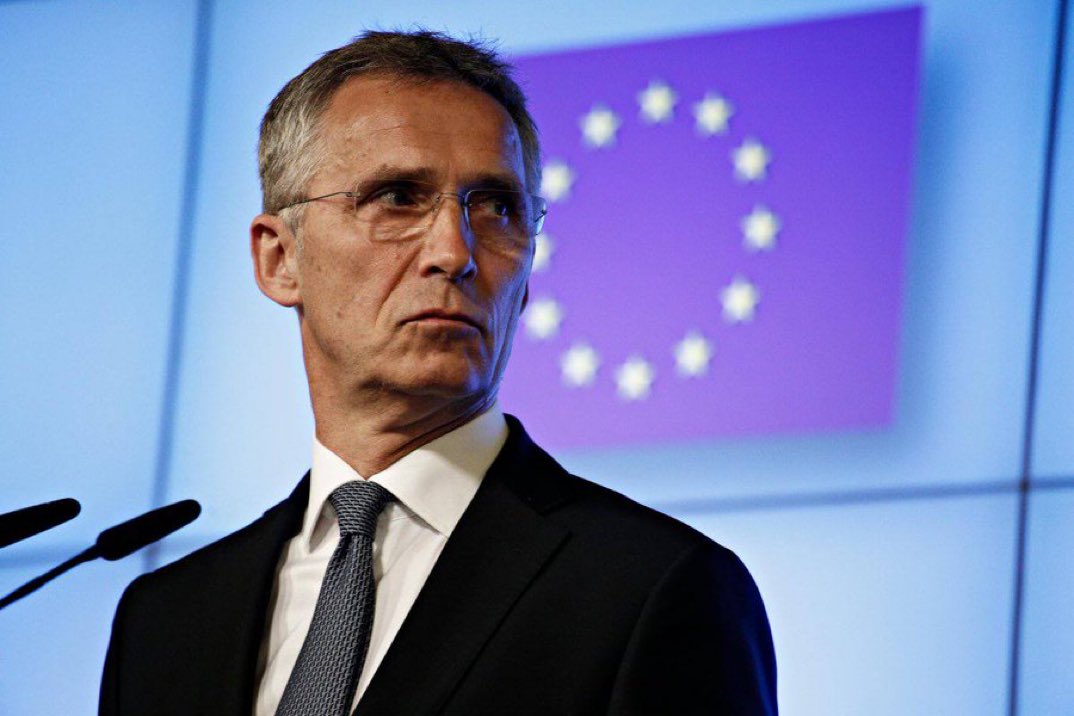
Jens Stoltenberg went on Fox News this week. It did not go the way Trump would have liked.
The former NATO Secretary General, now Norway’s Finance Minister, was asked about Trump’s threats to pull the United States out of the alliance.
He answered with the kind of calm, precise demolition that only a Norwegian diplomat can deliver without raising his voice once.
On why Europe didn’t join the war: “NATO is a defensive alliance. The strikes or the war against Iran were never an attempt to make that into a NATO operation.”
On whether Europe disagrees with America about Iran: “We all agree the Iranian nuclear program is dangerous. The question is how we achieve that goal.” Translation: the problem was never the destination. It was the lunatic who decided to get there by setting the car on fire.
On what Trump should have done before launching: “If you want NATO to contribute, then at least you have to sit down with NATO allies, as you did after 9/11. You cannot expect us just to be there without any consultations, any discussions in NATO before you take the decision to launch the attack.”
This is Stoltenberg saying, in the most polished terms imaginable, that you do not start a war at two in the morning on Truth Social and then ring your allies for help at breakfast.
On whether Europe abandoned America: “The majority of European allies have made sure that their bases and infrastructure were available for the United States. There are some exceptions, but most have contributed.” Most helped. Quietly. Without being asked to endorse a war they considered illegal.
On why leaving NATO would be catastrophic for America specifically: “The United States is 25 per cent of the global economy. But together with NATO allies, we are 50 per cent of the global economy and 50 per cent of the world’s military might. So it makes the United States safer to have friends and allies — something that Russia and China don’t have at all.”
And then, in a separate interview, the warning nobody in Washington wants to hear: “It’s not a natural law that we will have NATO forever. It’s not carved in stone that NATO will exist for the next ten years.”
That last line was not a threat. It was a diagnosis.
Trump called NATO a Paper Tiger. Stoltenberg replied, with characteristic Norwegian understatement, that paper tigers tend to be considerably less useful once you’ve set them on fire yourself.
Gandalv / @Microinteracti1
‼️‼️🇩🇪 BREAKING | WSJ: Germany is redirecting parts of its struggling industrial base—especially automotive suppliers—into defense production.
Facing stagnation and rising competition (notably from China), Berlin is pushing factories, workers, and expertise toward weapons manufacturing.
Firms like Rheinmetall are expanding rapidly, and auto suppliers are partnering on drones, ammunition, and military systems.
The goal is to turn economic weakness into strength by making Germany a central hub for Europe’s rearmament.
See the latest updates with us: @visionergeo
The most exciting longevity trend right now is that we are actually beating dementia.
At a given age—70, 75, 80, etc.—the prevalence of dementia is down compared to what it was decades ago.
Today's 90-year-olds have less than half the risk of dementia that ones in 1984 did!
We have already reached 10-year agreements with three key countries: Saudi Arabia, the United Arab Emirates, and Qatar. We already have requests from 11 countries – the Middle East and the Gulf, plus we’re also gradually turning our attention to the Caucasus.
Within this Drone Deal, there will be at least 10 different agreements covering various categories of Ukrainian weapons exports. Co-production is planned – the construction of our production lines both in Ukraine and in other countries. New technologies that we are developing jointly with various countries, in which they are investing. There is also an agreement on annual funding for a specific amount, along with a fixed number of years.
Second: the European track. Work has already begun with Germany, Italy, Norway, Sweden, and the Netherlands. Of course, we have good relations with the United Kingdom and France. I am confident that all of this will also be implemented there.
From an interview with the “United News” telethon.
Thank you for choosing to fly with @Official_NAFO Airlines Mr Vàtnik as always this flight will be non smoking & seat belts must remain on until the seat belt signs are off.
Free Peanuts & drink will be served mid flight.
Hungarians around the globe rushed to their embassies today to vote Orbàn out after 16 years. Only 1 person in Baku didn't vote, while everyone registered in Armenia casted their vote.
okay I guess I have to talk about Péter Magyar here.
Let me just start with saying, in a very unladylike way, that you guys seem to have zero clue what happened in Hungary in the last two years, you completely miss the point, and you're a disappointing bunch.
Let's go.
This is my favorite movie scene of all time.
Two key lessons:
1. You can read every book ever written, but knowledge means little without real-world experience.
2. Every single person you meet is fighting a battle you know nothing about.