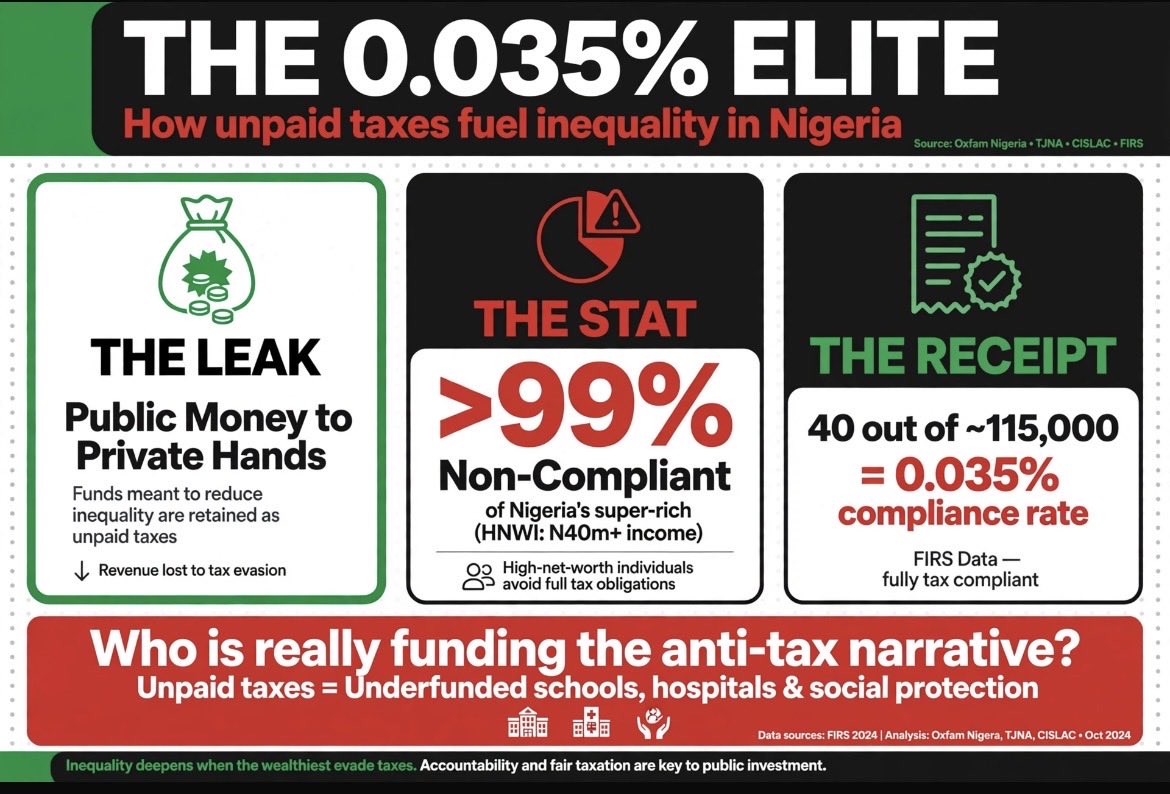
@Onsogbu The tool to eliminate multidimensional poverty is progressive taxation. When we don't pay, this public money stays in our pockets, but the unpaid taxes of the wealthy are far higher, fuelling inflation. They use theirs to hedge against inflation, while we struggle even with ours.
@emekabk21 The tool to eliminate multidimensional poverty is progressive taxation. When we don't pay, this public money stays in our pockets, but the unpaid taxes of the wealthy are far higher, fuelling inflation. They use theirs to hedge against inflation, while we struggle even with ours.
@Big_marvis The tool to eliminate multidimensional poverty is progressive taxation. When we don't pay, this public money stays in our pockets, but the unpaid taxes of the wealthy are far higher, fuelling inflation. They use theirs to hedge against inflation, while we struggle even with ours.
@UtomiPat The tool to eliminate multidimensional poverty is progressive taxation. When we don't pay, this public money stays in our pockets, but the unpaid taxes of the wealthy are far higher, fuelling inflation. They use theirs to hedge against inflation, while we struggle even with ours.
@lanreadelowo@MrB1DEM1 The tool to eliminate multidimensional poverty is progressive taxation. When we don't pay, this public money stays in our pockets, but the unpaid taxes of the wealthy are far higher, fuelling inflation. They use theirs to hedge against inflation, while we struggle even with ours.
@emekabk21 Dredging the river downstream is unsustainable unless you dam upstream of Onitsha to trap debris & silt, allowing only water flow & prevent silting up the river to allow navigation to Onitsha. But, will Kogi not complain if you dam upstream of Onitsha?
@TENIBEGILOJU202 If the majority are not paying their fair share of taxes, mainly the affluent, then 140 million of us remain in multidimensional poverty because the affluent keep in their pockets what should be public money to ease poverty. Yet, we go to the same market for food and other needs.
@novieverest If the majority are not paying their fair share of taxes, mainly the affluent, then 140 million of us remain in multidimensional poverty because the affluent keep in their pockets what should be public money to ease poverty. Yet, we go to the same market for food and other needs.
@SegunShowunmi If the majority are not paying their fair share of taxes, mainly the affluent, then 140 million of us remain in multidimensional poverty because the affluent keep in their pockets what should be public money to ease poverty. Yet, we go to the same market for food and other needs.
@ogundamisi@AguAneke If the majority are not paying their fair share of taxes, mainly the affluent, then 140 million of us remain in multidimensional poverty because the affluent keep in their pockets what should be public money to ease poverty. Yet, we go to the same market for food and other needs.
@KadunaResident@MrB1DEM1 If the majority are not paying their fair share of taxes, mainly the affluent, then 140 million of us remain in multidimensional poverty because the affluent keep in their pockets what should be public money to ease poverty. Yet, we go to the same market for food and other needs.
@ruffydfire If the majority are not paying their fair share of taxes, mainly the affluent, then 140 million of us remain in multidimensional poverty because the affluent keep in their pockets what should be public money to ease poverty. Yet, we go to the same market for food and other needs.
@taiwoyedele@FinMinNigeria If the majority are not paying their fair share of taxes, mainly the affluent, then 140 million of us remain in multidimensional poverty because the affluent keep in their pockets what should be public money to ease poverty. Yet, we go to the same market for food and other needs.
@iamayolawal@atiku An economic tipping point is when short-term populist policies inadvertently trigger a structural collapse—printing unbacked currency, draining foreign reserves to defend an overvalued exchange rate, & heavily subsidising commodities—is a well-documented economic trap. Venezuela.
@iamayolawal@atiku Govt stopped printing money to subsidise fuel -no more ways & means. Stopped draining external reserves to subsidise the naira exchange rate. Govt must enforce the top 10% to pay their taxes; untaxed liquidity distorts market prices. The naira will appreciate & a reprieve to all.
@UtomiPat Taxation is the bargain for adopting market capitalism, as states relinquish the means of production to individuals; Or, the govt will borrow, crowd out the private sector in the banks, increasing rates. High rates for Africa are a lending risk as it struggles to collect taxes.
@Naija_PR Ordinary households are straining now because the top 10% still use their untaxed liquidity to distort market prices. At the same time, they use it to hedge against inflation, but the average person doesn't have those buffers.
@firstladyship@anieeettt Each state will now subsidise electricity and no more the FG - electricity has been removed from the exclusive list. Now, it is the FG that is subsidising.
@ARISEtv When anyone comes on TV or radio to analyse the Nigerian economy, the presenter should ask if they are tax compliant - we can not keep public money in our pockets and morally talk about multidimensional poverty in Nigeria if we are not tax-compliant.
@SaharaReporters When anyone comes on TV or radio to analyse the Nigerian economy, the presenter should ask if they are tax compliant - we can not keep public money in our pockets and morally talk about multidimensional poverty in Nigeria if we are not tax-compliant.