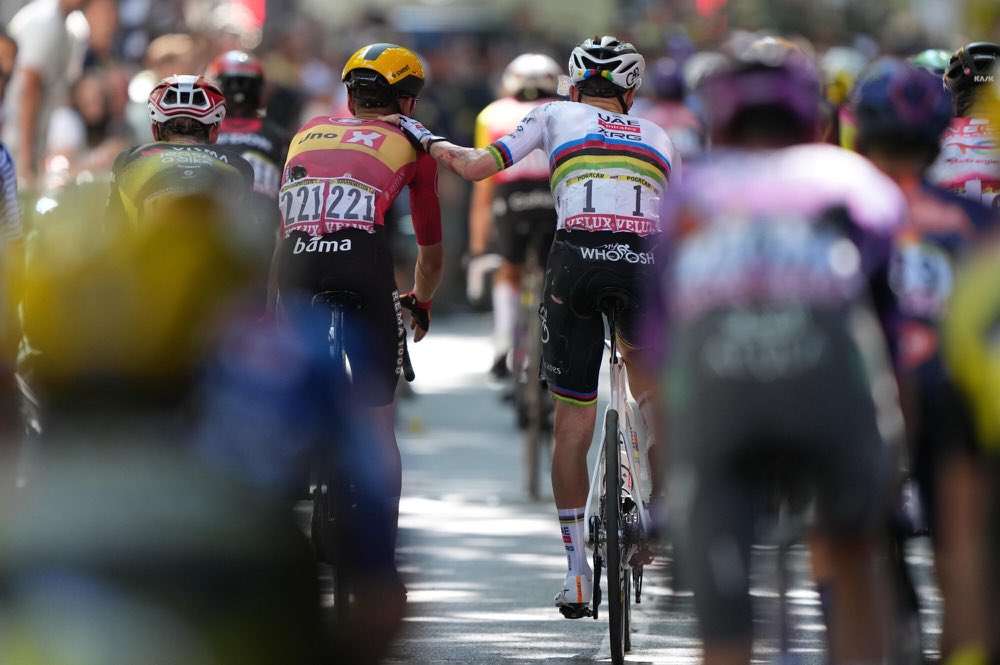
El vídeo del zasca de Juan Antonio Flecha en modo @antoalix- por lo que dijo @albertocontador sobre los impuestos durante la retransmisión de la etapa de ayer del @LeTour en @Eurosport_ES.
Gracias @trikimonamur por hacer divertido mi cabreo por ese comentario tan pepero/voxero.
Doping didn't disappear from pro cycling.
It may have just moved to 2,500 metres.
This morning I interviewed James Witts, author of a new book called Dope. Halfway through the conversation, he described something I'd never heard in all my years around this sport.
He calls it "the altitude alibi."
Here's how it works.
Every spring, pro riders disappear to the same places. Mount Teide. Sierra Nevada. Weeks at altitude preparing for the biggest races of the year.
The logic is simple. Altitude exposure raises your hematocrit. More red blood cells, more oxygen, more power.
Except there are two problems nobody talks about.
Problem one: altitude doesn't work for everyone. There are genetic responders and non-responders. Some riders come down from the volcano flying. Some come down with nothing to show for three weeks of their season.
Problem two: altitude forces a trade-off.
At camp, you have a choice of protocol. Sleep high and train high, or sleep high and train low.
Sleep high, train high: you maximise the altitude adaptation. But the thin air caps your power. You can't train at full intensity, so you lose the training adaptation.
Sleep high, train low: you descend to do your sessions at full intensity and keep the training adaptation. But you give up some of the altitude effect.
You can't fully have both. Every altitude camp is a compromise.
Now here's where James's argument gets dark.
The biological passport, the system designed to catch dopers, doesn't test for drugs directly.
It tracks a rider's blood values against their own baseline. Deviate too far from your own normal, and you get flagged.
But when a rider is at altitude, the passport expects the deviation. Rising blood values are exactly what altitude is supposed to produce.
James believes some riders have worked out what that means.
Go to altitude. Microdose EPO. The passport reads the change in your blood as a natural altitude response.
Then train low, at full intensity, and take the full training adaptation - because you no longer need the mountain to raise your blood values. The drug does that part.
The altitude camp isn't the preparation.
It's the alibi.
I've spent years interviewing World Tour coaches, sports scientists and pro riders. I have never heard it framed like this before.
The full conversation goes much deeper: what the passport can and can't see, why microdosing is so hard to catch, and what it all means for the sport we love.
It drops soon on the Roadman Cycling Podcast. Follow along so you don't miss it.
His book is called Dope: How Drugs Changed Sport. Worth your time.
P.S. Genuine question for you: can the testers ever catch up in this game or cat & mouse?
The boss saw the waitress being humiliated by a customer, went up to him, showed him that he was being filmed, made him pick the money up from the floor, and kicked him out of the restaurant.
#TDF2026 is going to finally feature Col du Jandri.
The climb, gravel after LDA, has been partially surfaced in 2023 for TDF debut
Jandri will be finish of Stage 20, on 25/7 starting from Grenoble and willl feature also Alpe d'Huez and Sarenne
(Philippe D’Avril - Le Dauphiné)
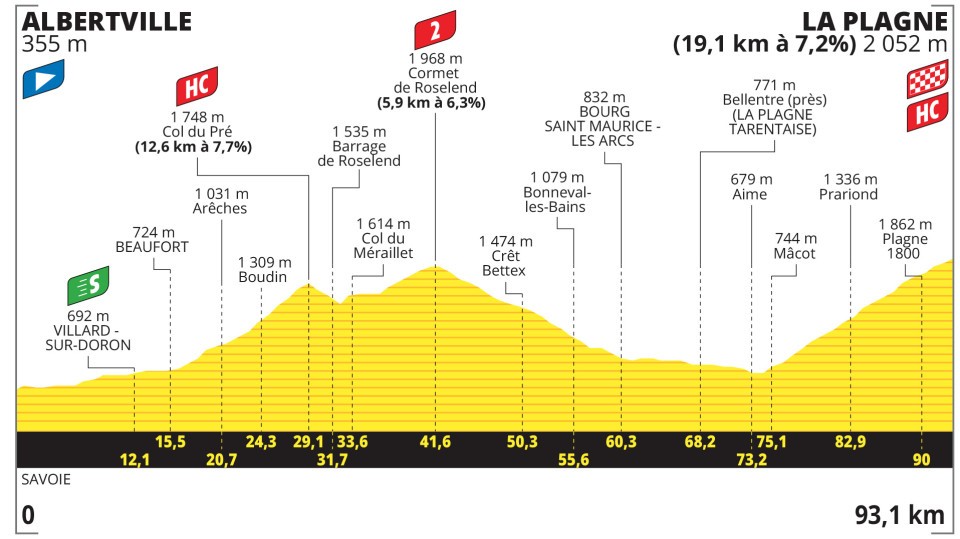
🚨La etapa 19 de @LeTour ha sido recortada en 35km
😯Un brote contagioso en un rebaño de ganado obliga a recortar la etapa a solo 95 km
🚵No incluirá la subida al Col des Saisies
https://t.co/BgWzK6UWga a través de @rtve
Before Tadej Pogačar and other riders, a mini Pogi conquered the Tour de France climbs on the route. 🥰
What a lovely video by thecyclingbrothers. #TDF2025
Cuando @albertocontador habla, toca escuchar
🌪️ La explicación sobre cómo se forman los abanicos que están siendo protagonistas en este inicio de Tour.
#TDF2025