@JonathanFitz820@ygzgzot@aphofer I think we've taken this discussion as far as your priors will permit, is what I'm saying. so, thanks for a fun opportunity to think about some things that have been remote from my thoughts, lately. best wishes; hope you figure out who your enemies are.
@JonathanFitz820@ygzgzot@aphofer my first allegiance is to the truth. I'll go where it takes me; hell, that's how I got here. but the renewed vigor of your motivated reasoning reminds me of that joke of the guy who lost his wallet in a theater, but keeps searching in the lobby because "the lighting is better"
@JonathanFitz820@ygzgzot@aphofer the tricky part is, again, measurements being theory-laden. as Roberts illustrated, Piketty's use of wealth in the denominator led him to completely different return figures, even though ostensibly we're trying to talk about the same thing: https://t.co/PN3oWQQ0EU
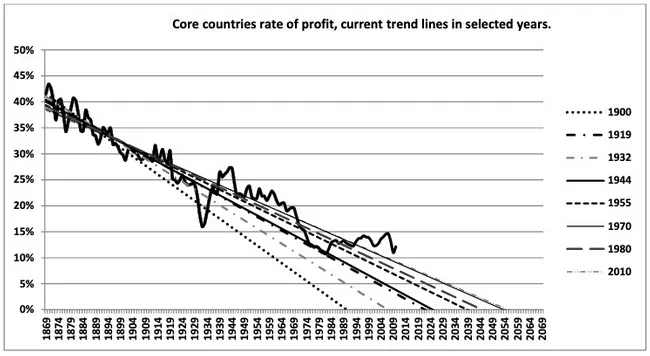
@JonathanFitz820@ygzgzot@aphofer are you trying to establish that profits are secularly increasing? then a more recent article would be even clearer, no? and able to correct for "dead-cat bounces" -- else I could point to the local crest in the Maito one and say "ah! 2014, the most profitable since the 70s!"
@JonathanFitz820@ygzgzot@aphofer I can see that we're already easing back into the fishing-for-dismissals part, which is surprising to me; what specific grievance do you have with Flarx that predisposes you against her?
@JonathanFitz820@ygzgzot@aphofer there's no scandal in the notion that different theories might measure phenomena differently, or make different predictions, and (e.g.) dual-system vs single-system approaches do indeed amount to different theories entirely.
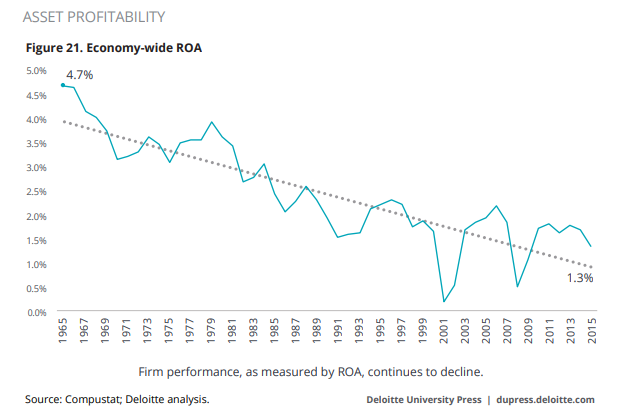
@JonathanFitz820@ygzgzot@aphofer sure, that's an important one. the maito FRoP chart is pretty famous by now, but i also found interesting the Deloitte Shift Index where they were discussing how everyone notices that returns on assets are in secular decline but, gosh, no one can agree why
@JonathanFitz820@ygzgzot@aphofer i agree unreservedly! i wish we'd all stop talking about the transformation problem. it's a red herring, read into the theory in the 20th century and carried forward by academic inertia. (not so different from certain errors about Descartes, if Marion is correct)
@JonathanFitz820@ygzgzot@aphofer If Flarxist theory is, then NOT aimed at predicting prices based on labor inputs, and if it does not contain any alleged transformation problem, and if the predictions it DOES make on long-term tendencies are borne out, you'd have no real reason to dismiss it out of hand, right?
@JonathanFitz820@ygzgzot@aphofer now that we've cast that evil "Marx" out of the discussion, let's say I happen to have a theory by another author, named "Flarx." THIS theory is quite different, and is not vulnerable to any of the criticisms you've leveled. you'd have to consider it on its own terms, yes?
@JonathanFitz820@ygzgzot@aphofer yes, good. see my response to the first time you shared that result, so we don't branch off in 10 different sections of discussion thread :)
@JonathanFitz820@ygzgzot@aphofer you're correct re: supply & demand! as I said, now keep going! *what if* the value theory was not aimed at predicting prices on the basis of labor inputs? what implications would that have for your critique?
@JonathanFitz820@ygzgzot@aphofer grok is, in this instance, correct. now keep going: in your own words, what do you see as the ramifications of this result?
@JonathanFitz820@ygzgzot@aphofer you can just try thinking it through using your own mind with the help of documents and interlocutors; passé, i know, but it's a classic approach for a reason
@JonathanFitz820@ygzgzot@aphofer if these questions seem like non-sequiturs to you (much as your own question does to me), then it's clear that we're just talking past one another not only on the technical details but on the stakes of the matter. not a productive discussion.
@JonathanFitz820@ygzgzot@aphofer what point do you suppose you're making right now? does changing seasonal ice cream preference imply that it is possible to consume more commodities than are produced? do industrial management accounts of capitalists record *nothing in particular*?