A Trybe creator messaged us last week: “That's a damn fine brief. It’s always a relief to get a brief like that.”
A relief. That’s the word that stuck with me.
Most briefs are a product page pasted into a Google Doc (or no brief at all!). The creator guesses, the footage comes back unusable, and the brand decides Trybe doesn’t work 😡
The brief is where Trybe is won. Here’s what goes in ours.
1. How it works, on one page
The monthly loop: get the deck, film, upload, we edit and run it as ads. Creators shouldn’t have to work out the process. If they have to ask, the brief failed.
2. What’s selling right now, with numbers
We pull it from the account data every month. “Opening on the problem stops 2.5x more scrollers.” “Our top video includes XYZ and sells at 2x the average.” Creators film better when they know what works, and they want to know. Their commission depends on it.
3. The product, limited to what matters
Six features, one line each. Then a rule: only mention a feature you’ve used yourself.
4. The offer, said exactly
“$149 for the pair, regularly $249.” Plus a do and don’t list: no invented bundles, no countdowns. If the price in the video doesn’t match the landing page, the ad can’t run.
5. Non-negotiables
The name spelled right. The product name as it appears on their box. The compliance wording, with the exact phrase they can use and the ones they can’t.
7. Two briefs, pick one
A gift to yourself, or a gift for someone. Each has an angle, who’s on camera, the setting and what to record. One brief per submission.
8. Visual hooks, as short clips
Six 3-to-5-second shots: product on a fingertip, opening a tiny gift box. Silent is fine. The first 2 seconds of an ad are a picture, not a sentence, so we ask for the pictures separately and pair them with the spoken hooks in the edit.
9. The spoken hooks, written out
Four per brief, each tied to a visual hook. Creators change the details to fit their life, but they start from a line that’s already been tested.
10. The script, in beats
Problem, putting it off, the gift, the quality, the price, the close. Each beat is one or two sentences. 40 to 45 seconds total. We cut it down.
11. The shot list and the b-roll
What to film talking to camera, what to film of the product, and 8 everyday clips of 5 to 10 seconds. Phone at eye level, window light, no logos, no copyrighted music.
12. How to label the upload
Brief, version, hooks filmed, model. “Brief 1 · Hooks 1, 2, 4 · V1 to V6 · Script · 3.0.” The editor opens the folder and knows exactly what they’ve got.
13. A final checklist
Ten boxes. Name spelled right, price said exactly, no cure claims, uploaded by required date.
That’s 20-odd pages. It takes us a day to produce each month, per brand.
It gets us creators who film what we need first time and want to work with us again - at scale, ads that pass compliance, and an edit team that isn’t guessing. The alternative is 40 videos a month you can’t use.
If you’re running Trybe and the content coming back is hit and miss, the brief is almost always the reason.
If you're running anything AGGRESSIVE on Meta...
Check your ad account's trust tier.
RIGHT NOW.
Yes.
Facebook ad accounts have trust tiers.
And no...
Not all ad accounts are treated equally.
That's why the exact same ad can:
Get rejected on one account...
And spend smoothly on another.
Want to check yours?
Go to your Ads Manager.
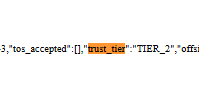
Right-click → View page source
Then search for:
"trust_finder"
You'll find your account's trust tier.
Tier 1?
Don't be surprised when aggressive creatives get rejected immediately.
Tier 2 or above?
That's where you want to scale.
Before blaming the creative...
Check the account you're running it from.