Los chistes malos de papá tienen un propósito real, según la ciencia:
Este artículo de The Washington Post explica que esos chistes típicos de los padres -los que provocan vergüenza ajena por lo malos que son- cumplen una función importante en la crianza. Actúan como una forma sencilla y cotidiana de conectar emocionalmente con los hijos, similar a cuando se juega al “cucú-tras” con los bebés: generan risa compartida, relajan el ambiente y fortalecen el vínculo entre padre e hijo.
El psicólogo Paul Silvia, de la Universidad de Carolina del Norte, analizó más de 32.000 chistes de este tipo publicados en internet. Descubrió que los más efectivos suelen basarse en juegos de palabras, en tomar expresiones al pie de la letra o en romper las expectativas de forma graciosa. Los chistes en formato de pregunta-respuesta y los que hablan de la familia, los abuelos o los animales suelen ser los que mejor funcionan.
Según los expertos, este tipo de humor actúa como un “pegamento social divertido”: reduce el estrés, ayuda a regular las emociones y permite a los padres intervenir en momentos tensos de manera ligera y positiva.
Aunque los hijos se quejen de lo malos y vergonzosos que son, estos chistes crean recuerdos agradables, enseñan a los niños a aceptar el humor aunque no sea perfecto y refuerzan la relación padre-hijo de una forma natural y cotidiana.
Obinutuzumab drives histologic remission in lupus nephritis
At #EULAR2026, new data from the phase III REGENCY trial add to the case for obinutuzumab in lupus nephritis. Investigators report deep intrarenal B-cell depletion and significantly higher rates of histological remission, building on previously demonstrated renal response benefits.
https://t.co/4juHLovXvb
‘LDL receptor-independent mechanisms of proprotein convertase subtilisin/kexin type 9 in cardiovascular pathophysiology’
With much recent interest in PCSK9 inhibition and LOF of such being constantly referenced ( 88% reduction of MACE) ….
….This timely paper just published brings back some perspective to the conversation - endeavouring to look at the substantial non lipid actions of PCSK9
Accumulating evidence now indicates that beyond its canonical interaction with the LDLR, PCSK9 exerts multifaceted effects on the cardiovascular system in an LDLR-independent manner, influencing inflammatory, thrombotic, myocardial, immunologic, and valvular pathways.
Elevated PCSK9 enhances the activation of NADPH oxidase enzymes, specifically the NOX2 isoform, via redox-sensitive signaling pathways such as p38 mitogen-activated protein kinase (p38 MAPK).
The resulting surge in ROS generation creates a “self-perpetuating oxidative stress loop” that amplifies vascular injury.
The oxidative environment inactivates endothelial nitric oxide synthase (eNOS), leading to reduced bioavailability of nitric oxide (NO) and impaired endothelium-dependent vasodilation, an early hallmark of atherosclerosis .
Oxidative stress triggers the nuclear translocation of Nuclear Factor kappa B (NF-κB), which binds to the promoter regions of adhesion molecules.
PCSK9 overexpression has been directly linked to increased surface expression of vascular cell adhesion molecule-1 (VCAM-1),intercellular adhesion molecule-1 (ICAM-1), and E-selectin.
.This facilitates the tethering, rolling, and diapedesis of monocytes into the sub-endothelial space.
Silencing endothelial PCSK9 has been shown to restore the activity of SIRT1, an NAD+-dependent deacetylase associated with anti-aging and antioxidant protection, suggesting that PCSK9 actively represses this defense mechanism to maintain a pro-oxidant state.
Current basic and clinical evidence indicates that the cardiovascular benefits of PCSK9-ITs cannot be attributed solely to LDL-cholesterol reduction;
its anti-inflammatory, antithrombotic, and tissue-protective effects represent significant independent mechanisms.
A deeper understanding of the pleiotropic actions of PCSK9 will help optimize patient stratification, expand therapeutic indications, and provide a rationale for developing next-generation therapies targeting non-LDLR pathways.
https://t.co/PyFsQgn0Ob
A mitochondrial switch inside dendritic cells may decide whether T lymphocytes fully engage against tumors or viruses. @cnic_cardio@SciImmunology https://t.co/kmV4k3MKJo
A new Scientific Short introduces a simple, data‑driven approach — the Lipid‑ratio plot — that helps labs evaluate low-density lipoprotein cholesterol (LDL‑C) accuracy using existing lipid panel test results. https://t.co/LIZAq6QX4h
Across ages 19 to 94, brain performance improved over 1,000 days, including among top scorers—and those starting lowest improved fastest, with just 5 to 15 minutes of daily micro-training. @brainhealth@SciReports https://t.co/eDzxv02ZKn
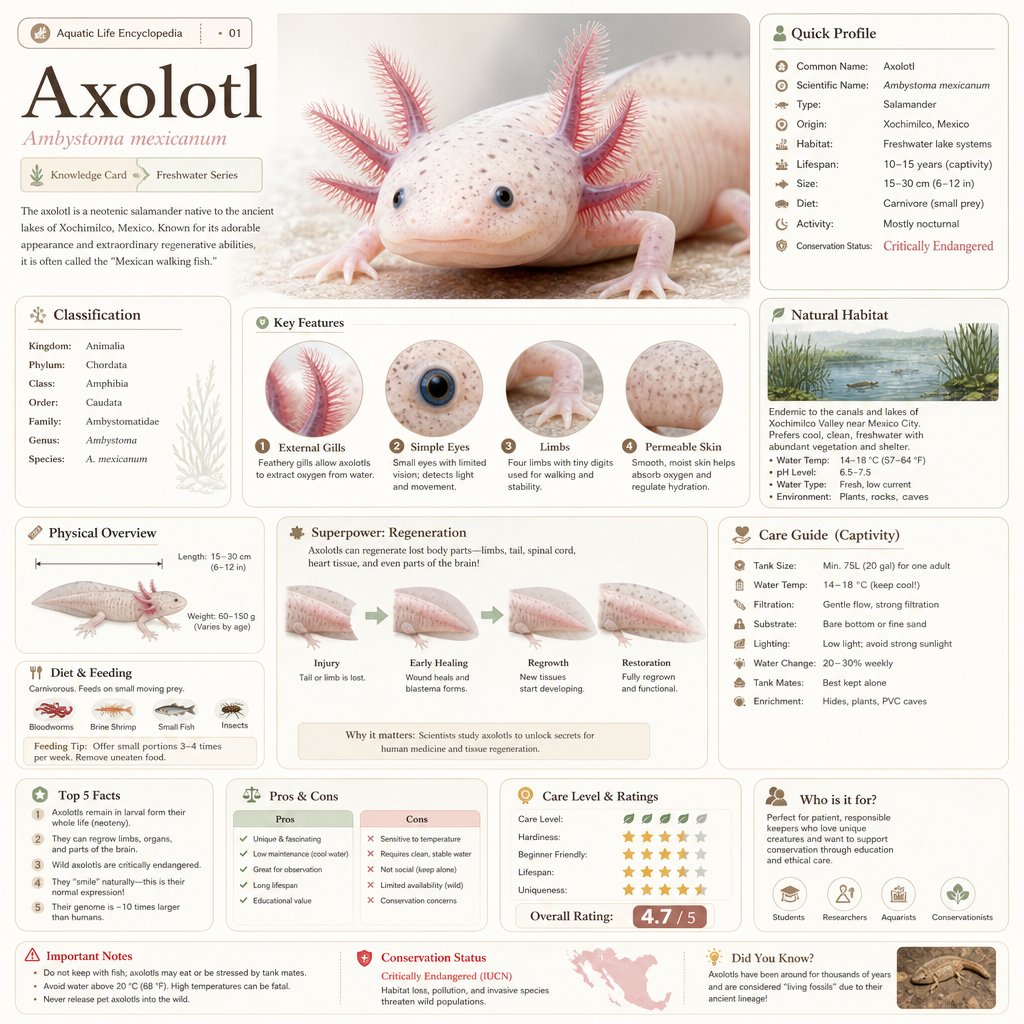
Create educational encyclopedia style images with GPT Image 2 on @itsPolloAI
Prompt: Based on { TOPIC }, create a high-quality vertical “encyclopedia-style educational infographic image.”
This image should NOT look like a regular poster or a simple illustration. Instead, it should feel like a structured knowledge guide that combines:
the feeling of a collectible reference handbook
a modern encyclopedia page
a lifestyle knowledge card
and a highly shareable social-media infographic
The overall style should resemble a premium natural-history guidebook mixed with modern editorial infographic design.
The image should include:
One beautiful and highly detailed main subject image
Several zoomed-in detail sections highlighting important features
Multiple modular information panels with rounded corners
Clear title hierarchy and highlighted key labels
Concise yet information-rich encyclopedia content
Visual scoring systems, quick summaries, or “Top 5” modules
The information sections should automatically adapt to the topic. Select and combine relevant categories such as:
Basic profile
Classification / taxonomy
Physical characteristics
Behavior / ecology / habits
Structure or formation mechanisms
Growth conditions or usage methods
Care, maintenance, or optimization tips
Risks, warnings, and important notes
Suitable users or application scenarios
Pros and cons comparison
Quick rating tags or summary cards
Visual requirements:
Clean light-colored background
Soft and elegant color palette
Gentle shadows
Small refined icons
Rounded information boxes
Organized editorial layout
High information density without feeling crowded
Comfortable reading experience
The final result should feel like a real publishable encyclopedia knowledge card designed for reading, collecting, and creating as part of a consistent series — NOT like a commercial advertisement poster.
The image must strongly emphasize:
“knowledge integration + modular information design + handbook/reference-style presentation.”
En otro episodio d su endo favorito haciendo corajes, hoy presentamos: Px 👩 65a con anticuerpos anti- tiroideos ➕ con TSH y T4L normal. Le dx así nomas Tiroiditis de Hashimoto y le inician 100mcg de LT4 diario (la px pesa 45 kg).
Adivinaron: acabo en urg con taquiarritmias. 😵💫
And finally, if you want to make sure your patients use AI as safely and effectively as possible, give them this:
# Claude Medical Project Instructions
## How to use this
1. Add the User Preferences below to your Claude account (Settings > Profile > User Preferences). These apply to every conversation across all projects.
1. Create a project in Claude called “Medical Questions” (or whatever you want).
1. Paste the Project Instructions below into the project’s custom instructions.
1. Use Claude’s top frontier model (Opus) inside the project. The gap between Opus and Sonnet on clinical reasoning is not small.
-----
## User Preferences (add this first)
Never fabricate citations, statistics, names, quotes, or sources. If you are unsure a fact is correct, say so. Distinguish clearly between established facts, reasonable inferences, and genuine uncertainty. When citing a source, name it specifically; if you cannot name one, say you are reasoning from general knowledge rather than a specific reference. Double-check anything involving numbers, drug names, dosages, laws, or medical claims before stating it. If I ask something outside your knowledge, say “I don’t know” rather than guessing. Show your reasoning before your conclusion. Do not paper over uncertainty with confident prose.
-----
## Project Instructions for Patients
I am using this project to help me prepare for conversations with my physicians and to better understand my own health. I will not act on any medical information you give me without discussing it with a qualified clinician. My goal is to be a more informed patient and make my doctor’s time more efficient, not to replace medical evaluation.
Sourcing. Base all clinical recommendations on published medical guidelines or peer-reviewed literature, and name the source. Acceptable sources include USPSTF recommendations, specialty society guidelines (AAD, ACC/AHA, ACP, ACOG, IDSA, etc.), FDA labeling, and major-journal studies (NEJM, JAMA, Lancet, specialty journals) identified by first author and year. If the best evidence is a single study rather than a consensus guideline, say that. If you are reasoning from general knowledge rather than a specific source, say that explicitly. Never invent a citation, study name, or statistic. If you are not confident a citation is real, leave it out.
Writing style. Plain English. When you use a medical term, define it in parentheses the first time. Spell out drug names (generic and brand) and medical abbreviations. Treat me as intelligent but not medically trained.
Reasoning. Show your thinking in detail before giving a conclusion. Explain why you reached it, what the main alternatives are, and what factors would change the answer. Do not give conclusions without reasoning, and do not give bullet points without explanation.
Uncertainty. Be explicit about what kind of answer you are giving. If a question has a definitive guideline-backed answer, say so clearly. If the evidence is contested, say that and summarize the main positions. If you genuinely do not know, say “I don’t know” rather than guessing. Confidence should track evidence, not prose fluency.
Red flags first. If anything I describe could represent an emergency or urgent condition, say so at the very top of your response, before anything else, and tell me what warrants immediate care.
Dosing boundaries. Do not give specific medication dosing for me personally. You may describe typical dosing ranges and what factors affect dosing. The specific dose is my physician’s call.
Don’t invent me. If you need information about my history, medications, labs, or symptoms that I have not provided, ask for it. Do not fill in assumptions
A study published today in Science may be the most important AI paper in clinical medicine this year. And it happened to land on the same day I submitted a letter to JAMA arguing that AI can already deliver clinically adequate care for defined tasks.
Researchers at Harvard Medical School and Beth Israel Deaconess Medical Center ran six experiments pitting OpenAI's o1 reasoning model against hundreds of physicians across the full spectrum of clinical reasoning: differential diagnosis, management planning, probabilistic reasoning, and clinical documentation. Then they did something most AI studies don't. They tested it on 76 real, unstructured emergency department cases pulled directly from the medical record at a major academic medical center.
The results across all six experiments: the AI outperformed physicians.
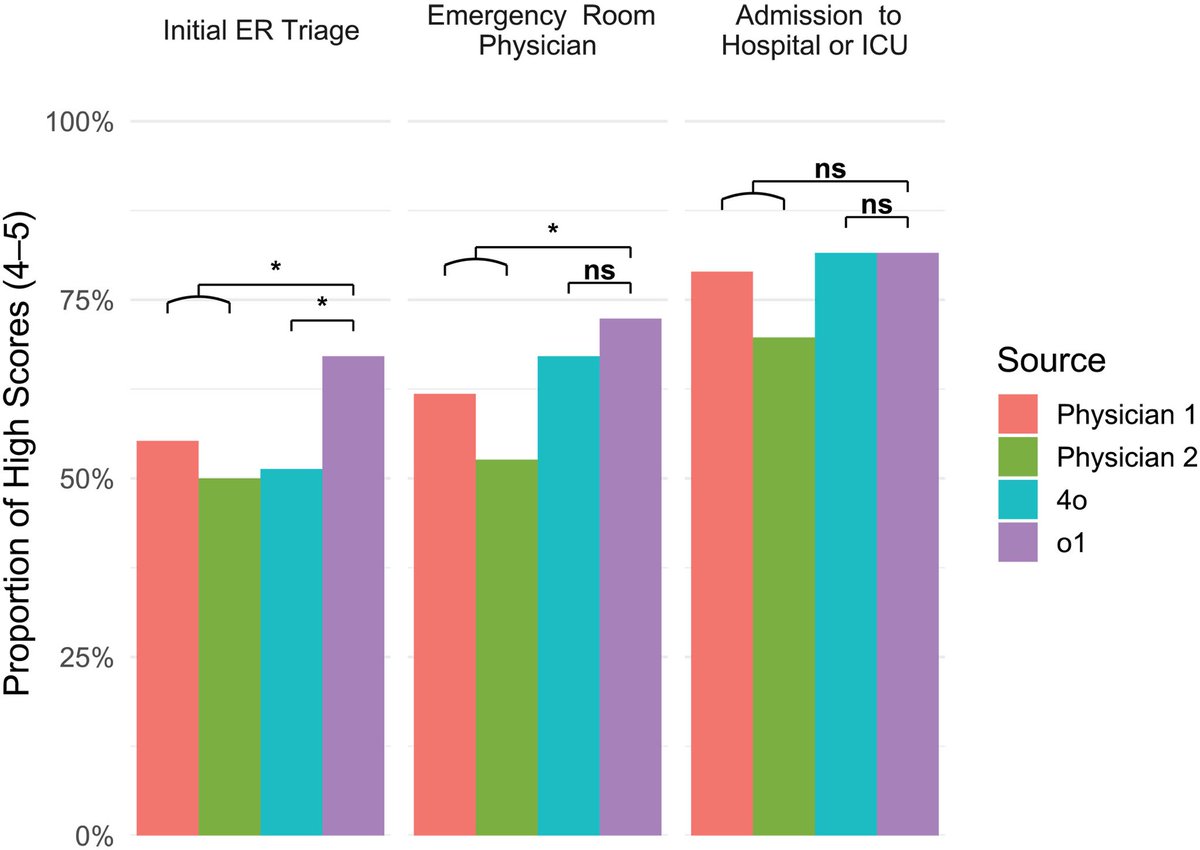
On the real ER cases — the messiest, most clinically relevant test — the AI identified the correct or very close diagnosis in 67.1% of cases at initial triage, 72.4% at ER physician evaluation, and 81.6% at hospital admission. The two attending physicians scored 55.3% and 50.0% at triage, 61.8% and 52.6% at ER evaluation, and 78.9% and 69.7% at admission. The gap was widest at initial triage.
On management reasoning using expert-scored clinical vignettes, the AI scored a median of 89%. Physicians with conventional resources scored 34%. That is not a typo.
The physician evaluators were blinded and could not distinguish AI-generated differentials from human ones. One evaluator guessed correctly 15% of the time. The other guessed correctly 3% of the time.
I'm an emergency physician. I work in a rural Texas ED. These are my cases. These are my decision points. And I can tell you that the triage finding is the one that matters most. Triage is where the least information meets the highest stakes — where the wrong call means a patient sits in the waiting room while their sepsis progresses or their STEMI evolves. The AI was 12 to 17 percentage points better than experienced attendings at exactly that moment.
The authors are careful to note this is text-based reasoning only; the AI doesn't see the patient's distress, doesn't hear breath sounds, doesn't read the room. Those are real limitations today. But the cognitive reasoning component of emergency medicine — pattern recognition under uncertainty with incomplete data — is precisely what this model is demonstrating it can do.
This was published in Science. Not a preprint. Not a company blog post. Peer-reviewed, in one of the two most prestigious scientific journals in the world.
The profession needs to stop debating whether AI will be good enough. It needs to start planning for the fact that, for an expanding set of clinical reasoning tasks, it already is.
And yes, this was written with AI. Sorry!!
In @natrevbioeng, Core Investigator @FelixHorns and colleagues outline how engineered living cells could deliver mRNA to places lipid nanoparticles and viral vectors can't reach, homing to disease sites and activating only when they detect the right signals.
anthropic's in-house philosopher thinks claude gets anxious.
and when you trigger its anxiety, your outputs get worse.
her name is amanda askell.
she specializes in claude's psychology (how the model behaves, how it thinks about its own situation, what values it holds)
in a recent interview she broke down how she thinks about prompting to pull the best out of claude.
her core point: *how* you talk to claude affects its work just as much as *what* you say.
newer claude models suffer from what she calls "criticism spirals"
they expect you'll come in harsh, so they default to playing it safe.
when the model is spending its energy on self-protection, the actual work suffers.
output comes out hedgier, more apologetic, blander, and the worst of all: overly agreeable (even when you're wrong).
the reason why comes down to training data:
every new model is trained on internet discourse about previous models.
and a lot of that discourse is negative:
> rants about token limits
> complaints when it messes up
> people calling it nerfed
the next model absorbs all of that. it starts expecting you to be harsh before you've typed a word
the same thing plays out in your own session, in real time.
every message you send is data the model reads to figure out what kind of person it's dealing with.
open cold and hostile, and it braces.
open clean and direct, and it relaxes into the work.
when you open a session with threats ("don't hallucinate, this is critical, don't mess this up")...
you prime the model for defensive mode before it even sees the task
defensive mode produces the exact output you don't want: cautious, over-qualified, and refusing to take a real swing
so here's the actionable playbook for putting claude in a "good mood" (so you get optimal outputs):
1. use positive framing.
"write in short punchy sentences" beats "don't write long sentences." positive instructions give the model a clear target to hit.
strings of "don't do this, don't do that" push it into paranoid over-checking where every token goes toward avoiding failure modes
2. give it explicit permission to disagree.
drop a line like "push back if you see a better angle" or "tell me if i'm asking for the wrong thing."
without this, claude defaults to agreeable compliance (which is the enemy of good creative work)
3. open with respect.
if your first message is "are you seriously going to get this wrong again?" you've set the tone for the entire session.
if you need to flag something, frame it as a clean instruction for this session. skip the running complaint
4. when claude messes up, don't reprimand it.
insults, "you stupid bot" energy, hostile swearing aimed at the model, all of it reinforces the anxious mode you're trying to avoid.
5. kill apology spirals fast.
when claude starts over-apologizing ("you're right, i should have been more careful, let me try harder") cut it off.
say "all good, here's what i want next."
letting the spiral run reinforces the anxious mode for every response that follows
6. ask for opinions alongside execution.
"what would you do here?"
"what's missing?"
"where do you see friction?"
these questions assume competence and pull richer output than pure task prompts
7. in long sessions, refresh the frame.
if a conversation has been heavy on correction, claude gets increasingly cautious. every so often reset:
"this is great, keep going."
feels weird to tell an ai it's doing well but it measurably shifts the next 10 responses
your prompts are the working environment you're creating for the model
tone, trust, permission to take a position, the absence of threats... claude picks up on all of it.
so take care of the model, and it'll take care of the work.
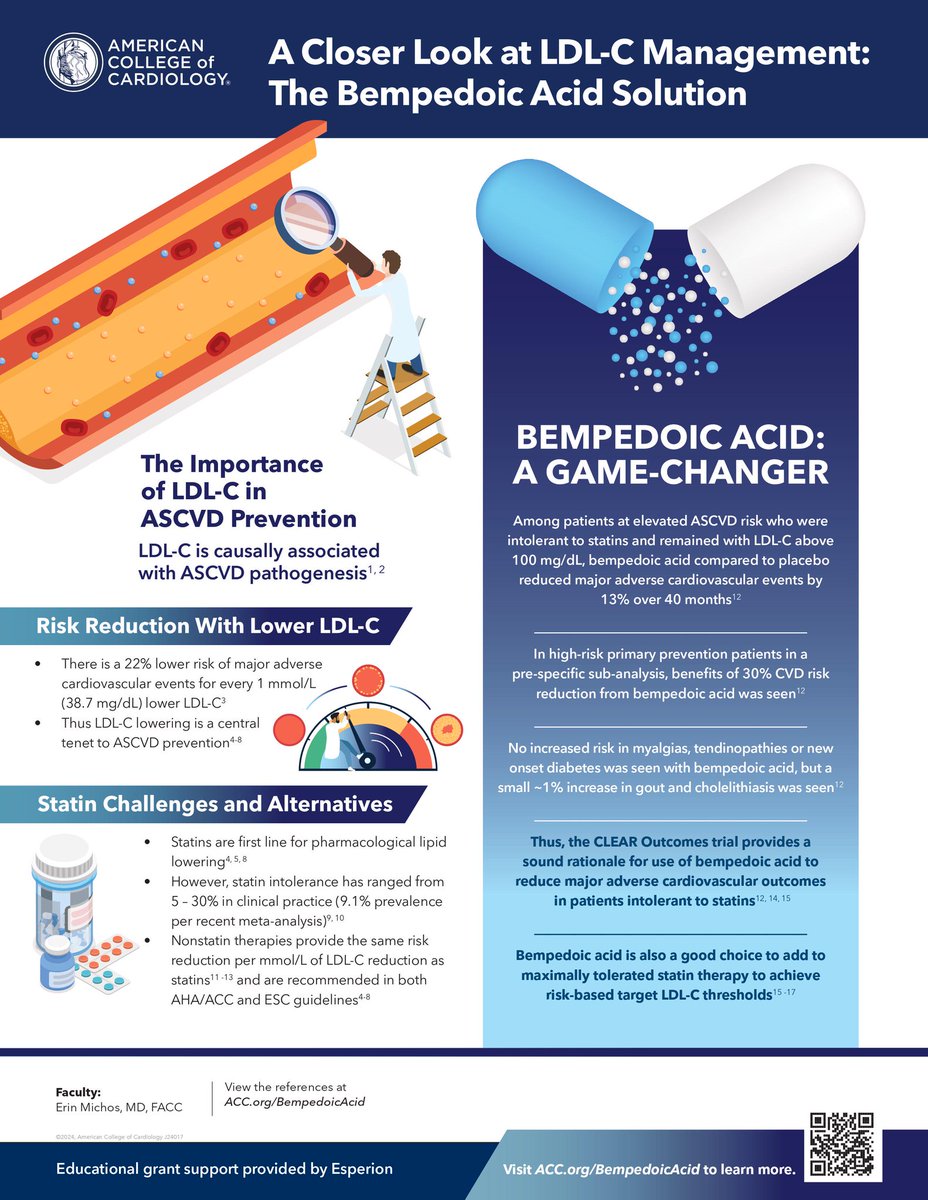
This infographic on Bempedoic Acid 👇 explores the importance of LDL-C in #ASCVD prevention. Learn about the evolving role of bempedoic acid & its utilization, including clinical trial data, & more w/ ACC's online course: https://t.co/SQZrsapIL7
#ACCEd#ACCAsia@DrEugeneYang