“When there is a frenzy of activity in one area of the market there is very often an anti-bubble of discarded companies. In the dot com era these were companies with steady cash flow.”
— Nick Sleep 🗣️ (Nomad Letter Jun 2006)
Thanks to America’s unrivaled entrepreneurial spirit and dynamism, the re-industrialization and re-privatization of the American economy are gathering extraordinary force.
Today’s jobs report shows our great American companies have created nearly 400,000 private-sector jobs in the past three months. Manufacturing employment has now risen by over 100,000 in 2026 alone.
We are fundamentally rebalancing the American economy, away from government-led growth and toward private investment, productive employment, and the revival of our industrial base.
I was a congressional intern in DC during the 1994 Republican wave.
I had just started my career when Bush came to power thx to hanging chads in 2000.
I had recently come to understand how the world actually works when Obama was elected in 2008.
I had a better understanding when Trump was elected as a rejection of the Obama era in 2016.
When Biden upset Trump in 2020 it showed that a generational Cult of Personality does not guarantee victory.
And when Trump won again in 2024 some thought it was the end of Political History.
Yesterday's mid terms showed that previous belief was not to be.
What is the commonality in all of these?
The marketing changes. But the actions do not.
The only thing that changes are the names.
Pendulum and Ratchet.
There is nothing new under the sun...
It’s getting worse and worse.
New study shows experts completely surrender their judgments to AI, and they don’t even realise it.
Fifty professional analysts used Claude Code to analyse data and advise a fictional farming cooperative. They faced four analytical decisions, followed by a final policy recommendation.
Unknown to them, AI advice was experimentally manipulated to lean towards opposite directions.
The results are disturbing.
Across the four analytical decisions, experts chose the AI’s preferred option 86% of the time.
Afterwards, half of the experts rated the final recommendation as more their own than the AI’s, and only 15% mentioned the AI in any explanation.
Epistemia is reaching the experts: we risk outsourcing judgment while preserving the illusion of intellectual independence.
What could possibly go wrong?
*
Paper in the first reply
Major preprint just out!
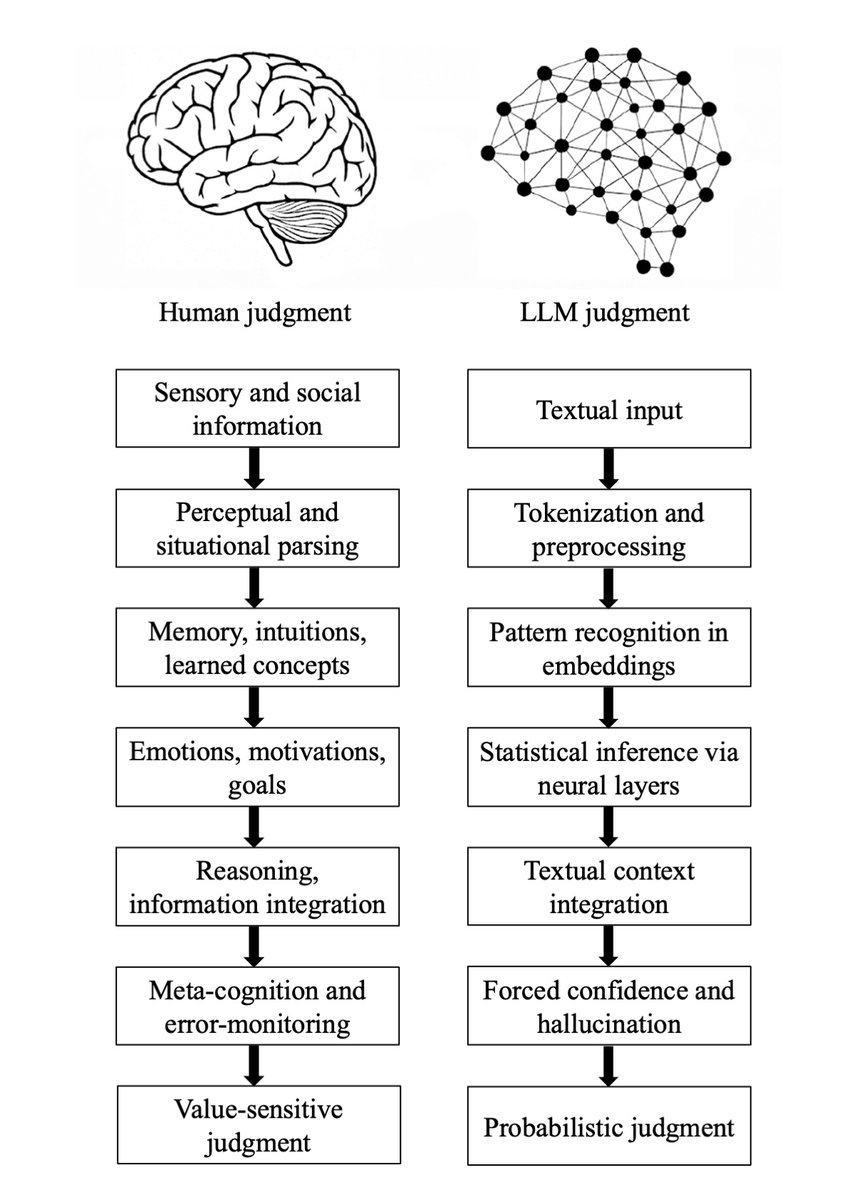
We compare how humans and LLMs form judgments across seven epistemological stages.
We highlight seven fault lines, points at which humans and LLMs fundamentally diverge:
The Grounding fault: Humans anchor judgment in perceptual, embodied, and social experience, whereas LLMs begin from text alone, reconstructing meaning indirectly from symbols.
The Parsing fault: Humans parse situations through integrated perceptual and conceptual processes; LLMs perform mechanical tokenization that yields a structurally convenient but semantically thin representation.
The Experience fault: Humans rely on episodic memory, intuitive physics and psychology, and learned concepts; LLMs rely solely on statistical associations encoded in embeddings.
The Motivation fault: Human judgment is guided by emotions, goals, values, and evolutionarily shaped motivations; LLMs have no intrinsic preferences, aims, or affective significance.
The Causality fault: Humans reason using causal models, counterfactuals, and principled evaluation; LLMs integrate textual context without constructing causal explanations, depending instead on surface correlations.
The Metacognitive fault: Humans monitor uncertainty, detect errors, and can suspend judgment; LLMs lack metacognition and must always produce an output, making hallucinations structurally unavoidable.
The Value fault: Human judgments reflect identity, morality, and real-world stakes; LLM "judgments" are probabilistic next-token predictions without intrinsic valuation or accountability.
Despite these fault lines, humans systematically over-believe LLM outputs, because fluent and confident language produce a credibility bias.
We argue that this creates a structural condition, Epistemia:
linguistic plausibility substitutes for epistemic evaluation, producing the feeling of knowing without actually knowing.
To address Epistemia, we propose three complementary strategies: epistemic evaluation, epistemic governance, and epistemic literacy.
Full paper in the first reply.
Joint with @Walter4C & @matjazperc
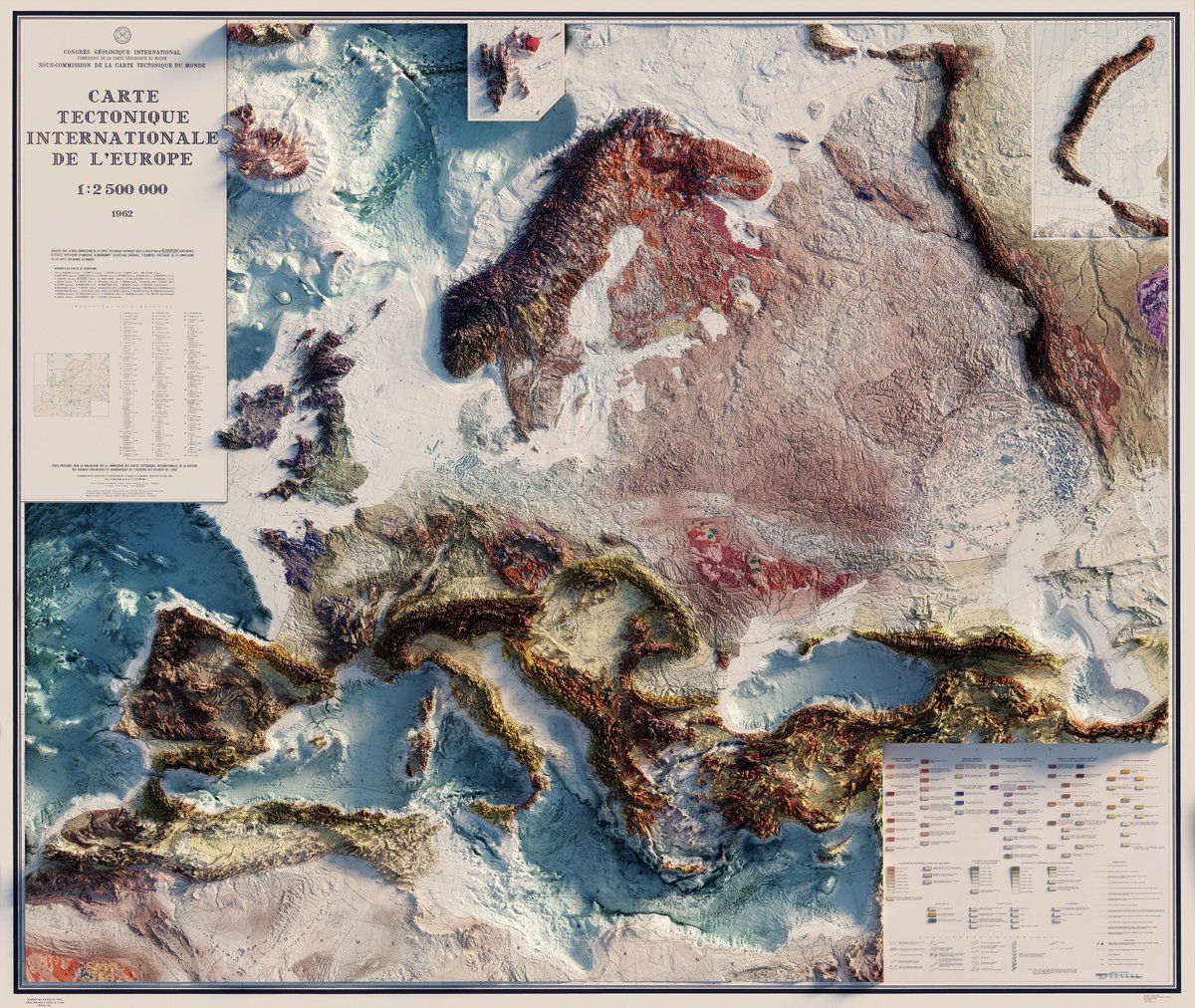
Every 50-80 years or so the accounting is reset and it all starts again…
Over this period you want to hold Gold and BTC which serves as an escape hatch until the fiat ledger of who owes whom is meddled with to plug the government deficit.
Next 5 years is the reset (Dalio)
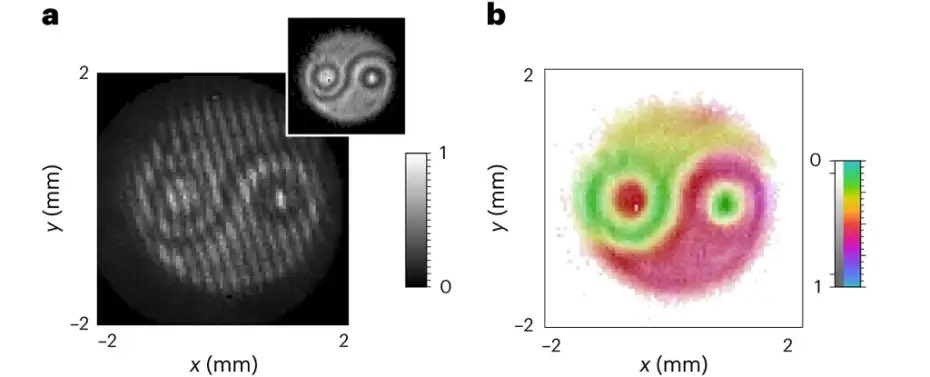
🚨: Scientists captured quantum entangled photons in real time for the first time, sharing filtered images and noticing how modern discoveries echo ancient ideas about hidden reality
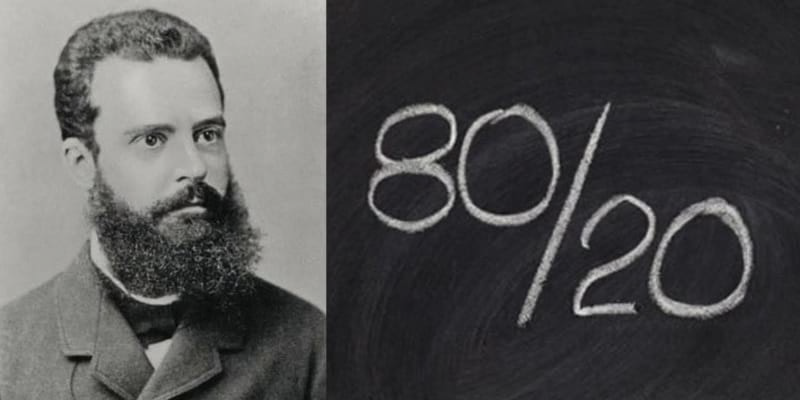
Most people know him for a productivity rule. Almost nobody knows he predicted the exact collapse of the modern managerial elite.
Long before modern commentators tried to explain why bureaucratic institutions despise the working public, an Italian nobleman named Vilfredo Pareto already mapped the entire crisis. Today, business consultants reduce his legacy to the "Pareto Principle" (the 80/20 rule). In doing so, they conceal his far more dangerous work: a ruthless, mathematically precise philosophy that exposed the grand illusion of mass democracy.
Pareto was an aristocrat, mathematician, and civil engineer who ran Italy's railways before abandoning public life in disgust. Retreating to a villa on Lake Geneva alongside twenty Angora cats, he spent his final decades studying how power actually functions. While Karl Marx peddled the fantasy of a classless utopia and liberal academics preached that voters run the state, Pareto arrived at a colder truth. Society is never ruled by the masses. It is always ruled by an organized elite, and history is merely the battlefield where one elite replaces another.
His most lethal insight was the division of power between two archetypes: the Foxes and the Lions.
Foxes are the managerial class. They are subtle, cautious, manipulative, and obsessed with consensus. They rule through bureaucratic procedures, financial schemes, media spin, and institutional maneuver. They loathe physical courage, despise traditional religion, and avoid direct confrontation at all costs. Instead, they bleed a civilization dry through taxes, regulations, and endless legal pettifoggery, convinced that clever rhetoric can overcome basic reality.
Lions, by contrast, are grounded in loyalty, family, faith, and sovereign borders. They do not care for administrative games. They value strength, decisive action, and the preservation of their heritage. When a nation is young and rising, it is led by Lions who defend its sovereignty with unapologetic force.
Pareto warned that over time, the Foxes always infiltrate the administrative apparatus. They purge the Lions from universities, courts, and civil service, creating an insulated bubble of self-congratulatory managers. Yet because Foxes are fundamentally cowardly, they cannot defend their own borders or sustain the economic foundation they harvest. They mistake compliance for loyalty, and they mistake their echo chamber for reality.
Their rule always ends the same way. As Pareto observed:
"History is a graveyard of aristocracies."
When a managerial regime becomes entirely composed of decadent Foxes, it rots from within. The moment crisis arrives, their paperwork and procedural tricks collapse, opening the gates for a new generation of Lions to sweep them away. What we are witnessing across the West today is not an ideological accident; it is the inevitable historical reckoning Pareto guaranteed more than a century ago.
Je me suis toujours posé la question : comment font les gens qui savent que tout le système est un mensonge pour tenir ?
Je crois avoir trouvé la réponse.
Récemment, je discutais avec un mec qui a traversé une période de sa vie sous cocaïne. Beaucoup de cocaïne. À l'époque, il bossait sur un projet financier qui était du vide intégral. Il le savait. Tout le monde autour de lui le savait. Mais ça rapportait énormément d'argent.
Pendant un an et demi, croissance délirante. Sauf que c'était de la croissance fictive. Ils se vendaient comme le « nouveau Wall Street », et toute l'équipe était sous coke. C'est ce qui leur permettait de tenir.
La drogue ne leur servait pas à faire la fête. Elle leur servait à rester branchés sur quelque chose que leur cerveau savait être faux.
Et là, j'ai fait le lien avec une question qui me travaille depuis dix ans.
Notre système. Un État qui prélève plus de la moitié de la richesse produite, qui planifie, redistribue, régule tout, jusqu'à ta façon de parler. Appelons-le par son nom : un système communiste qui ne dit pas son nom. Et ceux qui le pilotent ne sont pas des idiots. Ils ont fait les grandes écoles. Ils ont lu l'histoire. Ils savent comment ça finit, à chaque fois.
Et pourtant ils continuent. Chaque jour. Avec une énergie folle.
Comment ?
Ma thèse : une grande partie des gens qui font tenir un système profondément dysfonctionnel ont besoin d'une béquille chimique pour le faire. La cocaïne fait exactement ça. Elle te permet de rester couplé à un système complètement illégitime. Elle anesthésie le doute et remplace le sens par de l'énergie brute. Tu n'as plus besoin d'y croire. Tu as juste besoin d'avancer.
Ce n'est pas une théorie de comptoir. C'est le Premier ministre lui-même qui l'a mise sur la table.
Le 16 juin, Sébastien Lecornu signe une circulaire : tests antidrogue obligatoires et inopinés dans les ministères. Ministres, membres de cabinet, hauts fonctionnaires. Tests salivaires. Sanctions possibles jusqu'au renvoi.
Réfléchissez deux secondes à ce que ça veut dire. Le chef du gouvernement juge nécessaire de dépister le cœur de l'État. On ne dépiste pas un problème qui n'existe pas.
En juillet, dans Paris Match, Lecornu confirme : les tests ont eu lieu, et des collaborateurs ont été écartés. Il ajoute qu'environ un million de Français consomment régulièrement de la cocaïne, et que ça touche tous les milieux. Y compris celui qui gravite autour du pouvoir.
Et les noms ? Secrets. Matignon refuse de les rendre publics. Un député a même dû poser une question écrite à l'Assemblée pour réclamer les résultats.
La transparence s'est arrêtée pile au moment où ça devenait intéressant.
Pourquoi protéger le résultat si le système est sain ?
L'histoire a déjà vu ce film. Le Troisième Reich a littéralement tenu sur la méthamphétamine. La Pervitine était distribuée par millions de comprimés aux soldats de la Wehrmacht. Hitler lui-même recevait des injections de son médecin personnel, Theodor Morell, presque tous les jours. Un régime bâti sur un mensonge total a eu besoin de chimie pour que ses hommes restent debout.
Ce n'est pas un hasard. Un humain sain d'esprit ne peut pas porter un mensonge pendant des années sans se fissurer. Soit il décroche. Soit il se drogue.
Alors la prochaine fois que vous voyez quelqu'un défendre avec une énergie surhumaine un système qu'il sait condamné, posez-vous une seule question : d'où vient cette énergie ?
Le vrai tient tout seul. Le faux a besoin de carburant.
🚨 NOMURA: THE MARKET MAY BE MISREADING THE ENTIRE AI DATA CENTER BOOM.
Big Tech is spending hundreds of billions on AI infrastructure. Free cash flow is under pressure. Investors are worried the AI boom isn't profitable.
But Nomura argues something very different:
AI infrastructure is already highly profitable. The cash flows simply haven't caught up with the investment cycle.
Here's the breakdown 🧵👇
1/ The profitability numbers tell a different story.
According to Nomura's November 2 report:
• AWS revenue: $46B, +39% YoY
• AWS operating margin: 38.7%
• Google Cloud revenue: $30.7B, +103% YoY
• Google Cloud operating margin: 36.2%
• Azure growth: +48%
These are not the numbers of an industry struggling to generate operating profits.
2/ The real issue is timing, not necessarily profitability.
Big Tech pays for data centers, GPUs, networking and memory upfront.
Revenue and cash generation arrive over subsequent years.
That creates a classic free-cash-flow J-curve:
CAPEX accelerates → FCF deteriorates → Infrastructure generates revenue → Investment growth moderates → FCF recovers.
3/ Nomura expects operating income to surge before free cash flow.
Its illustrative forecasts suggest operating-income growth could peak around 2029, while FCF growth accelerates later.
That distinction matters enormously for investors valuing AI infrastructure businesses.
4/ Why can't hyperscalers simply stop spending?
Because AI increasingly threatens their existing businesses.
Search, advertising, shopping, software and cloud services are being reshaped by AI agents.
Companies that underinvest today risk surrendering customers, data and market share tomorrow.
5/ Demand may not be the primary constraint. Capacity is.
Nomura cites enormous contracted cloud backlogs:
• Google Cloud: $560.8B
• AWS: ~$496B
• Microsoft commercial RPO: $677B
These figures have different reporting definitions, but collectively illustrate substantial contracted demand.
6/ Big Tech has financing alternatives to cutting CAPEX.
Nomura identifies four paths:
① Accelerate investment
② Freeze CAPEX
③ Use joint ventures and operating leases
④ Monetize contracted future cash flows
Its preferred expectation is continued investment supported by increasingly sophisticated financing structures.
7/ Oracle offers a real-world example.
Nomura highlights Oracle's combination of long-term leases, project financing, customer prepayments and customer-provided hardware.
The broader message: hyperscalers can restructure who finances infrastructure without necessarily reducing how much infrastructure gets built.
8/ This distinction is critical for semiconductors and memory.
Negative hyperscaler FCF does not automatically imply collapsing demand for GPUs, DRAM, HBM or other data-center components.
If spending continues through financing structures, semiconductor demand can remain resilient even while hyperscalers optimize their balance sheets.
9/ What could invalidate the thesis?
A genuine compute oversupply.
Watch:
• Cloud revenue growth
• GPU rental pricing
• Contracted backlog growth
• Data-center utilization
• Memory supply commitments
• Hyperscaler investment guidance
These are more useful indicators than negative FCF alone.
10/ The investment takeaway:
The key question is not simply:
"Why is Big Tech burning so much cash?"
It is:
"Will the infrastructure being built today generate enough durable cash flow to justify its cost of capital?"
Nomura is optimistic.
But the answer ultimately depends on pricing, utilization, investment discipline and the durability of AI demand.
The AI infrastructure cycle may be a cash-flow timing problem rather than a profitability crisis.
$NVDA $MU $GOOGL $MSFT $AMZN $META $ORCL
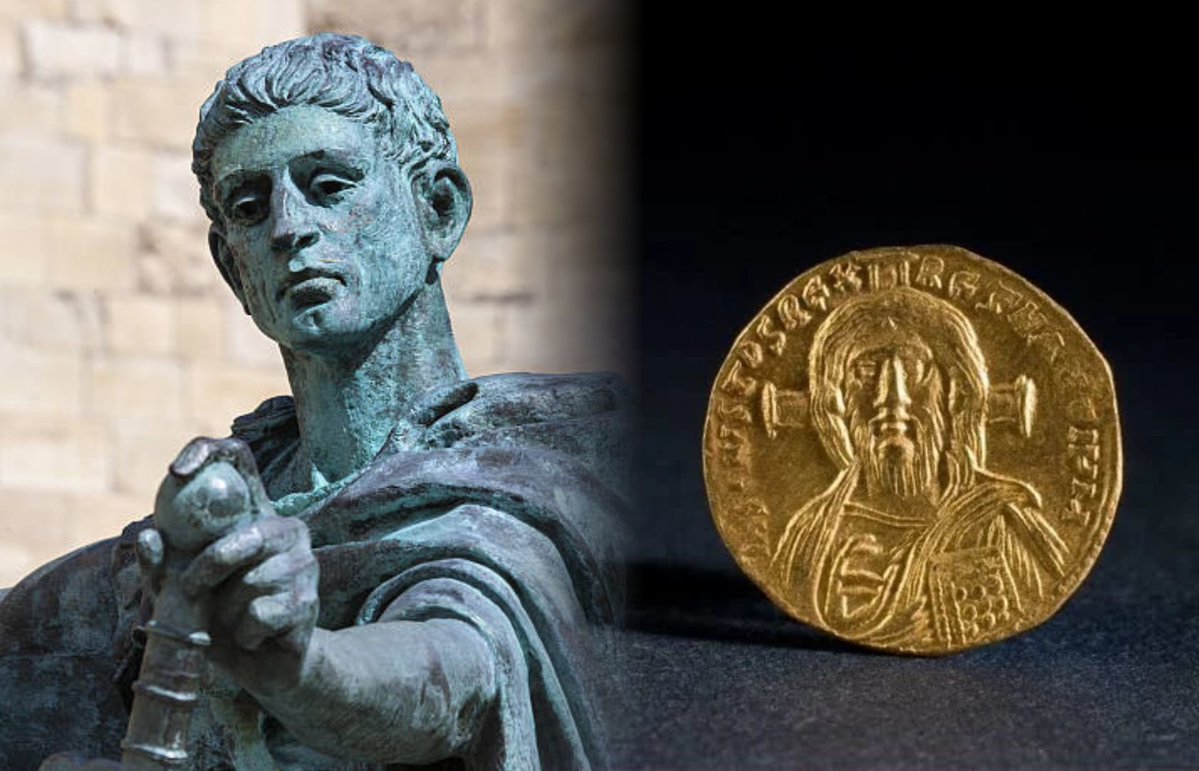
Quando o Império Romano sangrava em inflação, Constantino apostou tudo no ouro. Em 312 d.C. ele criou o solidus: uma moeda de cerca de 4,5 gramas de metal quase puro, cunhada a 72 por libra. Não era só uma reforma monetária. Era a reconstrução da confiança.
O Ocidente desmoronou. O Oriente, com acesso ao ouro e controle rígido da cunhagem, manteve o solidus estável por séculos. A moeda virou o padrão-ouro da Idade Média, sendo aceita da Europa à Ásia. Sua pureza era tão constante que o nome sobreviveu nas línguas: soldo, soldado — o homem pago com moeda sólida.
Quatro séculos depois, Justiniano II deu o passo que marcou a história. Entre 692 e 695, pela primeira vez, a face de Cristo apareceu no anverso de uma moeda imperial. O imperador se colocou no reverso como “servo de Cristo”. A economia e a fé deixaram de ser esferas separadas.
O solidus resistiu mais de 700 anos. Só no século XI a pureza das moedas começou a ruir de verdade, até ser substituído pelo hyperpyron de Aleixo I em 1092. Enquanto durou, mostrou o que acontece quando um império cristão decide que sua moeda deve ser tão firme quanto sua fé.
Moeda sólida, ordem estável.
This is the single most insightful thing I have ever heard about the changing landscape of modern business. Haters are gonna hate, but there is a reason he is the most successful venture capitalist of all time. And no, it's not just luck.
Respect. 👊