@ianjaynee Glad to see you and your family to make peace with God and receive His grace through Jesus Christ alone. Your journey and every one’s journey is depicted in the book “Pilgrim’s Progress “ by John Bunyan. Get an illustrated version so you can read with your daughter. 🙏
@epochhealth I also recommend reading “Imagine Heaven” by John Burke. He documents many cases of near-death experiences across many different cultures. Excellent read!
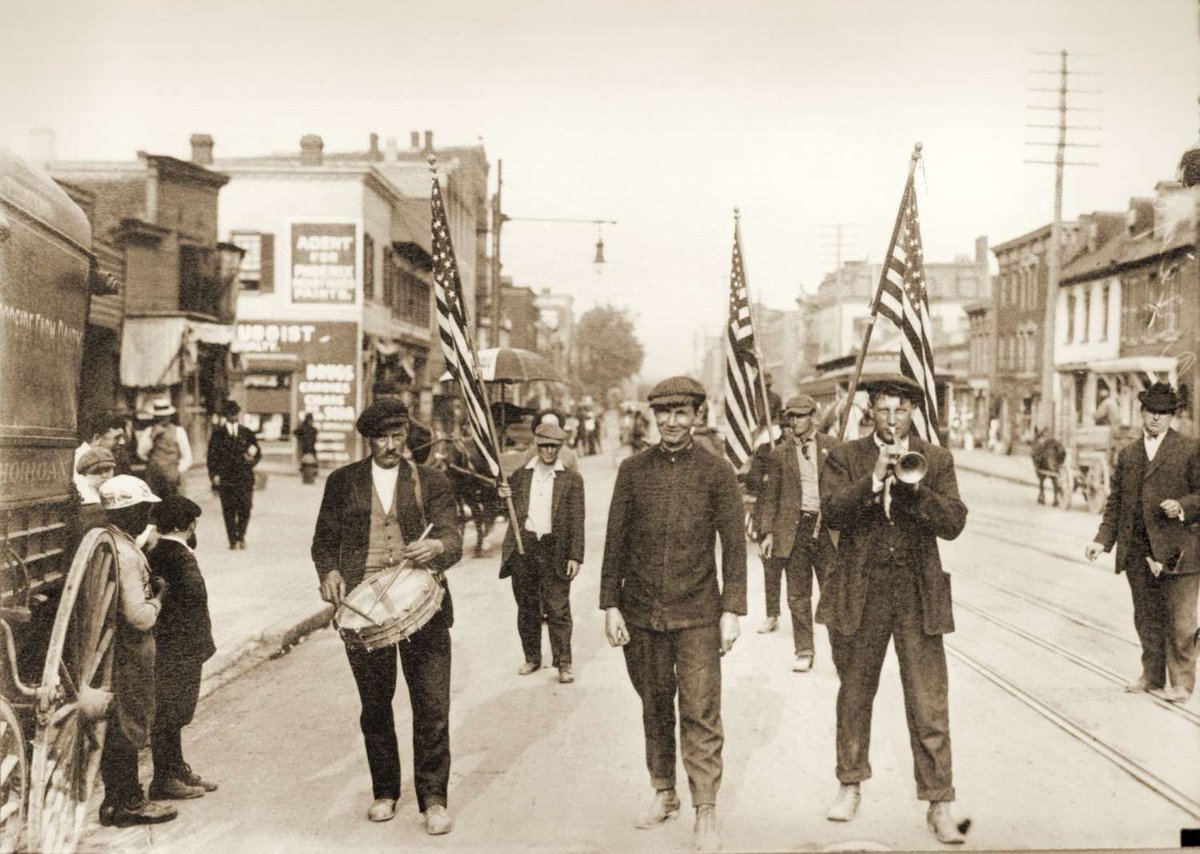
PITTSBURGH-In April 1894, a ragged column of unemployed men attempted to come through Pittsburgh on the way to Washington. They called themselves Coxey's Army. It was a protest march of jobless workers led by Jacob Coxey, an Ohio businessman, and they were marching on the capital. The country was in the second year of a four-year depression, the worst in its history up to that time, and the city fresh from the violence and lost lives of the Homestead Strike, did not allow them entrance into the city limits: so they marched on along the Monongahela River.
Seven months later, the country did something the marchers might not have predicted. It voted overwhelmingly for the party of the steel tariff. Democrats lost 125 House seats, still the largest swing in the chamber's history. In Pennsylvania they kept 2 of 30. In Pittsburgh, Republican John Dalzell won withmore than three-quarters of the vote.
Pittsburgh hadn't swung. It had spent two decades becoming the model of the new industrial economy, and the rest of the country was catching up to it. Between 1870 and 1890 the city's population nearly tripled as mills pulled workers off farms and immigrants off ships. Through those same years the House changed hands six times, sometimes by a third of its seats, as a country caught between farm and factory lurched from one party to the other with every crash.
It is worth remembering this now, because it is happening again.
The House changed hands in 2006, 2010, 2018 and 2022. Three weeks from now it may change hands again. If it does, 2026 will be the seventh straight midterm in which one chamber of Congress or the other changed parties. We are inclined to treat this as a symptom of our own era: cable news, social media, polarization, a broken politics. History suggests something else. The country has been here before, and the reasons were less about politics than about the people doing the voting.
That's why the House is the right place to look. The framers designed it to register the public's mood. In Federalist 52, Madison wrote that this branch in particular "should have an immediate dependence on, and an intimate sympathy with, the people," and that "frequent elections are unquestionably the only policy by which this dependence and sympathy can be effectually secured.” Senators serve six years, and until 1913 they weren't even elected directly by voters. Presidents serve four. House members face us every two years, in districts small enough that a mill closing or a crop failure can change the result.
So when the House swings hard, it's worth asking what the country is going through; the first place to look is what the Gilded Age voters were telling us then.
In the 1870s and 1880s, Americans were living through the largest economic transformation in the country's history. In 1870, about one American in four lived in a city. By 1890 it was more than a third. Farmers watched corn fall from 83 cents a bushel in 1881 to 28 cents in 1890 while they paid tariff-protected prices for everything they bought. Mill towns filled with newcomers. Western Pennsylvania was where much of the future was being built: rails in Johnstown, locomotives in Altoona, coke in Connellsville, oil in Butler County, gas in Murrysville and George Westinghouse's alternating current in Pittsburgh. https://t.co/9Od4E8CF4C
NEW
As part of our ongoing efforts to crack down on illegal robocalls and text, the FCC has published step-by-step guides that enable consumers to turn on blocking and filtering tools.
They are specific to your type of phone and carrier.
Find them here: https://t.co/aAcfXYDSJO
Celebrate America’s 250th birthday at the box office!!! There’s a lot of great choices this weekend. But considering it’s July 4 weekend I humbly suggest “Young, Washington.” I was actually blown away. The movie is incredible. Like Braveheart for Americans. Jon Erwin crushed it. William Franklin Miller did a great job as young Washington. Remember the name! A star is born! The movie is awesome! Way to go!!
Adam Brown’s last words were “I’m okay.”
He knew where he was going because he had a personal relationship with Jesus Christ.
Honored to award this hero with the Arkansas Medal of Freedom today.