We are happy to present Beyondcell, a computational methodology for identifying tumour cell subpopulations with distinct drug responses in single-cell RNA-seq data and proposing cancer-specific treatments.
code: https://t.co/tR8epapQjR
preprint:https://t.co/yQMTgyexYH
👇🏻
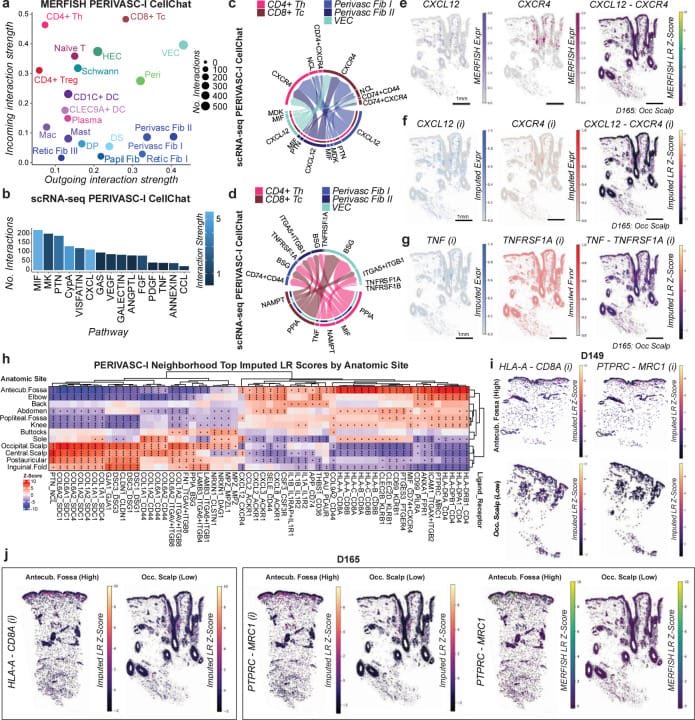
New @Nature Genetics paper mapped human skin at single-cell spatial resolution across 15 anatomic sites and 1.2 million cells — and the headline finding deserves attention:
Anatomy is encoded in cell states, not just cell types.
A fibroblast in your scalp and a fibroblast in your palm are both fibroblasts. Same cell type, same surface markers. But their gene expression programs are tuned to their location. The body doesn't just sort cells into the right places — it writes positional information directly into molecular state.
This has been hinted at in vitro for years (fibroblasts cultured from different body sites retain "positional memory"). What Ji lab did is put spatial context back in. Using MERFISH across 22 donors with matched sites, they could distinguish whether anatomic differences reflect cell abundance, cell state, or neighborhood architecture — and the answer is all three, operating together.
The cell-cell communication finding is equally striking. TNF emerges as a key regulator of immune-fibroblast crosstalk in a perivascular niche that resembles organized lymphoid tissue — right in the skin. When those neighborhoods break down, you get disease.
This points directly at one of the hardest unsolved problems in building single cells foundation models. Most single-cell models treat cells as isolated units — a transcriptomic snapshot divorced from where the cell lives and who its neighbors are. But biology doesn't work that way. A cell's state is partly a function of the signals it receives from adjacent cells, the extracellular matrix it sits in, and the tissue niche it belongs to. Spatial context and cell-cell interaction aren't annotations on top of the biology — they are the biology. Any virtual cell worth the name will need to internalize that. Atlases like this one are what that training data looks like.
Press release : https://t.co/Q0xNeRHD8y
Paper: https://t.co/ItEGlJmIGV
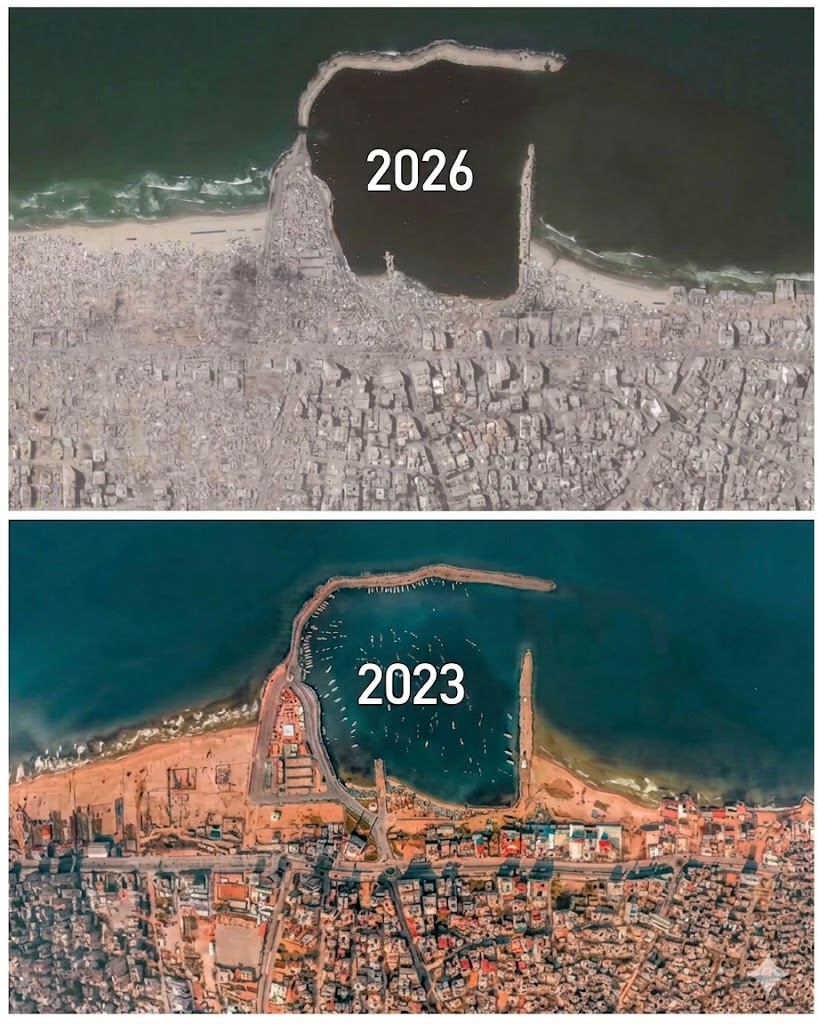
We are continuing to update our Cartography of Genocide platform with our analysis of Israel’s military campaign in Gaza. Half of the layers are currently updated through mid-January, highlighting the escalation in bombardments and forced displacement across northern Gaza over the last few months: https://t.co/Xsbhepnt2d
@engineering_joy While the students should acknowledge who helps them, in my opinion, this type of behavior and the fact it persists reflects bigger problems with the culture of the lab/lack of communication of what’s acceptable conduct by the PI.
Postdocs do a lot of invisible labor in academia. The majority of which is helping PhD students. Many of us are happy to do it, but when students fail to acknowledge that help, especially in front of the PI, it kinda kills the vibe.
Give people credit for their work.
Amnesty International’s new landmark report concludes that Israeli authorities have committed – and still are committing - genocide against Palestinians in the occupied Gaza Strip.
Full report, out now.
#EndGazaGenocide https://t.co/IwKzHPXqXU
🐙We are thrilled to share #Squidiff, a conditional diffusion model, which generates new transcriptomes that represent distinct cellular states, and its application to cell differentiation and drug perturbation https://t.co/tTtN5is6kB 1/🐙
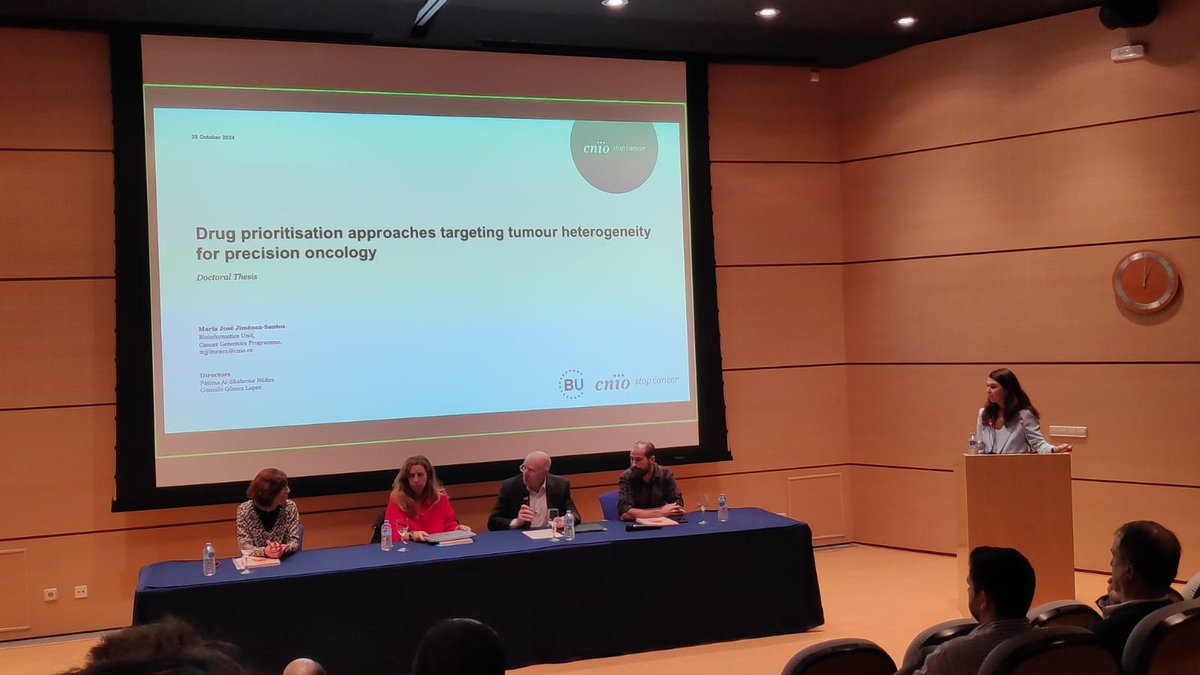
Yesterday, @depitiparapaula became Dr.—hard to believe she wasn’t one already. I had the joy of working with her at @BU_CNIO, where she was both an anchor and a friend, a steady hand and a supportive shoulder to lean on. Couldn’t be prouder! ¡Enhorabuena doctora!
Computational postdoc position available! Come join our lab @CNIOStopCancer and help better understand the role of chromosomal instability in basic biology, tumour evolution, and diagnostics. #ComputationalOncology#CIN#Postdocs https://t.co/AFDVROLysc
‼️ The final version of our article “Identification of Clonal Hematopoiesis Driver Mutations through In Silico Saturation Mutagenesis” is out in Cancer Discovery @CD_AACR: https://t.co/ug0meqg10b
Learn more about our findings in this thread 👇🏽