Finally, our review & meta-analysis on the mammal parasite–glucorticoid relationship is out!
TLDNR: across 110records in 65mammal sp., we found an overall + parasites-GC relationship, 0 effect of taxa, almost 0 methods' effect but ecology plays a role. https://t.co/EMLLRr9a5K
Learned this the harder way...
But I'm always happy to get into contact with prospective PhD students and giving them some feedback on my former advisors!
DO interview your potential advisor if you apply for a PhD or postdoc.
This can save you years of pain, lost dreams and wasted time.
❗ Most students are focused on receiving the offer. But this is the biggest mistake one can make when looking for a position.
▫️
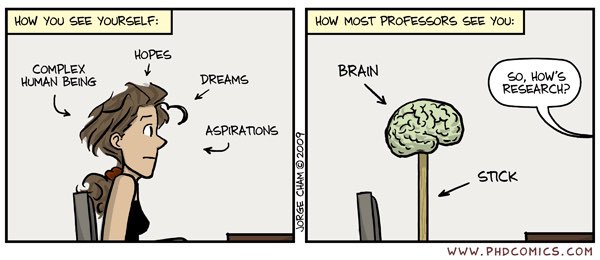
NOT every lab is friendly and has a good mentor in charge. In fact, most professors don’t know how to mentor (as mentorship is not prioritized in academia).
AFTER you get an offer, you can avoid possible problems during your PhD/postdoc through this:
1️⃣ Interview your advisor about the approaches and opinion on:
1. Research advising (how your advisor understands it and how it’s done in the group).
2. Mentoring and personal development during PhD/postdoc.
3. Collaboration - how they do it and what role students/postdocs play in it.
4. Development of your independence and confidence in research.
5. Your participation in conferences and workshops (how often and which types of conferences).
6. How they prepare research publications – authorship, quality, time per manuscript, contributions, etc.
.
2️⃣ Make sure you can talk to the current students one on one (online or in person):
1. Ask about the group culture and support from the advisor
2. Hear their opinion on publication practices and conferences
Ultimately, don’t leave until you understand how you can fit in this group.
.
3️⃣ Talk to alumni (at least 3-4 people):
1. Check out the advisor’s website and find a list of alumni.
2. Google the names of those who went into academia and industry (to hear both sides).
3. Reach out via email or LinkedIn, explain your intentions and politely ask for a quick call.
.
🔴 Why is it important?
Because your advisor is the ONE who can shape your professional skills, motivation and perception of science.
Because the right mentor FORGES your critical thinking and vision.
And a careful search of such an advisor is the starting point.
#AcademicTwitter #AcademicChatter #phdvoice
@MaheutMarie@cs5630937260720 J'ai une licence un master et un doctorat en neurosciences avec sélection à chaque fois c'est pas pour ça que je peux trouver du travail facilement...
@JuCourvoisier Et en parallèle on doit écouter leur discours des vies brisées par nos dénonciations... Courage aux victimes et leur alliés, on vous écoute, on vous croit, on vous soutient 💔
Je suis en train de visualiser ce à quoi auraient pu ressembler les paniques linguistiques du Figaro il y a 20 ans.
"« T'as une tâche, pistache, ta grand mère a des moustaches » : 50 écrivains et académiciens signent une tribune pour interdire l'expression dans l'espace public"
Which vampire fact surprises you?
🎥: @divingdeepmovie 1. They can turn into a pineapple! 🍍 Researchers refer to a startled inverted vampire as displaying a ‘pineapple posture’. These spine-like projections are called cirri. Each of their 8 arms are adorned with suckers which help pass food to it’s ivory white beak! 2. They live longer than most (known) cephalopods - researchers believe that the vampire could live up to 10 years! 3. They eat marine snow ❄️ - sound tasty? Well it’s a mixture of dead sea creatures, snot, and fecal pellets passed by small animals— while most species of cephalopods are carnivores —vampires are detrivores! happy holidays nation! 😂 4. They’re not squids - the vampire is commonly referred to as a vampire squid as their scientific name, Vampyroteuthis infernalis, literally translates to vampire squid from hell *insert evil laugh* 🔥
Well HELLO 2023— deep sea researchers say vampires are more closely related to octopuses! Vampires are in their very OWN taxonomy order named Vampyromorphida… so to avoid confusion they’ve changed their nickname to simply “vampire” (Thoughts?) 5. They DON’T die after laying eggs! Most Cephalopods die after spawning just once! Vampires can reproduce 20ish times (6,000 to 20,000 hatchlings throughout their lifetime) Go Vampz Go! 6. They’ve got BIG BLUE eyeballs— Relative to their body size which is 1 foot (.3 meters), vampires have the largest eyes when compared to any animal in the animal kingdom! 🔵🔵
7. Vampires are living fossils!
Vampyromorphs diverged from ancestors of the jurassic seas more than 150 million years ago! Imagine surviving a mass extinction that wiped out 75% of the planet, Vampires family tree can!
❓ Which fact did you find most fascinating!?
If you enjoyed this, Pass along this info with a re|tweet! 🧠📈
#France 🇫🇷 et violences policières 🧵
Un thread que je sais particulièrement « explosif » car en France, parler de violences policières est un sujet tabou.
Critiquer la violence aux USA est une chose facile, mais il faut aussi voir nos propres dérives policières ⤵️
1/22
@geekingthething@meganpetersdorf With wooclap you can also put figures to legend, texts to complete, words or expression to connect together.... And it is super easy to use
Hello everyone and welcome to your weekly #PrimatePlaytime! Today we'll play a #PrimateTrivia about anti-predation tactics in #primates
I'll release 6 polls and leave a 24h delay so everyone around the world can participate, with detailed answers tomorrow. Ready? #scicomm
Highly, highly recommended This should be compulsory reading for every PhD student, supervisor, postgrad administrator, dean - and pretty much anyone in academia! Shout-out to @ZJAyres