While Europeans suffer in sweltering summer heatwaves thanks to their perpetually unimaginative and useless leadership…
Here’s how China🇨🇳 deals with the summer heat: mist cooling systems cool city streets, sending temperatures plummeting by 5-8 degrees.
Once again China leads the way technologically.
Three thousand years ago, no king planned the Mediterranean economy. The Phoenicians built it anyway, one trading post at a time, from Tyre to Cádiz, without a central authority telling them where the cedar should go or what a measure of purple dye ought to cost.
You want to understand spontaneous order? Look at the network the Phoenicians strung along the coast between roughly 1200 and 800 BC. Byblos, Sidon, Tyre at home. Then Carthage in 814 BC, Gadir (modern Cádiz) past the Pillars of Hercules, Motya off Sicily, Utica on the African shore. Nobody sat in a planning ministry assigning these locations. Merchants found good harbors, fresh water, and locals willing to trade and set up shop. The ones who chose badly went broke and disappeared from the record. The ones who chose well became cities. Price signals and profit and loss did the sorting, not a committee.
Notice what they actually moved. Cedar from Lebanon to Egypt and Mesopotamia, where timber was scarce and pharaohs paid dearly. Silver and tin from Iberia, the tin essential for bronze and found almost nowhere convenient. Murex dye so expensive it later clothed Roman senators, produced by crushing thousands of sea snails per gram. Each good flowed from where it was cheap to where it was dear, and the Phoenicians captured the spread. The spread was the reward for solving the knowledge problem of who needs what, and where, across two thousand miles of open water.
They even handed us the alphabet as a byproduct. Twenty-two consonantal letters, far simpler than Egyptian hieroglyphs or cuneiform, because merchants needed fast records of who owed what, not priestly monuments. The Greeks borrowed it, added vowels, and you are reading the descendant of a Phoenician accounting tool right now. Commerce produced the technology of literacy, not the other way around.
No emperor commissioned this. No five-year plan drew the trade routes. A few thousand traders pursuing their own gain wove together civilizations that had never heard of one another, and they did it through voluntary exchange backed by weighed silver. Then Alexander besieged Tyre in 332 BC and burned it to the ground. Politics always shows up eventually to collect.
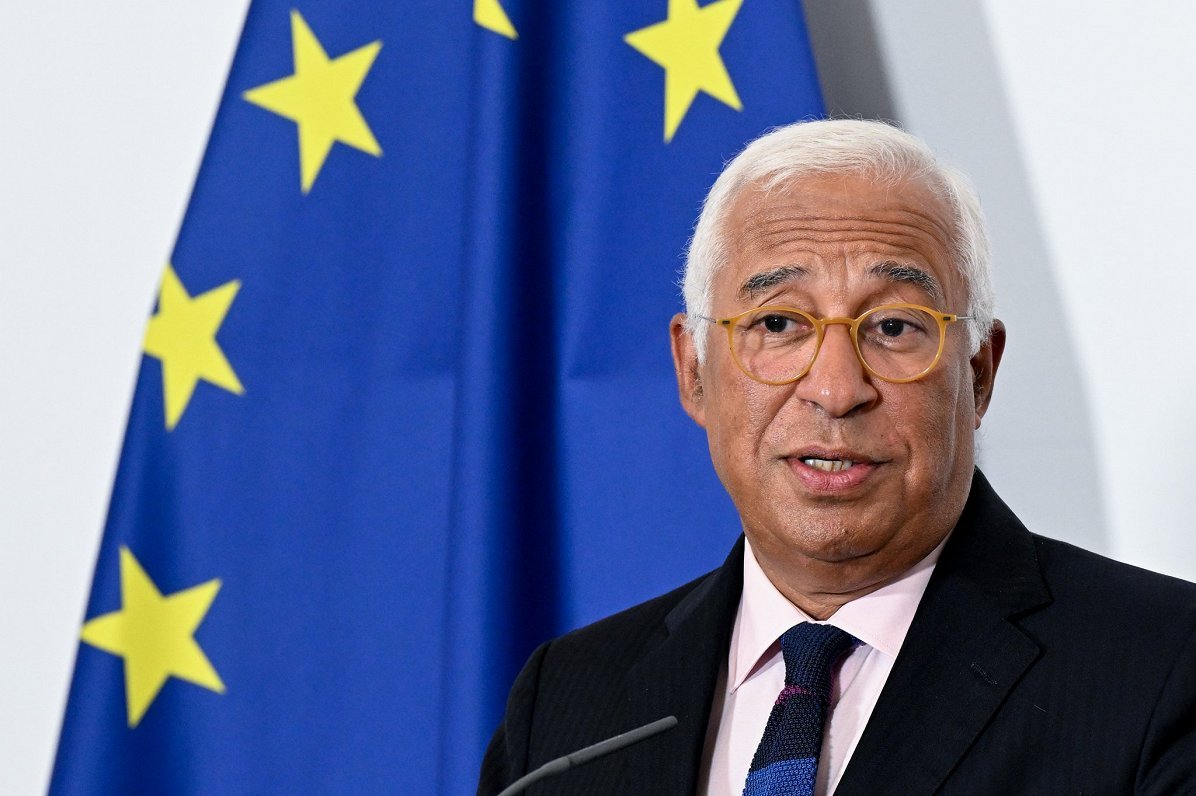
Scandal in the EU: Head of the European Council António Costa tried to establish a communication channel with Moscow without coordination.
According to Politico, Costa instructed his assistant to contact the Russian side twice without consulting Germany, France, and the Baltic states.
This caused sharp dissatisfaction from Merz, Macron, and others. In the German Chancellor’s circle, Costa’s actions were called “unprofessional” and “offensive.”
In the European Council, they claim that it was only about creating a communication channel for the future. However, Moscow has already rejected this idea: Lavrov stated that the EU cannot be a negotiator because it is “interested in Russia’s defeat.”
Against the backdrop of the scandal, the EU for the first time extended economic sanctions against Russia immediately for 12 months.
German MEP Tomasz Froelich (AfD):
Madam President, Türkiye no longer needs the EU, and that is your own fault.
Why? Because Ankara can do without your moral lectures.
Because those who preach morality while practicing double standards lose all credibility.
We cannot continue to turn a blind eye to the crises unfolding in #Somalia and #Sudan! While we complain about the influx of refugees, we ignore the harrowing realities currently devastating their homes. Face the truth! #Somalia#Sudan#Africa#HumanitarianCrisis
TRIGGER ⚠️: content contain graphics
\ I Am Power
I am Power.
I will cement your heart against humane feeling.
I will seduce you with illusions:
money,
land,
mansions,
women,
authority.
I will blind your eyes and your soul
until you no longer recognise your own cruelty.
I will whisper to you of enemies.
I will teach you suspicion.
I will make you conspire with distant forces.
They will arm you.
You shall bring terror to the land,
to your people,
to your community,
to your country.
You shall do it
in the name of security,
in the name of existence,
in the name of democracy.
For power to sustain itself,
I will command you to loot,
to vandalise,
to steal,
to tear apart,
to kill,
to rape,
to torture.
I will conscript your young
and forbid them from dreaming.
I am Power.
Your land,
your Sudan,
must serve me.
I dwell far away:
in deserts and palaces,
in the Arabian Gulf,
in the lingering shadows
of Greeks,
Romans,
English,
Germans,
French,
Belgians,
and all those who claim a stake
in the earth beyond the seas.
For they envy
what you possess.
They envy your land.
They envy your people.
They envy your future.
I am Power.
I will condition you to seek recognition.
I will summon you
to become the instrument
of my desires.
Dear Sudan.
Power is not the ability
to inflict cruelty upon another.
Power is not terror.
Power is not domination.
Dear Sudan,
dear Sudanese,
the land has bled for generations.
Lay down your weapons.
Lay down your terror.
Lay down your lust.
Lay down your anger.
Lift your morals.
Humanise them.
So that this land may finally shelter us
with a power
that does not demand payment
in flesh,
in grief,
or in blood. |
>Dear viewers, this poem is less about governments and more about the psychology of domination, how people become willing servants of violence while believing they are serving something noble.>
#freesudan
A Pulitzer Prize-winning science journalist spent years interviewing researchers across a dozen countries, and the book he wrote accidentally proved that everything you think you know about reality is a lie your nervous system constructed for you.
His name is Ed Yong. The book is called An Immense World.
I read it over two nights and it genuinely scared me. Not in a horror movie way. But In the way that happens when you realize something true that you cannot unfeel.
Here is the idea that broke my brain.
There is a German word called Umwelt. It was coined in 1909 by an Estonian-German zoologist named Jakob von Uexküll. It means the perceptual world of a specific animal. The slice of reality that animal can sense, experience, and respond to.
Every animal has one. Including you.
Your Umwelt is shaped by your eyes, ears, nose, skin, and tongue. Those organs evolved over millions of years to detect the specific information your ancestors needed to survive. Not reality as it is. Reality as it was useful to perceive.
That is the part nobody tells you.
You did not evolve to see the world accurately. You evolved to see enough of it to not die.
The rest of reality is just out there. Running constantly. Invisible to you.
Here is what that actually looks like.
A dog lives in a world of smell the way you live in a world of sight. When your dog walks into a room, it does not just detect that food is present. It reads who cooked it, when it was touched, who has been in the room, what emotional state they were in, and whether any of them are sick. A dog's nose has 300 million olfactory receptors. You have 6 million. Your dog is not smelling the world. It is reading it.
Birds are even more disorienting.
Most birds are tetrachromats. They have four types of color receptors where you have three. This does not mean they see slightly more color. It means they perceive an entire dimension of color that you have no sensory apparatus to access. There is no human experience that captures what they see. The feathers of a bird that look brown to you are likely a riot of ultraviolet patterns visible only to other birds. Flowers that look plain to you have ultraviolet landing strips pointing insects directly to the pollen. You walk through a world covered in signals you cannot read.
The mantis shrimp is the one that finished me.
It has 16 types of photoreceptors. You have 3. Scientists initially assumed this meant mantis shrimp saw an almost incomprehensible number of colors. Then they tested it. The mantis shrimp does not compare colors the way we do. Its visual system processes color more like a barcode scanner, running a quick yes or no against each receptor rather than mixing them into rich experience. It has 16 channels, but it likely perceives the world in a completely alien way that we have no framework to describe or imagine.
There is no human word for what the mantis shrimp sees. Our vocabulary for visual experience was built by creatures with three receptors. It does not reach.
But here is the part of the book that stayed with me longest.
Yong writes about a tick. A tiny bloodsucking parasite that can live for up to 18 years without eating. Its entire Umwelt consists of three signals. Temperature. The smell of butyric acid from mammal skin. The touch of hair. That is the entire perceptual universe of a tick. Warmth, one smell, one texture. It waits for those three signals. When they arrive, it falls and feeds. Then it waits again.
For 18 years sometimes.
Inside an Umwelt that contains almost nothing.
The tick is not suffering. The tick has no concept of what it is missing. It has exactly the sensory equipment it needs to survive, and nothing else. It perceives the world it evolved to survive in, and it cannot imagine a larger one.
And this is where Yong does the thing that made me put the book down at 2am and stare at the ceiling.
He points out, quietly, that the same logic applies to you.
You have exactly the sensory equipment your ancestors needed to survive on the African savanna. You see the wavelengths of light that bounced off fruit and predators. You hear the frequencies of human voices and snapping branches. You smell and taste at ranges that kept you fed and kept you away from rot and poison.
Everything outside those ranges is simply not there for you.
Electric fields. Magnetic fields. Ultraviolet light. Infrared signatures. Vibrations moving through the ground. The low-frequency calls of elephants traveling 10 kilometers through soil. The echolocation pulses of bats painting a sonic picture of the world in real time.
All of it happening. Constantly. In the exact room you are sitting in right now. And you perceive none of it.
The world is not what you see. The world is what exists. Your brain built a model of the relevant parts and handed it to you and called it reality.
Yong's most important line is not a dramatic one. It comes near the end, almost as a quiet admission.
He says we are the only animal that can try to understand the Umwelten of others. We cannot experience them. But we can study them, build instruments to detect what we cannot sense, and use our imagination to extend our perception beyond what evolution gave us.
That is not just a line about biology.
It is the best argument for curiosity I have ever read.
Every field of science is, at its core, a tool for extending the human Umwelt. The telescope. The microscope. The spectrometer. The fMRI. Every instrument humans have ever built is an attempt to perceive a slice of reality that our biology locked us out of.
We have been building prosthetic senses since the first person held a lens to their eye.
The book scared me more than anything I have read this year, because it is true. The world is immense. You are perceiving a very thin slice of it, assembled by evolution to keep you alive, not to show you everything.
The tick survives on three signals. You survive on five senses. The difference is enormous and also, when you look out at the full spectrum of what exists, not as large as you thought.
What is one sense or ability from the animal world that you would want to experience for just one day, and what do you think it would change about how you see your own life?
Must read piece on how a month-long diplomatic effort involving the United States, Iran, Qatar and Pakistan led to US Iran MoU, arguing that Qatar played a key role in keeping the process on track.
Article argues that Qatar’s involvement intensified in mid-May after negotiations stalled. The article notes that a Qatari delegation led by HE Ali Al Thawadi, Minister at the Prime Minister's Office for Strategic Affairs, and Hamad al-Kubaisi secretly travelled to Tehran, while Qatar worked closely with Pakistan, Egypt and Türkiye.
The report notes that Qatar leveraged its experience as a diplomatic intermediary between Washington and adversaries such as Hamas, the Taliban and Venezuela. One Western diplomat is quoted as saying: “The Pakistanis were well briefed and the face of the process [...] but the Qataris quietly did most of the heavy lifting to bridge the two sides”.
Pakistani and Arab diplomats, HH the Amir, Saudi Crown Prince Mohammed bin Salman, UAE’ President Sheikh Mohamed bin Zayed al-Nahyan and Pakistan’s military chief all put in calls to President Trump to urge him against more attacks.
Qataris threatened to walk away after the Iranians continued to push for tweaks to the language. Throughout the process Ghalibaf Araghchi continued discussions with mediators, while lower-level US and Iranian officials held talks in Doha.
https://t.co/ebbXN6K6fI
🚨 San people are the oldest ethnic group in the world. Their territories span Botswana, Namibia, Angola, Zambia, Zimbabwe, Lesotho and South Africa
Historians assert that they were the first people to occupy much of southern Africa yet they have lived as aliens in their own land. In the last century, the San people have suffered much at the hands of other peoples.
El monopolio global del flúor está en Sudáfrica.
El yacimiento de Vergenoeg contiene una de las mayores reservas mundiales de fluorita.
Es un mineral crítico que las potencias tecnológicas compran para fabricar las pantallas táctiles de los dispositivos móviles y los sistemas de refrigeración industrial.
Breaking: China’s Ministry of Education has directed universities to eliminate and revoke 12200 undergraduate degree programs that are irrelevant in the incoming AI era while adding ~10,200 new ones.
“Eliminated degrees” are mostly in:
•Arts & creative fields (photography, illustration, comics, visual communication design, fashion design, animation, new media art)
•Humanities & languages (translation, some broadcasting/journalism). Yes Journalism is gone as a study degree.
- Oversaturated areas (public administration, marketing, information management, product design)
These were cut due to weak job prospects and AI disruption.
New programs focus on AI, robotics, data science, semiconductors, embodied intelligence, and advanced manufacturing to align with national tech goals and ease graduate unemployment.
This post continues my series of illustrations on the evolution of the total fertility rate (TFR) worldwide. Today, Tunisia.
In 2024, after decades of decline from highs of above 7, Tunisia’s TFR reached 1.45. For perspective, that is roughly the UK’s level and well below the U.S. (1.60) in the same year.
Births have fallen so sharply that the crude birth rate is already 10 per 1,000. The figure is a symbolic threshold and sits well below 1000 divided by life expectancy: the birth rate that, if sustained indefinitely, would hold the population constant.
Natural increase remains relatively high at 4.4 per 1,000 because mortality is low, reflecting a young population resulting from high TFRs in earlier decades. As the population ages, mortality will rise. Tunisia also has significant outmigration.
So the total population will probably peak in the mid-2030s, if not earlier.
Finally, for several reasons, I see Tunisia as a leading indicator for all of North Africa.
What started as a mission has now led to over 50 million pounds of trash removed, and we’re not stopping here.
This is something you can be part of, every 4ocean bracelet removes one pound of trash from the ocean, rivers, and shorelines.
This is bigger than a bracelet, it’s a movement you can wear.
https://t.co/D3ty4lN7ML