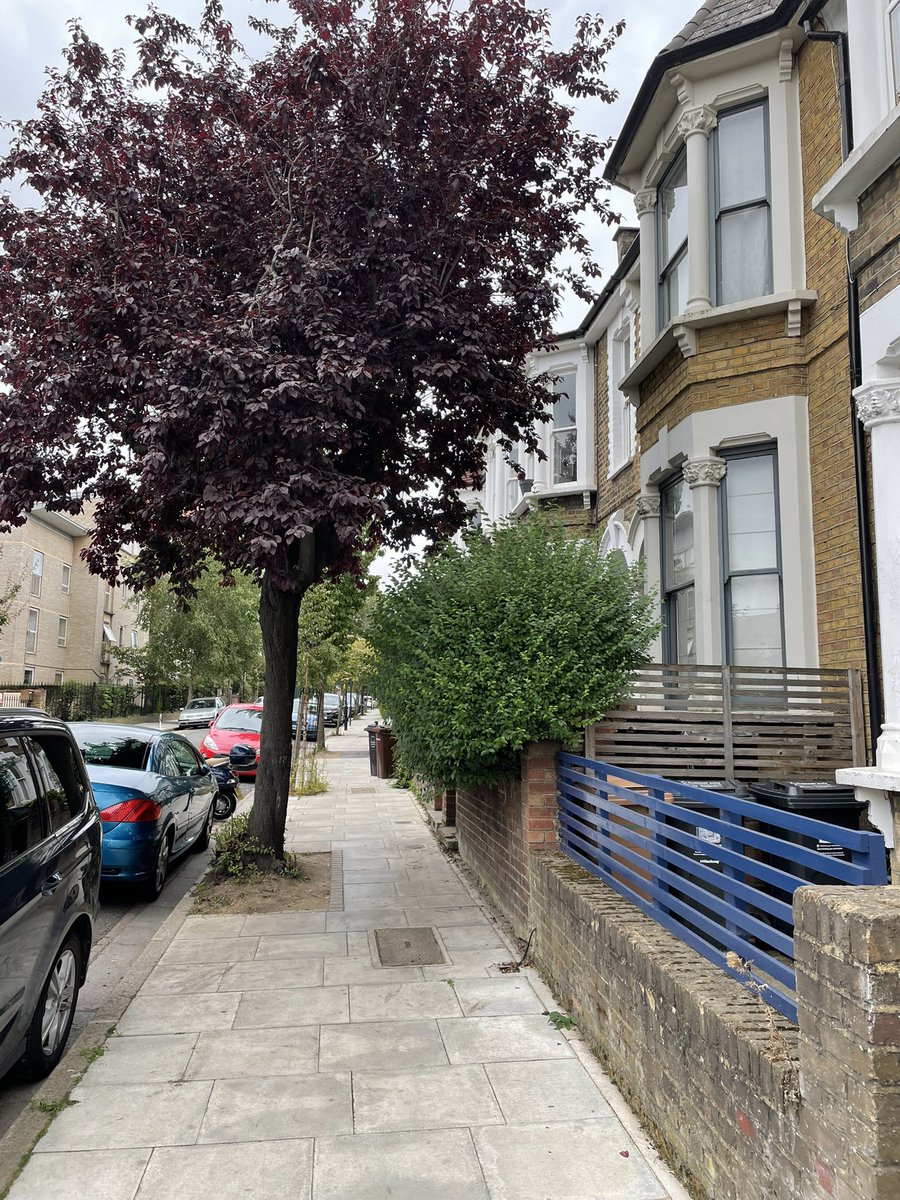
תמיד העדפתי לגור בדירות שמשקיפות על עצים, אולי כי גדלתי עם יער גבעת המורה מחוץ לחלון. בלונדון זה קל במיוחד, 20% משטח העיר מכוסה על ידי עצים. אבל זה מעבר להעדפה אסתטית, לפי הספר The Walkable City עצים הם רכיב עירוני קריטי. הנה למה אנחנו צריכים הרבה יותר מהם בעיר, שרשור: (1/10) >>
The French hate air conditioning.
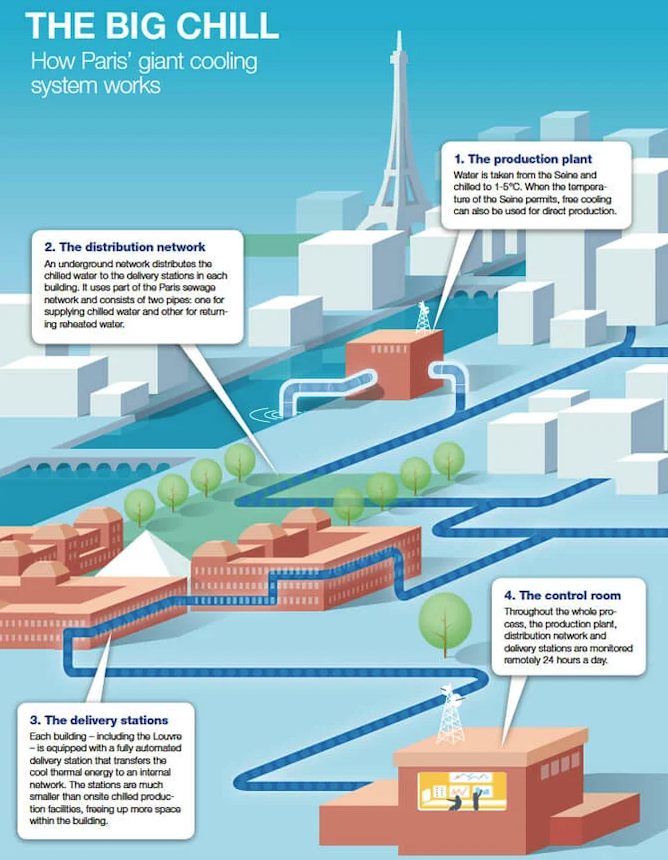
So Paris built a 120-kilometre machine under its streets for producing cold.
It’s called Fraîcheur de Paris, and it does for summer heat what district heating did for winter: centralise the problem.
Instead of every museum, office, hotel, hospital and shop bolting its own cooling plant onto the building, Paris moves cold through pipes.
The network sends water chilled to 2 to 4°C through buried supply lines. The water enters a connected building, absorbs heat through an exchange station, then returns at 12 to 14°C to be cooled again.
It essentially functions with two pipes. One carries the cold out, the other carries heat back.
The production plants cool the circuit from 12°C to 4°C. Some sites use the Seine as a heat sink. In colder periods, the system can use the river’s own temperature for free cooling, which means the machines work less and the electricity demand drops. The Seine water doesn’t become the building water. It stays separate, passing temperature across heat exchangers.
The scale is pretty strange when you see it written down though.
It's got 15 production sites, 4 storage sites, 120 km of underground network with 924 subscribers. This has resulted in 7 million square metres cooled, and 493 GWh of cooling sold.
A cold utility running beneath one of the densest cities in Europe.
The Forum des Halles has been cooled this way since 1979. The Louvre since 1986. Galeries Lafayette, Opéra Garnier, Hôtel de Ville, Station F, La Samaritaine and the National Assembly all sit on the same idea. Tourists stand in the Louvre looking at paintings while a municipal cold loop does part of the dull work below ground.
The boring part is the breakthrough.
Cold can be stored at night in chilled water or ice, then used during daytime peaks. The network is monitored from a control room with more than 125,000 control points. A delivery station inside a building takes 5 to 7 times less space than a standalone cooling installation and avoids the roof and façade clutter that turns cities into compressor farms.
That matters because conventional air conditioning solves heat by moving it somewhere nearby. In a dense city, thousands of private machines mean thousands of outdoor units rejecting heat into streets, courtyards and roofs, plus refrigerants, noise, vibration and maintenance spread across every building.
Paris’s public cooling network has a stated coefficient of performance of 4, against 3 for a wet standalone system and 2 for a dry standalone system. Against an equivalent set of autonomous installations, Fraîcheur de Paris says the network gives 100% higher energy efficiency, 35% less electricity use, 90% fewer refrigerant-fluid emissions and 50% lower CO2 emissions.
The climate backdrop is the real reason this exists.
Paris ran a full crisis exercise called “Paris at 50°C” in 2023. Météo-France’s 2050 reference trajectory for France points to heatwave days becoming five times more frequent, hot nights rising sharply in urban centres, and some local extremes around 48°C becoming possible.
The city signed a 20-year concession in 2022 with Fraîcheur de Paris, owned 85% by ENGIE and 15% by RATP. The contract is worth a projected €2.4 billion. The plan is to extend the network by 158 km by 2042, add 20 production plants and 10 storage sites, and reach more than 3,000 subscribers, including hospitals, nurseries, schools and care homes.
This is basically the infrastructure version of admitting that summer is becoming a public systems problem...
אתחיל בחיובי: זה נתון מטורף מטורף. לונדון, שגדולה פי 20 מתל אביב באוכלוסיה ואולי יותר בשטח, סללה בערך 270 ק״מ שבילי אופניים ב-10 שנים. הישג מדהים של תל אביב. לא מופרך שתל אביב תגיע למספרים של קופנהגן ואמסטרדם מבחינת תחבורה בת קיימא.
>
היום יום האופניים הבינלאומי וזה זמן טוב להזכיר:
סללנו כמעט 200 ק"מ והגענו ל-200,000 רכיבות בכל יום!
כשהתחלנו היו כאלה שאמרו שזה לא יתפוס, שהעיר תוכננה למכוניות ולהליכה ותישאר ככה.
אז אמרו.
הפכנו את הפירמידה. שביל אחרי שביל אנחנו בונות כאן עיר אחרת, בטוחה יותר, נעימה יותר, שוויונית יותר.
אז לאן ואיפה בא לכם עוד שביל? 💚
#פידתחבורה
@OriKatz3@EffiQure זה ממש ממש לא נכון. יש מנהלים טובים יותר ופחות והתוצאות בהתאם. מה שמפריע למנהלים טובים זה לא קביעות של עובדים אלא פוליטיקאי גרוע שלא באמת מעוניין בטובת המדינה (לצערי יש לא מעט כאלה).
@considerthefish אני מקבל את זה שזה פחות טוב מההייפ. אבל הכתבות האלה לא משכנעות אותי שאין שיפור ביעילות (או באיכות התוצרים). עדיין אין חברה שיכולה לדמיין את עצמה בלי מלא מלא משאבי AI היום. כמובן אני גם מוטה מהניסיון האישי שלי בעודי כותב מאמר על פי ניתוחים שפעם היו לוקחים לי שבועיים והיום כמה שעות