📍💦🦠ARISE FLUIDS (NEJM 2026):
En 963 pacientes con choque séptico, una estrategia de vasopresores tempranos y restricción de líquidos redujo en ~1.1 L la administración de fluidos durante las primeras 24 horas.
✅ 🫁El edema pulmonar fue significativamente menor con vasopresores tempranos (0.6% vs 5.0%).
🎯💦 menos líquidos y norepinefrina precoz parecen seguros y reducen la sobrecarga hídrica.
🚫Pero NO mejoran los días vivos y fuera del hospital a 90 días, ni la mortalidad ni el soporte orgánico comparado con una estrategia más liberal de fluidos.
🙌🏼La calidad de la reanimación parece ser más importante que la cantidad de fluidos administrados.
🔗Descarga: https://t.co/lDl6rs5y4C
Haemodynamic equations are useful. But they also mislead.
Take:
CO = HR × SV
CO ≈ (MAP − RAP) / SVR
Both are mathematically true. But they can make the variables they contain look like the controllers of output.
Often they are not.
In the intact circulation, these equations describe the resolved state of the system. They do not, by themselves, tell you what is supplying energy, what is constraining flow, or what is actually limiting output.
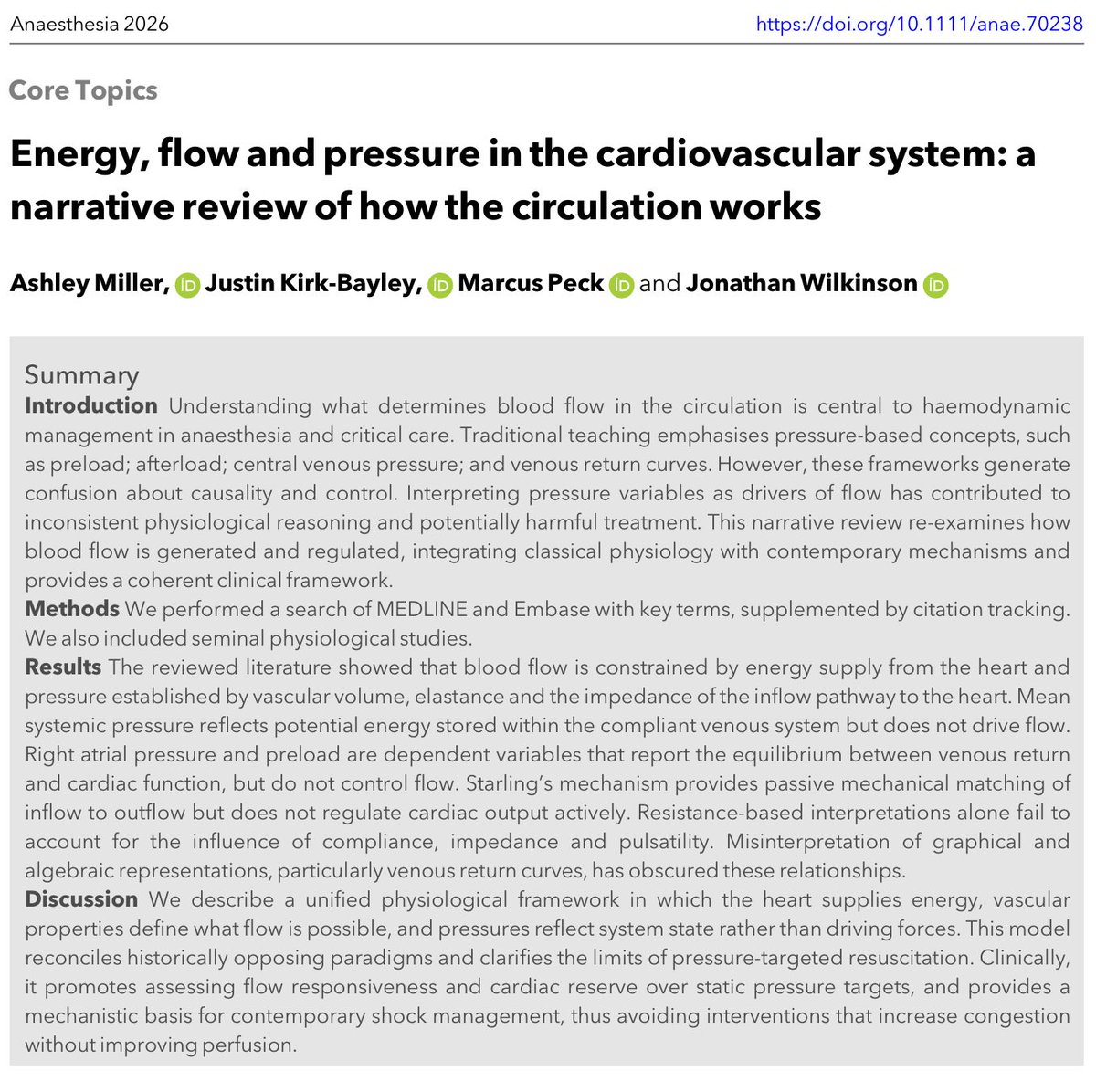
That is one of the central themes of our review:
Energy, flow and pressure in the cardiovascular system: a narrative review of how the circulation works.
https://t.co/L19bsDCzr6
How the blood goes round sounds simple. It isn’t.
• Pressure does not drive flow.
• Preload is not a driver of cardiac output.
• Equations and graphs describe a system without explaining what controls it.
• Flow is governed by two constraints: delivery and acceptance.
Now free to read for a limited time:
Energy, flow and pressure in the cardiovascular system: a narrative review of how the circulation works
Link in reply 👇
https://t.co/1Oa5uJkOGH.
How should you resuscitate sepsis post Andromeda-Shock 2?
Join us, the investigators on Andromeda-VEXUS, Andromeda-Shock 2 as we have a full throttle webinar (debate? cage match?) and settle this with a discussion of the blend of evidence and physiology.
When: June 10th 3:00pm ET (12:00pm PT)
Free Registration: https://t.co/kkIXy3Oi24
Super pumped for it!
💧 Fluids are not benign.
They are pharmacologic interventions with indications, contraindications, dose limits, adverse effects, and cumulative toxicity.
“If hypotensive, give more fluid.” 😬
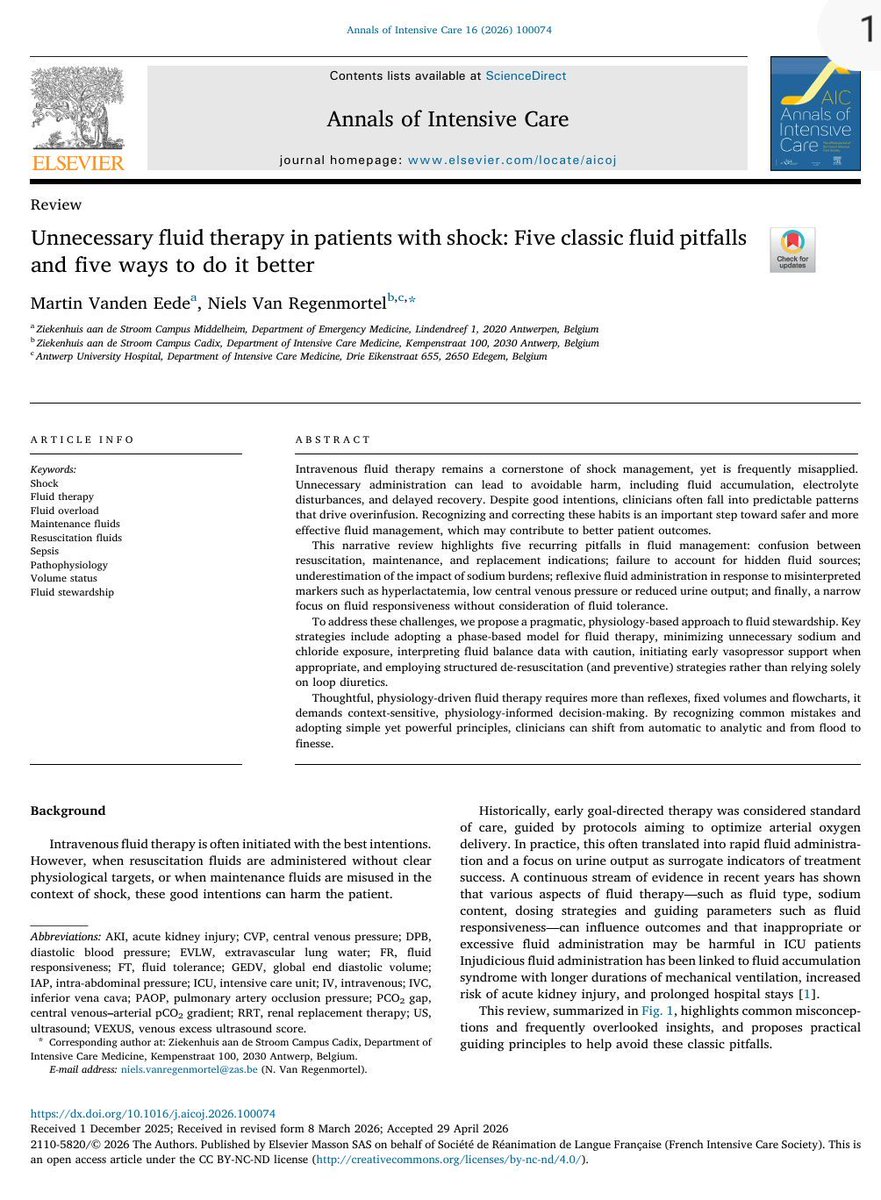
The paper highlights five classic pitfalls in fluid therapy that most intensivists encounter daily:
1️⃣ Confusing: • resuscitation fluids
• maintenance fluids
• replacement fluids
2️⃣ Ignoring “hidden fluids” (medication diluents, flushes, fluid creep)
3️⃣ Focusing on volume while underestimating sodium burden
4️⃣ Using nonspecific markers as automatic fluid triggers
5️⃣ Assessing fluid responsiveness while ignoring fluid tolerance
One of the strongest concepts in the review:
🧠 “Fluid responsiveness does not equal fluid tolerance.”
A patient may increase stroke volume after a bolus and still deteriorate from: • venous congestion
• pulmonary edema
• renal congestion
• abdominal hypertension
• impaired microcirculation
That distinction is fundamental.
The article strongly supports integrating: 📡 Lung ultrasound
📡 VExUS
📡 venous Doppler
📡 congestion assessment
📡 organ specific fluid tolerance
🚨 Lactate is a clue. Not a fluid order.
Also
• hyperlactatemia
• oliguria
• tachycardia
• low CVP
are often misinterpreted as direct triggers for fluid administration despite poor specificity for hypovolemia.
Especially after:
• ANDROMEDA SHOCK
• early vasopressor strategies
• capillary refill guided resuscitation
• fluid stewardship concepts
One of my favorite lines conceptually from this review:
🧂 “Sodium may matter more than volume.”
That idea deserves much more discussion.
The authors emphasize that: fluid accumulation is frequently driven not only by liters, but by cumulative sodium and chloride exposure.
Including: • maintenance fluids
• replacement fluids
• medication diluents
• “fluid creep”
This is a critical but frequently ignored concept in ICU practice.
The paper also revisits the ROSE model: 🌹 Resuscitation
🌹 Optimization
🌹 Stabilization
🌹 Evacuation
A framework that encourages phase specific fluid therapy instead of continuous indiscriminate fluid loading.
Particularly interesting: the review supports earlier vasopressor initiation in vasoplegic shock.
Not every hypotensive patient is “fluid depleted.”
Sometimes the real pathology is: 🩸 vasoplegia
🩸 endothelial dysfunction
🩸 vascular leak
🩸 loss of vascular tone
In these situations: more fluid may simply worsen interstitial edema while norepinephrine addresses the actual pathophysiology.
My main takeaway:
Future fluid management will probably become: less protocolized, less volume centered, and far more physiology driven.
The intensivist of the future may think less in terms of: “how many liters?”
And more in terms of:
🧠 perfusion
🧠 tolerance
🧠 congestion
🧠 sodium load
🧠 vascular tone
🧠 phase of shock
From flood to finesse.
📖 Reference
Vanden Eede, M. Annals of Intensive Care, 16, 100074. https://t.co/u6Zf8P3DHG
Here's my rapid approach to shunt in the ICU.
If a patient is on high FiO2 and still hypoxic, they are shunting (other forms of hypoxia respond to O2)
Two options:
1. Lung (most cases)
2. Cardiac
If normal chest x-ray, consider cardiac BUT remember that CXR is insensitive for consolidation and many patients have atelectasis and are just shunting through that.
CXR
→ Abnormal = treat lung
→ Normal = go deeper
Bubble study
→ Early bubbles = intracardiac shunt (e.g., Patent Foramen Ovale)
→ Negative = proceed
Lung ultrasound
→ Finds occult consolidation = intrapulmonary shunt
My general Heuristic:
Normal CXR + hypoxemia → rule out cardiac shunt → then it’s lung until proven otherwise.
🧵 Energy Reserve
The physics of circulation part 9
In the last thread we described an operating limit of the circulation:
• Volume reserve.
The heart cannot accept unlimited venous return.
But 'reserve' has a second component.
The heart must also generate the energy required to eject blood into the arterial system.
🫀🔊 𝗥𝗨𝗦𝗛-𝗩𝗧𝗜: 𝗲𝘃𝗮𝗹𝘂𝗮𝗰𝗶𝗼́𝗻 𝗲𝗻 𝘁𝗶𝗲𝗺𝗽𝗼 𝗿𝗲𝗮𝗹 🚨
@WileyGlobal@curromir
👇🏼👇🏼👇🏼👇🏼
📑🔗🔑🔓
https://t.co/89ht2mBRSA
⬇️⬇️⬇️⬇️
🧵👇
📌El artículo propone ampliar el protocolo 𝙍𝙐𝙎𝙃 agregando el 𝙑𝙏𝙄 para no quedarnos solo con la “causa” del shock, sino también con algo todavía más útil a pie de cama: 𝙘𝙤́𝙢𝙤 𝙚𝙨𝙩𝙖́ 𝙚𝙡 𝙫𝙤𝙡𝙪𝙢𝙚𝙣 𝙨𝙞𝙨𝙩𝙤́𝙡𝙞𝙘𝙤 𝙮 𝙘𝙤́𝙢𝙤 𝙘𝙖𝙢𝙗𝙞𝙖 𝙘𝙤𝙣 𝙚𝙡 𝙩𝙧𝙖𝙩𝙖𝙢𝙞𝙚𝙣𝙩𝙤 🎯.
🧠🔍 𝙍𝙚𝙘𝙤𝙧𝙙𝙖𝙩𝙤𝙧𝙞𝙤 𝙧𝙖́𝙥𝙞𝙙𝙤: 𝙍𝙐𝙎𝙃 = 𝙥𝙪𝙢𝙥, 𝙩𝙖𝙣𝙠, 𝙥𝙞𝙥𝙚𝙨
El RUSH clásico evalúa:
🫀 𝙥𝙪𝙢𝙥 = corazón/pulmón
🫗 𝙩𝙖𝙣𝙠 = volumen/IVC/abdomen
🩸 𝙥𝙞𝙥𝙚𝙨 = aorta/venas
👉 Muy útil para identificar el mecanismo del shock, pero 𝙣𝙤 𝙞𝙣𝙘𝙤𝙧𝙥𝙤𝙧𝙖 𝙜𝙖𝙨𝙩𝙤 𝙘𝙖𝙧𝙙𝙞𝙖𝙘𝙤 𝙣𝙞 𝙫𝙤𝙡𝙪𝙢𝙚𝙣 𝙨𝙞𝙨𝙩𝙤́𝙡𝙞𝙘𝙤 de forma directa 😮💨.
📏💓 𝙇𝙖 𝙥𝙧𝙤𝙥𝙪𝙚𝙨𝙩𝙖: 𝙨𝙪𝙢𝙖𝙧 𝙚𝙡 𝙑𝙏𝙄 𝙙𝙚𝙡 𝙩𝙧𝙖𝙘𝙩𝙤 𝙙𝙚 𝙨𝙖𝙡𝙞𝙙𝙖 𝙙𝙚𝙡 𝙑𝙄 (𝙇𝙑𝙊𝙏-𝙑𝙏𝙄) ✅
El volumen sistólico por eco se estima como:
🧮 𝙖́𝙧𝙚𝙖 𝙙𝙚𝙡 𝙇𝙑𝙊𝙏 × 𝙑𝙏𝙄 𝙙𝙚𝙡 𝙇𝙑𝙊𝙏
Pero como medir bien el diámetro del LVOT en urgencias puede ser engorroso 😵💫, el artículo propone usar el 𝙑𝙏𝙄 𝙘𝙤𝙢𝙤 𝙨𝙪𝙗𝙧𝙧𝙤𝙜𝙖𝙙𝙤 𝙥𝙧𝙖́𝙘𝙩𝙞𝙘𝙤 𝙙𝙚𝙡 𝙫𝙤𝙡𝙪𝙢𝙚𝙣 𝙨𝙞𝙨𝙩𝙤́𝙡𝙞𝙘𝙤.
👉 En otras palabras: si el área cambia poco, 𝙡𝙤𝙨 𝙘𝙖𝙢𝙗𝙞𝙤𝙨 𝙙𝙚𝙡 𝙑𝙏𝙄 𝙧𝙚𝙛𝙡𝙚𝙟𝙖𝙣 𝙡𝙤𝙨 𝙘𝙖𝙢𝙗𝙞𝙤𝙨 𝙙𝙚𝙡 𝙨𝙩𝙧𝙤𝙠𝙚 𝙫𝙤𝙡𝙪𝙢𝙚.
📊🫀 ¿𝙌𝙪𝙚́ 𝙫𝙖𝙡𝙤𝙧𝙚𝙨 𝙤𝙧𝙞𝙚𝙣𝙩𝙖𝙣?
En personas sanas, el 𝙇𝙑𝙊𝙏-𝙑𝙏𝙄 𝙣𝙤𝙧𝙢𝙖𝙡 suele estar alrededor de 𝟭𝟴–𝟮𝟮 𝙘𝙢 🧠
📉 VTI bajo → sugiere 𝙨𝙩𝙧𝙤𝙠𝙚 𝙫𝙤𝙡𝙪𝙢𝙚 𝙗𝙖𝙟𝙤
📈 VTI alto → puede sugerir 𝙖𝙡𝙩𝙤 𝙜𝙖𝙨𝙩𝙤 según contexto y FC
Pero lo más importante no es el número aislado… sino la 𝙩𝙚𝙣𝙙𝙚𝙣𝙘𝙞𝙖 🔄✨.
🔁💧 𝙇𝙤 𝙧𝙚𝙖𝙡𝙢𝙚𝙣𝙩𝙚 𝙥𝙤𝙩𝙚𝙣𝙩𝙚: 𝙫𝙚𝙧 𝙨𝙞 𝙧𝙚𝙨𝙥𝙤𝙣𝙙𝙚 𝙖𝙡 𝙩𝙧𝙖𝙩𝙖𝙢𝙞𝙚𝙣𝙩𝙤
El paper conecta el VTI con la reanimación real:
💧 𝙛𝙡𝙪𝙞𝙙 𝙧𝙚𝙨𝙥𝙤𝙣𝙨𝙞𝙫𝙚𝙣𝙚𝙨𝙨 ≈ aumento del stroke volume >15%
Como el VTI sigue al volumen sistólico, una 𝙨𝙪𝙗𝙞𝙙𝙖 𝙙𝙚𝙡 𝙑𝙏𝙄 tras fluidos, inotrópicos o liberar una obstrucción indica respuesta útil ✅
👉 O sea, no solo preguntas “¿qué tipo de shock es?” sino también “¿𝙡𝙤 𝙦𝙪𝙚 𝙚𝙨𝙩𝙤𝙮 𝙝𝙖𝙘𝙞𝙚𝙣𝙙𝙤 𝙚𝙨𝙩𝙖́ 𝙛𝙪𝙣𝙘𝙞𝙤𝙣𝙖𝙣𝙙𝙤?” 🎯.
🦵⚡ 𝙋𝙖𝙨𝙨𝙞𝙫𝙚 𝙡𝙚𝙜 𝙧𝙖𝙞𝙨𝙚 + 𝙑𝙏𝙄 = 𝙘𝙤𝙢𝙗𝙤 𝙗𝙚𝙙𝙨𝙞𝙙𝙚 𝙢𝙪𝙮 𝙥𝙤𝙩𝙚𝙣𝙩𝙚
Para el artículo, la maniobra práctica estrella para predecir respuesta a fluidos es el 𝙥𝙖𝙨𝙨𝙞𝙫𝙚 𝙡𝙚𝙜 𝙧𝙖𝙞𝙨𝙚 🦵
Si el 𝙑𝙏𝙄 𝙖𝙪𝙢𝙚𝙣𝙩𝙖 >𝟭𝟮%, eso sugiere 𝙧𝙚𝙨𝙚𝙧𝙫𝙖 𝙙𝙚 𝙥𝙧𝙚𝙘𝙖𝙧𝙜𝙖 y probable respuesta a volumen 💧📈
✅ reversible
✅ rápida
✅ sin “inundar” al paciente innecesariamente
👉 Muy útil justo donde más miedo da sobrecargar: shock séptico con SDRA, disfunción VI, etc.
🛠️🫁 𝙈𝙚𝙣𝙨𝙖𝙟𝙚 𝙛𝙞𝙣𝙖𝙡: 𝙍𝙐𝙎𝙃 + 𝙑𝙏𝙄 𝙘𝙤𝙣𝙫𝙞𝙚𝙧𝙩𝙚 𝙪𝙣 𝙥𝙧𝙤𝙩𝙤𝙘𝙤𝙡𝙤 𝙙𝙞𝙖𝙜𝙣𝙤́𝙨𝙩𝙞𝙘𝙤 𝙚𝙣 𝙪𝙣𝙤 𝙢𝙖́𝙨 𝙩𝙚𝙧𝙖𝙥𝙚́𝙪𝙩𝙞𝙘𝙤 🔥
La idea central del paper es elegante:
✅ usa 𝙍𝙐𝙎𝙃 para reconocer la fisiopatología del shock
✅ añade 𝙑𝙏𝙄 𝙗𝙖𝙨𝙖𝙡
✅ repítelo tras intervenciones
✅ si el 𝙑𝙏𝙄 𝙨𝙪𝙗𝙚 𝟭𝟱–𝟮𝟬%, la respuesta va por buen camino.
Además, si el LVOT no se puede medir bien, el artículo sugiere alternativas como:
🫀 𝙍𝙑𝙊𝙏-𝙑𝙏𝙄
🌊 𝙖𝙤𝙧𝙩𝙖 𝙙𝙚𝙨𝙘𝙚𝙣𝙙𝙚𝙣𝙩𝙚
👉 En resumen: 𝙍𝙐𝙎𝙃-𝙑𝙏𝙄 no solo te ayuda a encontrar el shock… te ayuda a 𝙧𝙚𝙖𝙣𝙞𝙢𝙖𝙧𝙡𝙤 𝙘𝙤𝙣 𝙢𝙖́𝙨 𝙥𝙧𝙚𝙘𝙞𝙨𝙞𝙤́𝙣.
‼️Si te sirve: ❤️ Me gusta | 🔁 Repost | ➕ Follow para más #MedED en #ClubCrit 😄🧠🫶
📚📖 Más en el blog #ClubCrit 👉 [https://t.co/W7ZhBi7NYd]
#ClubCrit #RUSH #VTI #Shock #Ultrasound #POCUS #Shock #Echo #Hemodynamics #CardiacOutput #FluidResponsiveness #Resuscitation #PLR #CritCareMed #POCUS #VExUS #ICU #CriticalCare #CuidadoCrítico #MedTwitter #CritCare #Diagnóstico #icu #intensivecare #diagnosis #management #UCI #Tratamiento #MedicinaBasadaEnEvidencia #MedEd #Medicina #FOAMed #FOAMcc #MedX #IntensiveCare #EducaciónMédica #MedIntensiva #MedXCommunity #MedicinaCrítica #MedED #CritCare #ICUmanagement #MustRead #LecturaRecomendada
Albumin use in critically ill patients is controversial. I tackle these controversies on The Saving Lives Podcast. But you really just want the data, so I have listed them all for you.
https://t.co/iCG6OgxkW6
@ThinkingCC@OrlandoRPN 100% agree. Great example. BUT When it comes to ITU bedside expertise 24/7 depends on many factors starting from recognition etc. ☺️
@ThinkingCC@OrlandoRPN Side. They need something simple—a definition or a framework—to recognise that the patient is in trouble and act early.
These definitions are not there to say it is one disease. They are there to help identify a dangerous situation and trigger escalation and treatment.


![MarlonVFZR's tweet photo. 🫀🔊 𝗥𝗨𝗦𝗛-𝗩𝗧𝗜: 𝗲𝘃𝗮𝗹𝘂𝗮𝗰𝗶𝗼́𝗻 𝗲𝗻 𝘁𝗶𝗲𝗺𝗽𝗼 𝗿𝗲𝗮𝗹 🚨
@WileyGlobal @curromir
👇🏼👇🏼👇🏼👇🏼
📑🔗🔑🔓
https://t.co/89ht2mBRSA
⬇️⬇️⬇️⬇️
🧵👇
📌El artículo propone ampliar el protocolo 𝙍𝙐𝙎𝙃 agregando el 𝙑𝙏𝙄 para no quedarnos solo con la “causa” del shock, sino también con algo todavía más útil a pie de cama: 𝙘𝙤́𝙢𝙤 𝙚𝙨𝙩𝙖́ 𝙚𝙡 𝙫𝙤𝙡𝙪𝙢𝙚𝙣 𝙨𝙞𝙨𝙩𝙤́𝙡𝙞𝙘𝙤 𝙮 𝙘𝙤́𝙢𝙤 𝙘𝙖𝙢𝙗𝙞𝙖 𝙘𝙤𝙣 𝙚𝙡 𝙩𝙧𝙖𝙩𝙖𝙢𝙞𝙚𝙣𝙩𝙤 🎯.
🧠🔍 𝙍𝙚𝙘𝙤𝙧𝙙𝙖𝙩𝙤𝙧𝙞𝙤 𝙧𝙖́𝙥𝙞𝙙𝙤: 𝙍𝙐𝙎𝙃 = 𝙥𝙪𝙢𝙥, 𝙩𝙖𝙣𝙠, 𝙥𝙞𝙥𝙚𝙨
El RUSH clásico evalúa:
🫀 𝙥𝙪𝙢𝙥 = corazón/pulmón
🫗 𝙩𝙖𝙣𝙠 = volumen/IVC/abdomen
🩸 𝙥𝙞𝙥𝙚𝙨 = aorta/venas
👉 Muy útil para identificar el mecanismo del shock, pero 𝙣𝙤 𝙞𝙣𝙘𝙤𝙧𝙥𝙤𝙧𝙖 𝙜𝙖𝙨𝙩𝙤 𝙘𝙖𝙧𝙙𝙞𝙖𝙘𝙤 𝙣𝙞 𝙫𝙤𝙡𝙪𝙢𝙚𝙣 𝙨𝙞𝙨𝙩𝙤́𝙡𝙞𝙘𝙤 de forma directa 😮💨.
📏💓 𝙇𝙖 𝙥𝙧𝙤𝙥𝙪𝙚𝙨𝙩𝙖: 𝙨𝙪𝙢𝙖𝙧 𝙚𝙡 𝙑𝙏𝙄 𝙙𝙚𝙡 𝙩𝙧𝙖𝙘𝙩𝙤 𝙙𝙚 𝙨𝙖𝙡𝙞𝙙𝙖 𝙙𝙚𝙡 𝙑𝙄 (𝙇𝙑𝙊𝙏-𝙑𝙏𝙄) ✅
El volumen sistólico por eco se estima como:
🧮 𝙖́𝙧𝙚𝙖 𝙙𝙚𝙡 𝙇𝙑𝙊𝙏 × 𝙑𝙏𝙄 𝙙𝙚𝙡 𝙇𝙑𝙊𝙏
Pero como medir bien el diámetro del LVOT en urgencias puede ser engorroso 😵💫, el artículo propone usar el 𝙑𝙏𝙄 𝙘𝙤𝙢𝙤 𝙨𝙪𝙗𝙧𝙧𝙤𝙜𝙖𝙙𝙤 𝙥𝙧𝙖́𝙘𝙩𝙞𝙘𝙤 𝙙𝙚𝙡 𝙫𝙤𝙡𝙪𝙢𝙚𝙣 𝙨𝙞𝙨𝙩𝙤́𝙡𝙞𝙘𝙤.
👉 En otras palabras: si el área cambia poco, 𝙡𝙤𝙨 𝙘𝙖𝙢𝙗𝙞𝙤𝙨 𝙙𝙚𝙡 𝙑𝙏𝙄 𝙧𝙚𝙛𝙡𝙚𝙟𝙖𝙣 𝙡𝙤𝙨 𝙘𝙖𝙢𝙗𝙞𝙤𝙨 𝙙𝙚𝙡 𝙨𝙩𝙧𝙤𝙠𝙚 𝙫𝙤𝙡𝙪𝙢𝙚.
📊🫀 ¿𝙌𝙪𝙚́ 𝙫𝙖𝙡𝙤𝙧𝙚𝙨 𝙤𝙧𝙞𝙚𝙣𝙩𝙖𝙣?
En personas sanas, el 𝙇𝙑𝙊𝙏-𝙑𝙏𝙄 𝙣𝙤𝙧𝙢𝙖𝙡 suele estar alrededor de 𝟭𝟴–𝟮𝟮 𝙘𝙢 🧠
📉 VTI bajo → sugiere 𝙨𝙩𝙧𝙤𝙠𝙚 𝙫𝙤𝙡𝙪𝙢𝙚 𝙗𝙖𝙟𝙤
📈 VTI alto → puede sugerir 𝙖𝙡𝙩𝙤 𝙜𝙖𝙨𝙩𝙤 según contexto y FC
Pero lo más importante no es el número aislado… sino la 𝙩𝙚𝙣𝙙𝙚𝙣𝙘𝙞𝙖 🔄✨.
🔁💧 𝙇𝙤 𝙧𝙚𝙖𝙡𝙢𝙚𝙣𝙩𝙚 𝙥𝙤𝙩𝙚𝙣𝙩𝙚: 𝙫𝙚𝙧 𝙨𝙞 𝙧𝙚𝙨𝙥𝙤𝙣𝙙𝙚 𝙖𝙡 𝙩𝙧𝙖𝙩𝙖𝙢𝙞𝙚𝙣𝙩𝙤
El paper conecta el VTI con la reanimación real:
💧 𝙛𝙡𝙪𝙞𝙙 𝙧𝙚𝙨𝙥𝙤𝙣𝙨𝙞𝙫𝙚𝙣𝙚𝙨𝙨 ≈ aumento del stroke volume >15%
Como el VTI sigue al volumen sistólico, una 𝙨𝙪𝙗𝙞𝙙𝙖 𝙙𝙚𝙡 𝙑𝙏𝙄 tras fluidos, inotrópicos o liberar una obstrucción indica respuesta útil ✅
👉 O sea, no solo preguntas “¿qué tipo de shock es?” sino también “¿𝙡𝙤 𝙦𝙪𝙚 𝙚𝙨𝙩𝙤𝙮 𝙝𝙖𝙘𝙞𝙚𝙣𝙙𝙤 𝙚𝙨𝙩𝙖́ 𝙛𝙪𝙣𝙘𝙞𝙤𝙣𝙖𝙣𝙙𝙤?” 🎯.
🦵⚡ 𝙋𝙖𝙨𝙨𝙞𝙫𝙚 𝙡𝙚𝙜 𝙧𝙖𝙞𝙨𝙚 + 𝙑𝙏𝙄 = 𝙘𝙤𝙢𝙗𝙤 𝙗𝙚𝙙𝙨𝙞𝙙𝙚 𝙢𝙪𝙮 𝙥𝙤𝙩𝙚𝙣𝙩𝙚
Para el artículo, la maniobra práctica estrella para predecir respuesta a fluidos es el 𝙥𝙖𝙨𝙨𝙞𝙫𝙚 𝙡𝙚𝙜 𝙧𝙖𝙞𝙨𝙚 🦵
Si el 𝙑𝙏𝙄 𝙖𝙪𝙢𝙚𝙣𝙩𝙖 >𝟭𝟮%, eso sugiere 𝙧𝙚𝙨𝙚𝙧𝙫𝙖 𝙙𝙚 𝙥𝙧𝙚𝙘𝙖𝙧𝙜𝙖 y probable respuesta a volumen 💧📈
✅ reversible
✅ rápida
✅ sin “inundar” al paciente innecesariamente
👉 Muy útil justo donde más miedo da sobrecargar: shock séptico con SDRA, disfunción VI, etc.
🛠️🫁 𝙈𝙚𝙣𝙨𝙖𝙟𝙚 𝙛𝙞𝙣𝙖𝙡: 𝙍𝙐𝙎𝙃 + 𝙑𝙏𝙄 𝙘𝙤𝙣𝙫𝙞𝙚𝙧𝙩𝙚 𝙪𝙣 𝙥𝙧𝙤𝙩𝙤𝙘𝙤𝙡𝙤 𝙙𝙞𝙖𝙜𝙣𝙤́𝙨𝙩𝙞𝙘𝙤 𝙚𝙣 𝙪𝙣𝙤 𝙢𝙖́𝙨 𝙩𝙚𝙧𝙖𝙥𝙚́𝙪𝙩𝙞𝙘𝙤 🔥
La idea central del paper es elegante:
✅ usa 𝙍𝙐𝙎𝙃 para reconocer la fisiopatología del shock
✅ añade 𝙑𝙏𝙄 𝙗𝙖𝙨𝙖𝙡
✅ repítelo tras intervenciones
✅ si el 𝙑𝙏𝙄 𝙨𝙪𝙗𝙚 𝟭𝟱–𝟮𝟬%, la respuesta va por buen camino.
Además, si el LVOT no se puede medir bien, el artículo sugiere alternativas como:
🫀 𝙍𝙑𝙊𝙏-𝙑𝙏𝙄
🌊 𝙖𝙤𝙧𝙩𝙖 𝙙𝙚𝙨𝙘𝙚𝙣𝙙𝙚𝙣𝙩𝙚
👉 En resumen: 𝙍𝙐𝙎𝙃-𝙑𝙏𝙄 no solo te ayuda a encontrar el shock… te ayuda a 𝙧𝙚𝙖𝙣𝙞𝙢𝙖𝙧𝙡𝙤 𝙘𝙤𝙣 𝙢𝙖́𝙨 𝙥𝙧𝙚𝙘𝙞𝙨𝙞𝙤́𝙣.
‼️Si te sirve: ❤️ Me gusta | 🔁 Repost | ➕ Follow para más #MedED en #ClubCrit 😄🧠🫶
📚📖 Más en el blog #ClubCrit 👉 [https://t.co/W7ZhBi7NYd]
#ClubCrit #RUSH #VTI #Shock #Ultrasound #POCUS #Shock #Echo #Hemodynamics #CardiacOutput #FluidResponsiveness #Resuscitation #PLR #CritCareMed #POCUS #VExUS #ICU #CriticalCare #CuidadoCrítico #MedTwitter #CritCare #Diagnóstico #icu #intensivecare #diagnosis #management #UCI #Tratamiento #MedicinaBasadaEnEvidencia #MedEd #Medicina #FOAMed #FOAMcc #MedX #IntensiveCare #EducaciónMédica #MedIntensiva #MedXCommunity #MedicinaCrítica #MedED #CritCare #ICUmanagement #MustRead #LecturaRecomendada](https://pbs.twimg.com/media/HFi7yXyXUAAkho1.jpg)
![MarlonVFZR's tweet photo. 🫀🔊 𝗥𝗨𝗦𝗛-𝗩𝗧𝗜: 𝗲𝘃𝗮𝗹𝘂𝗮𝗰𝗶𝗼́𝗻 𝗲𝗻 𝘁𝗶𝗲𝗺𝗽𝗼 𝗿𝗲𝗮𝗹 🚨
@WileyGlobal @curromir
👇🏼👇🏼👇🏼👇🏼
📑🔗🔑🔓
https://t.co/89ht2mBRSA
⬇️⬇️⬇️⬇️
🧵👇
📌El artículo propone ampliar el protocolo 𝙍𝙐𝙎𝙃 agregando el 𝙑𝙏𝙄 para no quedarnos solo con la “causa” del shock, sino también con algo todavía más útil a pie de cama: 𝙘𝙤́𝙢𝙤 𝙚𝙨𝙩𝙖́ 𝙚𝙡 𝙫𝙤𝙡𝙪𝙢𝙚𝙣 𝙨𝙞𝙨𝙩𝙤́𝙡𝙞𝙘𝙤 𝙮 𝙘𝙤́𝙢𝙤 𝙘𝙖𝙢𝙗𝙞𝙖 𝙘𝙤𝙣 𝙚𝙡 𝙩𝙧𝙖𝙩𝙖𝙢𝙞𝙚𝙣𝙩𝙤 🎯.
🧠🔍 𝙍𝙚𝙘𝙤𝙧𝙙𝙖𝙩𝙤𝙧𝙞𝙤 𝙧𝙖́𝙥𝙞𝙙𝙤: 𝙍𝙐𝙎𝙃 = 𝙥𝙪𝙢𝙥, 𝙩𝙖𝙣𝙠, 𝙥𝙞𝙥𝙚𝙨
El RUSH clásico evalúa:
🫀 𝙥𝙪𝙢𝙥 = corazón/pulmón
🫗 𝙩𝙖𝙣𝙠 = volumen/IVC/abdomen
🩸 𝙥𝙞𝙥𝙚𝙨 = aorta/venas
👉 Muy útil para identificar el mecanismo del shock, pero 𝙣𝙤 𝙞𝙣𝙘𝙤𝙧𝙥𝙤𝙧𝙖 𝙜𝙖𝙨𝙩𝙤 𝙘𝙖𝙧𝙙𝙞𝙖𝙘𝙤 𝙣𝙞 𝙫𝙤𝙡𝙪𝙢𝙚𝙣 𝙨𝙞𝙨𝙩𝙤́𝙡𝙞𝙘𝙤 de forma directa 😮💨.
📏💓 𝙇𝙖 𝙥𝙧𝙤𝙥𝙪𝙚𝙨𝙩𝙖: 𝙨𝙪𝙢𝙖𝙧 𝙚𝙡 𝙑𝙏𝙄 𝙙𝙚𝙡 𝙩𝙧𝙖𝙘𝙩𝙤 𝙙𝙚 𝙨𝙖𝙡𝙞𝙙𝙖 𝙙𝙚𝙡 𝙑𝙄 (𝙇𝙑𝙊𝙏-𝙑𝙏𝙄) ✅
El volumen sistólico por eco se estima como:
🧮 𝙖́𝙧𝙚𝙖 𝙙𝙚𝙡 𝙇𝙑𝙊𝙏 × 𝙑𝙏𝙄 𝙙𝙚𝙡 𝙇𝙑𝙊𝙏
Pero como medir bien el diámetro del LVOT en urgencias puede ser engorroso 😵💫, el artículo propone usar el 𝙑𝙏𝙄 𝙘𝙤𝙢𝙤 𝙨𝙪𝙗𝙧𝙧𝙤𝙜𝙖𝙙𝙤 𝙥𝙧𝙖́𝙘𝙩𝙞𝙘𝙤 𝙙𝙚𝙡 𝙫𝙤𝙡𝙪𝙢𝙚𝙣 𝙨𝙞𝙨𝙩𝙤́𝙡𝙞𝙘𝙤.
👉 En otras palabras: si el área cambia poco, 𝙡𝙤𝙨 𝙘𝙖𝙢𝙗𝙞𝙤𝙨 𝙙𝙚𝙡 𝙑𝙏𝙄 𝙧𝙚𝙛𝙡𝙚𝙟𝙖𝙣 𝙡𝙤𝙨 𝙘𝙖𝙢𝙗𝙞𝙤𝙨 𝙙𝙚𝙡 𝙨𝙩𝙧𝙤𝙠𝙚 𝙫𝙤𝙡𝙪𝙢𝙚.
📊🫀 ¿𝙌𝙪𝙚́ 𝙫𝙖𝙡𝙤𝙧𝙚𝙨 𝙤𝙧𝙞𝙚𝙣𝙩𝙖𝙣?
En personas sanas, el 𝙇𝙑𝙊𝙏-𝙑𝙏𝙄 𝙣𝙤𝙧𝙢𝙖𝙡 suele estar alrededor de 𝟭𝟴–𝟮𝟮 𝙘𝙢 🧠
📉 VTI bajo → sugiere 𝙨𝙩𝙧𝙤𝙠𝙚 𝙫𝙤𝙡𝙪𝙢𝙚 𝙗𝙖𝙟𝙤
📈 VTI alto → puede sugerir 𝙖𝙡𝙩𝙤 𝙜𝙖𝙨𝙩𝙤 según contexto y FC
Pero lo más importante no es el número aislado… sino la 𝙩𝙚𝙣𝙙𝙚𝙣𝙘𝙞𝙖 🔄✨.
🔁💧 𝙇𝙤 𝙧𝙚𝙖𝙡𝙢𝙚𝙣𝙩𝙚 𝙥𝙤𝙩𝙚𝙣𝙩𝙚: 𝙫𝙚𝙧 𝙨𝙞 𝙧𝙚𝙨𝙥𝙤𝙣𝙙𝙚 𝙖𝙡 𝙩𝙧𝙖𝙩𝙖𝙢𝙞𝙚𝙣𝙩𝙤
El paper conecta el VTI con la reanimación real:
💧 𝙛𝙡𝙪𝙞𝙙 𝙧𝙚𝙨𝙥𝙤𝙣𝙨𝙞𝙫𝙚𝙣𝙚𝙨𝙨 ≈ aumento del stroke volume >15%
Como el VTI sigue al volumen sistólico, una 𝙨𝙪𝙗𝙞𝙙𝙖 𝙙𝙚𝙡 𝙑𝙏𝙄 tras fluidos, inotrópicos o liberar una obstrucción indica respuesta útil ✅
👉 O sea, no solo preguntas “¿qué tipo de shock es?” sino también “¿𝙡𝙤 𝙦𝙪𝙚 𝙚𝙨𝙩𝙤𝙮 𝙝𝙖𝙘𝙞𝙚𝙣𝙙𝙤 𝙚𝙨𝙩𝙖́ 𝙛𝙪𝙣𝙘𝙞𝙤𝙣𝙖𝙣𝙙𝙤?” 🎯.
🦵⚡ 𝙋𝙖𝙨𝙨𝙞𝙫𝙚 𝙡𝙚𝙜 𝙧𝙖𝙞𝙨𝙚 + 𝙑𝙏𝙄 = 𝙘𝙤𝙢𝙗𝙤 𝙗𝙚𝙙𝙨𝙞𝙙𝙚 𝙢𝙪𝙮 𝙥𝙤𝙩𝙚𝙣𝙩𝙚
Para el artículo, la maniobra práctica estrella para predecir respuesta a fluidos es el 𝙥𝙖𝙨𝙨𝙞𝙫𝙚 𝙡𝙚𝙜 𝙧𝙖𝙞𝙨𝙚 🦵
Si el 𝙑𝙏𝙄 𝙖𝙪𝙢𝙚𝙣𝙩𝙖 >𝟭𝟮%, eso sugiere 𝙧𝙚𝙨𝙚𝙧𝙫𝙖 𝙙𝙚 𝙥𝙧𝙚𝙘𝙖𝙧𝙜𝙖 y probable respuesta a volumen 💧📈
✅ reversible
✅ rápida
✅ sin “inundar” al paciente innecesariamente
👉 Muy útil justo donde más miedo da sobrecargar: shock séptico con SDRA, disfunción VI, etc.
🛠️🫁 𝙈𝙚𝙣𝙨𝙖𝙟𝙚 𝙛𝙞𝙣𝙖𝙡: 𝙍𝙐𝙎𝙃 + 𝙑𝙏𝙄 𝙘𝙤𝙣𝙫𝙞𝙚𝙧𝙩𝙚 𝙪𝙣 𝙥𝙧𝙤𝙩𝙤𝙘𝙤𝙡𝙤 𝙙𝙞𝙖𝙜𝙣𝙤́𝙨𝙩𝙞𝙘𝙤 𝙚𝙣 𝙪𝙣𝙤 𝙢𝙖́𝙨 𝙩𝙚𝙧𝙖𝙥𝙚́𝙪𝙩𝙞𝙘𝙤 🔥
La idea central del paper es elegante:
✅ usa 𝙍𝙐𝙎𝙃 para reconocer la fisiopatología del shock
✅ añade 𝙑𝙏𝙄 𝙗𝙖𝙨𝙖𝙡
✅ repítelo tras intervenciones
✅ si el 𝙑𝙏𝙄 𝙨𝙪𝙗𝙚 𝟭𝟱–𝟮𝟬%, la respuesta va por buen camino.
Además, si el LVOT no se puede medir bien, el artículo sugiere alternativas como:
🫀 𝙍𝙑𝙊𝙏-𝙑𝙏𝙄
🌊 𝙖𝙤𝙧𝙩𝙖 𝙙𝙚𝙨𝙘𝙚𝙣𝙙𝙚𝙣𝙩𝙚
👉 En resumen: 𝙍𝙐𝙎𝙃-𝙑𝙏𝙄 no solo te ayuda a encontrar el shock… te ayuda a 𝙧𝙚𝙖𝙣𝙞𝙢𝙖𝙧𝙡𝙤 𝙘𝙤𝙣 𝙢𝙖́𝙨 𝙥𝙧𝙚𝙘𝙞𝙨𝙞𝙤́𝙣.
‼️Si te sirve: ❤️ Me gusta | 🔁 Repost | ➕ Follow para más #MedED en #ClubCrit 😄🧠🫶
📚📖 Más en el blog #ClubCrit 👉 [https://t.co/W7ZhBi7NYd]
#ClubCrit #RUSH #VTI #Shock #Ultrasound #POCUS #Shock #Echo #Hemodynamics #CardiacOutput #FluidResponsiveness #Resuscitation #PLR #CritCareMed #POCUS #VExUS #ICU #CriticalCare #CuidadoCrítico #MedTwitter #CritCare #Diagnóstico #icu #intensivecare #diagnosis #management #UCI #Tratamiento #MedicinaBasadaEnEvidencia #MedEd #Medicina #FOAMed #FOAMcc #MedX #IntensiveCare #EducaciónMédica #MedIntensiva #MedXCommunity #MedicinaCrítica #MedED #CritCare #ICUmanagement #MustRead #LecturaRecomendada](https://pbs.twimg.com/media/HFi7yOgXAAAOQy6.jpg)




![MarlonVFZR's tweet photo. 🫀🔊 𝗥𝗨𝗦𝗛-𝗩𝗧𝗜: 𝗲𝘃𝗮𝗹𝘂𝗮𝗰𝗶𝗼́𝗻 𝗲𝗻 𝘁𝗶𝗲𝗺𝗽𝗼 𝗿𝗲𝗮𝗹 🚨
@WileyGlobal @curromir
👇🏼👇🏼👇🏼👇🏼
📑🔗🔑🔓
https://t.co/89ht2mBRSA
⬇️⬇️⬇️⬇️
🧵👇
📌El artículo propone ampliar el protocolo 𝙍𝙐𝙎𝙃 agregando el 𝙑𝙏𝙄 para no quedarnos solo con la “causa” del shock, sino también con algo todavía más útil a pie de cama: 𝙘𝙤́𝙢𝙤 𝙚𝙨𝙩𝙖́ 𝙚𝙡 𝙫𝙤𝙡𝙪𝙢𝙚𝙣 𝙨𝙞𝙨𝙩𝙤́𝙡𝙞𝙘𝙤 𝙮 𝙘𝙤́𝙢𝙤 𝙘𝙖𝙢𝙗𝙞𝙖 𝙘𝙤𝙣 𝙚𝙡 𝙩𝙧𝙖𝙩𝙖𝙢𝙞𝙚𝙣𝙩𝙤 🎯.
🧠🔍 𝙍𝙚𝙘𝙤𝙧𝙙𝙖𝙩𝙤𝙧𝙞𝙤 𝙧𝙖́𝙥𝙞𝙙𝙤: 𝙍𝙐𝙎𝙃 = 𝙥𝙪𝙢𝙥, 𝙩𝙖𝙣𝙠, 𝙥𝙞𝙥𝙚𝙨
El RUSH clásico evalúa:
🫀 𝙥𝙪𝙢𝙥 = corazón/pulmón
🫗 𝙩𝙖𝙣𝙠 = volumen/IVC/abdomen
🩸 𝙥𝙞𝙥𝙚𝙨 = aorta/venas
👉 Muy útil para identificar el mecanismo del shock, pero 𝙣𝙤 𝙞𝙣𝙘𝙤𝙧𝙥𝙤𝙧𝙖 𝙜𝙖𝙨𝙩𝙤 𝙘𝙖𝙧𝙙𝙞𝙖𝙘𝙤 𝙣𝙞 𝙫𝙤𝙡𝙪𝙢𝙚𝙣 𝙨𝙞𝙨𝙩𝙤́𝙡𝙞𝙘𝙤 de forma directa 😮💨.
📏💓 𝙇𝙖 𝙥𝙧𝙤𝙥𝙪𝙚𝙨𝙩𝙖: 𝙨𝙪𝙢𝙖𝙧 𝙚𝙡 𝙑𝙏𝙄 𝙙𝙚𝙡 𝙩𝙧𝙖𝙘𝙩𝙤 𝙙𝙚 𝙨𝙖𝙡𝙞𝙙𝙖 𝙙𝙚𝙡 𝙑𝙄 (𝙇𝙑𝙊𝙏-𝙑𝙏𝙄) ✅
El volumen sistólico por eco se estima como:
🧮 𝙖́𝙧𝙚𝙖 𝙙𝙚𝙡 𝙇𝙑𝙊𝙏 × 𝙑𝙏𝙄 𝙙𝙚𝙡 𝙇𝙑𝙊𝙏
Pero como medir bien el diámetro del LVOT en urgencias puede ser engorroso 😵💫, el artículo propone usar el 𝙑𝙏𝙄 𝙘𝙤𝙢𝙤 𝙨𝙪𝙗𝙧𝙧𝙤𝙜𝙖𝙙𝙤 𝙥𝙧𝙖́𝙘𝙩𝙞𝙘𝙤 𝙙𝙚𝙡 𝙫𝙤𝙡𝙪𝙢𝙚𝙣 𝙨𝙞𝙨𝙩𝙤́𝙡𝙞𝙘𝙤.
👉 En otras palabras: si el área cambia poco, 𝙡𝙤𝙨 𝙘𝙖𝙢𝙗𝙞𝙤𝙨 𝙙𝙚𝙡 𝙑𝙏𝙄 𝙧𝙚𝙛𝙡𝙚𝙟𝙖𝙣 𝙡𝙤𝙨 𝙘𝙖𝙢𝙗𝙞𝙤𝙨 𝙙𝙚𝙡 𝙨𝙩𝙧𝙤𝙠𝙚 𝙫𝙤𝙡𝙪𝙢𝙚.
📊🫀 ¿𝙌𝙪𝙚́ 𝙫𝙖𝙡𝙤𝙧𝙚𝙨 𝙤𝙧𝙞𝙚𝙣𝙩𝙖𝙣?
En personas sanas, el 𝙇𝙑𝙊𝙏-𝙑𝙏𝙄 𝙣𝙤𝙧𝙢𝙖𝙡 suele estar alrededor de 𝟭𝟴–𝟮𝟮 𝙘𝙢 🧠
📉 VTI bajo → sugiere 𝙨𝙩𝙧𝙤𝙠𝙚 𝙫𝙤𝙡𝙪𝙢𝙚 𝙗𝙖𝙟𝙤
📈 VTI alto → puede sugerir 𝙖𝙡𝙩𝙤 𝙜𝙖𝙨𝙩𝙤 según contexto y FC
Pero lo más importante no es el número aislado… sino la 𝙩𝙚𝙣𝙙𝙚𝙣𝙘𝙞𝙖 🔄✨.
🔁💧 𝙇𝙤 𝙧𝙚𝙖𝙡𝙢𝙚𝙣𝙩𝙚 𝙥𝙤𝙩𝙚𝙣𝙩𝙚: 𝙫𝙚𝙧 𝙨𝙞 𝙧𝙚𝙨𝙥𝙤𝙣𝙙𝙚 𝙖𝙡 𝙩𝙧𝙖𝙩𝙖𝙢𝙞𝙚𝙣𝙩𝙤
El paper conecta el VTI con la reanimación real:
💧 𝙛𝙡𝙪𝙞𝙙 𝙧𝙚𝙨𝙥𝙤𝙣𝙨𝙞𝙫𝙚𝙣𝙚𝙨𝙨 ≈ aumento del stroke volume >15%
Como el VTI sigue al volumen sistólico, una 𝙨𝙪𝙗𝙞𝙙𝙖 𝙙𝙚𝙡 𝙑𝙏𝙄 tras fluidos, inotrópicos o liberar una obstrucción indica respuesta útil ✅
👉 O sea, no solo preguntas “¿qué tipo de shock es?” sino también “¿𝙡𝙤 𝙦𝙪𝙚 𝙚𝙨𝙩𝙤𝙮 𝙝𝙖𝙘𝙞𝙚𝙣𝙙𝙤 𝙚𝙨𝙩𝙖́ 𝙛𝙪𝙣𝙘𝙞𝙤𝙣𝙖𝙣𝙙𝙤?” 🎯.
🦵⚡ 𝙋𝙖𝙨𝙨𝙞𝙫𝙚 𝙡𝙚𝙜 𝙧𝙖𝙞𝙨𝙚 + 𝙑𝙏𝙄 = 𝙘𝙤𝙢𝙗𝙤 𝙗𝙚𝙙𝙨𝙞𝙙𝙚 𝙢𝙪𝙮 𝙥𝙤𝙩𝙚𝙣𝙩𝙚
Para el artículo, la maniobra práctica estrella para predecir respuesta a fluidos es el 𝙥𝙖𝙨𝙨𝙞𝙫𝙚 𝙡𝙚𝙜 𝙧𝙖𝙞𝙨𝙚 🦵
Si el 𝙑𝙏𝙄 𝙖𝙪𝙢𝙚𝙣𝙩𝙖 >𝟭𝟮%, eso sugiere 𝙧𝙚𝙨𝙚𝙧𝙫𝙖 𝙙𝙚 𝙥𝙧𝙚𝙘𝙖𝙧𝙜𝙖 y probable respuesta a volumen 💧📈
✅ reversible
✅ rápida
✅ sin “inundar” al paciente innecesariamente
👉 Muy útil justo donde más miedo da sobrecargar: shock séptico con SDRA, disfunción VI, etc.
🛠️🫁 𝙈𝙚𝙣𝙨𝙖𝙟𝙚 𝙛𝙞𝙣𝙖𝙡: 𝙍𝙐𝙎𝙃 + 𝙑𝙏𝙄 𝙘𝙤𝙣𝙫𝙞𝙚𝙧𝙩𝙚 𝙪𝙣 𝙥𝙧𝙤𝙩𝙤𝙘𝙤𝙡𝙤 𝙙𝙞𝙖𝙜𝙣𝙤́𝙨𝙩𝙞𝙘𝙤 𝙚𝙣 𝙪𝙣𝙤 𝙢𝙖́𝙨 𝙩𝙚𝙧𝙖𝙥𝙚́𝙪𝙩𝙞𝙘𝙤 🔥
La idea central del paper es elegante:
✅ usa 𝙍𝙐𝙎𝙃 para reconocer la fisiopatología del shock
✅ añade 𝙑𝙏𝙄 𝙗𝙖𝙨𝙖𝙡
✅ repítelo tras intervenciones
✅ si el 𝙑𝙏𝙄 𝙨𝙪𝙗𝙚 𝟭𝟱–𝟮𝟬%, la respuesta va por buen camino.
Además, si el LVOT no se puede medir bien, el artículo sugiere alternativas como:
🫀 𝙍𝙑𝙊𝙏-𝙑𝙏𝙄
🌊 𝙖𝙤𝙧𝙩𝙖 𝙙𝙚𝙨𝙘𝙚𝙣𝙙𝙚𝙣𝙩𝙚
👉 En resumen: 𝙍𝙐𝙎𝙃-𝙑𝙏𝙄 no solo te ayuda a encontrar el shock… te ayuda a 𝙧𝙚𝙖𝙣𝙞𝙢𝙖𝙧𝙡𝙤 𝙘𝙤𝙣 𝙢𝙖́𝙨 𝙥𝙧𝙚𝙘𝙞𝙨𝙞𝙤́𝙣.
‼️Si te sirve: ❤️ Me gusta | 🔁 Repost | ➕ Follow para más #MedED en #ClubCrit 😄🧠🫶
📚📖 Más en el blog #ClubCrit 👉 [https://t.co/W7ZhBi7NYd]
#ClubCrit #RUSH #VTI #Shock #Ultrasound #POCUS #Shock #Echo #Hemodynamics #CardiacOutput #FluidResponsiveness #Resuscitation #PLR #CritCareMed #POCUS #VExUS #ICU #CriticalCare #CuidadoCrítico #MedTwitter #CritCare #Diagnóstico #icu #intensivecare #diagnosis #management #UCI #Tratamiento #MedicinaBasadaEnEvidencia #MedEd #Medicina #FOAMed #FOAMcc #MedX #IntensiveCare #EducaciónMédica #MedIntensiva #MedXCommunity #MedicinaCrítica #MedED #CritCare #ICUmanagement #MustRead #LecturaRecomendada](https://pbs.twimg.com/media/HFi7yeoWcAABZ4B.jpg)