I have a proposal for Mr. Zuckerberg…
Winner of our fight gets ownership of the other persons social media platform for 24 HOURS.
You win, you get Twitter.
I win, I get Meta.
Let me know.
Best,
Elon “your wife drives a Tesla” Musk
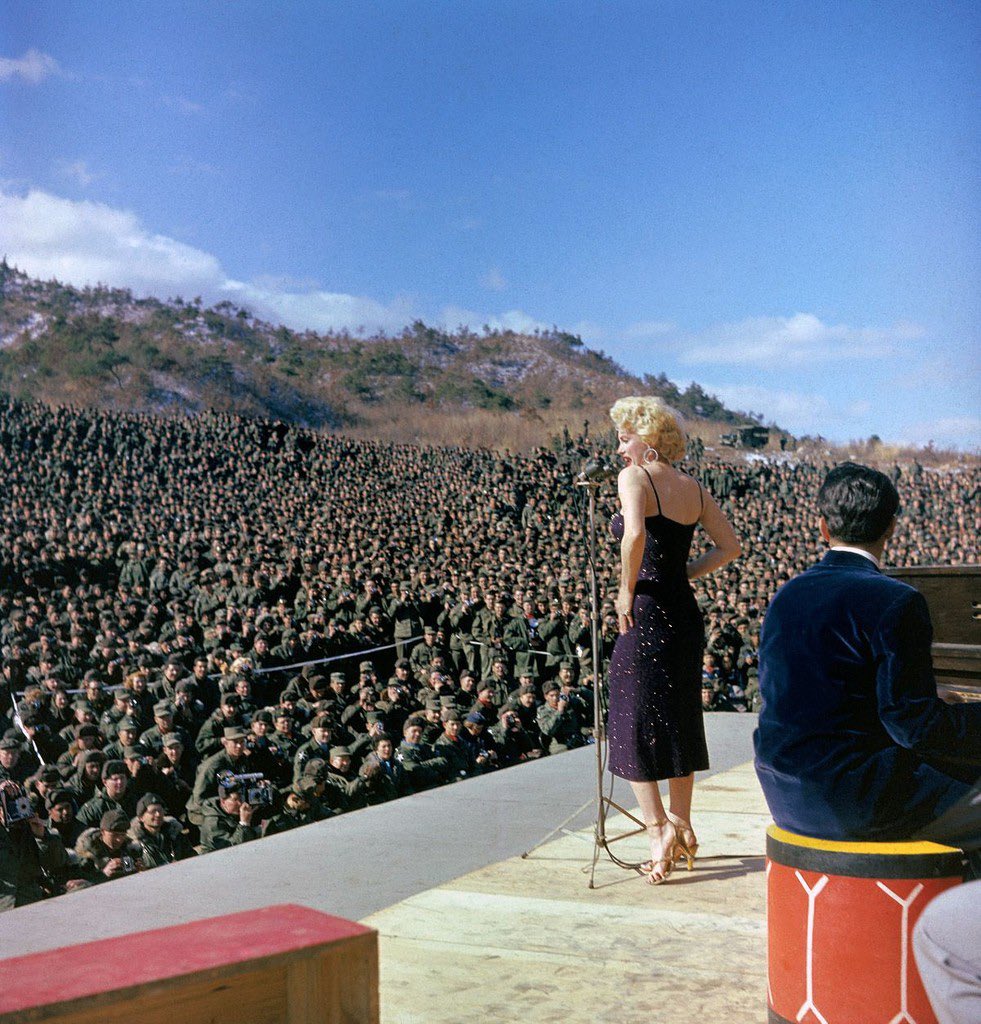
In 1954, one year after the unofficial end of the Korean War, Marilyn Monroe embarked on a significant journey to Korea, leaving a lasting impact on both the American troops stationed there and the history of entertainment during wartime. The Korean War, which began in 1950, was a conflict between North Korea, supported by China and the Soviet Union, and South Korea, supported by a United Nations coalition led by the United States.
Monroe's visit to Korea took place in February 1954, shortly after the signing of the armistice agreement that ended the active fighting on the Korean Peninsula. The armistice, signed in July 1953, effectively halted the war and established a demilitarized zone between North and South Korea, but it did not result in a formal peace treaty, meaning the war technically remained ongoing.
During her time in Korea, Monroe embarked on a whirlwind tour of American military bases. This tour served as a morale-boosting initiative, aiming to uplift the spirits of the homesick servicemen who had been stationed far from their families and loved ones. Monroe's presence and performances provided a much-needed escape and entertainment for the troops, reminding them of the support and appreciation they received from back home.
Over the course of four days, Monroe put on a total of ten shows, captivating an estimated audience of around 100,000 servicemen. These performances were filled with her iconic charm, captivating stage presence, and sultry singing style, which had made her a renowned figure in Hollywood. Monroe's visit not only brought joy and respite to the troops but also helped raise awareness about the sacrifices and challenges faced by American soldiers during the Korean War.
Monroe's decision to visit Korea and entertain the troops was a testament to her patriotism and dedication to supporting the military. This historic event not only highlighted her popularity as a cultural icon but also demonstrated the significance of entertainers in boosting the morale of troops during times of war. Monroe's visit to Korea became an important chapter in her legacy, further solidifying her status as a symbol of glamour, beauty, and hope in an era marked by conflict and uncertainty.