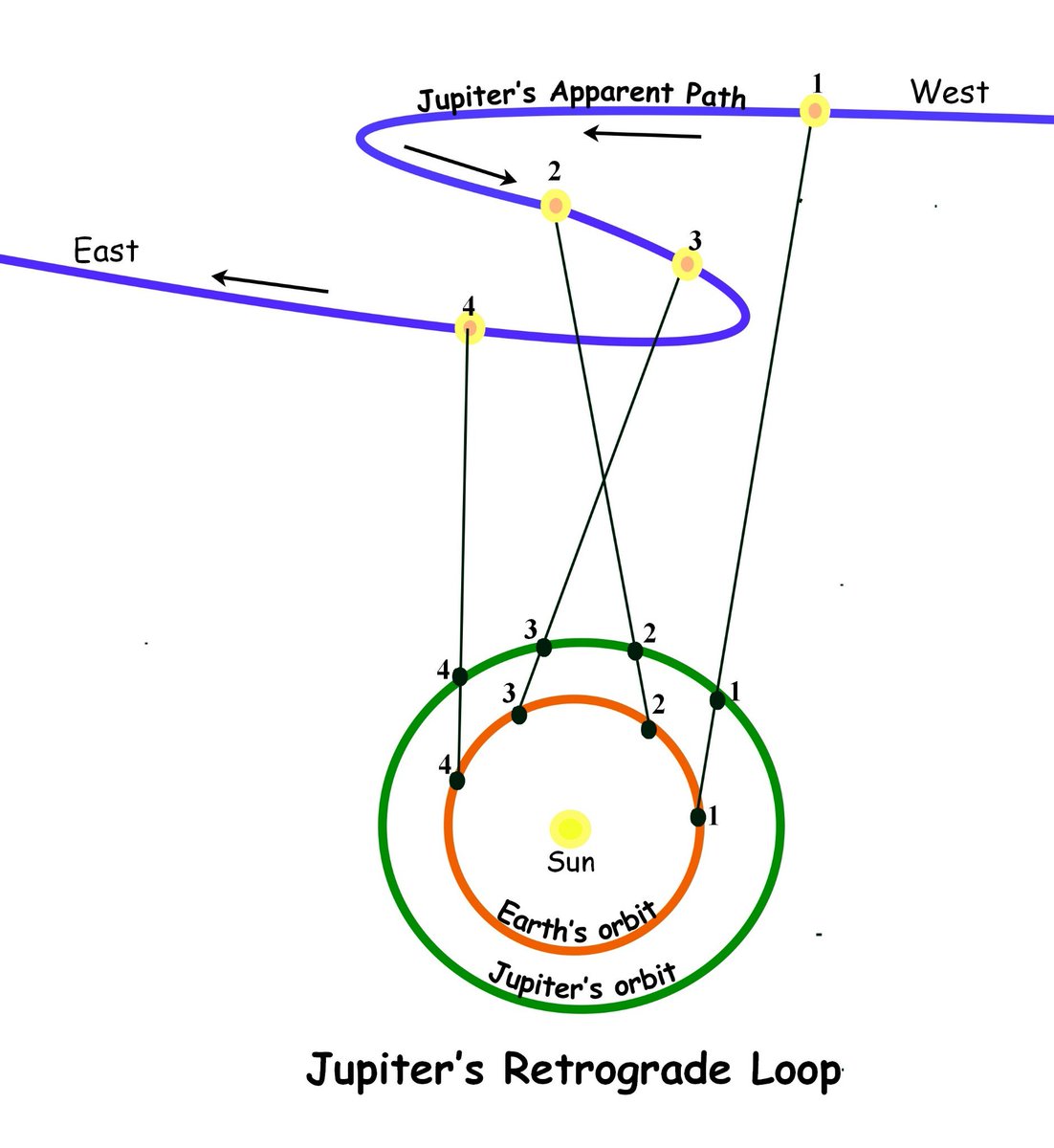
@sharmajiihere Because the other planets rotate around the sun like us, from our perspective they travel across the night sky in one direction part of the year and the other direction the rest, that's all it means.
🥁 DHOL TASHA: JUST NOISE, OR A FORGOTTEN PIECE OF HISTORY?
Every year, a predictable yet geniune debate takes over the timeline. On one side, decibel meters are out, petitions are signed, and citizens are asking for a little civic quiet. On the other side, from the historic lanes of Pune and Nashik to the sprawling, high energy streets of Mumbai, the air is vibrating with the unstoppable, thunderous roar of public Ganeshotsav processions.
It is a genuine modern deadlock. But the profound irony of it all lies somewhere else entirely.
The beautiful, tragic irony is that if you go out into that deafening roar today, almost no one, neither the critics nor the revellers, remembers why celebrating Ganpati, the deity traditionally associated with quiet, meditative wisdom, had to become a massive public spectacle in the first place.
To understand the sound, you have to look at the original blueprint of the festival.
Let's time travel to the 1890s. Ganesh Chaturthi was strictly an intimate, household affair. Families installed small clay idols inside their own homes, conducted quiet, private prayers behind closed doors, and immersed them quietly. It was a domestic ritual, completely isolated from the neighborhood.
The colonial government had banned political assemblies of more than 20 people to suffocate the freedom movement. They effectively locked everyone inside their own houses. A legal mastermind looked at this strategy and realized that the state didn’t dare touch public religious traditions for fear of triggering an uncontrollable revolt.
So, he weaponized a loophole. He systematically took this quiet, private domestic ritual and dragged it completely into the open streets, launching the first "Sarvajanik Ganeshotsav." By transforming an indoor family prayer into a massive, neighborhood wide community celebration, he legally reclaimed the public squares the British had stolen.
But this grand neighborhood mobilization created a lethal new problem. Colonial spies and local informants were stationed on every street corner to eavesdrop on the crowds. How do you encrypt human speech in 1893 when digital scramblers don't exist?
You invent a human signal jammer.
You fill those newly opened public squares with an absolutely deafening, thunderous, coordinated wall of traditional rhythms and cymbals. The air vibrated so intensely that intelligence officers were rendered completely deafened. They couldn't wiretap the streets because they couldn't hear the person standing next to them. Under the cover of that overwhelming acoustic shield, secret messages were passed, forbidden literature was circulated, and revolution was plotted in broad daylight.
The noise wasn’t an accident. It was tactical surveillance jamming.
And the man behind this masterstroke was about to pay a price so brutal that it would alter the course of Indian history forever.
"Las masas nunca han sentido sed por la verdad. Se alejan de los hechos que no les gusta y adoran los errores que las enamoran. Quien sepa engañarlas será fácilmente su dueño, quien intente desengañarlas será siempre su victima"
Gustave Le Bon
विश्वविद्यालय में आए दैनिक जागरण वालों के बैनर में रजनीगंधा का प्रचार देख के लड़के ने सवाल पूछ लिया!!
लगता है लड़के ने शेरनी का दूध ज़्यादा पी लिया था।
A Silent Coup in Dhaka.
Parag Jain, R&AW chief, is right now sitting in a five-star hotel in the Bangladesh capital.
Not invited by Tarique Rahman's government.
Invited by DGFI, the army's own intelligence.
That is the story 🧵
#Vikram Sarabhai must be smiling today.
When the Second World War broke out in 1939, Vikram Sarabhai was pursuing his doctoral research in cosmic ray physics at the University of Cambridge.
As the war spread across Europe, universities slowed down, research became difficult, and many Indian students were advised to return home. Sarabhai came back to India, uncertain about when he would be able to resume his studies.
What appeared to be an interruption would instead become one of the defining turning points of his life.
His family approached Nobel laureate Sir C. V. Raman, who was then heading the Physics Department at the Indian Institute of Science (IISc), Bengaluru. Raman, celebrated for discovering the Raman Effect and awarded the Nobel Prize in Physics in 1930, believed deeply in nurturing exceptional young scientists. Raman’s research was in optics and spectroscopy, he welcomed the young Sarabhai into his laboratory, recognizing his extraordinary curiosity and potential.
At IISc, Sarabhai continued his work on cosmic rays under Raman’s guidance.
Cosmic rays are highly energetic particles arriving from the Sun, distant stars, and exploding galaxies. Long before satellites existed, they offered scientists one of the few ways to study the universe beyond Earth. Understanding them required much more than theoretical physics. Sarabhai had to build sensitive instruments, carry out observations at different altitudes and latitudes, and understand how Earth’s atmosphere and magnetic field influenced the particles reaching the ground.
These 5 years with CV Raman trained him in experimental physics, instrumentation, data analysis, and large scientific investigations; skills that would later become indispensable for space research.
When the war ended, Sarabhai returned to Cambridge and completed his PhD in 1947. But he came back with much more than a doctoral degree. He had developed a deep understanding of the upper atmosphere and radiation from space, built an international network of scientists, and gained the confidence to lead ambitious scientific programmes.
Just a decade later, in 1957, the Soviet Union launched Sputnik, the world’s first artificial satellite. While much of the world saw it as a symbol of Cold War rivalry, Sarabhai saw something else; a powerful scientific tool that could help a developing nation leapfrog in communication, weather forecasting, education, and resource management.
His background in cosmic ray physics had already convinced him that to truly understand space and the atmosphere, scientists had to make observations above Earth’s surface. Rockets and satellites were the natural next step. Here comes his interest in space programmes.
This vision led him to establish the Physical Research Laboratory (PRL) in Ahmedabad, often called the cradle of India’s space programme. He went on to create the Indian National Committee for Space Research (INCOSPAR) in 1962, laying the institutional foundation that later evolved into ISRO. Rest is history.
Looking back, it is remarkable how a global crisis changed the course of Indian science. Had the Second World War not forced Vikram Sarabhai to return home, he might never have spent those formative years under C. V. Raman at IISc. Those unexpected years shaped not only a brilliant physicist but also the visionary who would build India’s space programme.
Sometimes, history advances because an unforeseen detour places the right mentor and the right student together at exactly the right moment.
#Skyroot has named its launcher on Dr Vikram Ambalal Sarabhai. Vikram -1 is India’s first privately developed orbital rocket.
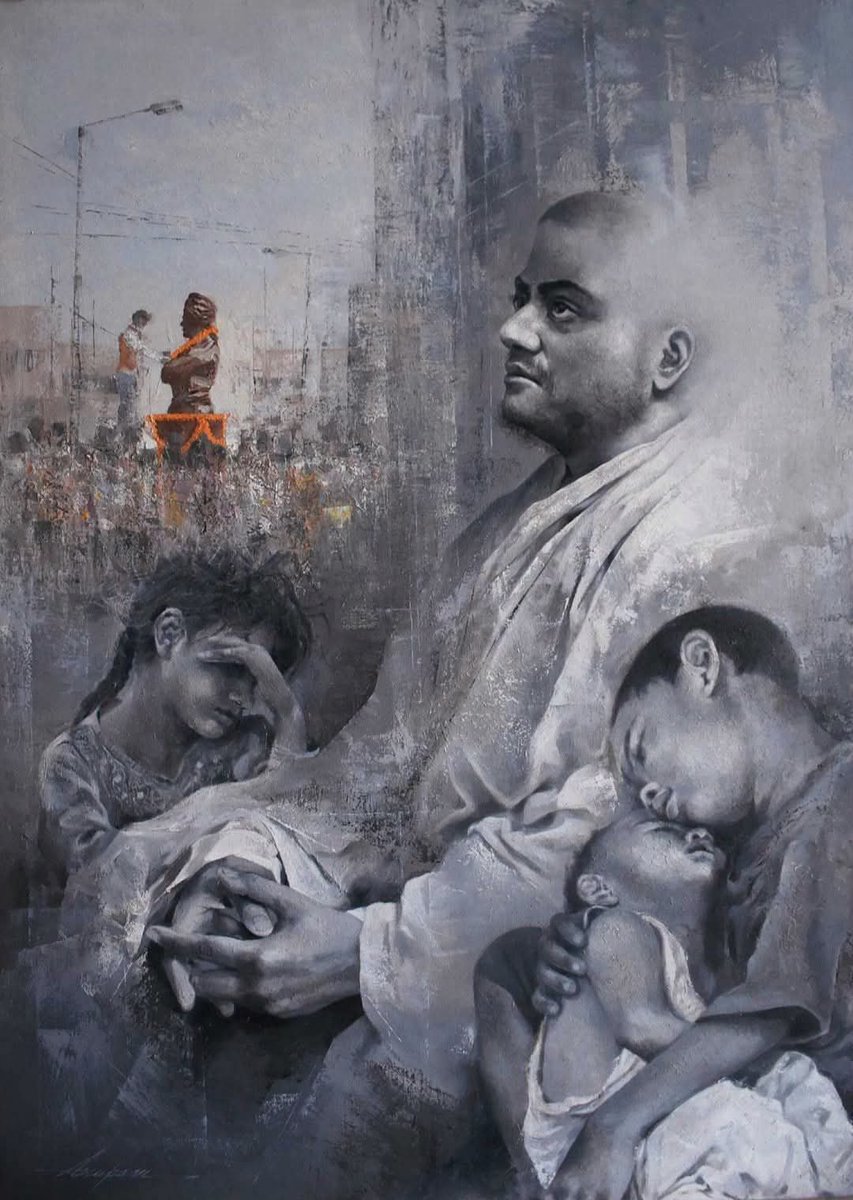
What Were the Final Days of Swami Vivekananda Like?
Swami Vivekananda passed away in 1902 at the age of just 39. It was 9:10 p.m. at Belur Math. At that time, neither Belur Math nor the nearby villages had electricity, although there was a telephone. Yet no news reporters arrived, and remarkably, none of the newspapers published in Bengal carried the news of his death the following day. Nor did any prominent political leader or celebrated Bengali publicly express condolences. It is astonishing to think about. 🔴
Throughout his short life, Swami Vivekananda endured humiliation, neglect, and repeated rejection. After his father's death, he became entangled in legal disputes with relatives over family property and had to appear in court on numerous occasions.
His family lived in extreme poverty. Every morning he would leave home in search of employment, wandering from office to office. Many days, knowing there was no rice, lentils, oil, or salt at home to feed his mother, brothers, and sisters, he would tell his mother, "Don't cook for me today, Mother. I've been invited to a friend's house for dinner." In reality, there was no invitation. He often went hungry so that the rest of the family could eat. It is almost unimaginable. 🍂
He struggled with poverty throughout his life. At the age of 23, he secured a teaching position at the Metropolitan Institution, founded by Ishwar Chandra Vidyasagar. However, the headmaster—Vidyasagar's son-in-law—disliked Narendra Nath Datta and reportedly had him dismissed, alleging that he did not teach well. This happened despite his extraordinary intellect, scholarship, and eloquence.
Once again, he found himself unemployed.
Even abroad, a Bengali religious leader allegedly spread false rumours that Vivekananda had several wives, ten or twelve children, and was nothing more than a fraud and a gambler. 💥
He often endured hunger both in India and overseas. In one of his letters, he wrote:
"Many times I have passed days without food. I felt that perhaps I would die that very day. Then I would rise, crying, 'Victory to Brahman!' and declare: 'I have no fear. I know neither death nor hunger. I am beyond thirst. What power does the world have to destroy me?'"
When the ailing Swami Vivekananda returned to Calcutta after achieving worldwide acclaim, many prominent Bengalis reportedly declined to attend or organise a public reception in his honour. Eventually, Paryichand Mitra agreed but is said to have remarked that since Vivekananda was a Kayastha rather than a Brahmin, he could not truly be a monk and would therefore address him merely as "Brother Vivekananda."
By 1898, Americans were deeply inspired by his speeches and writings, while many in his own homeland remained indifferent.
That same year, the sick Swami consulted the renowned physician Dr. Rasiklal Dutt at his clinic on Sadar Street in Calcutta. The doctor reportedly charged him forty rupees as a consultation fee and another ten rupees for medicines—a considerable sum in those days. The money was paid by Swami Brahmananda from funds collected for Belur Math.
There is no known photograph of Swami Vivekananda after his death. Nor is there an officially preserved death certificate, despite the existence of the Bally–Belur Municipality at the time. Ironically, that same municipality imposed an amusement tax on Belur Math.
Some people even mocked the monastery, dismissing it as a gathering place for idle young men and using insulting nicknames such as "Bichitra Ananda" or "Bibi-ka-Ananda"—
Perhaps that is why, toward the end of his life, he is said to have remarked:
"Only another Vivekananda could truly understand what this Vivekananda has accomplished."
Today, Swami Vivekananda is revered across India and around the world. Yet during his own lifetime, he endured poverty, insults, and neglect. One might even wonder whether, had he witnessed some of today's displays of admiration, he would have dismissed them as empty gestures
Collected n edited
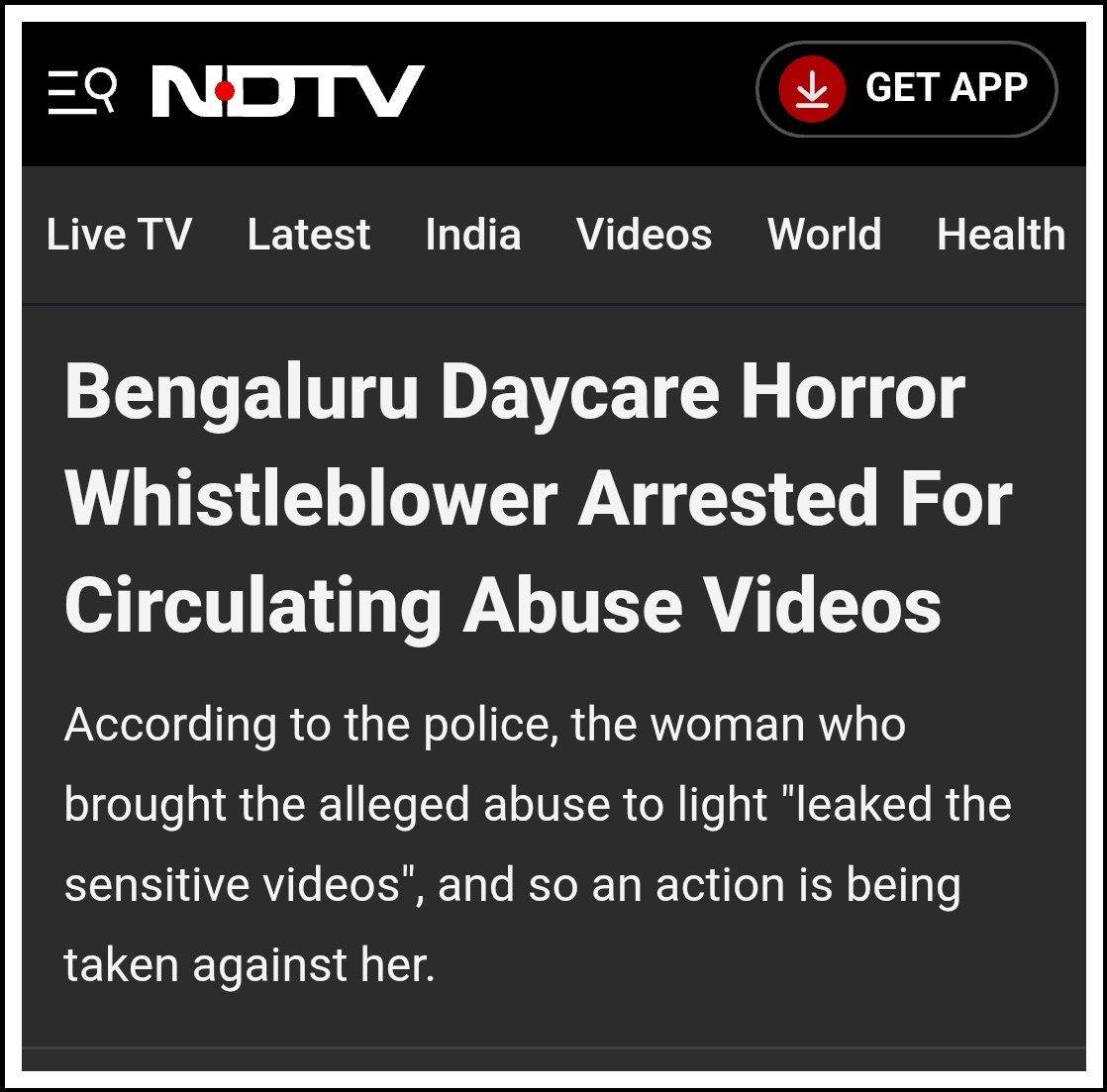
A daycare employee at Capgemini's Bengaluru campus couldn't bear the abuse of the kids at the centre.
She reported it to supervisor, but instead of taking action, they fired her. She then became a whistleblower and leaked videos that exposed the abuse.
In the videos, toddlers were made to sit inside the drum of a front-loading washing machine, had water sprayed into their mouths using a toilet jet spray, were locked inside bathrooms, and were forced into narrow, water-filled pipes to frighten them. The videos triggered outrage, forcing authorities to act.
Today, according to media reports, the police have arrested the whistleblower only for allegedly "leaking sensitive videos." Lol! What a system! A poor woman with a clear conscience stood up to the powerful and went public, not for personal gain or with any malicious intent, but solely to protect those children. And she's the one who gets arrested.