It’s going unnoticed because so much other news is happening, but the war drums are beating again in D.C. The warmongers worry this is their last chance to get the white whale they’ve been chasing for thirty years, an all-out regime change war against Iran.
A new Middle East war would be a catastrophic mistake. Our military stockpiles are depleted from three years of backing Ukraine. Our effort to reshore manufacturing has only just begun and will take years to bear fruit. War would worsen our already immense deficit and national debt. Iran is larger than Iraq, Syria, and Afghanistan combined. A war would not be easy and could easily become a calamity.
Thanks to President Trump’s restraint during his first term, America has a golden opportunity to pull away from Middle East quagmires for good. We shouldn’t throw that opportunity away so that sone D.C. has-beens can feel tough by sending young Americans to die yet again.
Twenty years ago we invaded Iraq. The war killed many innocent Iraqis and Americans. It destroyed the oldest Christian populations in the world. It cost over $1 trillion, and turned Iraq into a satellite of Iran. It was an unforced disaster, and I pray that we learn its lessons.
Today is the anniversary of the atomic bomb detonation in Hiroshima on August 6, 1945.
It's a sad reminder that most of what we have been taught about the atomic bombs, and the reasons behind their usage, is the product of lies and the US propaganda machine.
According to the standard narrative, Japan refused to surrender in WW2 even after long and bloody battles in the Pacific, and an allied invasion of the Japanese mainland would have caused the deaths of 1 million+ allied soldiers as well as 10 million+ Japanese. Slaughtering hundreds of thousands of innocents in the two cities, by this argument, saved millions of lives and convinced Japan to surrender.
In reality, Japan actually had made overtures as early as late May, 1945 to surrender to the United States in a manner that was virtually unconditional, save for some basic legal protections for Emperor Hirohito. Furthermore, Japan was in no position to continue the war for long, for the US oil embargo had completely starved the country of fuel and basic resources. By the end of July, 1945, Japan’s navy had completely stopped major naval operations.
Some of the highest-ranking and most respected US generals reflected back on the bombings and expressed moral outrage and strategic doubts about their usage. Others made this clear at the time, and strongly urged their civil superiors not to use them.
Supreme Allied Commander in Europe Dwight Eisenhower, for instance, pleaded with Secretary of War Henry Stimson to reconsider the plan, expressing his belief “that Japan was already defeated and that dropping the bomb was completely unnecessary,” and also because he “thought that our country should avoid shocking world opinion by the use of a weapon whose employment was, I thought, no longer mandatory as a measure to save American lives. It was my belief that Japan was,” Eisenhower wrote, “at that very moment, seeking some way to surrender with a minimum loss of ‘face.’”
Admiral William Leahy, the highest-ranking US military officer on active duty in the war, wrote similarly: “It is my opinion that the use of this barbarous weapon at Hiroshima and Nagasaki was of no material assistance in our war against Japan. The Japanese were already defeated and ready to surrender because of the effective sea blockade and the successful bombing with conventional weapons.”
Chester Nimitz, the commander-in-chief of the US Pacific Fleet, insisted that the atomic bombs were “of no material assistance in our war against Japan” for similar reasons.
General Douglas MacArthur, the supreme allied commander of the southwest Pacific, saw “no military justification for the dropping of the bomb” whatsoever, and also professed that “Japan would have surrendered even if the atomic bombs had not been dropped.”
Admiral William “Bull” Halsey stated emphatically that “atomic bombing – of civilians, is morally indefensible.”
Because the US government decided otherwise, 225,000+ innocent civilians died in atrocities the scale of which the world had never seen. Instead of saving American lives, the chief purpose of the two atomic bombs seems to have been to flex the might of the American war machine in front of Soviet eyes. The detonations led to a costly arms race, the birth of the military industrial complex, and the Cold War itself.
Americans are still paying the price for all of it.
We do not accept that the atomic bombs saved millions of lives (they didn’t), that Japan would never have surrendered otherwise (they would have, and tried do to so prior to the bombings), or that they were morally justified in any way (they weren’t). These are all myths to justify the mass extermination of civilians in an overt act of terrorism by the US government.
We chose to expose these truths about the catastrophes in Hiroshima and Nagasaki because we do not accept that it is ever moral to target civilians for mass death. Additionally, we hope recounting these horrors will persuade others that they must never transpire again.
For humanity to thrive, there can be no brinksmanship with Russia, China, or any other nuclear power.
For humanity to thrive, there can be no nuclear winter.
For humanity to thrive, there can never be any more tragedies like Hiroshima and Nagasaki ever again.
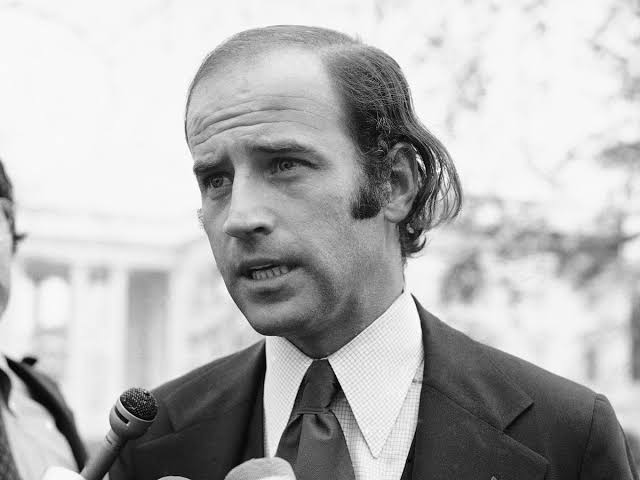
REMINDER: Biden created the student debt crisis.
The solution is simple: students who truly can't pay back their student loans should be able to have it discharged in bankruptcy court.
That would also force lenders to be less predatory in their lending practices.
And it would force universities to make their tuitions more affordable, as lenders refused to make risky, overly-expensive loans.
But in 1978, Senator Joe Biden supported the "Middle Income Student Assistance Act", which eliminated income restrictions on federal loans to expand eligibility to all students.
He then used that elimination of income restriction to warn of the threat of student debt bankruptcy, and wrote a separate bill later that year to block students from filing bankruptcy on those loans.
The income restrictions were reinstated in 1981.
He then went on to vote for bills which extended loan eligibility to students with no parental financial support.
In 1984, Biden used his senior position in the Judiciary Committee to extend bankruptcy exemptions to vocational schools as well.
And now that he's created the debt crisis that everyone with common sense warned would happen, he's trying again to use it as an excuse to assert powers that his office does not have.
Because that's what politicians always do: create a crisis, and then grandstand on your suffering that he caused in order to push for more power and more of your money.
To this day, he still won't push for Congress to end the bankruptcy exemption for student loans, for a very simple reason:
He doesn't want the crisis to end. He wants it to worsen, so he can exploit it for more power.
Read all about Biden's role in the crisis here:
https://t.co/YZs0Mm01D7