JUST IN: Elon Musk unveils the Tesla Roadster by launching it off a ramp before the car flipped in midair and safely landed on the ground.
The car is a collaboration between Tesla and SpaceX.
One of the most insane things I've ever seen.
I don't want to get into this GDP growth debate. I lost interest in this data point a while back.
Instead I go with " Real Feel" GDP growth.
India,$4 trln , growing ~7%: Crashing quality of life. Janata looks stressed. Traffic looks chaotic.
Cities & villages look GDP of a $ 100 billion country not 4 trln.
"Real Feel" : GDP growth of 2-3%
Europe: GDP growth: ~ 2-3%. Janata looks happy. Khushhali - happiness everywhere. Everything looks super chic, organised. Clean. Cafes, restaurants buzzing, music on the streets. Lovely villages.
"Real Feel": GDP growth of 7.8%
In my latest @bsindia column, I revisit the impossible trinity, through the lens of RBI’s interventions across markets. A few key points:
• RBI says it intervenes in FX markets to manage volatility, not exchange-rate levels. But intervention of the scale and persistence we have often seen inevitably influences levels too. Perhaps, just as the MPC brought greater objectivity and transparency to monetary policy, we need a better-articulated FX framework.
• The trilemma applies to RBI as a whole, not just the MPC. Large bond purchases and liquidity interventions kept interest rates below levels otherwise needed to attract discretionary savings. This had external consequences through equity valuations, outward investments and lower FX forward premia. Pressures created in one market subsequently required intervention in another.
• For now, RBI has bought time through an expensive FX-swap subsidy to attract foreign-currency funding. In effect, after offering domestic fixed-income savers below market-clearing returns, we are subsidising overseas savers and banks to bring funds into India. This funding, in turn, helps keep domestic rates below what discretionary savers demand. This is not a durable equilibrium. Rationalizing taxation of fixed income could offer one way out.
• Going forward, large RBI interventions in bonds, liquidity or FX should explicitly assess spillovers across other markets through the lens of the impossible trinity. Over time, this could also provide the basis for a more coherent and transparent FX framework.
link: https://t.co/EUJSCr4YjF
@ZEE5India Arey baba your video is only not loading. Thoda budget you could have transferred from Marketing to ITInfra so that your servers can perform when required. #PoorService#Zee5#PooraIndiaBhagega
I've already retweeted @Options_IndiaAB post.
Since I want this to reach lot of people, posting it separately too.
Here is the post:
I recently spent 2 weeks in China.
6 cities: Shanghai, Beijing, Xi’an, Zhangjiajie, Chongqing and Chengdu.
I went there with curiosity.
Like many Indians, I had heard a lot about China through media, social media and conversations. I expected to see progress, maybe discover some business ideas, and understand what the country is actually building.
I came back with a very uncomfortable feeling.
Not because I found a business idea for myself.
But because I saw 100 things that governments can do when infrastructure, tourism, transport, urban planning and civic systems are treated seriously.
I travelled within China by flights, trains, cars and local transport. The infrastructure was honestly stunning.
Clean cities. Smooth roads. High-speed trains. Well-managed traffic. Public spaces that actually feel designed for people. Tourist destinations that are built, maintained and promoted like national assets.
And then I kept thinking about India.
We keep comparing ourselves to China. Our media keeps telling us how India is catching up, how China is restrictive, how we are better in so many ways.
After spending time there and speaking to people, I realised how much of that narrative is just comfort food.
China is not perfect. No country is.
But on infrastructure, execution, tourism, civic discipline and quality of urban life, they are not 5 years ahead of us.
They are decades ahead.
The saddest part for me was the currency.
Everything felt expensive. Not because China was insanely expensive, but because the rupee has weakened so much that even normal spending starts feeling heavy. As an Indian taxpayer, that genuinely hurt.
We pay taxes. We work hard. We talk about becoming a global power.
But where is the quality of life?
Where is the civic sense?
Where is the infrastructure that makes daily life easier?
Where is the tourism vision beyond religious tourism?
I met travellers from other countries who were excited to visit China because they wanted to see its progress. When I asked about India, many had no real desire to visit. Not out of hate. India simply was not on their aspirational travel list.
That should bother us.
Even the so-called “closed internet” surprised me. We are told people there are missing out because they don’t use Google, Instagram, WhatsApp or Facebook.
But China has built its own digital ecosystem. Payments, maps, transport, messaging, shopping, everything works inside their own infrastructure. People did not seem to feel deprived. They seemed adapted.
Again, this is not a hate post.
I love India. That is exactly why this trip bothered me.
Patriotism cannot only be about saying we are great.
Real patriotism is having the courage to admit where we are falling behind.
China made me realise one thing very clearly:
India’s potential is not the problem.
Execution is.
And unless we stop comforting ourselves with comparisons and start demanding better infrastructure, better governance, better tourism, cleaner cities and a higher quality of life, we will keep celebrating the idea of progress instead of actually living it.
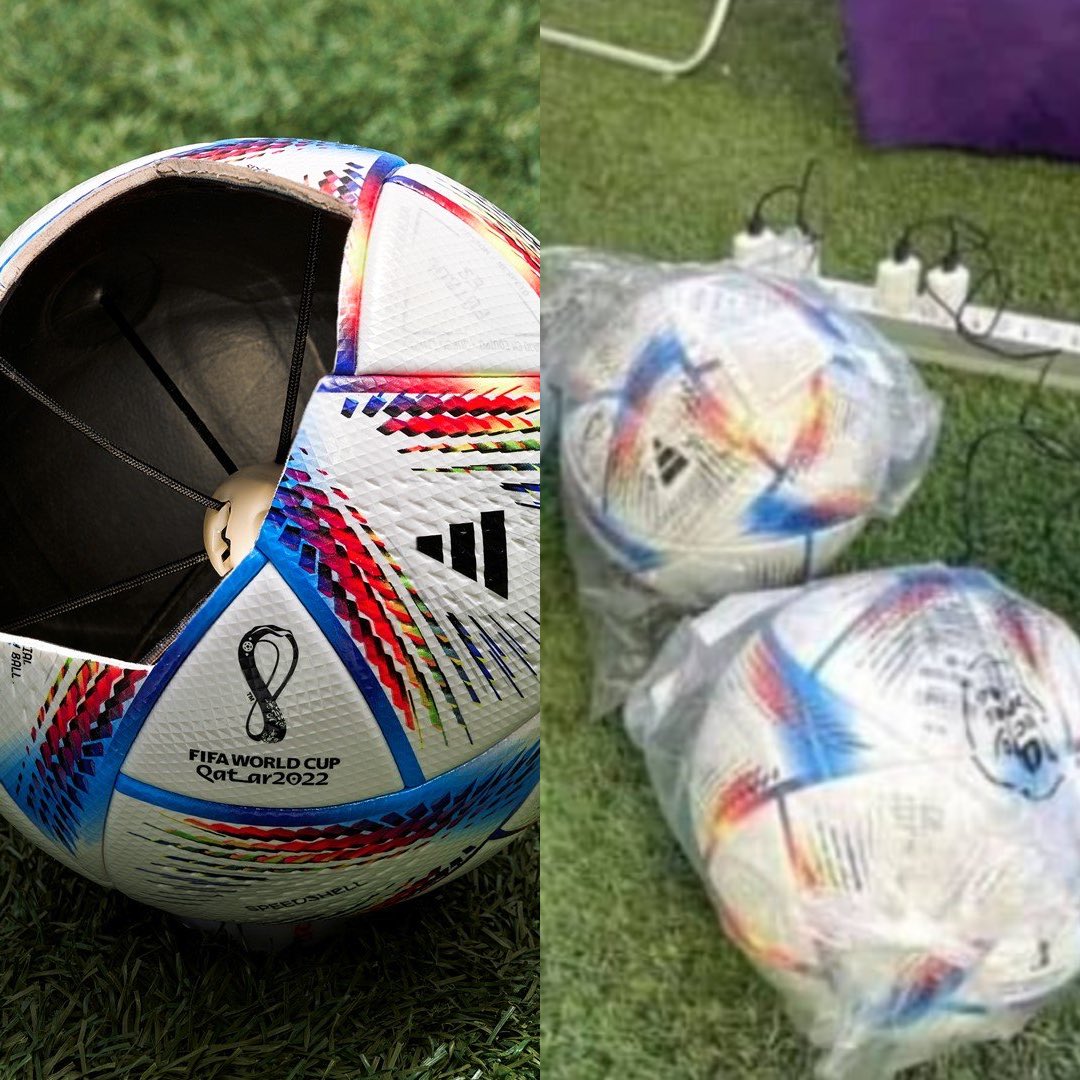
🚨🎙️Thierry Henry on the new 2026 World Cup ball that needs to be plugged in and charged before kick off:
“Football is finished. Completely finished. We are charging footballs now? Charging footballs before kick-off like they’re iPhones? And people still want to tell me this sport has ‘romance’ left?
The biggest sport on earth, the most emotional game in the world, and now the football itself has a battery inside it like it’s a smartwatch. Think about how insane that sounds for a second.
“They keep calling it ‘progress’, but sometimes I look at modern football and honestly wonder if we’re slowly killing the soul of the game.
Back in my day, the ball was a ball. You kicked it, you controlled it, you scored. Simple. Now we have sensors inside the ball, 12 cameras watching every blade of grass, computers tracking every heartbeat, and VAR officials sitting in a room deciding football frame-by-frame like it’s some science experiment.
And don’t tell me this is ‘for accuracy’. Accuracy for who? Because all I see is the game becoming more robotic every single year. Strikers can’t celebrate goals anymore because they’re waiting for a microchip inside the ball to tell them if someone’s shoelace was offside three passes earlier.
You score a goal now and nobody celebrates properly anymore. The striker looks at the linesman. The fans look at the screen. The referee puts his finger to his ear. Then everybody waits 90 seconds for a laboratory decision from people sitting behind monitors.
The funniest part? FIFA will market this as ‘innovation’. Innovation? No. It’s control. Football was the most human sport in the world because of emotion, controversy, chaos, mistakes, that’s what made people fall in love with it. Now everything is engineered.
Soon they’ll have AI referees, automatic red cards, and maybe balls that vibrate when a player dives. We laugh now, but look how fast this nonsense is moving.
And people wonder why old-school fans say modern football has lost its soul. We went from street football to Silicon Valley football in less than 20 years.
Imagine telling Ronaldinho, Zidane, or R9 that one day the World Cup ball would need charging before a final. They would think you were joking.”
Modern football keeps calling itself ‘evolution’. Sometimes it looks more like the death of spontaneity.”
IIT Delhi to IIM Bangalore to IAS. I got the best education my country had to offer. It taught me how to crack tough exams and manage big responsibilities. But it never taught me how to quiet my own mind or handle loneliness. We spend many years learning how to achieve, but not a single day learning how to be happy.
My thoughts on what is missing in school education.
Emotional Regulation:
We memorized the periodic table, but no one explained the chemistry of a broken heart. School demanded we stay quiet, confusing silence with peace. Now, we don't know how to host our own storms without drowning in them. We feel lost because we were taught to suppress, not to process.
Deep Communication:
We were taught to write perfect essays, but not how to say "I’m hurting" or "No." While there is a strong emphasis on communication, we are not taught the vocabulary of the adult life. There is no course on how to stand our ground in face of bullying by a boss or how to protect our work boundaries by saying 'No'
Critical Thinking:
In school, the person with the most answers won. In life, the person with the most questions survives. This is the reason many adults can repeat opinions confidently without ever questioning where those opinions came from. We are told everything as the gospel truth. So we end up just following blindly
Financial Literacy:
We spent years learning maths and solving for x, but never learned how to keep ourselves from falling in a debt trap. Money isn't just about math; it’s about the dignity of choice. We do not learn how to use debt effectively without it controlling our freedom. How impulsive spending compounds over time, or how money affects stress, relationships, and mental peace. Financial literacy is missing because education often focuses on earning money someday, not managing it wisely once it arrives.
Self-Discipline
School is a world of bells and schedules. Someone else always tells you what to do and when. But adulthood is a world of total silence. We feel stuck because we were never taught how to push ourselves without a teacher watching. Discipline is simply the habit of keeping promises to yourself. This is a habit many of us are lacking
Handling Loneliness
In school, you are always shrouded by people. You never realize how loud the silence of adulthood can be until you’re in it. We feel lonely because we weren't taught how to be our own best friends. Peace is learning that being alone doesn't mean being lonely. It is a sacred space, not a sign of being unwanted.
Reading People
School is a time of innocence where friendships are often given to you. But as we go along, not everyone retains that purity. We feel cheated because we weren't taught to see the hidden intentions or the masks people wear. Reading people is the quiet wisdom of seeing the truth behind the words.
Mental Health Maintenance
We have gym class for our bodies, but nothing for our souls. We are taught to push through exhaustion to finish a project, which is exactly how we end up in burnout. Honoring your nervous system is the only way to make sure the light inside you doesn't go out. We should know when we are dealing with a stressor and unable to handle it anymore. We should know when to reach out for help if we feel that we are drowning in that distress
Knowing Yourself
We spend years trying to be the "best" student, only to realize we don't know who we are without a gold medal. We are left inadequate because we studied every subject except our own souls. The ultimate education is discovering what truly matters to you before the world tells you what to want.
One of my absolute favourite television presenters, Sir David Attenborough, turns 100 today. Heartiest wishes to him on this remarkable milestone.
Around 2006, David Attenborough’s series ‘Planet Earth’ was released. That was still the era of DVDs. From that time onwards, I became almost obsessed with the work of this extraordinary man. Watching every new series that followed Planet Earth - first on DVDs and later on Blu-rays, as soon as they were released - became a passion for me.
Then came ‘Africa’ in 2013. Its opening montage was so breathtaking, such a masterclass in visual storytelling, that I have lost count of how many times I must have watched it.
Whenever I watch Attenborough’s documentaries, the way he narrates, I feel as if I am listening to a fairy tale. You become immersed in the story he tells, and once you enter that world, it remains with you forever. Many people have made documentaries over the years, but very few have possessed the rare storytelling gift of David Attenborough.
When one looks at Sir David Attenborough’s life, one is astonished at the life this man has lived, and how much he has given to the world. From black-and-white television to colour broadcasting, from high definition to 3D to 4K, he remained present through every technological transformation, narrating the story of nature with the same sense of wonder. And while doing so, he never tried to dominate the screen himself. Instead, he kept nature, the very thing he deeply loved, front and center.
Many people live to see 100. But there are a few rare individuals who spend their entire lives searching for something, and for whom that search itself becomes their lifelong companion.
Over the last hundred years, what has Attenborough not witnessed? The rise of television, the Second World War, the transition from black-and-white screens to colour, the satellite revolution, the jet age, the digital age, the internet age — and perhaps most importantly, humanity’s own transformation from being merely a part of the nature to becoming a force capable of destroying it in the name of development. In many ways, he witnessed the fastest century in human evolution. Yet despite all these changes, he continued to tell the story of nature with undiminished passion and curiosity.
The Attenborough who once introduced the world to the sheer beauty of nature gradually became the Attenborough who began warning us, with visible anguish, about how humanity itself is destroying that very world. If one wishes to see the scale of ecological decline that has happened within just five or six decades, one can trace it through the journey of David Attenborough’s documentaries themselves.
BBC’s public broadcasting demonstrated that deeply enriching content on science and nature could be created in a visually stunning yet accessible way. But it was David Attenborough who showed how powerful, precise and emotionally effective such storytelling could truly become.
I could write much more about Attenborough. But instead, I would especially urge Marathi youngsters to watch his documentaries. Watch them not just for the storytelling, but also to understand how beautiful nature truly is, and how recklessly we are destroying it in the name of roads, bridges and endless development.
There is one more reason why my colleagues in the media should watch Attenborough closely: when your understanding of a subject is deep and authentic, you stop worrying endlessly about whether your content will be watched or what needs to be done to make it “viral.”
Attenborough was born in an era when humanity was still discovering the mysteries of of our world and nature with curiosity and wonder. Today, at 100, he is witnessing a time when that same humanity risks pushing the planet and nature towards destruction. May he live long enough to once again see this Earth flourishing, vibrant and alive.
Heartfelt birthday wishes to Sir David Attenborough once again.
Raj Thackeray
An angry lady’s image shouting at a political leader and his party for having stopped the road has gone viral.
That one woman has said what millions of us feel. Stop blocking roads for your political agendas. Stop blocking roads, temples, for VIPs.
People have work, emergencies, lives. This entitlement has gone too far.
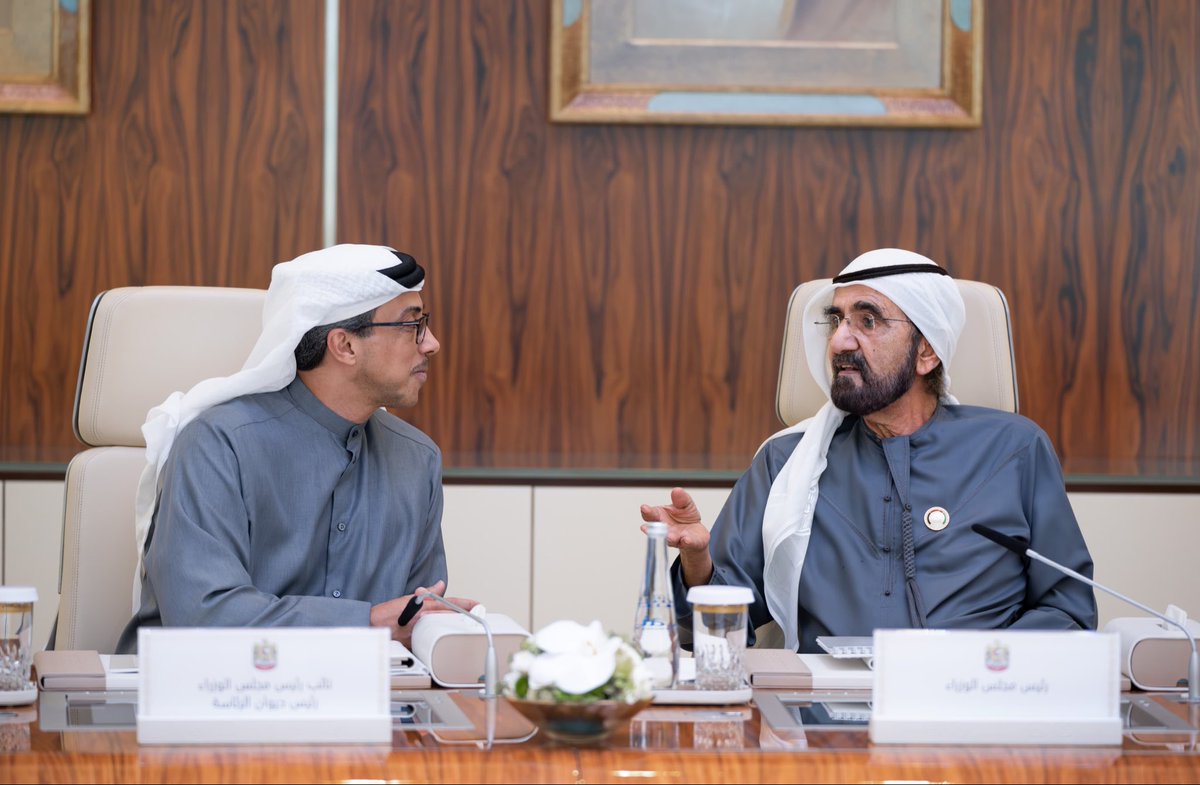
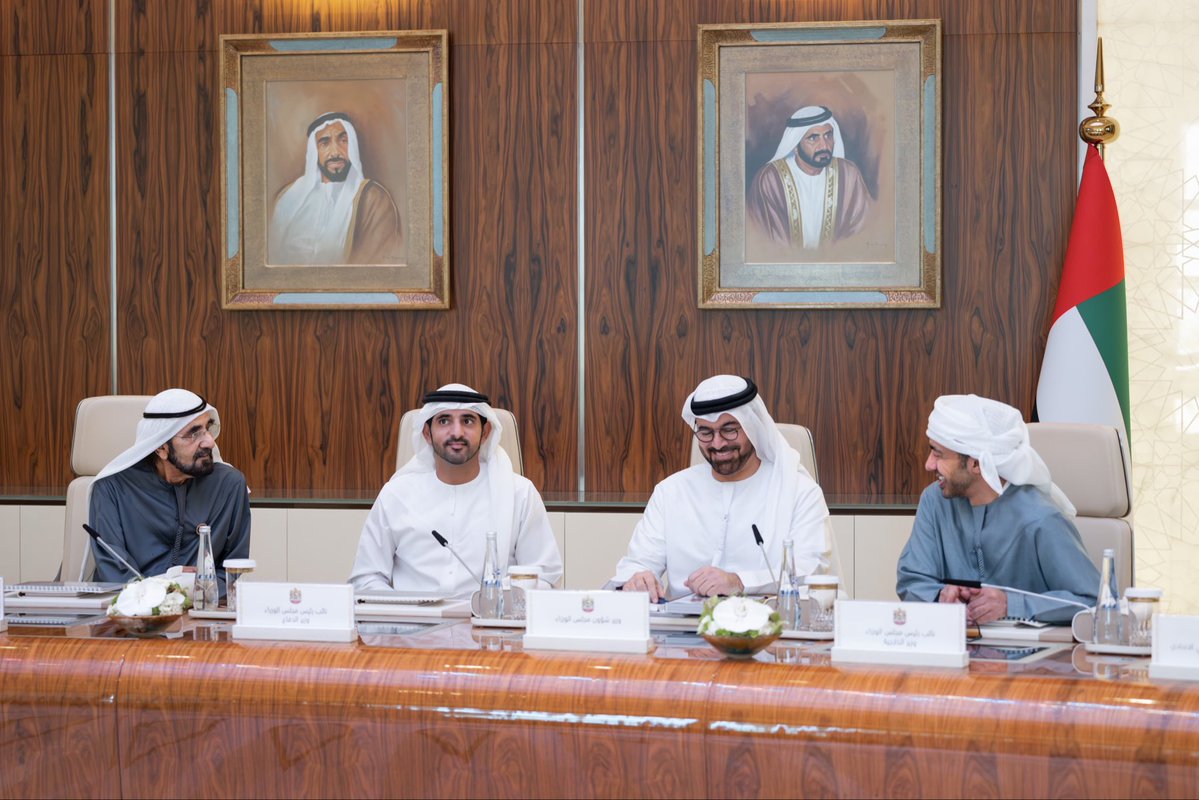
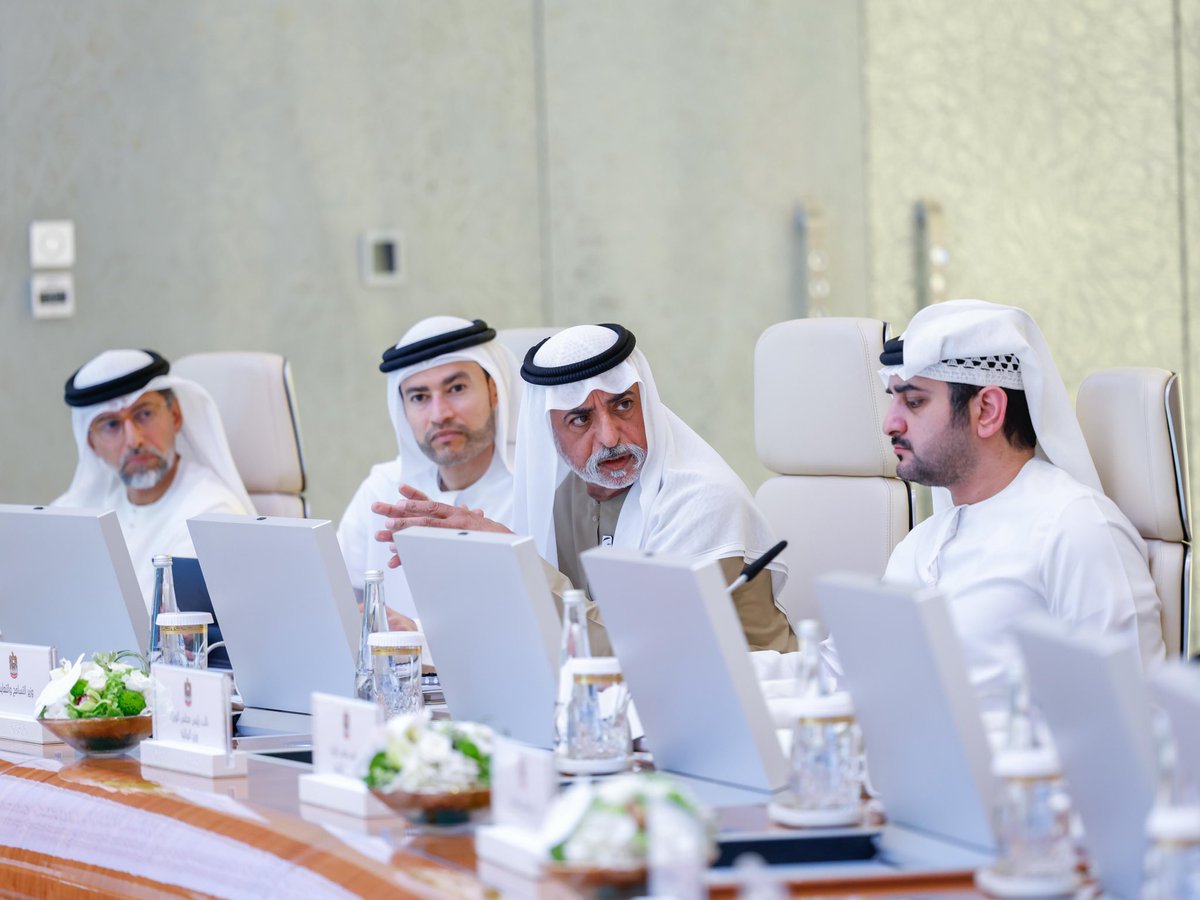
Under the directives of the President of the UAE, we launch a new government model. Within two years, 50% of government sectors, services, and operations will run on Agentic AI, making the UAE the first government globally to operate at this scale through autonomous systems.
AI is no longer a tool. It analyses, decides, executes, and improves in real time. It will become our executive partner to enhance services, accelerate decisions, and raise efficiency.
This transformation has a clear timeline. Two years. Performance across government will be measured by speed of adoption, quality of implementation, and mastery of AI in redesigning government work.
We are investing in our people. Every federal employee will be trained to master AI, building one of the world’s strongest capabilities in AI-driven government.
Implementation will be overseen by Sheikh Mansour bin Zayed, with a dedicated taskforce chaired by Mohammad Al Gergawi driving execution.
The world is changing. Technology is accelerating. Our principle remains constant. People come first. Our goal is a government that is faster, more responsive, and more impactful.
Your visual cortex burns 44% of your brain's energy budget. Turning off the lights in the shower is the fastest way to slash that load to near zero.
Your brain is 2% of your body weight but burns 20% of your total energy. Visual processing alone eats almost half of that. Every photon hitting your retina triggers a cascade of neural signaling that demands oxygen, glucose, and ATP at rates higher than almost any other cognitive function.
When you kill the lights, you're removing the single largest energy load on your cortex. That freed-up metabolic capacity gets reallocated.
This is where it gets interesting. A 2022 study from the Laureate Institute for Brain Research measured what happens when you strip sensory input from anxious patients. High-frequency heart rate variability, the gold standard marker of parasympathetic activation, increased significantly compared to controls. Blood pressure dropped. Breathing rate fell. The nervous system shifted from sympathetic dominance to parasympathetic mode within minutes.
The warm water adds a second mechanism. Core body temperature rises during the shower. When you step out, temperature drops rapidly. That cooling signal triggers melatonin production and primes the circadian system for sleep. Layer darkness on top: no photons suppressing melatonin through the retinal ganglion cells, no blue-light signaling to the suprachiasmatic nucleus that it's still daytime.
The shower is doing three things simultaneously. Reducing cortical energy demand by eliminating visual input. Activating the parasympathetic nervous system through sensory reduction. Triggering thermoregulatory sleep signaling through the heat-then-cool cycle.
A $0 float tank that takes 10 minutes.