Free Black woman. Africa, education, design, culture, politics. I live for carbs, caffeine, and Toni Morrison. Isoko waa do (but I'm actually mostly Ukwuani).
H/T History_Daily
In a rare archival footage from 1965, three of Nigeria’s foremost literary minds: Chinua Achebe, Cyprian Ekwensi, and Onuora Nzekwu explore the burden and beauty of writing as Africans navigating a post-colonial world.
At the time, Nigeria was barely five years into its independence. The conversation centered on a powerful theme: the dual identity of the African writer caught between two worlds, shaped by indigenous traditions and Western education, and writing for both local and international audiences.
Chinua Achebe, already globally acclaimed for Things Fall Apart (1958), spoke about the responsibility of the African writer to truthfully represent African realities without romanticizing or distorting them to suit foreign expectations. Achebe emphasized the role of storytelling in reclaiming African dignity from colonial narratives.
Cyprian Ekwensi, known for Jagua Nana and People of the City, discussed the urban African experience, the cultural transitions sweeping through modern cities, and how writers must capture the tension between inherited values and rapidly changing lifestyles. He echoed the idea that African writers stand at a cultural crossroads.
Onuora Nzekwu, best known for Eze Goes to School and Wand of Noble Wood, contributed insights on the educational and linguistic dilemmas faced by African writers. Writing in English, a colonial language while trying to express deeply indigenous realities, he said, required a delicate balancing act.
Together, the three men articulated the challenges of cultural duality, the feeling of being shaped by traditional African identity while also navigating the intellectual legacy of the West. They addressed how African writers must often perform a literary negotiation: remaining rooted in local idioms, yet reaching a global audience.
This 1965 interview remains a poignant reminder of the intellectual energy and cultural debates that shaped the early years of Nigeria’s literary renaissance.
Source: Historical Archive
⛔ No copyright intended. All rights reserved to the respective owners.
#history_daily
Speaking of Lagos the “white man’s grave,” as mentioned later in this thread, Sir William MacGregor who was Governor of Lagos from 1899-1904, initiated the idea of draining the stagnant marshes behind Lagos Island, into the Lagoon, to rid the island of mosquitoes.
Subsequently named after him, the MacGregor Canal still exists, now substantially narrowed and slabbed over to create market stalls.
He used his expertise as a medical doctor to obtain the newly discovered scientific information that mosquitoes were the carriers of malaria, to conceive the idea of the drainage scheme.
It proved effective. In the first 3 years after completion, there was only 1 malaria related death in Lagos as opposed to the tens per anum in previous years. Of course this was also due to additional measures.
MacGregor was a great believer in a science based approach to issues. One of the first tasks in his governorship was his establishment of a General Sanitation Board as a way of improving general public health of the colony. He included prominent locals as members.
It’s is mainly on account of him that historians have observed that Nigerias colonial experience was rather benign as opposed to the experience in say, East Africa. It’s on record that all the governors, up till just after the end of the first decade of the 1900s, resisted giving effect to the obnoxious recommendation of segregated residential reservations until the second coming of Lugard in 1912 as governor of all Nigeria, when it was given effect.
For all his efforts, MacGregor himself almost died in 1903 from a very severe attack of malaria.
He was recognised for his efforts against malaria by the Royal Society for Tropical Medicine.
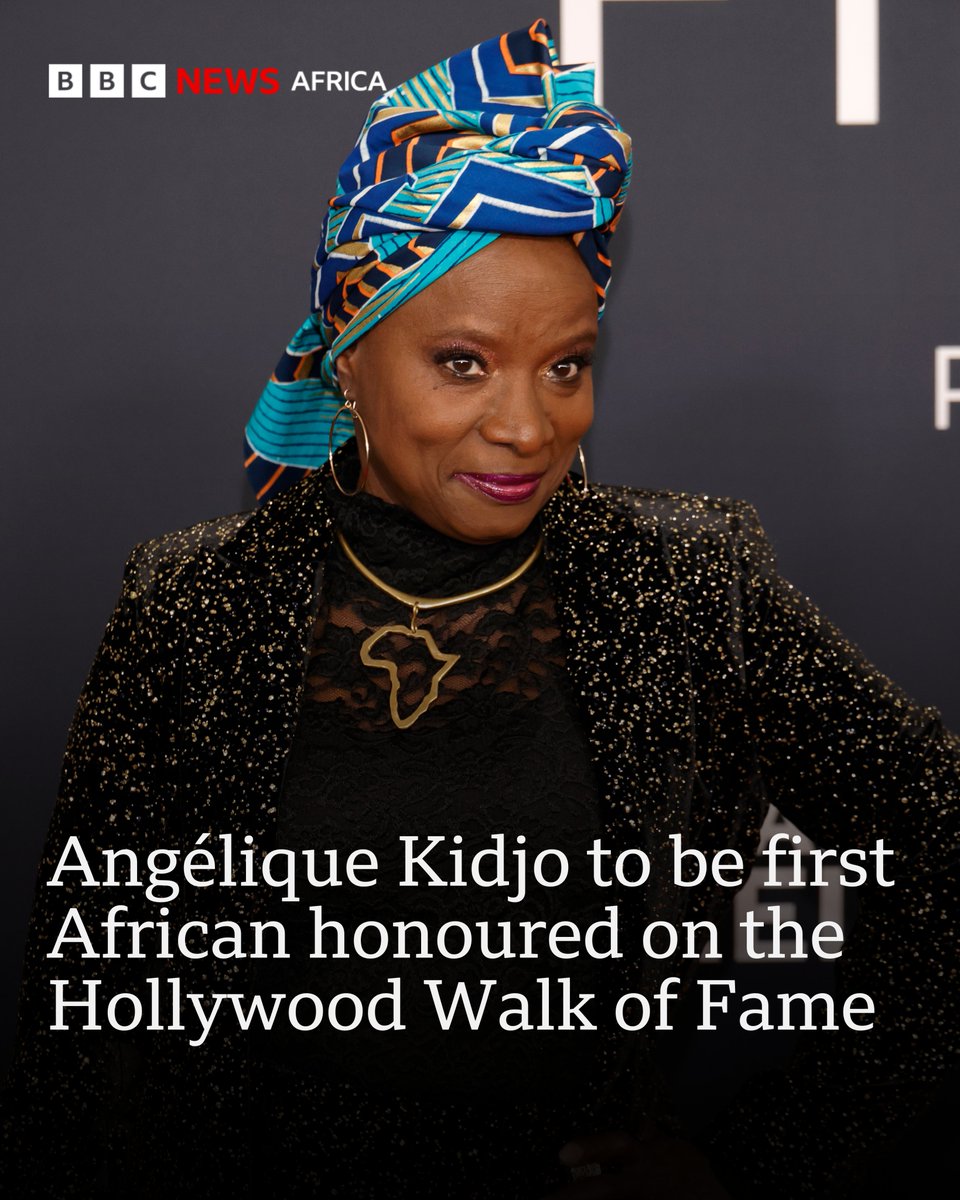
Grammy Award-winning singer Angélique Kidjo will formally receive her star in Hollywood later this year.
The Beninoise-French musician known for her voice and electric stage presence is being honoured in the Recordings category.
I like how Piketty wrote a paper on unequal exchange and how the West got rich by stealing from the Third World where he only cited other Europeans and Americans and not a single one of the Third World economists who developed those ideas. Incredible bit of performance art
Colonial extraction and unequal exchange have shaped two centuries of North-South inequality.
🧵A thread on a NEW STUDY written with @gatonievas
[1/9]
🔗 https://t.co/kA1jeQiLOp