Morgan Stanley: Bearings
The Big Picture: Bearings as a Core Robotics Play
> Architecture-Agnostic Growth: Bearings offer a diversified way to invest in the robotics sector because they are required regardless of a robot's ultimate design or form factor.
> Massive Market Expansion: Morgan Stanley forecasts a massive ~300x growth in the robot bearings market through the year 2050.
> Low Risk of Obsolescence: Bearings face very low substitution, in-sourcing, or obsolescence risks—you simply cannot design moving machines around them.
> OpenAI Endorsement: In a recent Request for Proposal (RFP) for U.S.-based hardware manufacturing capacity, OpenAI listed precision bearings as 1 of 6 critical components in its robotics category.
Content Scales with Robot Complexity
> Bearings 101: Every single motor in a robot requires at least one or more bearings to reduce friction and support rotating parts.
> Degrees of Freedom (DoF): As robots get more complex, the number of bearings multiplies.
Small quadcopter drone: Requires 8–12 bearings.
Humanoid robot: Requires 70 or more bearings.
> Pricing Variability: Depending on the specific use-case, individual bearings can range from under $1 to as much as $100
Global Bearings Market Dynamics
> Consolidated Supply: The top 6 global manufacturers control over 50% of the global roller market, with Chinese manufacturers making up about 25%.
> Current Demand Split: Roughly 40% of the overall market goes to industrial equipment OEMs, 30% to automotive, and 30 to distribution channels
If you are learning System Design as a Fresher, these things are important:
HLD (High-Level Design):
> Load Balancers
> Caching (Redis)
> CDN
> API Gateway
> Databases (SQL vs NoSQL)
> Sharding & Replication
> Message Queues (Kafka/SQS/RabbitMQ)
> Microservices vs Monolith
> Consistent Hashing
> CAP Theorem
LLD (Low-Level Design):
> SOLID Principles
> OOP
> Design Patterns
> UML Class Diagrams
> REST API Design
> Database Schema Design
> Concurrency & Thread Safety
> Logging & Error Handling
> Dependency Injection
> Unit Testing
These are some basic things, there is much more.
You don’t need to build a SaaS to stand out
These projects teach real engineering:
- Redis clone
- Kafka/message queue clone
- Load balancer
- Rate limiter
- URL shortener at scale
- HTTP server from scratch
- Distributed cache
- Search engine basics
- WebSocket server
- Tiny database engine
These projects force you to understand how systems actually work.
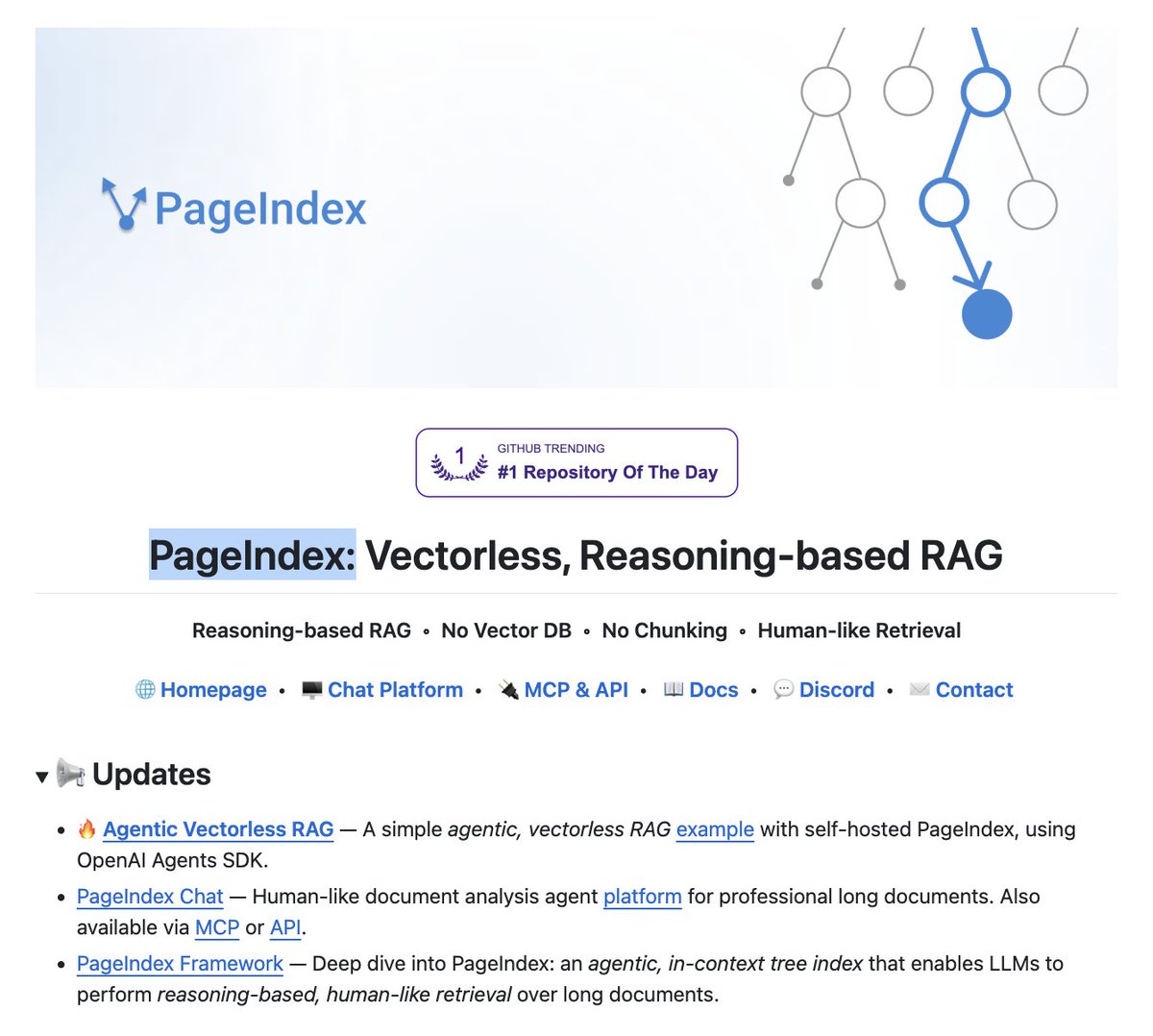
The entire RAG industry is about to get cooked.
Researchers have built a new RAG approach that:
- does not need a vector DB.
- does not embed data.
- involves no chunking.
- performs no similarity search.
It's called PageIndex. Instead of chunking your docs and stuffing them into pinecone, it builds a tree index and lets the LLM reason through it like a human reading a book.
hit 98.7% on financebench. beats every vector RAG on the leaderboard.
no embeddings. no chunking. no vector DB.
100% open source.
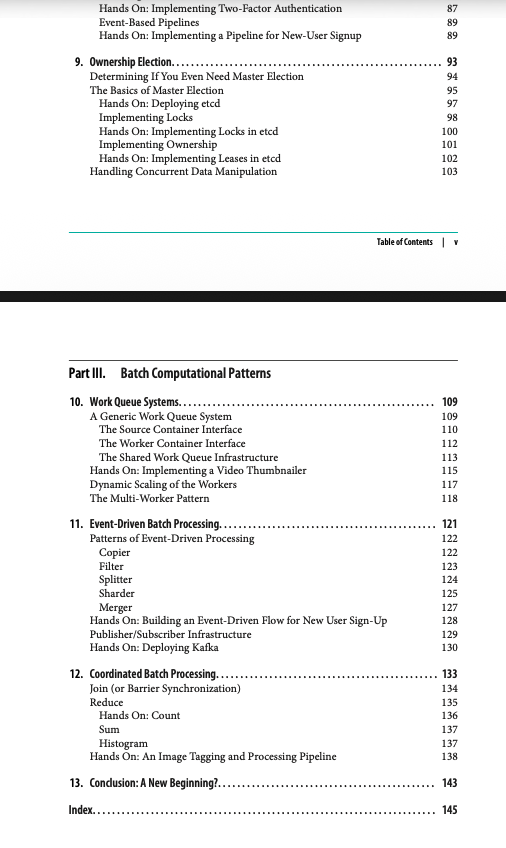
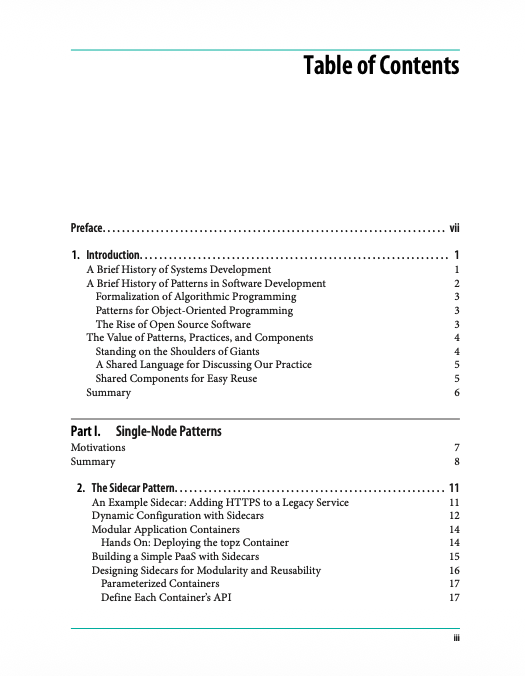
The DDIA book (Designing Data Intensive Applications) is a classic no-doubt and has much in-depth stuff about distributed systems (Nowhere close to completing it though). However it is also too much to digest for any beginner (me).
Personally I found this one a much better starter book. Gives a birds-eye-view of the systems and components along with a hands-on exercise after each pattern. Also just a bit over ~160 pages - readable in a few days. A week or so if doing hands-on›
THE PHOTONICS ROTATION
Almost nobody is watching photonics.
As AI clusters scale, copper hits physical limits and the next bottleneck becomes optical infrastructure.
Here are 15 names positioned for it:
1. $LITE owns the laser + optical switching side of the trade and is one of the cleanest pure plays on AI optical demand.
2. $COHR wins from lasers, modules, and networking hardware that power hyperscale AI infrastructure and cloud expansion.
3. $AAOI is one of the best ways to play AI optical transceivers with major hyperscaler demand for 800G and 1.6T connectivity.
4. $SIVE benefits from the push toward faster semiconductor-to-optical integration as AI infrastructure scales.
5. $MRVL controls a huge part of the DSP + interconnect story with optical networking chips and high-speed connectivity.
6. $AVGO sits at the center of AI networking through switching, custom silicon, and optical interconnect demand.
7. $ANET is the Ethernet backbone moving massive AI workloads across hyperscale clusters and data centers.
8. $GLW supplies the specialty glass + fiber needed for the optical transport layer behind AI infrastructure.
9. $JBL benefits from building and scaling the actual hardware behind networking systems and optical modules.
10. $AEHR wins from burn-in + testing demand as AI ASICs and high-power optical hardware move into production.
11. $POET is focused on lower-cost optical engines designed to improve efficiency inside AI data centers.
12. $LWLG is pushing next-gen polymer photonics that could make optical communication faster and more efficient.
13. $QCLS brings exposure to advanced laser systems supporting precision photonics and next-gen optical demand.
14. $LPTH provides specialty optics and photonic components tied to industrial, defense, and AI-driven systems.
15. $ALAB gives exposure to the connectivity + infrastructure side helping AI clusters scale faster.
Most people won’t care until these are already up 100%.
Karpathy didn't make a course.
He made THE course.
3 hours. Free.
Tokenization. Attention. Hallucinations. Tool use. RLHF. DeepSeek. AlphaGo.
Every behavior you've ever wondered about in an LLM - where it comes from, why it exists, how it was engineered.
The gap between engineers who understand this and engineers who don't isn't technical depth.
It's the ability to conceive of entirely different things.
55+ High-Quality SME Stocks with Strong Fundamentals to Study & Track ❤️🔥❤️🔥❤️🔥
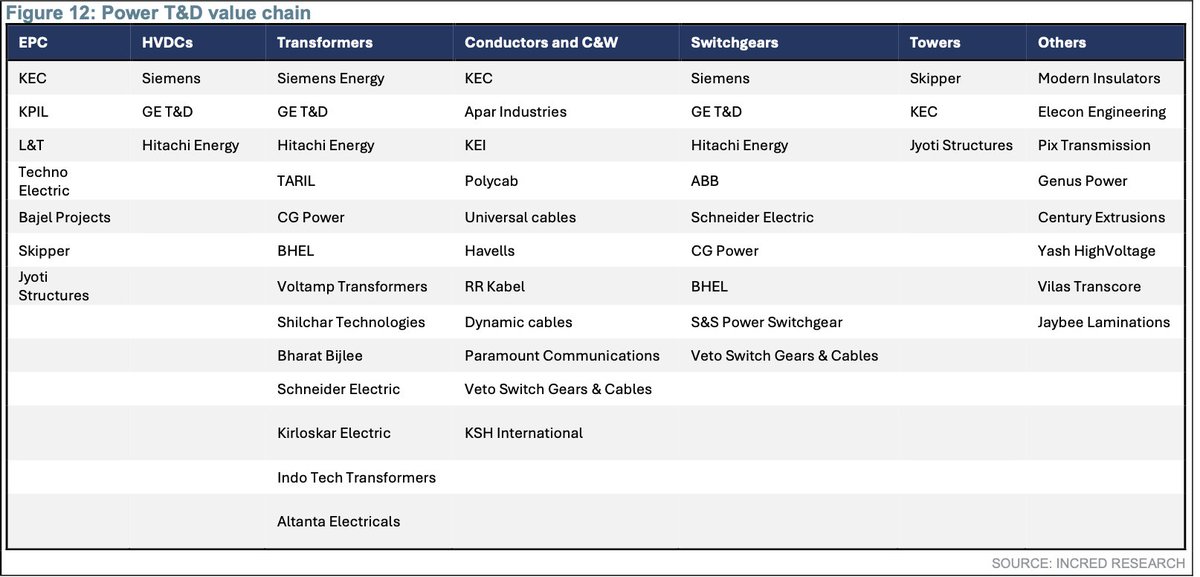
Yash Highvoltage
Concord Control Systems
V-Marc India
KP Green Engineering
Anondita Medicare
Amic Forging
Vinyas Innovative
CFF Fluid Control
Khazanchi Jewellers
Accent Microcell
Emkay Tools
Macfos
Karnika Industries
Msafe Equipments
ABS Marine
Indo SMC
Connplex Cinemas
Suba Hotels
Freshara Agro Exports
Patil Automation
Rajesh Power
OSEL Devices
Sat Kartar Shopping
Exhicon Events Media
Shri Ahimsa Naturals
Airfloa Rail
TechD Cybersecurity
Sugs Lloyd
Namo eWaste
Monolithisch
Aimtron Electronics
JD Cables
FlySBS Aviation
Sathlokhar Synergys
Alpex Solar
Sunita Tools
Parth Electricals
E2E Transportation
Exato Technologies
Maxvolt Energy
Danish Power
GP Eco Solutions
Viviana Power
Neetu Yoshi
Kalyani Cast-Tech
Trident Techlabs
Sacheerome
Unihealth Hospitals
True Colors
Influx Healthtech
OBSC Perfection
Afcom Holdings
Vilas Transcore
Supreme Power
Asarfi Hospital
Oriana Power
L. T. Elevator
Prizor Viztech
These SME companies operate in niche and high-growth segments and may offer strong upside potential. However, they require deep research, continuous tracking, and understanding of business quality, order book, and management execution.
The SME space can be highly rewarding, but only for those who are willing to put in the effort. The more you study today, the better positioned you will be to identify high-growth opportunities in the coming market cycle.
Disclaimer: This is not a buy or sell recommendation. Please do your own research or consult your financial advisor before making any investment decisions.